35 Synonyms for Stuff: Better Words for Everyday Writing
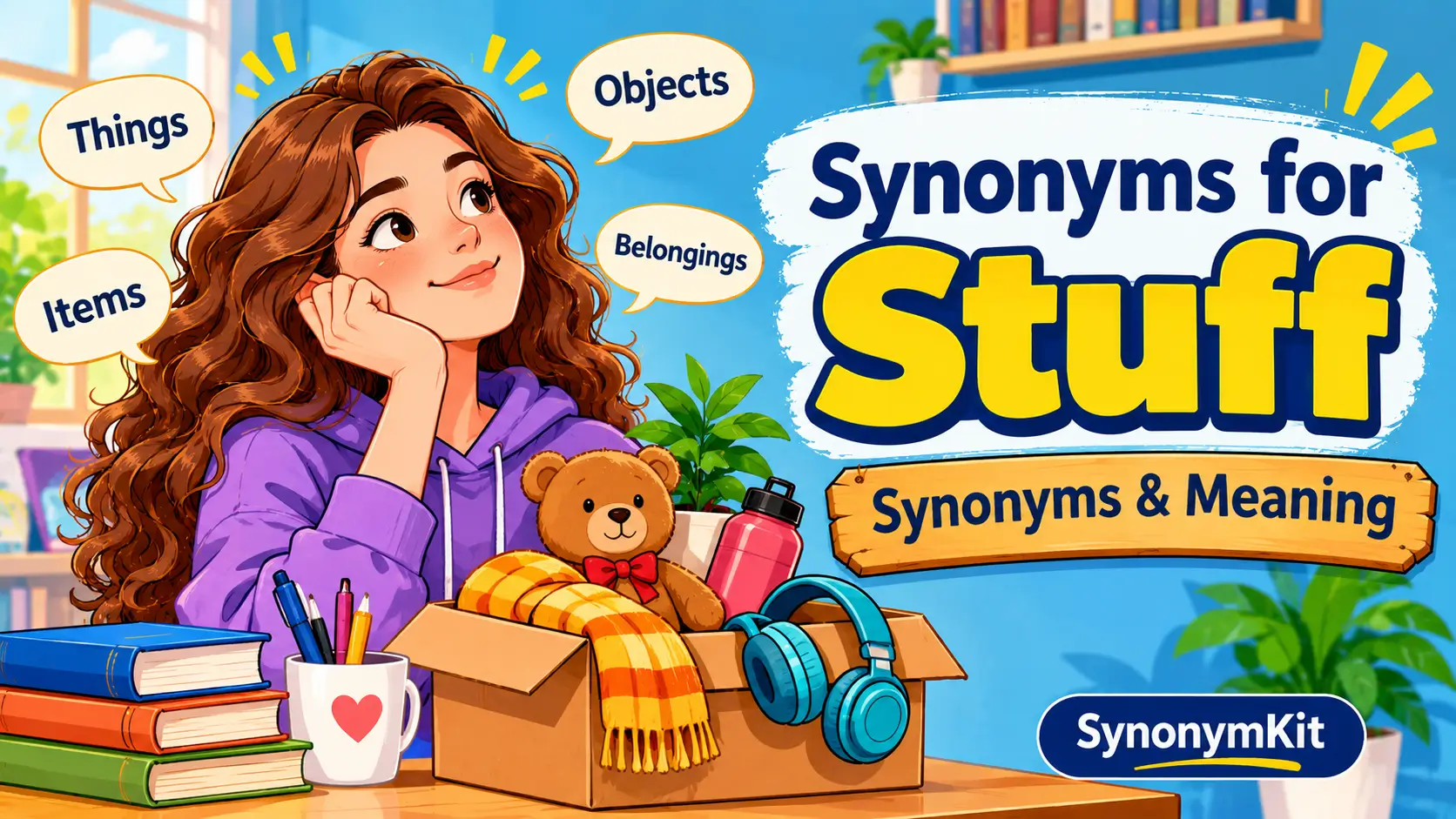
Synonyms for stuff include things, items, objects, belongings, materials, supplies, goods, and possessions. These words help you describe different objects, personal items, or materials more clearly. The best replacement depends on what you mean and whether you are speaking casually or writing formally.
Imagine cleaning your room and finding books, clothes, toys, papers, and many other things. You might say, “I have too much stuff!” This sounds natural in daily speech. However, using the same word again and again can make your writing feel plain.
For example, instead of saying, “Please move your stuff,” you could say, “Please move your belongings.” Both sentences share the same idea, but the second sounds clearer.
Learning different words helps you express your thoughts in a better way. Students can use them to make essays stronger. Bloggers can make their posts more interesting. Content writers can choose words that fit each topic. Daily English users can speak with more confidence.
“The right word can make a simple thought shine.”
A small change in vocabulary can make a big difference. You do not need difficult words to sound smart. You only need words that match your meaning.
“Good writing begins with clear and simple words.”
35 Common Synonyms for Stuff
1. Things
- Meaning: Things are objects or items that people use, own, or need.
- Examples: I packed my things before leaving.
- Please put your things on the table.
2. Items
- Meaning: Items are separate objects that belong to a group or collection.
- Examples: We need a few items today.
- She placed all the items inside.
3. Objects
- Meaning: Objects are physical things that people can see, touch, or move.
- Examples: The box contains several small objects.
- Keep sharp objects away from children.
4. Belongings
- Meaning: Belongings are personal things that someone owns and uses.
- Examples: He collected his belongings after work.
- Her belongings were inside the blue bag.
5. Possessions
- Meaning: Possessions are things that belong to a person.
- Examples: She keeps her possessions in one place.
- His most valued possessions were safe.
6. Materials
- Meaning: Materials are things used to make, build, or create something.
- Examples: We bought materials for the school project.
- These materials are easy to recycle.
7. Supplies
- Meaning: Supplies are useful things needed for a task or activity.
- Examples: The teacher ordered new school supplies.
- We have enough supplies for everyone.
8. Goods
- Meaning: Goods are products that people make, sell, buy, or use.
- Examples: The shop sells fresh goods daily.
- They packed the goods for delivery.
9. Equipment
- Meaning: Equipment includes tools and objects needed for a particular job.
- Examples: The team checked its sports equipment.
- We need better equipment for training.
10. Gear
- Meaning: Gear means useful equipment or clothing needed for an activity.
- Examples: Pack your camping gear before sunset.
- His fishing gear is in storage.
11. Tools
- Meaning: Tools are objects that help people complete different jobs.
- Examples: The workers cleaned their tools carefully.
- I keep my tools in this drawer.
12. Articles
- Meaning: Articles are separate objects, products, or pieces of personal property.
- Examples: The store sells household articles at low prices.
- Several articles were missing from the box.
13. Contents
- Meaning: Contents are all the things kept inside something.
- Examples: She checked the contents of her bag.
- The box contents were listed outside.
14. Products
- Meaning: Products are goods made or grown for people to use.
- Examples: This company makes natural beauty products.
- We tested several products before buying.
15. Resources
- Meaning: Resources are useful things that help people reach their goals.
- Examples: The library offers free learning resources.
- We must protect our natural resources.
16. Merchandise
- Meaning: Merchandise means products that a business offers for sale.
- Examples: The store displayed its new merchandise.
- All merchandise must have clear price tags.
17. Chattels
- Meaning: Chattels are movable personal possessions, such as furniture and household items.
- Examples: The family listed its valuable chattels.
- These chattels were included in the sale.
18. Effects
- Meaning: Effects are personal belongings that someone carries or keeps.
- Examples: Please collect your personal effects before leaving.
- His effects remained in the hotel room.
19. Paraphernalia
- Meaning: Paraphernalia means different objects linked to a particular activity or interest.
- Examples: Her art paraphernalia filled the small room.
- He carried his fishing paraphernalia everywhere.
20. Trinkets
- Meaning: Trinkets are small objects that people keep for decoration or memories.
- Examples: She bought colorful trinkets at the market.
- My grandmother collects tiny glass trinkets.
21. Knickknacks
- Meaning: Knickknacks are small decorative objects kept around homes.
- Examples: The shelf holds many lovely knickknacks.
- He dusted the knickknacks every Sunday.
22. Clutter
- Meaning: Clutter means too many objects spread around without proper order.
- Examples: My desk is covered with clutter.
- We removed the clutter from the kitchen.
23. Junk
- Meaning: Junk means old or unwanted things that have little value.
- Examples: They threw the junk into boxes.
- This garage is full of junk.
24. Miscellaneous Items
- Meaning: Miscellaneous items are different objects that do not share one clear category.
- Examples: The drawer contains miscellaneous items from work.
- Put the miscellaneous items in this basket.
25. Necessities
- Meaning: Necessities are things that people need for daily life.
- Examples: Food and water are basic necessities.
- She packed her daily necessities first.
26. Essentials
- Meaning: Essentials are the most important things needed for a task or situation.
- Examples: I packed my travel essentials last night.
- These essentials will help during the trip.
27. Stuffing
- Meaning: Stuffing is material used to fill something, such as a cushion or toy.
- Examples: The pillow needs fresh stuffing inside.
- We added soft stuffing to the toy.
28. Components
- Meaning: Components are separate parts that work together to make something.
- Examples: The machine has several small components.
- Each component serves an important purpose.
29. Parts
- Meaning: Parts are pieces that belong to or form something larger.
- Examples: The mechanic replaced the broken parts.
- Keep all the parts together safely.
30. Collections
- Meaning: Collections are groups of objects gathered because they share an interest or purpose.
- Examples: Her collections include stamps and coins.
- The museum displays rare art collections.
31. Furniture
- Meaning: Furniture means useful objects such as tables, chairs, and beds.
- Examples: We moved the furniture into another room.
- The new furniture looks great here.
32. Apparel
- Meaning: Apparel means clothing that people wear for different occasions.
- Examples: The shop sells affordable winter apparel.
- She packed extra apparel for the journey.
33. Wares
- Meaning: Wares are products or goods offered for sale by sellers.
- Examples: Local sellers displayed their handmade wares.
- The market offers traditional household wares.
34. Materials and Supplies
- Meaning: Materials and supplies are useful resources needed to complete a project.
- Examples: We gathered materials and supplies for painting.
- The office ordered materials and supplies yesterday.
35. Assets
- Meaning: Assets are valuable things that a person or business owns.
- Examples: The company listed its major assets.
- Her property and savings are valuable assets.
Remember: Not every synonym works in every sentence. Words such as “belongings” describe personal property, while “materials” suit building or creative work. Always choose a replacement that matches your meaning.
“A wider vocabulary gives your ideas more room to grow.”
Formal Synonyms for Stuff
In formal writing, words such as materials, resources, items, possessions, and assets often sound more suitable than stuff. The best choice depends on your topic. Use “materials” for things used in a project and “resources” for useful support.
Choose “assets” when discussing valuable property. These alternatives make reports, emails, and professional documents sound clearer and more precise.
Synonyms for Stuff in an Essay
Students can replace stuff with more exact words to improve their essays. Use factors when discussing reasons, issues when describing problems, and aspects when explaining parts of a topic.
For example, instead of writing “many stuff affects education,” write “many factors affect education.” Specific words help readers understand your point without confusion.
Synonyms for Stuff Noun
The word stuff is commonly used as an informal noun for different objects or materials. You can replace it with things, items, objects, belongings, goods, or possessions.
For example, “I left my stuff at home” can become “I left my belongings at home.” These choices help you describe personal property, household objects, and everyday items more clearly.
Synonyms for Stuff Like
Sometimes, people use “stuff like” when they want to give examples without naming every detail. You can use phrases such as things such as, items including, examples like, and products such as.
For instance, “I enjoy stuff like music and books” becomes “I enjoy activities such as reading and listening to music.” These phrases make your sentences smoother.
Frequently Asked Questions
1. What can I say instead of stuff?
You can say things, items, objects, belongings, materials, supplies, or possessions instead of stuff. The right word depends on your sentence. Use “belongings” for personal property, “supplies” for things needed to complete a task, and “materials” for things used to make something.
In casual conversations, “things” is usually the easiest replacement. In formal writing, more specific words often sound better.
2. What is a better word for things?
A better word for things depends on what you are talking about. Objects work well for physical items, while “factors” suits reasons that affect a situation. You can use “aspects” for parts of a topic and “matters” for subjects that need attention.
For example, “We discussed many things” could become “We discussed several important matters.” Specific words make your message easier to understand.
3. What is a slang synonym for “stuff”?
Common slang alternatives for stuff include junk, gear, goodies, bits and pieces, and odds and ends. These expressions are common in relaxed conversations. For example, someone might say, “Grab your gear before we leave.”
Another person might say, “I need to clean up this junk.” Remember that slang words may not suit school essays, business emails, or other formal situations.
4. What is a fancy word for things or stuff?
Some fancy alternatives for things or stuff include paraphernalia, miscellany, possessions, merchandise, and accoutrements. These words can make your vocabulary sound more advanced, but they have different meanings.
“Paraphernalia” describes objects linked to an activity, while “miscellany” means a mixture of different things. Choose a word that fits your sentence instead of using difficult vocabulary just to sound impressive.
Conclusion
Learning synonyms for stuff can make your English stronger and your writing more enjoyable. A simple word may work well in daily conversations, but other situations need clearer and more specific choices. Words such as items, belongings, materials, resources, and possessions help you explain your ideas with greater detail.
Students can use these alternatives to improve essays and school assignments. Bloggers can make their articles more engaging by avoiding repeated words.
Content writers can create clear messages that readers understand easily. English learners can also use new vocabulary to speak with greater confidence.
Start with a few simple words and practice using them in real sentences. Try replacing words in your emails, essays, notes, and daily conversations. Pay attention to the meaning of each word before choosing it. This small habit can improve your vocabulary over time.
“Every new word opens another way to express yourself.”
You do not need to use fancy words all the time. Clear and natural language is always a good choice. Keep learning, keep practicing, and choose words that express exactly what you mean.
“Better words help you share better ideas.”

James is a former English teacher turned content strategist who’s passionate about making language learning less intimidating. At SynonymKit, he focuses on curating word lists that are practical for everyday writing, essays, and professional communication.