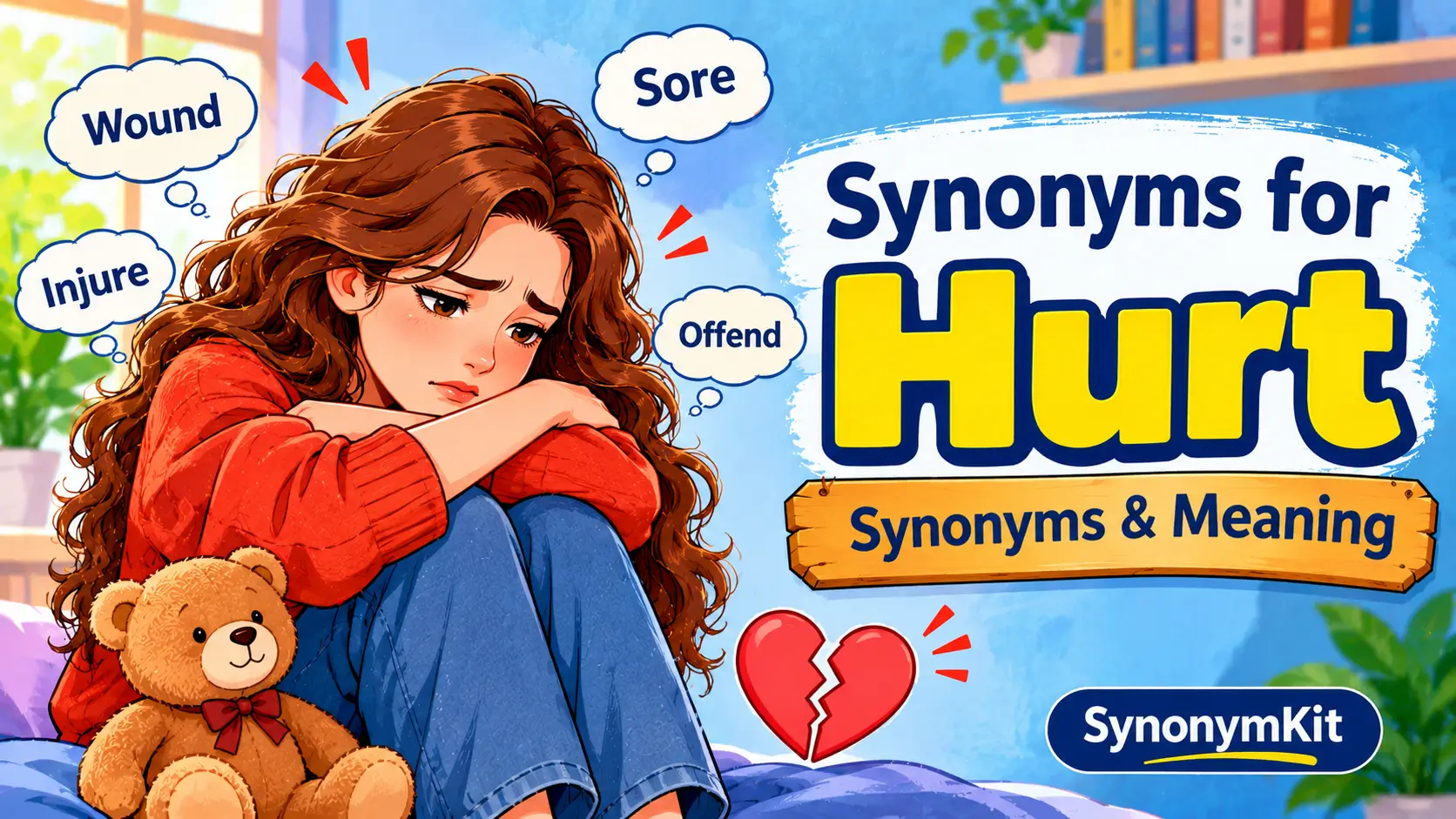
50 Synonyms for Hurt: Words for Emotional and Physical Pain
Synonyms for hurt include pain, harm, injure, wound, upset, distress, and suffer. These words help describe physical pain, sad feelings, or emotional damage. Some words sound gentle, while others express deep pain. Choosing the right word makes your speaking and writing clearer.
Imagine a friend saying something unkind during a conversation. You smile at first, but their words stay in your mind all day. You want to explain your feelings, but saying the same word again feels boring. This is where learning new words can help.
For example, you can say, “Her rude comment upset me” instead of “Her rude comment hurt me.”
Students can use these words to write better essays and stories. Bloggers can make their articles more interesting. Content writers can express feelings with greater care. Daily English users can speak with more confidence.
Having different words for pain also helps you explain what happened. The right word can show how serious a situation feels.
“Words have the power to express what the heart feels.”
A small change in vocabulary can make a big difference. You do not need difficult words to express strong feelings. Simple and clear language often works best.
“Clear words make even difficult feelings easier to understand.”
50 Synonyms for Hurt
1. Pain
- Meaning: Pain describes an unpleasant feeling caused by injury, illness, or emotional trouble.
- Examples: My arm has sharp pain today. She felt pain after their argument.
2. Harm
- Meaning: Harm means damage that makes someone or something less safe or healthy.
- Examples: His careless words caused real harm. Too much sun can harm your skin.
3. Injure
- Meaning: Injure means to cause physical damage to someone’s body.
- Examples: He may injure his knee playing football. The fall could injure her badly.
4. Wound
- Meaning: Wound means to cause physical or emotional damage to someone.
- Examples: His harsh reply wounded her deeply. The accident left a small wound.
5. Upset
- Meaning: Upset means to make someone feel sad, worried, or unhappy.
- Examples: Your sudden decision upset my mother. His comment upset me during lunch.
6. Distress
- Meaning: Distress means deep sadness or worry caused by something difficult.
- Examples: The news caused great distress. Her sudden silence distressed her friends.
7. Sadden
- Meaning: Sadden means to make someone feel unhappy or full of sadness.
- Examples: The goodbye saddened everyone in class. His sad story saddened the audience.
8. Offend
- Meaning: Offend means to make someone feel upset through rude words or actions.
- Examples: I did not mean to offend you. His joke offended several people yesterday.
9. Aggrieve
- Meaning: Aggrieve means to treat someone unfairly and cause emotional pain.
- Examples: The unfair choice aggrieved the workers. She felt aggrieved by their decision.
10. Grieve
- Meaning: Grieve means to feel deep sadness after losing someone or something.
- Examples: They grieved after losing their friend. He still grieves for his father.
11. Trouble
- Meaning: Trouble means to make someone feel worried, unhappy, or uncomfortable.
- Examples: Your strange behavior troubles me today. The news troubled her all evening.
12. Bother
- Meaning: Bother means to annoy someone or make them feel uncomfortable.
- Examples: His loud jokes bother me sometimes. Please do not bother your sister.
13. Agitate
- Meaning: Agitate means to make someone feel nervous, upset, or disturbed.
- Examples: The sudden noise agitated the baby. His angry words agitated the crowd.
14. Torment
- Meaning: Torment means to cause someone great mental or physical suffering.
- Examples: Those memories still torment him today. Her constant teasing tormented the young boy.
15. Afflict
- Meaning: Afflict means to cause someone lasting pain, trouble, or suffering.
- Examples: The illness afflicted many people nearby. His family was afflicted by poverty.
16. Suffer
- Meaning: Suffer means to experience pain, sadness, or another difficult feeling.
- Examples: She suffered after the painful breakup. Many people suffer during hard times.
17. Damage
- Meaning: Damage means to cause harm that makes something or someone weaker.
- Examples: His lies damaged their friendship badly. The storm damaged several nearby homes.
18. Ruin
- Meaning: Ruin means to badly damage something or make someone deeply unhappy.
- Examples: His actions ruined our special day. The accident ruined their holiday plans.
19. Crush
- Meaning: Crush means to make someone feel deeply sad or emotionally broken.
- Examples: Her rejection crushed his hopes completely. The sad news crushed their dreams.
20. Devastate
- Meaning: Devastate means to make someone feel extremely sad or deeply shocked.
- Examples: The loss devastated her entire family. His sudden departure devastated his friends.
21. Break
- Meaning: Break means to damage someone’s confidence, spirit, or emotional strength.
- Examples: Her cruel words broke his heart. The failure nearly broke her confidence.
22. Disappoint
- Meaning: Disappoint means to make someone feel sad when hopes are not met.
- Examples: Please do not disappoint your team. His broken promise disappointed his parents.
23. Dishearten
- Meaning: Dishearten means to make someone lose hope, courage, or confidence.
- Examples: The bad result disheartened the students. Do not let failure dishearten you.
24. Discourage
- Meaning: Discourage means to make someone feel less hopeful about something.
- Examples: Negative comments discouraged the young writer. Her failure did not discourage her.
25. Frustrate
- Meaning: Frustrate means to make someone feel upset because things go wrong.
- Examples: The delay frustrated everyone waiting outside. His careless mistakes frustrated the teacher.
26. Annoy
- Meaning: Annoy means to make someone feel slightly angry or uncomfortable.
- Examples: His repeated questions annoy me daily. Loud music annoys our neighbors.
27. Irritate
- Meaning: Irritate means to make someone feel angry, impatient, or uncomfortable.
- Examples: His rude tone irritated his mother. Dust can irritate your eyes quickly.
28. Embarrass
- Meaning: Embarrass means to make someone feel ashamed or uncomfortable around others.
- Examples: Please do not embarrass me publicly. His mistake embarrassed the whole group.
29. Humiliate
- Meaning: Humiliate means to make someone feel deeply ashamed or worthless.
- Examples: The manager humiliated him during the meeting. Never humiliate someone for making mistakes.
30. Shame
- Meaning: Shame means to make someone feel bad about themselves or actions.
- Examples: His public criticism shamed the student. Do not shame people for mistakes.
31. Betray
- Meaning: Betray means to break someone’s trust and cause deep emotional pain.
- Examples: His closest friend betrayed his trust. She felt betrayed by their actions.
32. Reject
- Meaning: Reject means to refuse someone or something and sometimes cause sadness.
- Examples: They rejected her new business idea. He felt sad when they rejected him.
33. Neglect
- Meaning: Neglect means to ignore someone’s needs and make them feel unimportant.
- Examples: Parents should never neglect their children. His friends neglected him during difficult times.
34. Abandon
- Meaning: Abandon means to leave someone alone when they need support.
- Examples: She felt abandoned after their departure. Never abandon someone during hard times.
35. Betrayal
- Meaning: Betrayal means breaking someone’s trust through dishonest or hurtful actions.
- Examples: His betrayal ended their friendship forever. She struggled to accept his betrayal.
36. Grievance
- Meaning: Grievance means a complaint about something unfair that causes unhappiness.
- Examples: She shared her grievance with management. The workers raised a serious grievance.
37. Sore
- Meaning: Sore describes a part of the body that feels painful or tender.
- Examples: My shoulders feel sore after exercise. His sore knee needs some rest.
38. Aching
- Meaning: Aching describes a steady pain that continues for some time.
- Examples: My back is aching after work. Her aching feet needed a break.
39. Tender
- Meaning: Tender describes a body part that feels painful when touched.
- Examples: My injured hand feels tender today. The tender spot hurts when touched.
40. Bruise
- Meaning: Bruise means to cause a dark mark through an injury or impact.
- Examples: He bruised his arm during practice. The fall left a purple bruise.
41. Sting
- Meaning: Sting means to cause a sharp physical or emotional pain.
- Examples: Her cold reply really stung me. The insect sting hurt his hand.
42. Smart
- Meaning: Smart describes a sharp, sudden pain felt in a body part.
- Examples: My finger began to smart suddenly. The cut still smarts when touched.
43. Ache
- Meaning: Ache means a lasting pain in a part of your body.
- Examples: My head began to ache again. His muscles ache after the workout.
44. Throb
- Meaning: Throb means to feel repeated pain that seems to beat.
- Examples: My injured tooth began to throb. Her ankle throbbed after the long walk.
45. Weaken
- Meaning: Weaken means to make someone less strong, healthy, or confident.
- Examples: The illness weakened his body badly. Constant criticism can weaken your confidence.
46. Wreck
- Meaning: Wreck means to badly damage someone’s feelings, plans, or physical condition.
- Examples: His lies wrecked their happy relationship. The accident wrecked his new car.
47. Harass
- Meaning: Harass means to repeatedly bother or upset someone through unwanted actions.
- Examples: Nobody should harass others at work. The bully harassed him every school day.
48. Oppress
- Meaning: Oppress means to treat someone cruelly and make life difficult.
- Examples: Unfair rules oppressed the local people. Nobody deserves to be oppressed.
49. Pester
- Meaning: Pester means to bother someone again and again with unwanted actions.
- Examples: The children pestered their father all morning. Stop pestering your little brother today.
50. Ravage
- Meaning: Ravage means to cause serious damage, pain, or destruction to something.
- Examples: The disease ravaged his body over time. The disaster ravaged the small village.
Synonyms for Hurt Physically
When someone experiences body pain, words like injure, wound, bruise, ache, and throb can describe the situation. The best choice depends on the type of injury. For example, a bruise describes a mark, while ache describes lasting pain.
These words help explain physical discomfort in conversations, medical reports, and everyday writing.
Synonyms for Hurt Verb
The verb hurt can describe causing pain or making someone feel sad. Useful alternatives include injure, harm, wound, upset, offend, and distress.
For example, you can say, “His actions harmed the team” instead of “His actions hurt the team.” Choose a word that matches the action and makes your sentence clear.
Synonyms for Hurtful Words
Hurtful words can make people feel sad, ashamed, or rejected. Other expressions include cruel words, harsh remarks, offensive comments, insulting language, and unkind statements. These phrases help describe speech that causes emotional pain.
For example, “Her harsh remarks upset me” sounds more specific than simply saying, “Her words hurt me.”
Synonyms for Hurting Someone
There are different ways to describe hurting another person. Words such as offending, upsetting, harming, wounding, and distressing explain different types of damage. Some describe emotional pain, while others suggest physical or lasting harm.
Use these alternatives when discussing relationships, personal actions, or difficult situations.
Synonyms and Antonyms for Hurt
Synonyms for hurt include harm, pain, injure, wound, upset, and distress. These words describe different forms of suffering or damage.
Common antonyms include heal, comfort, help, protect, soothe, and support. For example, “Her kind words comforted me” expresses the opposite feeling of emotional hurt.
Frequently Asked Questions
1. What Is a Synonym for “Emotionally Hurt”?
A synonym for emotionally hurt is wounded, distressed, upset, heartbroken, or devastated. Each word describes a different level of sadness. Wounded often suggests pain caused by someone’s words or actions.
Heartbroken expresses deep sadness, especially after losing someone or ending a relationship. You can also use disappointed when someone’s actions fail to meet your expectations.
2. What Is a Deeper Word for Hurt?
A deeper word for hurt is anguish. It describes very strong emotional pain that can be difficult to express. Other powerful words include torment, suffering, misery, heartbreak, and devastation.
These words work well when describing serious personal struggles, painful experiences, or deep sadness. Choose anguish when you want to show that someone is going through intense emotional suffering.
3. What Is a Synonym for Hurt Feelings?
Synonyms for hurt feelings include emotional pain, sadness, disappointment, distress, offense, and heartache. These expressions help explain how someone’s words or actions affect another person.
For example, you might say, “His comment caused me emotional pain.” You can also use offense when someone feels upset because another person said something rude or disrespectful.
4. How Do I Say I Am Hurt in Different Ways?
You can express your feelings without repeating the same sentence. Try saying, “Your words upset me,” “I feel disappointed,” or “That really hurt my feelings.” Other choices include “I feel let down,” “Your actions made me sad,” and “I feel emotionally wounded.”
Choose a gentle expression for personal conversations. Clear and honest words can help others understand your feelings better.
Conclusion
Learning different words for hurt can make your English stronger and your communication clearer. Instead of using the same word in every sentence, you can choose expressions that explain exactly what you mean. Words like wounded, upset, distressed, injured, and disappointed each describe a different kind of pain.
These synonyms are useful in many parts of life. Students can use them in essays, homework, and creative writing.
Bloggers can make their articles more engaging with natural vocabulary. Content writers can explain emotions and experiences in a clearer way. Daily English users can also express their feelings with greater confidence.
“The right words help people understand feelings more clearly.”
Start by learning five new words from this list. Practice using them in emails, essays, and daily conversations. Pay attention to their meanings before adding them to your sentences. You can also create your own examples to remember them easily.
“A stronger vocabulary opens the door to better communication.”
Remember, good English is not about using the hardest words. It is about choosing simple, clear, and meaningful words. With regular practice, you can express your thoughts and feelings naturally.

Sarah is a freelance content writer and grammar enthusiast with over 6 years of experience helping students and bloggers write with more clarity. She joined SynonymKit to make vocabulary-building simple and accessible for everyone, one word list at a time.