50 Synonyms for Personality: Words to Describe Someone
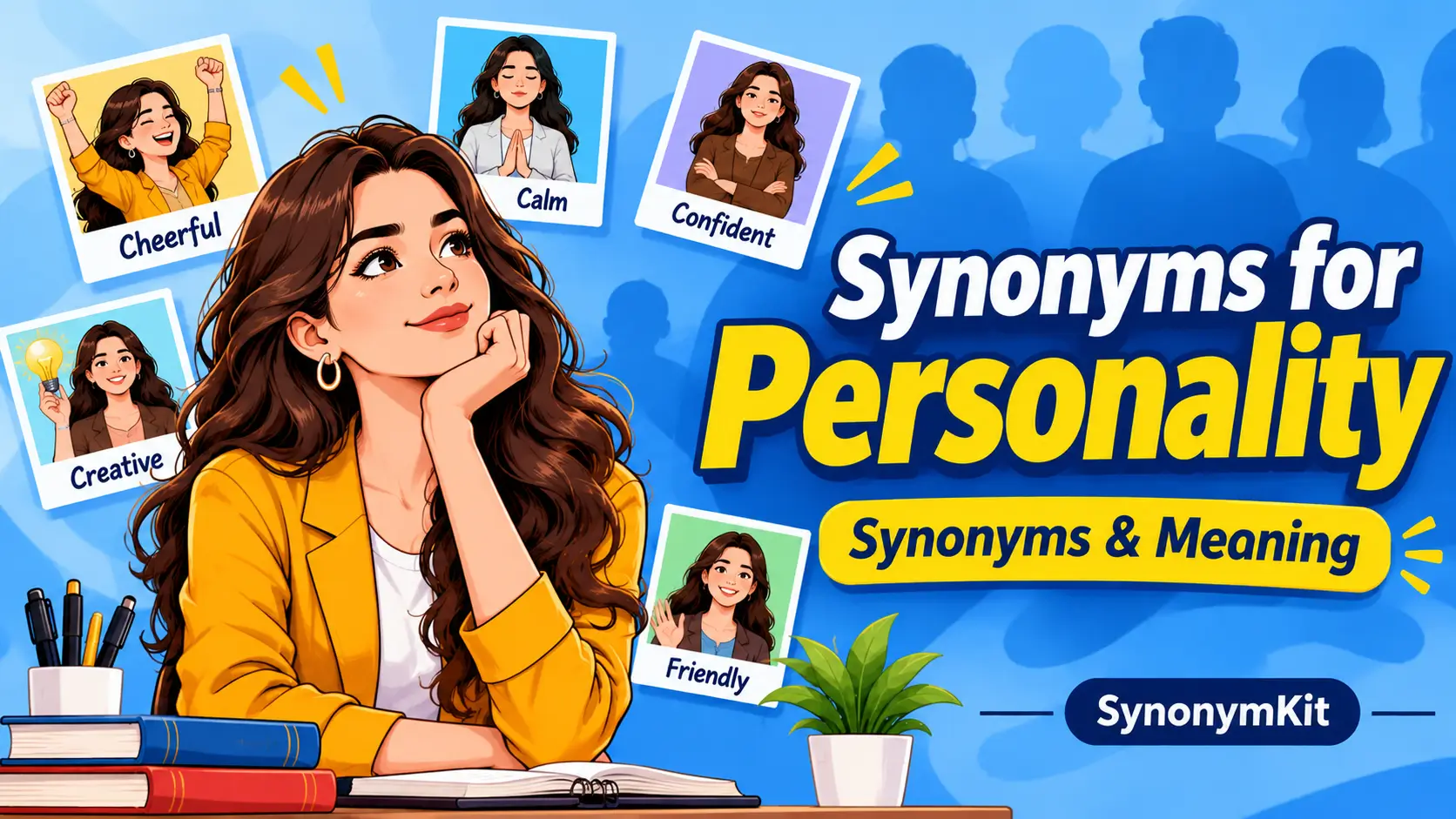
Synonyms for personality include character, nature, temperament, disposition, individuality, and personal qualities. These words help describe how someone thinks, feels, acts, and treats others. Some words show kindness and warmth, while others describe confidence, energy, or unique ways of behaving.
Think about two people in the same room. One makes everyone smile, while the other stays quiet and enjoys listening. Both have their own way of acting, speaking, and connecting with others. These differences make conversations and relationships interesting.
For example, a friendly person may welcome new classmates, while a calm person may help others feel relaxed. Choosing the right words makes these qualities easier to explain.
Learning different words for personality can improve the way we express our thoughts. Students can use them in essays and school projects. Bloggers can write more engaging descriptions.
Content writers can create clear and interesting stories. Daily English users can describe people with greater confidence.
As you explore these words, you will discover simple and useful ways to describe human nature.
“Personality is the unique way we show ourselves to the world.”
Good words can make a simple description more meaningful. Instead of using the same word again and again, you can choose language that fits the person and situation.
“Kindness and confidence make a lasting impression.”
50 Synonyms for Personality
Here are 50 useful words that describe someone’s character, nature, behavior, and personal qualities. Each word has a simple meaning and two everyday examples.
1. Character
- Meaning: Character describes the qualities that show what kind of person someone is.
- Examples: Her character makes everyone trust her. He has a strong and honest character.
2. Nature
- Meaning: Nature describes someone’s usual way of thinking, feeling, and acting.
- Examples: Her gentle nature makes people smile. His cheerful nature brightens every room.
3. Temperament
- Meaning: Temperament describes how someone usually feels and reacts.
- Examples: She has a calm temperament at work. His lively temperament makes parties enjoyable.
4. Disposition
- Meaning: Disposition describes someone’s usual mood and way of behaving.
- Examples: Her friendly disposition welcomes new students. He has a positive disposition toward life.
5. Individuality
- Meaning: Individuality describes the special qualities that make someone different.
- Examples: Her individuality shines through her clothes. He expresses his individuality through art.
6. Identity
- Meaning: Identity describes the qualities and beliefs that make someone who they are.
- Examples: Music plays a big role in her identity. His identity reflects his personal values.
7. Character Traits
- Meaning: Character traits are the qualities that shape someone’s actions and behavior.
- Examples: Honesty is one of her best character traits. Patience helps him handle difficult moments.
8. Personal Qualities
- Meaning: Personal qualities describe the good or bad features of someone.
- Examples: Her personal qualities make her a great leader. His personal qualities include kindness and patience.
9. Demeanor
- Meaning: Demeanor describes how someone looks and behaves around other people.
- Examples: Her calm demeanor helps nervous patients. His cheerful demeanor makes meetings pleasant.
10. Attitude
- Meaning: Attitude describes someone’s thoughts and feelings about people or situations.
- Examples: Her positive attitude inspires the whole team. He shows a helpful attitude every day.
11. Disposition of Mind
- Meaning: This phrase describes someone’s usual way of thinking and feeling.
- Examples: Her hopeful disposition of mind helps her. His peaceful disposition of mind supports better choices.
12. Mental Makeup
- Meaning: Mental makeup describes how someone’s thoughts and feelings work together.
- Examples: Her mental makeup supports creative thinking. His mental makeup helps him solve problems.
13. Character Makeup
- Meaning: Character makeup describes the qualities that shape someone’s behavior.
- Examples: Her character makeup includes courage and honesty. His character makeup shows great patience.
14. Essence
- Meaning: Essence describes the most important qualities that define someone.
- Examples: Kindness is the essence of her personality. His humor is part of his essence.
15. Spirit
- Meaning: Spirit describes someone’s energy, feelings, and way of facing life.
- Examples: Her positive spirit lifts everyone around her. His adventurous spirit loves new experiences.
16. Disposition of Character
- Meaning: This phrase describes the natural qualities behind someone’s usual behavior.
- Examples: Her gentle disposition of character wins respect. His strong disposition of character guides decisions.
17. Personal Nature
- Meaning: Personal nature describes someone’s natural habits, feelings, and behavior.
- Examples: Her caring personal nature attracts friends. His quiet personal nature suits him well.
18. Behavioral Traits
- Meaning: Behavioral traits describe the actions someone often shows in daily life.
- Examples: His behavioral traits include patience and respect. Her helpful behavioral traits support teamwork.
19. Individual Character
- Meaning: Individual character describes the qualities that make a person unique.
- Examples: Her individual character makes her memorable. His individual character stands out at school.
20. Human Nature
- Meaning: Human nature describes common ways people think, feel, and behave.
- Examples: Curiosity is part of human nature. The story explores human nature through friendship.
21. Personal Style
- Meaning: Personal style describes someone’s special way of acting or expressing themselves.
- Examples: Her personal style feels warm and welcoming. His personal style makes presentations interesting.
22. Behavioral Pattern
- Meaning: A behavioral pattern describes how someone usually acts in certain situations.
- Examples: Her behavioral pattern shows careful thinking. His behavioral pattern changes under pressure.
23. Psychological Makeup
- Meaning: Psychological makeup describes someone’s mental and emotional qualities.
- Examples: Her psychological makeup supports creative work. His psychological makeup affects his choices.
24. Emotional Makeup
- Meaning: Emotional makeup describes how someone feels and handles emotions.
- Examples: Her emotional makeup helps her show empathy. His emotional makeup makes him sensitive.
25. Personal Disposition
- Meaning: Personal disposition describes someone’s natural mood and approach to life.
- Examples: Her personal disposition is warm and kind. His personal disposition makes teamwork easier.
26. Attitude to Life
- Meaning: This phrase describes how someone thinks about life and its challenges.
- Examples: Her attitude to life remains hopeful. His attitude to life encourages positive change.
27. Way of Being
- Meaning: Way of being describes how someone naturally acts and connects with others.
- Examples: Her way of being feels peaceful. His way of being makes others comfortable.
28. Personal Makeup
- Meaning: Personal makeup describes the qualities that shape someone’s thoughts and actions.
- Examples: Her personal makeup includes strong values. His personal makeup supports careful decisions.
29. Character Profile
- Meaning: A character profile gives a picture of someone’s main personal qualities.
- Examples: The teacher wrote her character profile. His character profile highlights his leadership skills.
30. Behavioral Disposition
- Meaning: Behavioral disposition describes someone’s natural tendency to act in certain ways.
- Examples: Her behavioral disposition is friendly and open. His behavioral disposition supports careful planning.
31. Emotional Disposition
- Meaning: Emotional disposition describes someone’s usual way of feeling and showing emotions.
- Examples: Her emotional disposition makes her very caring. His emotional disposition is calm and steady.
32. Personal Characteristics
- Meaning: Personal characteristics are the features that describe someone’s behavior and nature.
- Examples: Her personal characteristics include honesty and courage. His personal characteristics make him dependable.
33. Qualities
- Meaning: Qualities are the features that make someone special or different.
- Examples: Her best qualities include kindness and patience. His qualities make him a good friend.
34. Traits
- Meaning: Traits are the natural or learned features that describe someone.
- Examples: Confidence is one of her strongest traits. His positive traits help him lead.
35. Disposition of Personality
- Meaning: This phrase describes someone’s usual emotional and behavioral tendencies.
- Examples: Her disposition of personality seems warm. His disposition of personality is quite reserved.
36. Characteristic Nature
- Meaning: Characteristic nature describes the qualities that are typical of someone.
- Examples: Her characteristic nature is thoughtful and kind. His characteristic nature makes him dependable.
37. Social Demeanor
- Meaning: Social demeanor describes how someone behaves when meeting and talking with others.
- Examples: Her social demeanor makes guests comfortable. His social demeanor is polite and friendly.
38. Personal Presence
- Meaning: Personal presence describes the impression someone creates around other people.
- Examples: Her personal presence fills the room. His personal presence makes meetings feel relaxed.
39. Aura
- Meaning: Aura describes the special feeling someone seems to give others.
- Examples: She has a warm and welcoming aura. His calm aura makes people feel safe.
40. Manner
- Meaning: Manner describes someone’s usual way of speaking and behaving.
- Examples: Her gentle manner earns people’s respect. His polite manner impresses every guest.
41. Bearing
- Meaning: Bearing describes the way someone carries and presents themselves.
- Examples: Her confident bearing impresses the audience. His relaxed bearing makes him approachable.
42. Habits of Mind
- Meaning: Habits of mind describe the usual ways someone thinks about things.
- Examples: Her habits of mind support clear thinking. His habits of mind encourage curiosity.
43. Outlook
- Meaning: Outlook describes someone’s general way of seeing life and situations.
- Examples: Her positive outlook keeps her motivated. His practical outlook helps the team.
44. Mindset
- Meaning: Mindset describes the beliefs and thoughts that guide someone’s actions.
- Examples: Her growth mindset helps her learn. His open mindset welcomes new ideas.
45. Psyche
- Meaning: Psyche describes someone’s mind, feelings, and inner emotional world.
- Examples: The novel explores her complex psyche. His psyche shapes his deepest fears.
46. Personal Attributes
- Meaning: Personal attributes are the features and qualities that describe someone.
- Examples: Her personal attributes include patience and honesty. His personal attributes support strong leadership.
47. Temper
- Meaning: Temper describes someone’s usual emotional state and way of reacting.
- Examples: She has a gentle and patient temper. His quick temper causes small arguments.
48. Character and Nature
- Meaning: This phrase describes someone’s main qualities and natural way of behaving.
- Examples: Her character and nature inspire trust. His character and nature show kindness.
49. Personal Disposition and Temperament
- Meaning: This phrase describes someone’s natural mood and emotional response.
- Examples: Her personal disposition and temperament are calm. His personal disposition and temperament suit leadership.
50. Distinctive Character
- Meaning: Distinctive character describes the special qualities that set someone apart.
- Examples: Her distinctive character makes her unforgettable. His distinctive character attracts many friends.
Synonyms for Personality Traits
Synonyms for personality traits include qualities, characteristics, attributes, and behavioral features. These words help describe how someone acts in daily life. For example, honesty, patience, confidence, and kindness are positive traits.
You can use these terms in school essays, character descriptions, job interviews, and personal profiles.
Synonyms for Personality Development
Personality development can also be discussed through words such as personal growth, self improvement, character building, and personal development. These expressions focus on learning new skills, building confidence, and improving behavior.
They work well in educational writing, motivational articles, and discussions about becoming a better version of yourself.
Synonyms for Personality Type
Words related to personality type include temperament, character type, behavioral style, and personal disposition. These expressions help explain how people differ in their actions and reactions.
For example, someone may have a quiet, outgoing, thoughtful, or adventurous nature. Choose the term that best fits your subject and context.
Synonyms for Friendly Personality
A friendly personality can be described with words such as warm, approachable, sociable, outgoing, and welcoming. These terms show that someone enjoys meeting people and making others feel comfortable.
Use them when describing a helpful classmate, a welcoming colleague, or a person who makes new friendships easily.
Frequently Asked Questions
What’s a word for a good personality?
A good personality can be described as pleasant, admirable, charming, warm, or likable. The best word depends on the quality you want to highlight. Use kind hearted for someone who cares about others, approachable for someone who is easy to talk to, and charismatic for someone who naturally attracts attention.
These words make descriptions more clear and meaningful.
What are good words to describe personality?
Good words include kind, honest, friendly, confident, patient, creative, thoughtful, caring, brave, and generous. You can also use words such as outgoing, calm, ambitious, cheerful, and dependable.
Choose words based on a person’s real behavior rather than simply listing positive qualities. This makes your writing sound more natural and gives readers a clearer picture of the person.
What’s another way to say personality traits?
You can say personal qualities, character traits, individual characteristics, or behavioral features instead of personality traits.
These expressions work in different situations. For example, personal qualities fit everyday descriptions, while behavioral characteristics can suit educational or professional writing. The phrase you choose should match the meaning and tone of your sentence.
What is another word for “full of personality”?
Words such as lively, vibrant, expressive, colorful, spirited, and charismatic can describe someone who is full of personality. These terms suggest that a person has an interesting presence and stands out in social situations.
For example, a lively teacher makes lessons enjoyable, while a charismatic speaker captures the audience’s attention.
Conclusion
Learning different synonyms for personality gives you more ways to describe people and express your thoughts. Instead of repeating the same words, you can choose terms that explain someone’s character, nature, behavior, or personal qualities.
These words are useful in many parts of life. Students can make their essays more interesting and improve their vocabulary.
Bloggers can write better descriptions of people and characters. Content writers can create more natural articles, while daily English users can speak with greater confidence.
Start with simple words such as character, nature, attitude, and temperament. Then practice using advanced words such as individuality, demeanor, disposition, and charisma. Try adding them to your emails, essays, stories, and everyday conversations.
Remember that every word has a slightly different meaning. A friendly person may not always be outgoing, and a confident person may still be quiet. Choose words that truly match the person you are describing.
“The right words make your thoughts easier to share.”
Keep learning, reading, and practicing. With time, your vocabulary will grow, your writing will become stronger, and your communication skills will improve.
“Every new word gives you another way to express yourself.”

Amelia is a linguistics graduate and lifelong word nerd who believes the right word can change how a sentence feels. She writes and edits vocabulary guides for SynonymKit, helping readers sound sharper and more confident in their writing.