50 Synonyms for Boring in English (Fancy & Formal Words)
A synonym for boring is a word that means dull, uninteresting, or not exciting. Common examples include tedious, monotonous, dreary, and humdrum.
These words describe something that fails to hold your attention, like a slow class, a flat movie, or a repetitive task at work.
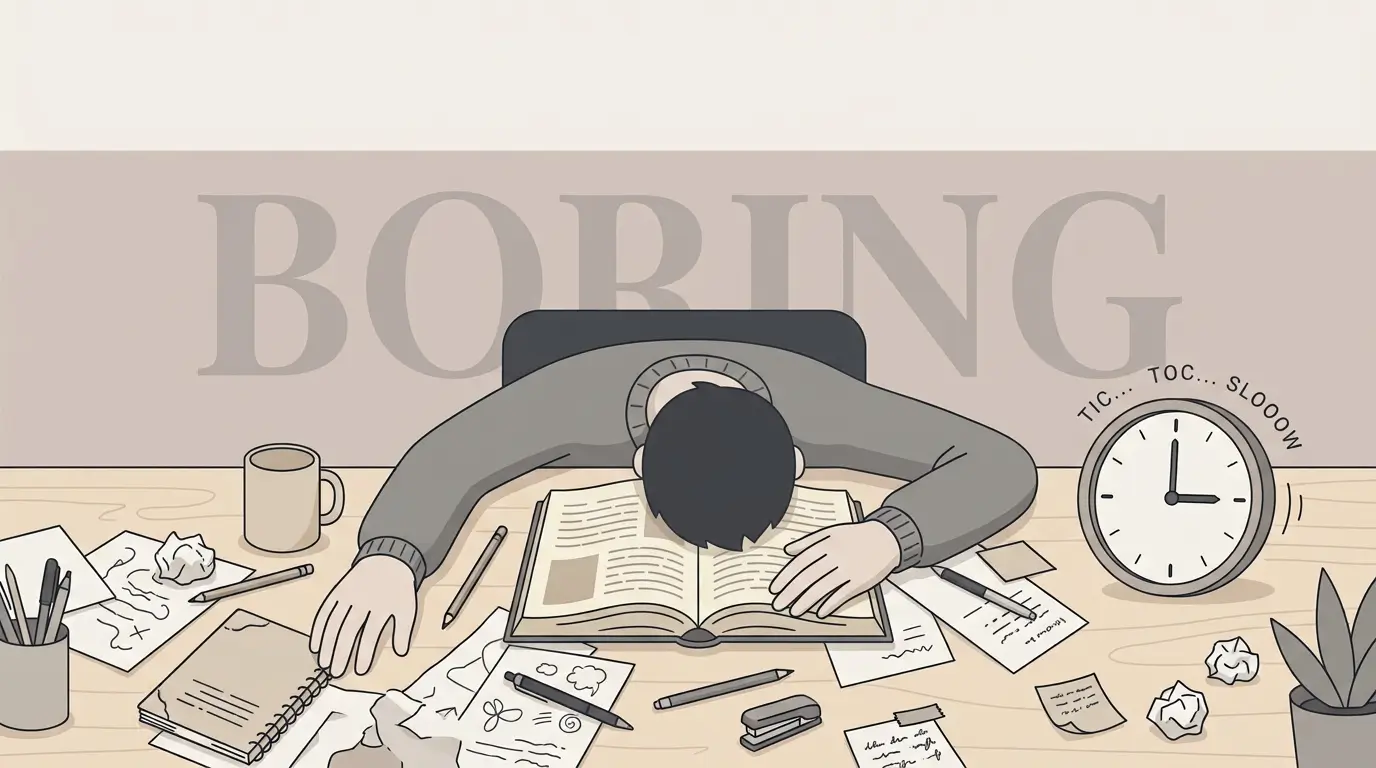
Picture this: it’s 2 p.m., the meeting has run forty minutes over, and someone is still reading numbers off a spreadsheet. Your eyes glaze over.
You’ve lived the feeling a hundred times, but you’ve probably used the same tired word to describe it every single time. That word is boring, and honestly, it’s a bit boring itself.
Think about a rainy Sunday with nothing to do, or a textbook chapter that repeats the same point five times. These moments deserve better words.
A wider vocabulary helps students sound smarter in essays, helps bloggers keep readers on the page, helps content writers avoid repeating the same adjective, and helps everyday English speakers describe their day with more color and honesty.
“Variety is the spice of life; it gives it all its flavor.”
That old saying applies to words too. The right synonym can turn a flat sentence into one that actually says something.
“The difference between the right word and the almost right word is the difference between lightning and a lightning bug.”
Mark Twain knew that picking the right word matters. Let’s build your list.
Long meetings, slow classes, and quiet afternoons all share one thing: they feel dull. Somewhere in the middle of a lecture, you might scribble a note calling the professor’s voice monotonous, and you would not be wrong.
That single small choice already proves the point one situation, several better words.
50 Synonyms for Boring
1. Dull
- Meaning: Something dull has no energy and fails to interest anyone.
- Examples: The lecture was dull and slow. His dull tone put us to sleep.
2. Tedious
- Meaning: A tedious task takes too long and feels annoying.
- Examples: Filing paperwork is a tedious job. The tedious drive lasted six hours.
3. Monotonous
- Meaning: Something monotonous repeats the same pattern without any change.
- Examples: Her monotonous voice never changed pitch. The monotonous song played all day.
4. Tiresome
- Meaning: A tiresome activity makes you feel tired and annoyed.
- Examples: His tiresome jokes never made anyone laugh. The tiresome chores took hours.
5. Uninteresting
- Meaning: Something uninteresting fails to catch your attention at all.
- Examples: The uninteresting movie put us to sleep. Her uninteresting speech lost the crowd.
6. Dreary
- Meaning: Dreary things feel sad, gray, and lacking any excitement.
- Examples: The dreary weather matched my mood. It was a dreary Monday morning.
7. Bland
- Meaning: Bland means plain, flat, and missing any strong flavor or spark.
- Examples: The soup tasted bland and watery. His bland answers gave no detail.
8. Lifeless
- Meaning: A lifeless event or place feels empty and without energy.
- Examples: The party felt lifeless by nine. Her lifeless essay lacked any passion.
9. Humdrum
- Meaning: Humdrum describes an ordinary routine with nothing special happening.
- Examples: He wanted to escape his humdrum job. Their humdrum routine never changed much.
10. Mundane
- Meaning: Mundane tasks are common, everyday, and not exciting at all.
- Examples: Washing dishes is a mundane chore. Her mundane commute felt endless again.
11. Dry
- Meaning: A dry topic or speaker gives facts without any warmth.
- Examples: The textbook was dry and technical. His dry lecture bored the class.
12. Stale
- Meaning: Stale ideas or jokes feel old and no longer fresh.
- Examples: His stale jokes made nobody laugh. The stale routine needed a change.
13. Flat
- Meaning: A flat performance or story has no excitement or energy.
- Examples: The show felt flat tonight. Her flat delivery ruined the joke.
14. Wearisome
- Meaning: Wearisome things wear you down and make you feel exhausted.
- Examples: The wearisome debate went on forever. His wearisome complaints tired everyone out.
15. Insipid
- Meaning: Insipid describes something weak, dull, and lacking real character.
- Examples: The insipid film had no plot. Her insipid comments added nothing new.
16. Vapid
- Meaning: Vapid means empty of ideas, dull, and shallow in content.
- Examples: His vapid speech offered no real substance. The show felt vapid and pointless.
17. Uneventful
- Meaning: An uneventful day passes quietly with nothing interesting happening.
- Examples: It was an uneventful weekend at home. The uneventful flight landed right on time.
18. Repetitive
- Meaning: Repetitive things happen the same way again and again constantly.
- Examples: The repetitive workout felt like a chore. His repetitive speech said nothing new.
19. Colorless
- Meaning: Colorless describes a dull personality or event with no character.
- Examples: His colorless personality made him forgettable. The colorless town had nothing exciting.
20. Drab
- Meaning: Drab things look gray, dull, and lacking any brightness.
- Examples: The drab office had no windows. Her drab outfit matched the weather.
21. Stodgy
- Meaning: Stodgy describes old fashioned, heavy, and unexciting style or ideas.
- Examples: The stodgy report used old formatting. His stodgy suit looked outdated too.
22. Lackluster
- Meaning: A lackluster effort or show lacks energy and real excitement.
- Examples: The team gave a lackluster performance. Her lackluster reply showed no enthusiasm.
23. Uninspiring
- Meaning: Uninspiring content fails to motivate or excite anyone at all.
- Examples: The uninspiring speech left the crowd silent. His uninspiring plan got no support.
24. Prosaic
- Meaning: Prosaic describes plain, ordinary writing or ideas without imagination.
- Examples: Her prosaic essay lacked any creativity. The prosaic menu offered nothing new.
25. Ho hum
- Meaning: Ho hum means mildly boring, ordinary, and not worth much excitement.
- Examples: It was a ho hum Tuesday at work. The ho hum movie barely held attention.
26. Plain
- Meaning: Plain things are simple, ordinary, and without extra decoration or spark.
- Examples: The plain room had bare walls. Her plain writing style felt flat.
27. Trite
- Meaning: Trite phrases are overused, tired, and lacking any originality now.
- Examples: His trite speech used old clichés. The trite plot felt very predictable.
28. Tame
- Meaning: A tame event feels mild, safe, and far from exciting.
- Examples: The tame party ended by ten. His tame joke got no laughs.
29. Ordinary
- Meaning: Ordinary describes something common, average, and not special at all.
- Examples: It was just an ordinary Friday. The ordinary meal tasted quite plain.
30. Unexciting
- Meaning: Unexciting things fail to create any thrill or interest.
- Examples: The unexciting match ended in a tie. Her unexciting update surprised no one.
31. Blah
- Meaning: Blah is a casual word for dull, flat, and uninspiring.
- Examples: The party felt kind of blah. His blah attitude annoyed his coworkers.
32. Flavorless
- Meaning: Flavorless describes something dull, weak, and missing any real character.
- Examples: The flavorless story bored every reader. His flavorless jokes fell completely flat.
33. Lousy
- Meaning: Lousy casually describes something weak, dull, or not impressive.
- Examples: That excuse sounded pretty lousy. The lousy party ended really early.
34. Draining
- Meaning: A draining task leaves you feeling tired, bored, and worn out.
- Examples: The draining meeting lasted three hours. Her draining shift felt incredibly long.
35. Sleep inducing
- Meaning: Sleep inducing describes something so dull it makes you drowsy.
- Examples: The sleep inducing lecture lost the class. His sleep inducing voice never changed tone.
36. Yawn inducing
- Meaning: Yawn inducing means so dull that people literally start yawning.
- Examples: The yawn inducing show lost viewers fast. Her yawn inducing speech ran too long.
37. Sluggish
- Meaning: Sluggish describes something slow moving that drags on without energy.
- Examples: The sluggish plot barely moved forward. His sluggish pace bored the audience.
38. Tiring
- Meaning: Tiring activities use up your energy and interest quickly.
- Examples: The tiring presentation felt endless today. Her tiring routine never really changed.
39. Numbing
- Meaning: Numbing describes something so dull it dulls your senses too.
- Examples: The numbing routine dulled his motivation. Her numbing job offered no challenge.
40. Wooden
- Meaning: A wooden performance feels stiff, dull, and lacking natural emotion.
- Examples: His wooden acting felt very awkward. The wooden speech lacked any warmth.
41. Unstimulating
- Meaning: Unstimulating describes something that fails to engage your mind at all.
- Examples: The unstimulating class taught nothing new. Her unstimulating job offered no growth.
42. Torpid
- Meaning: Torpid describes a slow, sluggish state with very little energy.
- Examples: The torpid afternoon dragged on forever. His torpid pace frustrated the whole team.
43. Unimaginative
- Meaning: Unimaginative work lacks creativity and follows the same old pattern.
- Examples: The unimaginative design copied every competitor. Her unimaginative plot felt very predictable.
44. Vanilla
- Meaning: Vanilla casually means plain, basic, and lacking any unique flavor.
- Examples: The vanilla design looked like every other app. His vanilla answers gave nothing new.
45. Dusty
- Meaning: Dusty describes old, outdated ideas that feel boring and neglected.
- Examples: The dusty rulebook needed a rewrite. Her dusty methods felt years outdated.
46. Long winded
- Meaning: Long winded speech drags on far longer than it really needs.
- Examples: His long winded story lost everyone’s attention. The long winded email repeated the same point.
47. Commonplace
- Meaning: Commonplace describes something so ordinary it barely gets noticed anymore.
- Examples: Traffic jams feel commonplace here. The commonplace excuse convinced no one at all.
48. Stagnant
- Meaning: Stagnant describes something stuck in place with no growth or change.
- Examples: The stagnant conversation went nowhere fast. Her stagnant career felt frustrating and boring.
49. Routine
- Meaning: Routine describes a regular pattern that feels expected and unexciting.
- Examples: It was just a routine checkup. His routine schedule rarely had surprises.
50. Dozy
- Meaning: Dozy describes a sleepy, slow feeling caused by something dull.
- Examples: The dozy afternoon made everyone sluggish. Her dozy tone nearly put me to sleep.
Synonyms for Boring Person

Calling someone boring can feel harsh, so English offers softer and sharper options depending on your tone. A dull person rarely shares opinions or stories, while a tiresome person often repeats the same complaints.
Colorless and wooden describe someone with little personality, and stuffy fits a person who feels overly formal and stiff. Choosing the right word helps you describe a personality accurately without sounding rude or repetitive in conversation, essays, or casual chats with friends.
Synonyms for Boring Starting with M

If you’re specifically looking for a word starting with “M,” these two are the strongest picks.
Monotonous Meaning: Something monotonous repeats the same tone or pattern without any change. Examples: His monotonous voice made the lecture unbearable. The monotonous hum of the fan filled the room.
Mundane Meaning: Mundane describes something ordinary, everyday, and unexciting. Examples: Grocery shopping felt like another mundane task. Her mundane routine rarely had surprises.
Between the two, monotonous fits repetition (a voice, a rhythm, a routine that never varies), while mundane fits ordinariness (a task, a chore, a day that’s simply plain). Use monotonous when something drones on the same way every time, and mundane when something is just too everyday to notice.
Synonyms for Boring Life
A humdrum or mundane life follows the same routine every single day. Words like monotonous and stagnant describe a life that feels stuck, with no growth, change, or excitement in sight.
Uneventful works well for a quiet stretch of time, while dreary adds a sadder, grayer feeling to the description.
These words help writers and diary keepers describe everyday life honestly, whether they’re journaling, blogging, or simply venting about a slow week to a friend.
Synonyms for Bored (the Feeling)
Here’s a distinction most lists skip: “boring” describes the thing causing the dullness, while “bored” describes how you feel because of it. A meeting can be boring; you are the one who feels bored. These words describe that internal state.
Apathetic Meaning: Feeling no interest, energy, or enthusiasm about anything at all. Examples: He grew apathetic toward the whole project. Her apathetic response surprised her manager.
Listless Meaning: Lacking energy or enthusiasm, often from boredom or fatigue. Examples: The kids felt listless on the long car ride. She gave a listless wave and looked away.
Restless Meaning: Unable to stay still or focused because of boredom or impatience. Examples: The restless crowd started checking their phones. He felt restless during the slow meeting.
Jaded Meaning: Bored or unimpressed because you’ve experienced too much of something already. Examples: Years of touring left the band feeling jaded. She sounded jaded talking about her job.
Indifferent Meaning: Showing no particular interest, care, or excitement either way. Examples: He stayed indifferent to the whole debate. Her indifferent shrug said it all.
Disengaged Meaning: Mentally checked out and no longer paying real attention. Examples: Half the class looked disengaged by the second hour. He felt disengaged from the conversation.
Fatigued Meaning: Worn out and mentally tired, often from repetition or overload. Examples: She felt fatigued after back-to-back meetings. Decision fatigue made the choice feel exhausting.
Quick rule: if you’re describing the cause, reach for the main list above (dull, tedious, monotonous). If you’re describing your own reaction, reach for this list instead.
Formal Synonyms for Boring
Instead, try tedious, monotonous, uninspiring, or unstimulating for reports, reviews, and workplace emails. Prosaic and uneventful also sound polished without feeling too dramatic. These formal choices work well in performance reviews, business writing, and academic papers where boring feels too casual.
Swapping in a formal synonym shows stronger vocabulary control and keeps your writing professional, even when the topic itself really is dull.
Funny Synonyms for Boring
Sometimes you want humor, not formality. Words like blah, snoozy, yawn inducing, and sleep inducing add a playful punch to casual writing or texts. Vanilla works great for describing a bland plan or a basic personality with comic timing.
Dozy also lands well in lighthearted complaints about slow mornings or dull meetings. These funny synonyms work best in social captions, group chats, and blog posts aiming for a light, relatable tone rather than serious criticism.
Synonyms and Antonyms for Boring

Synonyms for boring include dull, tedious, monotonous, dreary, and humdrum, all describing something that fails to hold interest. Antonyms flip the meaning completely: try exciting, thrilling, fascinating, captivating, or stimulating instead.
Knowing both sides helps writers balance descriptions, comparing a tedious meeting to an exciting one, or a dreary town to a captivating city.
This contrast makes essays, reviews, and stories feel more vivid, since readers understand a feeling better when it’s placed against its clear opposite.
| Boring Word | Exciting Opposite |
|---|---|
| Dull | Fascinating |
| Dreary | Thrilling |
| Tedious | Captivating |
| Monotonous | Stimulating |
| Humdrum | Riveting |
| Bland | Vivid |
| Lifeless | Electrifying |
| Mundane | Extraordinary |
Frequently Asked Questions
How do you say “boring” in a fancy way?
For a fancier tone, try insipid, prosaic, torpid, or vapid. These words sound more literary and work well in essays, book reviews, or formal writing. Insipid suggests something weak and flavorless, while prosaic points to plain, unimaginative style.
Using these words shows a stronger, more advanced vocabulary than simply repeating “boring” throughout your writing, and they still carry the same core meaning clearly.
What is a fancy word for bored?
Try listless, apathetic, or jaded to describe the feeling of being bored in a more elevated way. Listless suggests low energy and no motivation, while jaded implies boredom from having seen too much already.
These words describe the internal feeling rather than the boring thing itself, so they work well in personal essays, journals, or descriptive fiction writing.
How to professionally say “boring”?
In professional settings, choose tedious, unstimulating, uninspiring, or monotonous instead of “boring.” These words sound polished and constructive, especially in feedback, reviews, or reports.
Saying a meeting was “unstimulating” sounds far more tactful than calling it “boring,” while still communicating the same honest point clearly to colleagues or supervisors without sounding careless.
What is a slang word for boring?
These slang terms fit texts, social posts, and relaxed conversations with friends. “Meh” even works as a standalone reaction, showing indifference toward something dull.
Slang words like these keep everyday chats sounding natural, relaxed, and far less formal than academic or workplace vocabulary choices.
What’s the difference between boring and bored?
“Boring” describes the thing causing the dullness a boring movie, a boring speech. “Bored” describes how you feel because of it. You don’t say a movie is “bored”; you say you feel bored watching a boring movie. If you want words for the feeling itself, look for apathetic, listless, restless, or jaded instead of dull or tedious.
What are some synonyms for dull?
Dull overlap closely, so the same words usually work for both: tedious, monotonous, dreary, humdrum, lifeless, and flat. Dull leans slightly more toward “lacking sharpness or shine” (a dull knife, a dull color), while boring leans toward “failing to hold interest.” In everyday writing, they’re close enough to swap freely.
Conclusion
Learning synonyms for common words like boring does more than fill up your vocabulary list; it changes how clearly and confidently you communicate.
A wider word bank makes your writing sharper, your blogging more engaging, your speaking more natural, and your everyday conversations more colorful and precise.
Try using a new word from this list the next time you write an email, finish an essay, or simply describe your day to a friend.
Swap “boring” for tedious in a work message, or try humdrum the next time small talk turns to your weekend.
Small swaps like these build a habit, and that habit builds real fluency over time.
“Words are, of course, the most powerful drug used by people.”
Rudyard Kipling understood how much a single word choice can shift a whole sentence. Practice makes these words feel natural rather than forced.
“The limits of my language mean the limits of my world.”
Every new synonym you learn stretches that world a little wider.
Keep this list nearby, and let your descriptions of dull days finally feel a little less dull themselves.

James is a former English teacher turned content strategist who’s passionate about making language learning less intimidating. At SynonymKit, he focuses on curating word lists that are practical for everyday writing, essays, and professional communication.