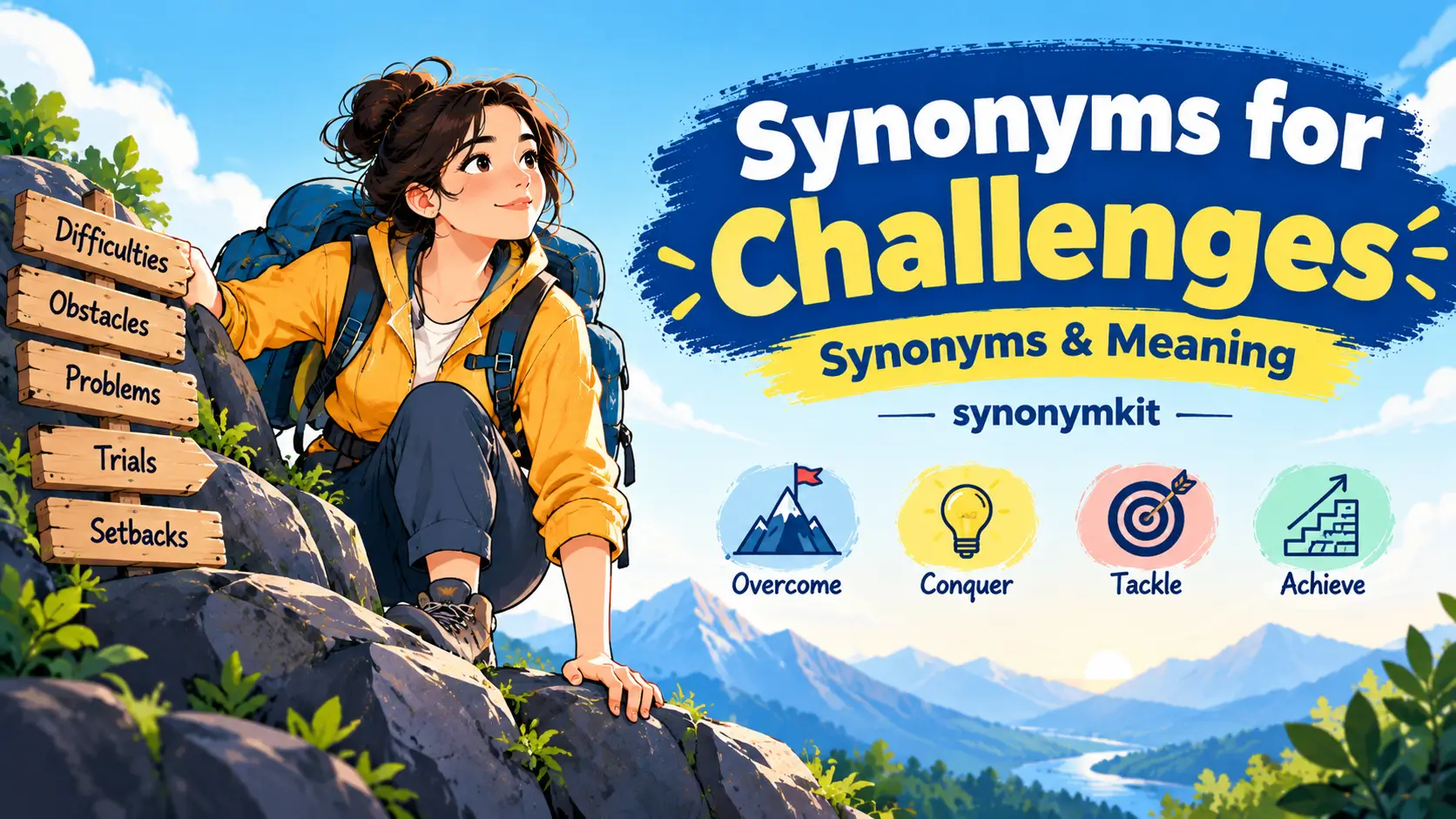
Synonyms for Challenges: 50 Powerful Words to Use Instead
A good synonym for challenges is difficulties. Other words with the same meaning include obstacles, hurdles, problems, trials, and tests. These words describe things that are hard to do or deal with. Choose the one that fits your sentence and tone best.
Maya stared at her essay. She had typed the word “challenges” four times in one paragraph, and each one sounded flatter than the last.
So she changed “Our team had many challenges” to “Our team overcame several hurdles.” Suddenly, the sentence felt alive. Small swaps like this make writing smoother.
“The difference between the almost right word and the right word is really a large matter.” Mark Twain
Finding the right word helps almost everyone. Students can make essays sound smarter. Bloggers can keep readers interested.
Content writers can avoid boring repetition. Daily English users can explain problems more clearly at work or at home.
Every entry below has a simple meaning and two short examples, so you can start using these words today.
“Difficulties strengthen the mind, as labor does the body.” Seneca
1. Difficulties
- Meaning: Things that are hard to do or hard to deal with.
- Examples: She faced many difficulties in her first year. We solved the difficulties as a team.
2. Obstacles
- Meaning: Things that block your way and stop you from moving forward.
- Examples: A fallen tree was the first obstacle today. Fear is the biggest obstacle for many learners.
3. Hurdles
- Meaning: Small barriers you must jump over to reach your goal.
- Examples: Passing the exam was her last hurdle. Every new business faces a few hurdles.
4. Problems
- Meaning: Situations that cause worry and need to be fixed soon.
- Examples: My phone has a few strange problems. Math problems seem easier after some practice.
5. Trials
- Meaning: Hard experiences that test how strong or patient you are.
- Examples: Her trials made her a stronger person. He never complained about his many trials.
6. Tests
- Meaning: Hard moments that show what you are really made of.
- Examples: Moving abroad was a real test for him. Every test taught us something valuable today.
7. Struggles
- Meaning: Long efforts to deal with something hard or painful.
- Examples: Her struggles with shyness slowly faded away. Many students share the same daily struggles.
8. Hardships
- Meaning: Times of great difficulty, often with little money or comfort.
- Examples: Their family survived years of hardships together. He rose above hardships and finished college.
9. Barriers
- Meaning: Things that keep people from getting or doing something.
- Examples: Language barriers made travel a bit harder. She worked to remove barriers for new students.
10. Setbacks
- Meaning: Events that slow your progress or make things worse.
- Examples: The team had one setback after another. A small setback should not stop you.
11. Roadblocks
- Meaning: Sudden problems that stop your plan from moving ahead.
- Examples: We hit a roadblock during the project. Money was the main roadblock for them.
12. Complications
- Meaning: New problems that make a situation harder than before.
- Examples: Weather caused complications for our flight home. The surgery went well without any complications.
13. Predicaments
- Meaning: Tricky situations where it is hard to choose what to do.
- Examples: Losing his keys put him in a predicament. She laughed about her funny predicament later.
14. Dilemmas
- Meaning: Hard choices between two options that both have drawbacks.
- Examples: Moral dilemmas appear in many great stories. She talked through her dilemmas with a friend.
15. Adversities
- Meaning: Hard times or bad luck that you must live through.
- Examples: Strong people grow stronger through adversities, not comfort. He overcame adversities with courage and hope.
16. Tribulations
- Meaning: Serious troubles that cause suffering over a long time.
- Examples: The novel follows a hero’s many tribulations. They shared stories of their early tribulations.
17. Ordeals
- Meaning: Painful or scary experiences that are hard to get through.
- Examples: The long hike felt like an ordeal. She survived two ordeals in one year.
18. Snags
- Meaning: Small hidden problems that appear and slow you down.
- Examples: We hit a snag with the payment page. Every plan has a few small snags.
19. Hitches
- Meaning: Minor problems that cause a short delay or trouble.
- Examples: The event ran without a single hitch. A few hitches slowed down the launch.
20. Stumbling Blocks
- Meaning: Things that make it hard to move ahead with a plan.
- Examples: Spelling was his biggest stumbling block in school. Fear of failure can become a stumbling block.
21. Impediments
- Meaning: Things that slow down or block progress or movement.
- Examples: Lack of sleep creates impediments to learning. She worked around each impediment with patience.
22. Hindrances
- Meaning: Things that make it harder for someone to do something.
- Examples: Noise is a hindrance when I study. Extra rules can be hindrances to creative work.
23. Pitfalls
- Meaning: Hidden dangers or mistakes that are easy to fall into.
- Examples: Our guide warned us about common pitfalls. Online shopping has a few hidden pitfalls too.
24. Headaches
- Meaning: Annoying problems that cause worry and take up your time.
- Examples: Late deliveries cause constant headaches for shops. Tax season brings headaches for many families.
25. Puzzles
- Meaning: Confusing problems that need careful thinking before you can solve them.
- Examples: Life’s puzzles keep our minds sharp and active. He enjoys solving the puzzles at work.
26. Battles
- Meaning: Long, hard fights against something that is difficult to beat.
- Examples: She fought many battles to learn English. His battles with fear made him braver.
27. Pressures
- Meaning: Strong demands that make you feel stressed or tense.
- Examples: Exam pressures can wear students out quickly. He handles work pressures with a calm mind.
28. Quandaries
- Meaning: States of not knowing what to do in a hard situation.
- Examples: Her quandaries kept her awake all night. He shared his career quandaries with his mentor.
29. Troubles
- Meaning: Problems or worries that make daily life harder than usual.
- Examples: Money troubles weighed on the whole family. She forgot her troubles while she danced.
30. Issues
- Meaning: Problems or questions that people need to talk about.
- Examples: We discussed the issues before the meeting. Tech issues delayed our online class today.
31. Crises
- Meaning: Times of great danger or trouble that need fast action.
- Examples: The city handled two crises in one week. Calm leaders stay steady during major crises.
32. Bottlenecks
- Meaning: Points where progress slows down because too much is happening.
- Examples: Slow approvals created bottlenecks in our process. We fixed the bottlenecks to finish faster.
33. Hazards
- Meaning: Risks that could cause harm, loss, or serious trouble later.
- Examples: Wet floors are hazards in a busy kitchen. Hikers should watch for hazards on the trail.
34. Complexities
- Meaning: Parts of a situation that make it hard to understand.
- Examples: Teachers explain the complexities of grammar slowly. She learned the complexities of running a shop.
35. Demands
- Meaning: Heavy needs or tasks that ask a lot of you.
- Examples: The demands of nursing school were intense. He balanced work demands and family time.
36. Burdens
- Meaning: Heavy duties or worries that are hard to carry.
- Examples: She carried many family burdens without complaining. Sharing burdens makes them feel much lighter.
37. Strains
- Meaning: Stress or pressure that tires your body or mind.
- Examples: Long shifts put strain on her health. Money strains can hurt even close friendships.
38. Tasks
- Meaning: Pieces of hard work that you are asked to finish.
- Examples: Tough tasks teach us patience and focus. He completed three hard tasks before noon.
39. Undertakings
- Meaning: Big or serious jobs that take time and great effort.
- Examples: Starting a farm is one of life’s big undertakings. Her undertakings required courage and long planning.
40. Contests
- Meaning: Competitions where you must beat others to win something.
- Examples: Spelling contests push kids to learn more words. She prepared for the contest for months.
41. Confrontations
- Meaning: Angry or serious meetings between people who strongly disagree with each other.
- Examples: He avoided confrontations at work whenever possible. Calm talk can prevent many heated confrontations.
42. Disputes
- Meaning: Strong disagreements about something that people cannot easily settle.
- Examples: The neighbors settled their disputes over coffee. Clear rules reduce disputes among team members.
43. Objections
- Meaning: Reasons given to show that you disagree with something.
- Examples: She answered all objections with calm facts. Several objections came up during the meeting.
44. Feats
- Meaning: Hard actions that need great skill, strength, or courage.
- Examples: Climbing Everest is one of the greatest feats. The young swimmer achieved several amazing feats.
45. Concerns
- Meaning: Worries about things that might go wrong in the future.
- Examples: Parents shared their concerns with the teacher. Safety concerns delayed the opening of the park.
46. Constraints
- Meaning: Limits that stop you from doing things the way you want.
- Examples: Time constraints forced us to shorten the trip. She worked well within tight budget constraints.
47. Limitations
- Meaning: Weak points or edges that keep you from doing more.
- Examples: Know your limitations before taking on more work. He turned his limitations into real strengths.
48. Tough Spots
- Meaning: Hard moments in life when things do not go well.
- Examples: Good friends help you through tough spots. We hit a few tough spots on the project.
49. Rough Patches
- Meaning: Short periods of time when life feels hard and unlucky.
- Examples: Every friendship goes through a few rough patches. She stayed positive during her rough patches.
50. Growing Pains
- Meaning: Small problems that come with change, growth, or learning something new.
- Examples: The young company felt some growing pains. Learning to blog has a few growing pains.
Synonyms for Challenges in Life
Life brings all kinds of hard moments, and the words you choose can change the mood. For personal stories, try hardships, struggles, trials, or rough patches. These words sound real and human.
Use adversities when you want a stronger, more serious tone. A friend might say “tough spots” in casual talk. Pick the word that matches how heavy the situation feels to you.
Positive Synonyms for Challenges
Not every challenge needs a heavy word. If you want an upbeat tone, try tests, feats, growing pains, or even opportunities. These words show that hard moments can help us improve. A coach might call a game a test of skill.
A teacher might call a project a chance to grow. Positive wording keeps readers hopeful and motivated.
“The limits of my language mean the limits of my world.” Ludwig Wittgenstein
Synonyms for Challenges or Obstacles
These two words are close, but they are not twins. A challenge invites you to try harder, while an obstacle simply blocks your path. Good matches for obstacles include barriers, hurdles, roadblocks, and impediments.
Use them when something stops progress. Use tests or feats when the task pushes you to grow. Knowing the difference makes your writing clearer and more exact.
Academic Synonyms for Challenges
In essays and reports, strong word choice shows careful thinking. Try complexities, constraints, limitations, adversities, or impediments. These words sound calm and professional.
For example, you might write that researchers faced time constraints or that teachers faced growing complexities.
Avoid casual choices like “headaches” or “snags” in school writing. Clear, formal words help your ideas feel trusted and serious.
Synonyms for Challenges (Verb)
As a verb, challenge means to test, question, or invite someone to compete. Useful synonyms include dispute, question, defy, confront, contest, and dare. A student might question an answer.
A coach might dare a team to try harder. Lawyers often dispute claims in court. Choose the verb that matches how strong you want your action to sound.
FAQ
What can I use instead of challenges?
You can use difficulties, obstacles, hurdles, problems, or hardships, depending on your sentence. Each word has a slightly different feel. Difficulties sound calm and general. Obstacles suggest something blocking your path.
Hardships point to painful times. If you want a gentler tone, try tests or growing pains. Read your sentence out loud and choose the word that sounds most natural.
What is the best synonym for challenge?
There is no single best choice because it depends on your meaning. For a general noun, difficulty is the safest pick. For something blocking your goal, obstacle works well. When a task pushes your skill, test or feat fits nicely.
As a verb, dispute or question often works. Match the word to the situation, and your writing will sound clear and confident.
What is another word for struggles and challenges?
A smooth pair is hardships and obstacles. You can also say trials and tribulations, difficulties and setbacks, or hurdles and hardships. These pairs avoid repeating the same idea twice.
Try to mix one word about feelings, like struggles or hardships, with one about outside problems, like barriers or roadblocks. That balance makes your sentence feel rich and complete.
What’s another word for facing challenges?
Instead of “facing challenges,” you can say confronting difficulties, tackling obstacles, overcoming hurdles, dealing with problems, or working through setbacks. Each phrase adds a little action to the sentence.
Tackling sounds bold and active. Dealing with sounds calm and practical. Working through feels patient and steady. Choose the phrase that matches the effort you want your reader to feel.
Conclusion
Learning synonyms is one of the easiest ways to grow as a writer. A strong word list helps you avoid repeating yourself, and it lets you match your tone to your reader. In writing, fresh words keep essays and blog posts lively.
Speaking becomes easier too, because synonyms help you sound calm, clear, and confident.
In everyday communication, the right word can turn a stressful moment into an honest, helpful talk.
“Words are, of course, the most powerful drug used by persons.” Rudyard Kipling
Now it is your turn to practice. Pick five words from this list and use them this week. Try them in an email to a teacher or coworker.
Add them to an essay or a journal page. Say them out loud during a normal conversation. The more you use them, the more natural they will feel, and soon you will not need the list at all.
“Vigorous writing is concise.” William Strunk Jr.
Remember that every challenge has many names, and each name tells a slightly different story. Choose carefully, stay curious, and keep building your vocabulary. You have got this!

Sarah is a freelance content writer and grammar enthusiast with over 6 years of experience helping students and bloggers write with more clarity. She joined SynonymKit to make vocabulary-building simple and accessible for everyone, one word list at a time.