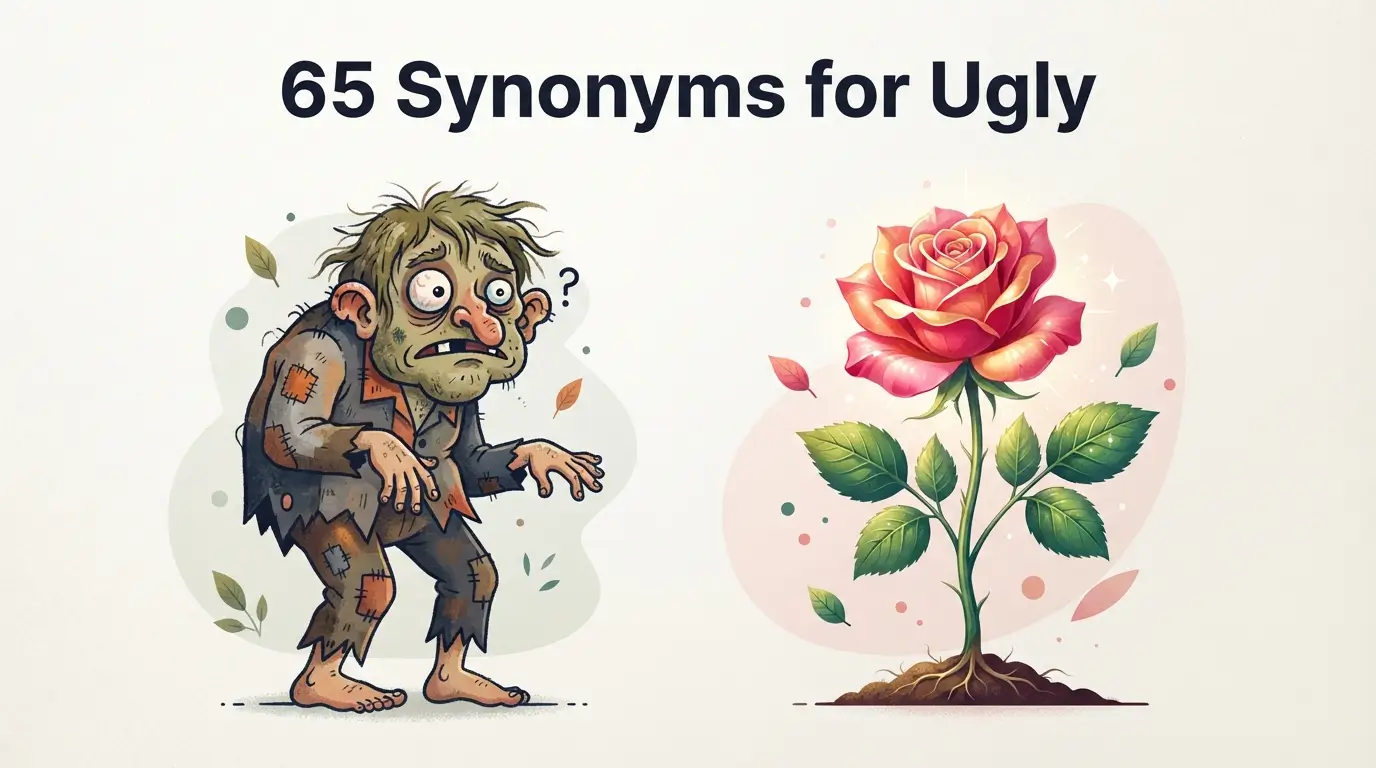
65 Synonyms for Ugly: The Ultimate Word List for Writers and Word Lovers
A synonym for ugly is any word that describes something unpleasant, unattractive, or hard to look at. Common examples include hideous, unsightly, grotesque, homely, and repulsive. These words help writers describe appearance, feelings, and reactions without repeating the same plain word “ugly” over and over.
Picture this: you are halfway through an essay, and the word “ugly” has already shown up four times. The sentence feels flat. The story feels stuck. This happens to almost every writer at some point, and it is exactly why a strong list of synonyms for ugly can save a piece of writing from sounding repetitive and dull.
Here is one simple example. Instead of writing “the old barn was ugly,” a writer could say “the old barn was shabby and falling apart,” and suddenly the reader can picture it clearly.
For students, these words build stronger essays and better grades. The bloggers, fresh vocabulary keeps readers scrolling instead of clicking away. For daily English users, new words make everyday conversation more colorful and precise.
“Words are, of course, the most powerful drug used by people.”
That power grows even stronger when a writer picks the exact right word for the exact right moment.
“The difference between the almost right word and the right word is really a large matter.”
Main List: 65 Synonyms for Ugly
1. Hideous
Meaning: This word means something looks very scary and unpleasant to see.
Examples: The hideous monster hid inside the dark cave. Nobody wanted to look at the hideous painting again.
2. Unsightly
Meaning: This word describes something not nice to look at.
Examples: The unsightly stain covered half the old carpet. She hid the unsightly scar with a scarf.
3. Grotesque
Meaning: This word means twisted, strange, and unpleasant to look at.
Examples: The grotesque statue scared every child at the fair. His grotesque mask made the whole room quiet.
4. Repulsive
Meaning: This word means something that makes you want to look away fast.
Examples: The repulsive smell came from the moldy fridge. Everyone found the repulsive bug impossible to touch.
5. Homely
Meaning: This word means plain and not very attractive at all.
Examples: The homely house needed fresh paint and new windows. Her homely dress looked plain next to others.
6. Unattractive
Meaning: This word means not pleasing or nice to see.
Examples: The unattractive wallpaper made the room feel small. He wore an unattractive jacket to the interview.
7. Plain
Meaning: This word means simple and not very special looking.
Examples: The plain cake had no frosting or decoration. Her plain shoes matched nothing else she wore.
8. Unlovely
Meaning: This word means not pretty or pleasant in appearance.
Examples: The unlovely fence leaned sideways near the garden. His unlovely handwriting was hard to read.
9. Ill favored
Meaning: This old word means someone or something looks unpleasant.
Examples: The ill favored troll guarded the bridge every night. Villagers avoided the ill favored old inn nearby.
10. Misshapen
Meaning: This word means bent or formed in the wrong way.
Examples: The misshapen pot wobbled every time she filled it. His misshapen hat sagged on one side.
11. Disfigured
Meaning: This word means changed in a way that harms its look.
Examples: The fire disfigured the old wooden cabin badly. Rust disfigured the truck’s once shiny doors.
12. Monstrous
Meaning: This word means huge, scary, and unpleasant to look at.
Examples: The monstrous shadow crept across the bedroom wall. A monstrous creature appeared in the old comic.
13. Ghastly
Meaning: This word means shockingly unpleasant or frightening to see.
Examples: The ghastly wound needed help from a doctor. Her ghastly costume scared every trick or treater outside.
14. Gruesome
Meaning: This word means horrible, shocking, and hard to look at.
Examples: The gruesome scene appeared in the horror film. He described the gruesome accident in careful detail.
15. Horrid
Meaning: This word means very unpleasant or nasty to experience.
Examples: The horrid smell filled the entire kitchen quickly. She wore a horrid green coat to school.
16. Revolting
Meaning: This word means so unpleasant it makes you feel sick.
Examples: The revolting garbage pile sat outside all week. His revolting table manners embarrassed his family.
17. Repugnant
Meaning: This word means causing strong dislike or disgust in someone.
Examples: The repugnant odor drove everyone from the room. She found the plan repugnant and refused immediately.
18. Foul
Meaning: This word means dirty, smelly, or very unpleasant overall.
Examples: The foul water ruined the fish tank completely. A foul smell rose from the kitchen drain.
19. Distasteful
Meaning: This word means unpleasant or offensive in a mild way.
Examples: His distasteful joke made the whole table quiet. The distasteful poster was removed from the wall.
20. Unprepossessing
Meaning: This word means not attractive or impressive at first glance.
Examples: The unprepossessing shop looked small from the street. His unprepossessing look hid a brilliant mind.
21. Uncomely
Meaning: This older word means not pleasant or pretty at all.
Examples: The uncomely barn stood alone in the field. Her uncomely bonnet looked out of fashion.
22. Uncouth
Meaning: This word means rough, awkward, and lacking good manners.
Examples: His uncouth laugh echoed through the quiet library. The uncouth stranger startled everyone at the door.
23. Gross
Meaning: This word means very unpleasant, disgusting, or hard to stomach.
Examples: The gross smell came from the old lunchbox. Her little brother made a gross face.
24. Vile
Meaning: This word means extremely unpleasant, nasty, or morally wrong.
Examples: The vile swamp water smelled worse every day. His vile temper scared the whole classroom quiet.
25. Nasty
Meaning: This word means unpleasant, dirty, or unkind in some way.
Examples: The nasty puddle soaked through his brand new shoes. She gave a nasty look across the room.
26. Disgusting
Meaning: This word means causing strong dislike, sickness, or discomfort.
Examples: The disgusting mold grew across the old bread. He left a disgusting mess on the counter.
27. Offensive
Meaning: This word means upsetting, rude, or unpleasant to notice.
Examples: The offensive graffiti covered the school’s front wall. His offensive comment ruined the friendly meeting.
28. Loathsome
Meaning: This word means causing hatred, disgust, or strong dislike.
Examples: The loathsome villain plotted against the whole kingdom. Everyone avoided the loathsome swamp near town.
29. Abhorrent
Meaning: This word means hated deeply because it feels so wrong.
Examples: The abhorrent crime shocked the entire small town. She called the plan abhorrent and walked away.
30. Odious
Meaning: This word means extremely unpleasant and disliked by nearly everyone.
Examples: The odious smell chased customers from the store. His odious habits annoyed every single roommate.
31. Obnoxious
Meaning: This word means very unpleasant, loud, or annoying to others.
Examples: The obnoxious car alarm rang all night. His obnoxious jokes made the meeting drag on.
32. Repellent
Meaning: This word means causing strong dislike or a need to avoid.
Examples: The repellent smell kept bugs away from camp. Her repellent attitude pushed new friends away.
33. Forbidding
Meaning: This word means looking unfriendly, harsh, or hard to approach.
Examples: The forbidding castle stood dark against the sky. His forbidding stare stopped the children instantly.
34. Frightful
Meaning: This word means shocking, scary, or extremely unpleasant to see.
Examples: The frightful storm knocked down three old trees. Her frightful scream echoed through the empty house.
35. Dreadful
Meaning: This word means very bad, unpleasant, or upsetting somehow.
Examples: The dreadful weather ruined their long planned picnic. His dreadful spelling filled the homework page.
36. Terrible
Meaning: This word means extremely bad, unpleasant, or poorly done.
Examples: The terrible smell filled the whole school hallway. She had a terrible haircut before picture day.
37. Awful
Meaning: This word means very unpleasant, bad, or hard to enjoy.
Examples: The awful traffic made everyone late for work. His awful singing echoed through the small apartment.
38. Horrendous
Meaning: This word means shockingly bad, ugly, or hard to accept.
Examples: The horrendous mess covered the entire kitchen floor. Her horrendous mistake cost the team the game.
39. Horrific
Meaning: This word means extremely shocking, scary, or unpleasant to witness.
Examples: The horrific crash stopped traffic for several hours. Witnesses described the horrific scene in detail.
40. Unappealing
Meaning: This word means not attractive, interesting, or pleasant at all.
Examples: The unappealing lunch sat untouched on his tray. Her unappealing offer was quickly turned down.
41. Rough looking
Meaning: This word describes something looking harsh, worn, or badly made.
Examples: The rough looking shed leaned against the fence. His rough looking hands showed years of hard work.
42. Hard featured
Meaning: This word describes a face that looks stern and unattractive.
Examples: The hard featured guard never smiled at visitors. Her hard featured portrait hung in the old hall.
43. Ill shaped
Meaning: This word means formed poorly or without a pleasing shape.
Examples: The ill shaped vase wobbled on the narrow shelf. His ill shaped hat never fit quite right.
44. Warty
Meaning: This word describes something covered with small rough bumps.
Examples: The warty toad sat quietly beside the pond. A warty pickle floated inside the old jar.
45. Blotchy
Meaning: This word means marked with uneven, ugly patches of color.
Examples: The blotchy paint job ruined the garage door. Her blotchy sunburn lasted several days.
46. Scarred
Meaning: This word means marked permanently by an old injury or damage.
Examples: The scarred table showed years of family dinners. His scarred boots had walked a thousand miles.
47. Disproportionate
Meaning: This word means parts that do not match in size correctly.
Examples: The disproportionate statue had one giant arm. Her disproportionate drawing made everyone laugh kindly.
48. Lopsided
Meaning: This word means leaning unevenly to one side or another.
Examples: The lopsided cake slid right off the plate. His lopsided smile made the photo memorable.
49. Asymmetrical
Meaning: This word means not balanced or matching on both sides.
Examples: The asymmetrical haircut surprised her whole family. His asymmetrical drawing confused the art teacher.
50. Ungainly
Meaning: This word means awkward, clumsy, and not graceful in movement.
Examples: The ungainly robot tripped over its own wires. Her ungainly walk made the puppy laugh.
51. Clunky
Meaning: This word means heavy, awkward, and poorly designed overall.
Examples: The clunky old computer took forever to start. His clunky boots clattered loudly down the stairs.
52. Garish
Meaning: This word means too bright, loud, or badly matched together.
Examples: The garish curtains clashed with every other color. Her garish costume stood out at the party.
53. Tacky
Meaning: This word means cheap looking, gaudy, or lacking good taste.
Examples: The tacky souvenir shop sold plastic snow globes. His tacky tie ruined an otherwise nice suit.
54. Gaudy
Meaning: This word means too showy, bright, or over decorated somehow.
Examples: The gaudy necklace sparkled under every single light. Her gaudy wallpaper covered the small kitchen.
55. Tasteless
Meaning: This word means lacking style, class, or good visual judgment.
Examples: The tasteless decorations covered the entire office lobby. His tasteless joke fell flat at dinner.
56. Ratty
Meaning: This word means worn out, torn, or looking very shabby.
Examples: The ratty blanket had holes in every corner. His ratty sneakers finally fell apart completely.
57. Shabby
Meaning: This word means old, worn, and not well kept anymore.
Examples: The shabby motel sign flickered above the highway. Her shabby coat barely kept out the cold.
58. Deformed
Meaning: This word means shaped wrongly because of damage or growth.
Examples: The deformed branch grew sideways from the trunk. His deformed action figure lost its right arm.
59. Malformed
Meaning: This word means badly shaped from the very beginning.
Examples: The malformed clay pot cracked during the firing. Her malformed sketch confused the whole art class.
60. Freakish
Meaning: This word means strange, unnatural, and unpleasant to look at.
Examples: The freakish weather turned the sky bright green. His freakish costume scared the younger children.
61. Ogreish
Meaning: This word describes something looking large, rough, and monster like.
Examples: The ogreish giant stomped across the story’s pages. His ogreish grin frightened the smallest children.
62. Beastly
Meaning: This word means unpleasant, harsh, or animal like in a bad way.
Examples: The beastly wind tore leaves off every tree. His beastly mood ruined the family dinner.
63. Wretched
Meaning: This word means miserable, poor, or unpleasant in condition.
Examples: The wretched shack barely survived the winter storm. Her wretched cold kept her home all week.
64. Grim
Meaning: This word means harsh, bleak, or unpleasant to look at.
Examples: The grim hallway had flickering lights and peeling paint. His grim expression worried everyone at the table.
65. Unsavory
Meaning: This word means unpleasant, distasteful, or slightly dishonest somehow.
Examples: The unsavory alley smelled like old fish. His unsavory reputation kept new clients away.
“There is no such thing as a synonym; and a doctrine of synonyms is a doctrine of subtle differences.”
These small shades of meaning are exactly why picking the right synonym matters more than picking any synonym at random.
Synonyms For Ugly Person
Describing a person’s looks needs extra care, so softer or more playful words work best. Common choices include homely, unattractive, plain, hard featured, and unprepossessing. Writers often reach for these in fiction, character sketches, or casual storytelling rather than in real conversation, since talking about someone’s appearance can hurt feelings.
- Fiction writers use these words to build vivid, memorable characters.
- Comedy scripts often use exaggerated versions for laughs.
- Everyday speech usually avoids harsh terms out of simple kindness.
Funny Synonyms For Ugly
Sometimes ugly needs a lighter, funnier touch instead of a harsh one. Words like butt ugly, fugly, rough looking, busted, and hideous (said jokingly) show up often in slang and memes. These playful versions work great among friends, in captions, or in casual online chats where the tone stays light.
- Memes and captions love short, punchy slang words.
- Friend groups often use these terms as harmless teasing.
- Comedy writing uses them to add quick, easy laughs.
Fancy Synonyms For Ugly
For formal essays, novels, or academic writing, fancier words sound more polished. Try grotesque, unprepossessing, ill favored, repugnant, or disfigured. These words carry weight and history, making descriptions feel literary instead of simple. They fit perfectly into gothic fiction, poetry, and detailed character or setting descriptions.
- Literary fiction leans on these words for atmosphere.
- Academic essays sound more advanced with varied vocabulary.
- Poetry often uses these words for stronger imagery.
Synonyms For Ugly In Spanish
Spanish speakers describe ugly with words like feo (masculine) and fea (feminine), the most common everyday choice. Other options include horrible, espantoso (dreadful), and repugnante (repugnant). Just like English, softer words exist too, such as poco atractivo, meaning “not very attractive,” for gentler, more polite conversation.
- Feo/fea works for almost any casual situation.
- Espantoso fits scarier or more dramatic descriptions well.
- Poco atractivo softens the tone for polite settings.
Synonyms And Antonyms For Ugly
Every synonym needs a matching opposite to fully understand the word. Antonyms for ugly include beautiful, pretty, attractive, lovely, and gorgeous. Placing synonyms and antonyms side by side helps readers, students, and writers understand tone, strength, and context, making word choice faster and far more accurate in everyday writing.
- Synonyms: hideous, homely, unsightly, grotesque, repulsive.
- Antonyms: beautiful, lovely, attractive, gorgeous, stunning.
- Comparing both lists builds stronger, more balanced vocabulary skills.
Frequently Asked Questions
How do you say “ugly” nicely?
Softer options include plain, homely, unconventional looking, or not conventionally attractive. These phrases describe appearance honestly without sounding harsh or hurtful. Many writers and speakers choose these gentler words in reviews, casual talk, or character descriptions when kindness matters more than blunt honesty about looks.
What’s slang for ugly?
Common slang includes fugly, busted, rough, janky looking, and butt ugly. These words mostly appear in casual speech, texting, or online comments among friends.
They carry a joking or exaggerated tone, so they rarely fit formal writing, job settings, or polite conversation with strangers or elders.
What’s a fancy word for disgusting?
Elegant alternatives include repugnant, abhorrent, odious, loathsome, and repellent. These words appear often in literature, formal essays, and detailed descriptive writing. They express strong dislike with a more sophisticated tone than the plain, everyday word “disgusting,” making sentences feel more advanced and intentional.
What’s a worse word for “ugly”?
Stronger, harsher options include hideous, grotesque, monstrous, repulsive, and horrendous. These words push far past plain or unattractive, describing something shocking or deeply unpleasant.
Writers use them for dramatic effect in horror stories, intense descriptions, or moments needing maximum emotional impact.
Conclusion
Learning new synonyms for ugly does more than fill up a vocabulary list. It changes how clearly a person can write, speak, and connect with others. A stronger word choice can turn a flat sentence into a vivid picture, and it can turn a boring essay into one that actually holds a reader’s attention from start to finish.
Try using a few of these words this week. Swap “ugly” for shabby in an email, or grotesque in a short story. Use homely instead of “ugly” in a casual conversation, and notice how the tone shifts. Small changes like these build big habits over time, and better habits build better writers.
“To limit the press is to insult a nation; to prohibit reading of certain books is to declare the inhabitants to be either fools or slaves.”
Words shape how people think, speak, and understand the world around them.
“The limits of my language mean the limits of my world.”
Keep exploring new words. Keep writing with intention. Every synonym learned today becomes a tool ready for tomorrow’s sentence, story, or conversation.

Sarah is a freelance content writer and grammar enthusiast with over 6 years of experience helping students and bloggers write with more clarity. She joined SynonymKit to make vocabulary-building simple and accessible for everyone, one word list at a time.