Synonyms for Angry: 50 Better Words to Describe Anger
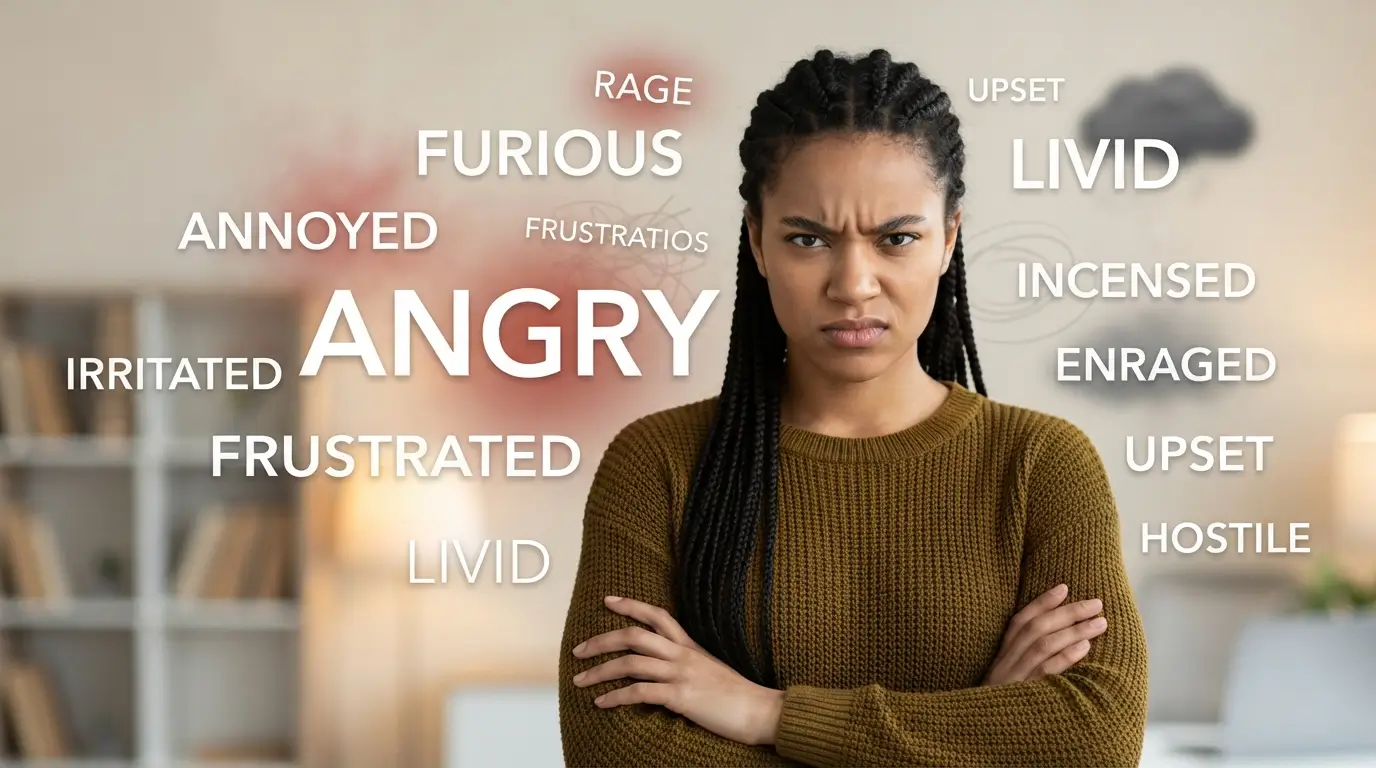
Common synonyms for angry include mad, furious, annoyed, irritated, upset, enraged, frustrated, and cross. The best choice depends on how strong the feeling is and the situation.
Some words describe mild anger, while others show very strong anger or a serious emotional reaction.
Maya read the message twice and put her phone down. Her friend had canceled their plans again. She felt angry, but that one word did not fully explain her mood. Maybe she was annoyed, frustrated, or even furious.
Choosing the right word can make your meaning clearer. A small argument may need a mild word. A serious conflict may need a stronger one.
For students, these words can make essays more interesting. For bloggers, they can make writing less repetitive.
Content writers, they help create clear and natural descriptions. For daily English users, they make conversations more precise.
“Words can change the way we understand a feeling.”
Think about a driver who cuts in front of you. You may feel annoyed, irritated, or upset. Your word choice shows how strong your reaction is.
“The right word helps your message feel clear and natural.”
Top 10 Synonyms for Angry: Mad, Furious, Annoyed, Irritated, Upset, Enraged, Frustrated, Livid, Outraged, Cross.
1. Mad
- Meaning: Mad means feeling angry about something that happened.
- Examples: She was mad about the delay.
He got mad after losing.
2. Furious
- Meaning: Furious means feeling extremely angry and unable to stay calm.
- Examples: Dad was furious about the damage.
She looked furious after hearing.
3. Annoyed
- Meaning: Annoyed means slightly angry because something bothers you.
- Examples: I felt annoyed by the noise.
He looked annoyed during class.
4. Irritated
- Meaning: Irritated means slightly angry because something keeps bothering you.
- Examples: She felt irritated by repeated questions.
He became irritated during traffic.
5. Enraged
- Meaning: Enraged means extremely angry because something feels very wrong.
- Examples: The unfair decision left him enraged.
She became enraged after reading.
6. Frustrated
- Meaning: Frustrated means angry because something is difficult or not working.
- Examples: He felt frustrated with the computer.
She was frustrated by slow progress.
7. Upset
- Meaning: Upset means unhappy or angry because something hurt your feelings.
- Examples: She was upset about the argument.
He felt upset after leaving.
8. Cross
- Meaning: Cross means slightly angry, especially in British English.
- Examples: Mom sounded cross at dinner.
He became cross with his brother.
9. Irrate
- Meaning: Irrate means to make someone angry or bothered.
- Examples: The loud music began to irritate her.
His comments irritated everyone nearby.
10. Outraged
- Meaning: Outraged means extremely angry about something unfair or unacceptable.
- Examples: People were outraged by the decision.
She felt outraged by their actions.
11. Resentful
- Meaning: Resentful means angry because you feel treated unfairly.
- Examples: He felt resentful about the promotion.
She became resentful after repeated criticism.
12. Agitated
- Meaning: Agitated means worried, upset, or angry and unable to relax.
- Examples: He looked agitated during the meeting.
She became agitated after waiting.
13. Hostile
- Meaning: Hostile means openly unfriendly, angry, or ready to argue.
- Examples: His hostile tone worried everyone.
She gave him a hostile look.
14. Bitter
- Meaning: Bitter means angry because you still remember something painful.
- Examples: He sounded bitter about losing.
She felt bitter after their breakup.
15. Vexed
- Meaning: Vexed means annoyed or worried by something difficult.
- Examples: She was vexed by the mistake.
He looked vexed after checking.
16. Exasperated
- Meaning: Exasperated means very annoyed after dealing with repeated problems.
- Examples: She felt exasperated by delays.
He sounded exasperated during the call.
17. Incensed
- Meaning: Incensed means extremely angry about something unfair or offensive.
- Examples: He was incensed by the accusation.
She became incensed after hearing.
18. Wrathful
- Meaning: Wrathful means showing very strong anger toward someone or something.
- Examples: The king gave a wrathful speech.
His wrathful expression scared them.
19. Livid
- Meaning: Livid means extremely angry about something serious.
- Examples: She was livid about the lie.
He looked livid after reading.
20. Fuming
- Meaning: Fuming means being very angry and showing strong frustration.
- Examples: She was fuming after the meeting.
He left the room fuming.
21. Seething
- Meaning: Seething means feeling intense anger that you try to hide.
- Examples: He was seething with anger.
She sat quietly, seething inside.
22. Boiling
- Meaning: Boiling means feeling extremely angry, often after unfair treatment.
- Examples: I was boiling after that call.
She felt boiling with anger.
23. Raging
- Meaning: Raging means showing or feeling powerful and uncontrolled anger.
- Examples: He was raging over the loss.
She came home raging.
24. Infuriated
- Meaning: Infuriated means made extremely angry by something upsetting.
- Examples: The delay infuriated the passengers.
His rude reply infuriated her.
25. Incensed
- Meaning: Incensed means deeply angry because something seems wrong or insulting.
- Examples: The workers were incensed by cuts.
She felt incensed by his words.
26. Displeased
- Meaning: Displeased means unhappy or mildly angry about something.
- Examples: The teacher was displeased with him.
Dad looked displeased after dinner.
27. Aggravated
- Meaning: Aggravated means annoyed or angry because of repeated trouble.
- Examples: The delay aggravated the travelers.
She felt aggravated by errors.
28. Provoked
- Meaning: Provoked means made angry because someone caused a strong reaction.
- Examples: His comment provoked her anger.
The unfair joke provoked him.
29. Offended
- Meaning: Offended means hurt or angry because someone acted disrespectfully.
- Examples: She felt offended by his joke.
He was offended by their remarks.
30. Disgruntled
- Meaning: Disgruntled means unhappy and annoyed about something you dislike.
- Examples: The customer sounded disgruntled today.
Several workers became disgruntled after changes.
31. Grumpy
- Meaning: Grumpy means easily annoyed and unpleasant because you feel unhappy.
- Examples: Dad gets grumpy when tired.
She seemed grumpy this morning.
32. Testy
- Meaning: Testy means easily annoyed and likely to respond angrily.
- Examples: He became testy during questions.
She sounded testy on the phone.
33. Short tempered
- Meaning: Short tempered means becoming angry quickly over small problems.
- Examples: My boss can be short tempered.
He gets short tempered when stressed.
34. Snappy
- Meaning: Snappy means speaking in a quick, rude, or angry way.
- Examples: She gave me a snappy reply.
He sounded snappy after work.
35. Touchy
- Meaning: Touchy means easily upset or angry about certain subjects.
- Examples: He is touchy about money.
She became touchy during the discussion.
36. Chafed
- Meaning: Chafed means annoyed because something feels unfair or uncomfortable.
- Examples: He chafed at the new rules.
She chafed under strict limits.
37. Displeased
- Meaning: Displeased means unhappy because something did not meet your expectations.
- Examples: The manager looked displeased today.
She was displeased with the results.
38. Aggrieved
- Meaning: Aggrieved means angry because you believe you were treated unfairly.
- Examples: He felt aggrieved by the ruling.
She sounded aggrieved during the meeting.
39. Indignant
- Meaning: Indignant means angry because something seems unfair or insulting.
- Examples: She sounded indignant after the accusation.
He became indignant about the claim.
40. Piqued
- Meaning: Piqued means slightly annoyed or offended by something.
- Examples: He seemed piqued by her comment.
She looked piqued after hearing.
41. Rankled
- Meaning: Rankled means caused lasting anger or annoyance.
- Examples: The unfair remark rankled him.
Her criticism rankled for weeks.
42. Choleric
- Meaning: Choleric describes someone who becomes angry very easily.
- Examples: His choleric nature caused problems.
The choleric manager often shouted.
43. Splenetic
- Meaning: Splenetic means showing a strong and unpleasant angry mood.
- Examples: He wrote a splenetic letter.
Her splenetic reply surprised everyone.
44. Perturbed
- Meaning: Perturbed means worried, bothered, or mildly angry about something.
- Examples: She looked perturbed by the news.
He seemed perturbed during lunch.
45. Discontented
- Meaning: Discontented means unhappy because you are not satisfied with something.
- Examples: Workers felt discontented with changes.
She became discontented with service.
46. Churlish
- Meaning: Churlish means rude or unfriendly because of an angry mood.
- Examples: His churlish reply ended the discussion.
She gave a churlish response.
47. Belligerent
- Meaning: Belligerent means acting aggressively and showing readiness to fight.
- Examples: The man became belligerent quickly.
His belligerent behavior caused concern.
48. Confrontational
- Meaning: Confrontational means likely to challenge others in an angry way.
- Examples: His confrontational style caused tension.
She became confrontational during talks.
49. Apoplectic
- Meaning: Apoplectic means extremely angry and almost unable to control yourself.
- Examples: He was apoplectic over the mistake.
She became apoplectic after hearing.
50. Wrathful
- Meaning: Wrathful means filled with powerful anger and a desire for justice.
- Examples: The leader gave a wrathful warning.
His wrathful voice filled the room.
Synonyms for Very Angry
When someone is more than just angry, these words show the intensity better.
- Livid: She was livid when she found out the truth.
- Furious: He was furious about the broken promise.
- Enraged: The crowd became enraged after the announcement.
- Incensed: She felt incensed by the unfair comment.
- Apoplectic: He was apoplectic when the deal fell through.
- Seething: She sat seething, saying nothing at all.
- Boiling: I was boiling with anger after the call.
Angry Synonyms and Antonyms
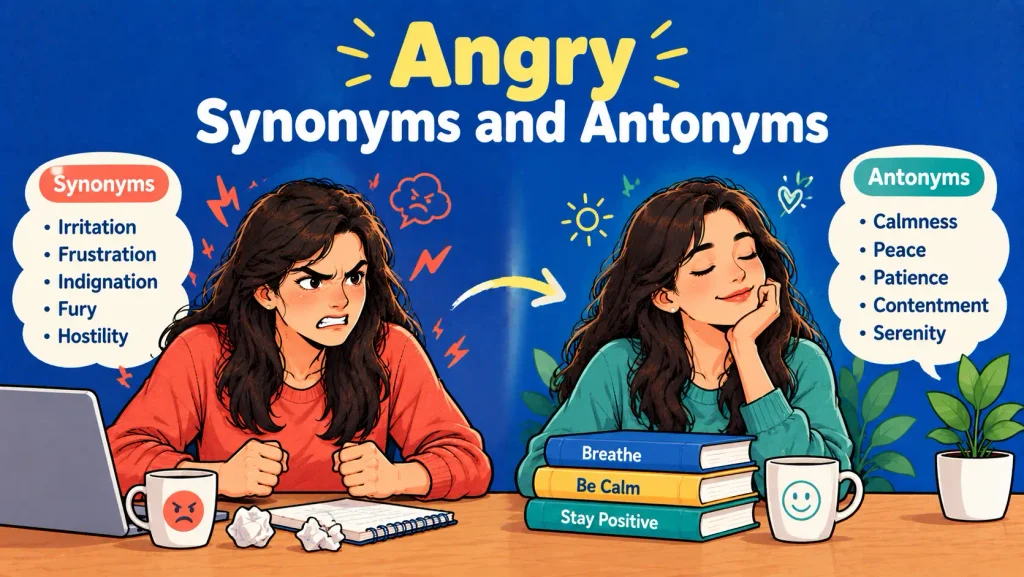
Common angry synonyms and antonyms help show both strong and weak emotional reactions. Synonyms include mad, annoyed, irritated, frustrated, furious, enraged, livid, and indignant.
Common antonyms of angry include calm, peaceful, pleased, content, relaxed, and happy. The best opposite depends on the situation. For example, calm describes someone who is not upset, while pleased describes someone who feels happy or satisfied.
Another Word for Angry and Frustrated
If you need another word for angry frustrated, useful choices include irritated, aggravated, exasperated, annoyed, agitated, and vexed. These words can describe a person who feels upset because something is difficult, delayed, unfair, or not working.
Frustrated is especially useful when a problem blocks progress. Aggravated and exasperated can show stronger annoyance after repeated problems, while irritated usually describes a milder reaction.
Synonyms for Angry and Upset
Angry and upset can overlap, but they are not always equal. Upset can suggest sadness, hurt, worry, or anger. Angry usually shows stronger irritation or displeasure.
Words such as frustrated, annoyed, hurt, distressed, and irritated can fit depending on the situation. Choosing the right word helps readers understand the exact emotion.
Synonyms for Angry in English
Common English synonyms include mad, annoyed, irritated, upset, frustrated, furious, enraged, livid, and outraged. Simple words work best in everyday conversations. Stronger words fit serious situations.
For example, “annoyed” sounds mild, while “furious” shows very strong anger. Learning these differences helps you speak and write more naturally.
Synonyms for Angry Person
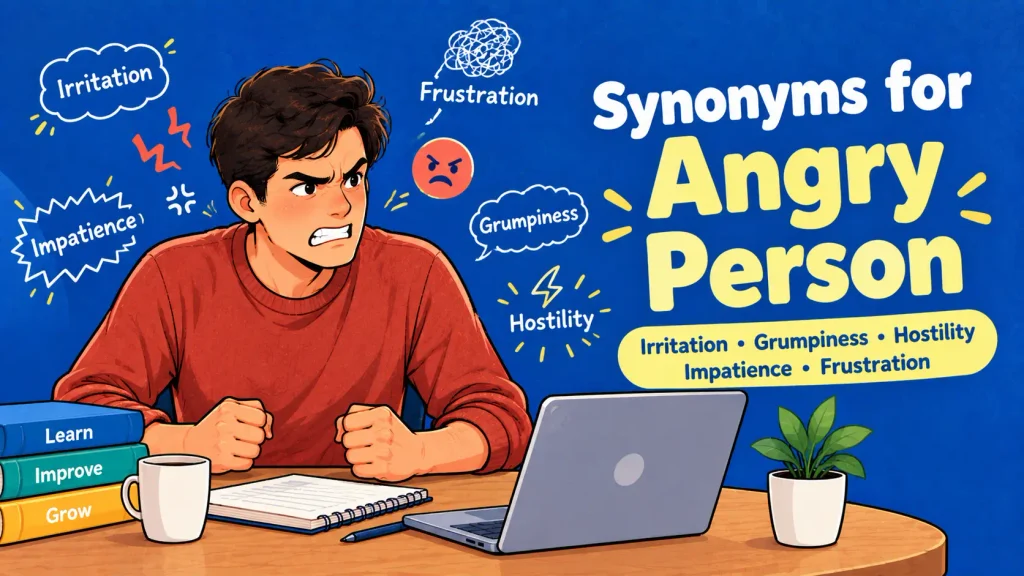
An angry person can be described as irritable, grumpy, hostile, short tempered, testy, or belligerent. The best word depends on behavior. Someone who gets angry quickly may be short tempered.
Someone who acts aggressively may be hostile or belligerent. These words can make descriptions more exact without repeating “angry” many times.
Synonyms for Angry Woman
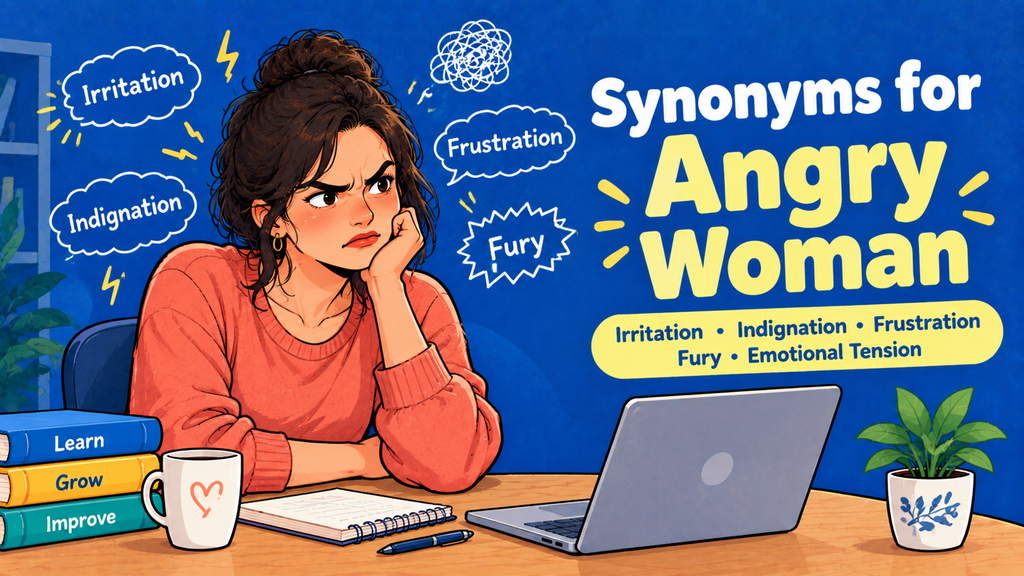
When describing an angry woman, the best synonym depends on how strong her emotion is. These words can describe irritation, frustration, strong anger, or a fierce reaction.
- Feisty: Her feisty reaction surprised the whole room.
- Fierce: She gave a fierce look when she was interrupted.
- Indignant: She sounded indignant about the unfair decision.
- Fuming: She walked in fuming after the meeting.
- Irritated: She looked irritated when the conversation continued.
- Furious: She was furious after hearing the unexpected news.
- Livid: She was livid about the unfair treatment.
- Frustrated: She felt frustrated when her concerns were ignored.
Good Synonyms for Angry
Good synonyms for angry include annoyed, irritated, frustrated, upset, mad, furious, livid, outraged, and indignant. Use mild words for small problems and stronger words for serious events.
For formal writing, “displeased,” “concerned,” or “indignant” may sound better. In casual speech, “mad,” “annoyed,” and “upset” are easy and natural choices.
Synonyms for Angry Starting with “L”
English mein “angry” ke liye “L” se shuru hone wale words kam hain, lekin ye 2 sabse relevant hain:
- Livid: extremely angry, often about something serious. She was livid about the mistake.
- Loathing (closely related, not an exact synonym): a feeling of intense dislike often paired with anger. He looked at the mess with loathing.
10 Synonyms of Angry
If you need 10 synonyms of angry, these common words can help you describe different levels of emotion: mad, annoyed, irritated, frustrated, upset, furious, enraged, livid, outraged, and indignant.
Mad is more disappointed, while annoyed and irritated describe milder anger. Frustrated fits situations where something is difficult or not working. For very strong anger, words such as furious, enraged, livid, and outraged are more powerful choices.
Frequently Asked Questions
How to say “angry” professionally?
In professional settings, choose words that describe the situation without sounding overly emotional. You can say frustrated, concerned, dissatisfied, displeased, or disappointed about the situation.
For example, instead of saying “I am angry about this mistake,” you could say, “I am concerned about this repeated error.” This sounds calm, clear, and suitable for workplace emails, meetings, and formal discussions.
How to say “angry” in a polite way?
A polite way to express anger is to focus on your feelings or the problem. Try phrases such as “I am disappointed,” “I am concerned,” “I am frustrated,” or “I am not happy with this situation.”
These expressions communicate your feelings without sounding aggressive. They are useful when speaking with coworkers, customers, teachers, family members, or other people you want to treat respectfully.
What is a better word for “angry”?
There is no single better word because the best synonym depends on the situation. Annoyed works for mild anger, while frustrated fits situations where problems block your progress. Furious, livid, and enraged show very strong anger.
In formal writing, “displeased” or “indignant” may fit better. Always choose a word that matches the strength and cause of the emotion.
What is a fancy word for mad?
Some more advanced words for “mad” include indignant, incensed, enraged, apoplectic, choleric, and splenetic. These words are less common in everyday conversation, so use them carefully.
“Indignant” works well when someone feels angry about unfair treatment. “Incensed” and “enraged” show powerful anger. “Apoplectic” is especially strong and often describes someone who is extremely angry.
What is another word for angry or frustrated?
When anger and frustration overlap, “frustrated,” “exasperated,” or “aggravated” work well. These words show anger caused by something difficult or blocked, rather than anger at a person; for example, “She felt exasperated by the constant delays.”
For example: Instead of “he was angry about the result,” you could say “he was calm about the result.”
What are some very angry synonyms in slang?
Common informal or slang expressions for being very angry include mad, pissed, heated, raging, and livid. Some expressions are much stronger or may be considered rude, so they are not suitable for professional or formal writing.
For everyday conversation, mad, heated, or raging can describe strong anger. In formal writing, words such as furious, enraged, or incensed are usually more appropriate.
Conclusion
Learning synonyms for angry gives you more ways to explain feelings clearly. Instead of using “angry” in every sentence, you can choose a word that shows the exact level of emotion. Someone can be annoyed by a small problem, frustrated by a difficult task, or furious about something serious.
These words can improve school essays, blog posts, stories, emails, and everyday conversations.
They also help you understand what other people mean when they use different words for anger.
Start with a few simple words. Practice mad, annoyed, irritated, frustrated, upset, and furious first. Then learn stronger or more formal words as your vocabulary grows.
Try using these words in short sentences. Write an email with “displeased” instead of “angry.” Use “frustrated” in an essay. Try “annoyed” in a daily conversation.
“A strong vocabulary gives you more ways to express what you mean.”
The goal is not to use difficult words all the time. The goal is to choose the right word for the right moment.
“Clear words make clear communication.”
With regular practice, these synonyms can make your English sound more natural, precise, and confident.

Amelia is a linguistics graduate and lifelong word nerd who believes the right word can change how a sentence feels. She writes and edits vocabulary guides for SynonymKit, helping readers sound sharper and more confident in their writing.