
50 Powerful Synonyms for Sadness (With Meanings and Examples)
A synonym for sadness is a word that means a low, heavy, or unhappy feeling inside a person. Common synonyms include sorrow, grief, misery, despair, and gloom.
Each word carries a slightly different shade of sadness, from mild disappointment to deep, lasting heartbreak.
Rain taps on the window. You sit alone with a cup of tea that has gone cold. The house feels quiet, and your chest feels heavy. That feeling has a name, and it has many names.
English gives us dozens of words for this one small, universal feeling, and each word paints it in a slightly different color.
A student writing an essay may need one word. A poet may need another. A friend texting after a hard day may need something softer still.
Learning these words matters. Students use them to sound sharper in essays and exams. Bloggers use them to keep readers hooked instead of bored by repeating the same word. Content writers use them to match tone, mood, and search intent.
Daily English users use them to actually say what they feel, instead of settling for “sad” every single time.
“Tears are words that need to be written.” Paulo Coelho
Words give shape to feelings that would otherwise stay stuck inside us. That is the real gift of a wide vocabulary.
“The word ‘happy’ would lose its meaning if it were not balanced by sadness.” Carl Jung
Fifty Synonyms for Sadness
1. Sorrow
- Meaning: A deep, quiet feeling of sadness, often after loss.
- Examples: She felt sorrow after her dog passed away. His voice was full of sorrow.
2. Grief
- Meaning: Strong sadness felt after someone close has died.
- Examples: Grief hit him hard that first week. She cried from pure grief.
3. Misery
- Meaning: A state of feeling very unhappy for a long time.
- Examples: The lonely winter brought him deep misery. Misery filled the empty house.
4. Despair
- Meaning: A feeling of total sadness with no hope left.
- Examples: Despair crept in during the long night. She sank into quiet despair.
5. Gloom
- Meaning: A heavy, dark sadness that fills a mood or room.
- Examples: Gloom settled over the tired office. His face showed nothing but gloom.
6. Melancholy
- Meaning: A gentle, thoughtful sadness that lasts a while.
- Examples: Old songs filled her with soft melancholy. He walked home in quiet melancholy.
7. Heartache
- Meaning: Emotional pain caused by loss, love, or disappointment.
- Examples: Losing the job caused real heartache. Her letter brought back old heartache.
8. Anguish
- Meaning: Sharp, intense sadness mixed with pain or worry.
- Examples: He cried out in silent anguish. Anguish filled her tired eyes.
9. Woe
- Meaning: A strong, old fashioned word for deep sadness or trouble.
- Examples: Tales of woe filled the letter. He spoke of his personal woe.
10. Dejection
- Meaning: A low mood after failing at something you wanted.
- Examples: Dejection showed clearly on his face. She sighed in complete dejection.
11. Despondency
- Meaning: A loss of hope that leads to deep sadness.
- Examples: Weeks of bad news caused despondency. He struggled with quiet despondency.
12. Desolation
- Meaning: A feeling of being empty, alone, and deeply sad.
- Examples: The empty house felt like desolation. Desolation filled her after the move.
13. Unhappiness
- Meaning: A simple, everyday word meaning not feeling happy.
- Examples: Unhappiness grew after the argument. Her unhappiness was easy to see.
14. Heartbreak
- Meaning: Deep sadness caused by losing love or a dream.
- Examples: The breakup caused months of heartbreak. His songs are full of heartbreak.
15. Mourning
- Meaning: Feeling and showing sadness after someone has died.
- Examples: The family wore black while mourning. She spent weeks mourning her father.
16. Dolor
- Meaning: A poetic, old word for great sadness or sorrow.
- Examples: The poem spoke of ancient dolor. His heart carried quiet dolor.
17. Wretchedness
- Meaning: A miserable, unhappy state, often with hardship too.
- Examples: Poverty brought years of wretchedness. He described his utter wretchedness.
18. Distress
- Meaning: Sadness mixed with worry, pain, or trouble.
- Examples: The news caused great distress. She called her friend in distress.
19. Dismay
- Meaning: Sadness that comes with shock or disappointment.
- Examples: He read the letter with dismay. Dismay spread across her face.
20. Blues
- Meaning: A casual word for feeling a bit sad or low.
- Examples: Monday mornings give him the blues. She’s had the blues lately.
21. Discouragement
- Meaning: Sadness that comes from losing motivation or hope.
- Examples: Discouragement grew after each rejection. He felt discouragement after failing.
22. Downheartedness
- Meaning: Feeling low, sad, and a little defeated inside.
- Examples: Downheartedness followed the lost match. She spoke with quiet downheartedness.
23. Forlornness
- Meaning: A sad, lonely feeling of being left behind.
- Examples: The old dog showed pure forlornness. Forlornness filled the empty street.
24. Hopelessness
- Meaning: Sadness that comes from believing nothing will improve.
- Examples: Hopelessness crept in during winter. He fought against total hopelessness.
25. Low Spirits
- Meaning: A common phrase meaning a sad, tired mood.
- Examples: She’s been in low spirits lately. Bad weather brings low spirits.
26. Doldrums
- Meaning: A dull, stuck feeling of low sadness or boredom.
- Examples: He’s stuck in the doldrums today. The team fell into the doldrums.
27. Funk
- Meaning: An informal word for a short, gloomy mood.
- Examples: She’s been in a funk. A bad grade put him in a funk.
28. Glumness
- Meaning: A quiet, sulky sadness shown on the face.
- Examples: Glumness spread across the classroom. His glumness lasted all evening.
29. Moroseness
- Meaning: A sad, silent, and slightly bitter mood.
- Examples: His moroseness worried his close friends. She sat in silent moroseness.
30. Sullenness
- Meaning: A sad mood shown through silence and a bad mood.
- Examples: The teenager’s sullenness annoyed his parents. Sullenness filled the quiet car.
31. Dolefulness
- Meaning: A sad, mournful look or feeling, often visible.
- Examples: Her dolefulness was clear during the speech. He spoke with real dolefulness.
32. Bleakness
- Meaning: A cold, hopeless sadness, often about the future.
- Examples: The bleakness of winter matched his mood. Bleakness filled the empty factory.
33. Dreariness
- Meaning: A dull, gray sadness that feels tiring and slow.
- Examples: The dreariness of the office wore him down. Dreariness hung over the town.
34. Lamentation
- Meaning: Loud or written expression of deep sadness and grief.
- Examples: Her lamentation echoed through the hall. The poem was full of lamentation.
35. Regret
- Meaning: Sadness felt about something you wish you hadn’t done.
- Examples: Regret filled him after the fight. She lived with quiet regret.
36. Longing
- Meaning: A sad wish for something or someone far away.
- Examples: Longing for home kept her awake. His letters were full of longing.
37. Heavy Heartedness
- Meaning: Feeling weighed down by sadness inside the chest.
- Examples: He left with heavy heartedness that morning. Heavy heartedness followed the sad news.
38. Pensiveness
- Meaning: A quiet, thoughtful sadness, often felt while reflecting.
- Examples: She sat in pensiveness by the window. Pensiveness crossed his tired face.
39. Brokenheartedness
- Meaning: Deep sadness after losing someone you loved deeply.
- Examples: Brokenheartedness followed the sudden goodbye. She wrote about her brokenheartedness.
40. Disappointment
- Meaning: Sadness felt when something does not go as hoped.
- Examples: Disappointment showed after the exam results. He hid his disappointment well.
41. Loneliness
- Meaning: A sad feeling of being alone and disconnected.
- Examples: Loneliness grew during the long winter. She battled loneliness after moving.
42. Emptiness
- Meaning: A sad, hollow feeling like something important is missing.
- Examples: Emptiness filled the quiet apartment. He felt emptiness after the loss.
43. Bitterness
- Meaning: Sadness mixed with anger about something unfair.
- Examples: Bitterness lingered after the betrayal. Her voice carried old bitterness.
44. Sorrowfulness
- Meaning: A state of being deeply and visibly sad.
- Examples: Sorrowfulness marked the whole ceremony. His sorrowfulness touched everyone nearby.
45. Heartsickness
- Meaning: A sick, heavy feeling caused by sadness or worry.
- Examples: Heartsickness kept her from sleeping. He felt heartsickness after the news.
46. Dispiritedness
- Meaning: A tired, sad mood with little energy or hope.
- Examples: Dispiritedness followed the long, hard year. The team showed clear dispiritedness.
47. Crestfallen
- Meaning: Suddenly sad and disappointed after losing or failing.
- Examples: He looked crestfallen after the loss. She felt crestfallen at the news.
48. Downcast
- Meaning: Looking or feeling sad, with eyes often lowered.
- Examples: His downcast eyes told the whole story. She walked away looking downcast.
49. Blue Mood
- Meaning: A casual phrase for a short spell of sadness.
- Examples: She’s in a blue mood today. A blue mood followed the rainy week.
50. Tearfulness
- Meaning: A sad state where a person is close to crying.
- Examples: Tearfulness took over during the movie. Her tearfulness surprised her coworkers.
Synonyms for Sadness and Grief
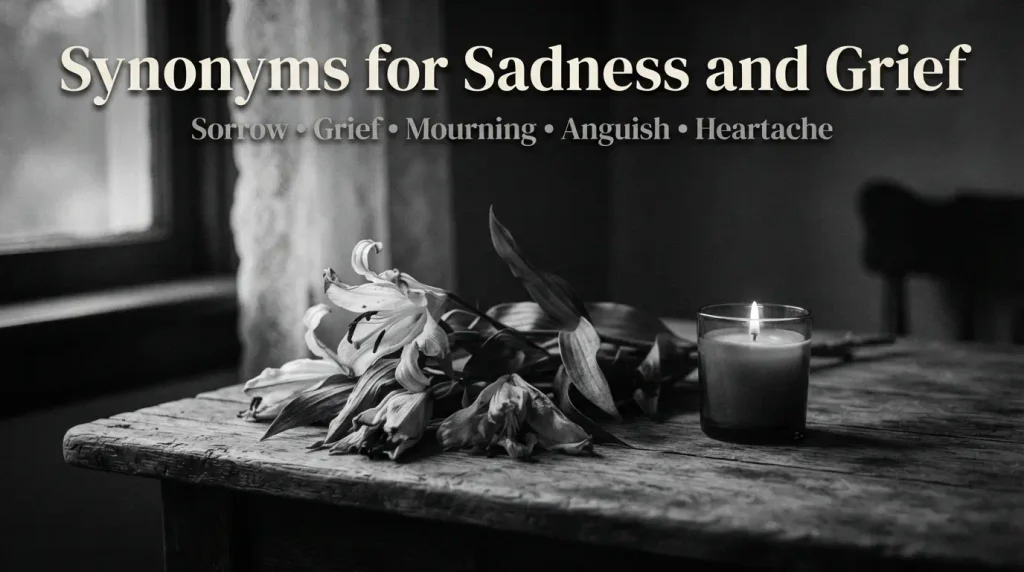
Sorrow, grief, mourning, anguish, and heartache all describe the sadness felt after loss. Grief usually points to death, while sorrow can apply more broadly to any painful event.
These words appear often in eulogies, poetry, and personal writing.
Choosing the right one depends on how deep or how recent the loss feels, since grief tends to describe something raw and immediate.
Synonyms for Sadness and Depression
Words like despondency, hopelessness, and desolation sit closer to depression than everyday sadness. They describe a heavier, longer lasting low mood rather than a passing feeling.
These terms are common in mental health writing and personal essays. Using them carefully matters, since they carry real emotional weight and should never be used lightly or for comic effect.
Fancy Synonyms for Sadness
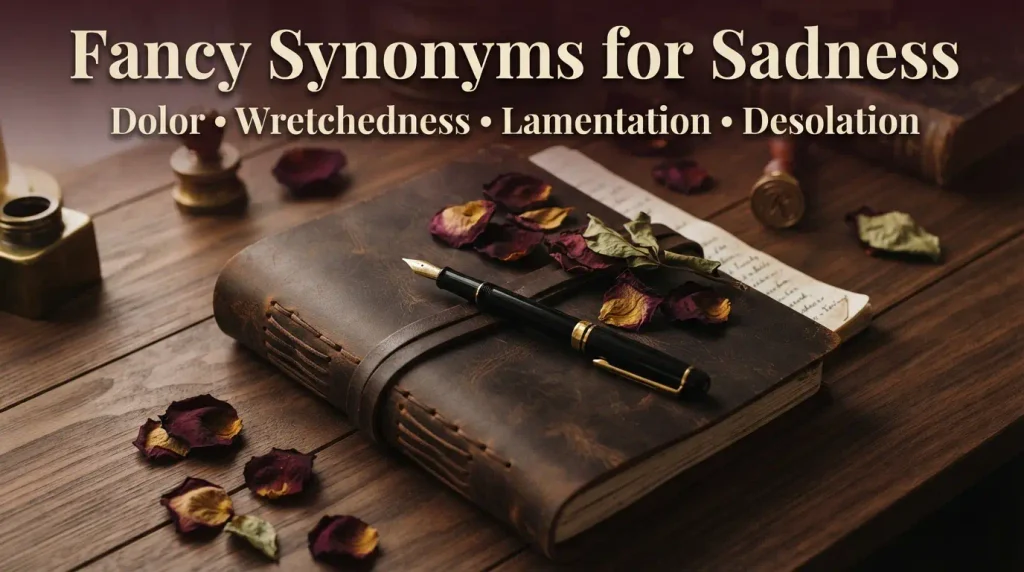
If you want to sound more formal or literary, try dolor, wretchedness, lamentation, or desolation. These words rarely show up in casual conversation but shine in essays, speeches, and creative writing.
They add weight and elegance to a sentence. A single fancy synonym can lift an ordinary paragraph into something that feels thoughtful and polished.
Poetic Synonyms for Sadness
Poets often reach for dolor, forlornness, heartsickness, and pensiveness. These words carry rhythm and emotional texture that plain words like “sad” simply cannot match.
They slow the reader down and invite reflection.
Even outside poetry, they work beautifully in song lyrics, personal journals, and reflective blog posts about loss or memory.
10 Synonyms for Sadness
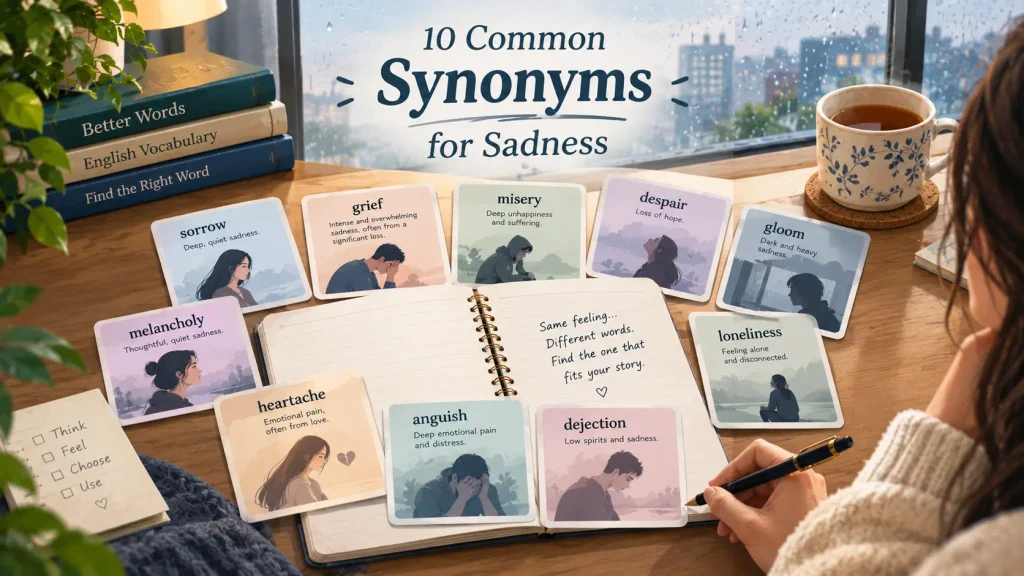
A quick list for fast reference: sorrow, grief, misery, despair, gloom, melancholy, heartache, anguish, dejection, and loneliness.
These ten cover most everyday and formal writing needs. Keep this shortlist handy for essays, emails, or creative writing when you want variety without searching through a long list of fifty options every time.
Frequently Asked Questions
What is a deeper word for sadness?
Words like anguish, despair, and desolation carry deeper, heavier meaning than simple sadness. They describe pain that feels intense, lasting, and hard to shake off.
Anguish often includes both emotional and physical tension, while despair suggests a complete loss of hope.
These words fit serious situations, not minor disappointments or small daily frustrations.
What are 10 synonyms for sadness?
Ten common choices are sorrow, grief, misery, despair, gloom, melancholy, heartache, anguish, dejection, and loneliness. Each word shifts the tone slightly, from the gentle sadness of melancholy to the sharper pain of anguish.
Picking the right one depends on context, audience, and how strong the feeling truly is.
What is a fancy word for sad?
Doleful, forlorn, disconsolate, and woeful all sound more elegant than the plain word “sad.” These adjectives work well in formal essays, literature, and creative writing. They describe the same basic feeling but add sophistication and a more refined, thoughtful tone to any sentence they appear in.
How do you say “sad” in a nice way?
Softer options include feeling low, feeling blue, downhearted, or a little melancholy. These phrases sound gentler and more caring than a blunt “sad,” especially in conversation. They work well when comforting a friend, since they acknowledge the feeling without sounding harsh, clinical, or overly dramatic.
What is another word for sadness and depression?
Words like despondency, desolation, and hopelessness describe sadness that borders on depression. These terms point to a heavier, longer-lasting low mood rather than everyday sadness, and are common in mental health writing.
What are some synonyms for sadness and pain?
Anguish, heartache, and heartsickness capture sadness combined with emotional or physical pain. Anguish especially blends sharp distress with a physical sensation, making it ideal for describing intense suffering.
What are synonyms for sadness and regret?
Regret itself blends sadness with self-blame, while longing and heavy-heartedness describe a related ache over missed chances or past choices. These words suit reflective writing about things someone wishes had gone differently.
What are some rare words for sadness?
Dolor, wretchedness, dolefulness, and downheartedness are less common in everyday speech but add a distinctive, literary flavor. They work best in creative writing, poetry, or formal essays where a fresh word choice stands out.
What is a synonym for slight sadness?
Words like wistful, blue, downhearted, or a touch of melancholy describe a mild, passing sadness rather than deep grief. These softer terms suit casual writing or everyday conversation.
Conclusion
A rich vocabulary changes how you write and speak. Instead of repeating “sad” in every sentence, you now have fifty different shades to choose from, each with its own weight, tone, and personality.
This matters in essays, where variety keeps readers engaged. It matters for blogs, where fresh word choice builds trust and style.
It matters for daily conversation, where the right word can make someone feel truly heard.
Try using two or three new words this week. Slip one into an email, another into a journal entry, and a third into a conversation with a friend.
Small practice like this builds real, lasting confidence in your writing and speaking.
“Language is the road map of a culture. It tells you where its people come from and where they are going. Rita Mae Brown
“Words are, of course, the most powerful drug used by humans.” Rudyard Kipling
Keep this list close, and let your words carry exactly the feeling you mean.

James is a former English teacher turned content strategist who’s passionate about making language learning less intimidating. At SynonymKit, he focuses on curating word lists that are practical for everyday writing, essays, and professional communication.