
50 Synonyms for Lonely: Meaning & Examples
A synonym for “lonely” is a word that describes the feeling of being alone or cut off from other people. Common examples are isolated, solitary, forlorn, and desolate. Some, like “solitary,” feel neutral or even calm, while others, like “forsaken,” carry deep sadness.
It’s late evening. The house is quiet, your phone hasn’t buzzed in hours, and the silence feels heavier than usual. That feeling has a name, and English has dozens of words for it. Picking the right one can turn a flat sentence into one that actually sounds like how you feel.
Think about a student writing a personal essay about moving to a new city. “I felt lonely” is honest, but “I felt like an outsider, cut off from everyone I once knew” paints a picture. Students use these words to make essays sound more human.
Bloggers use them to keep readers hooked instead of bored.
Content writers use them to avoid repeating the same word five times in one article. Everyday English users use them to explain their feelings more clearly to friends and family.
“The word ‘happy’ would lose its meaning if it were not balanced by sadness.” Carl Jung
Loneliness is one of those universal experiences everyone eventually writes or talks about, whether in a poem, a text message, or a therapy session.
“Loneliness does not come from having no people about one, but from being unable to communicate the things that seem important.” Carl Jung
Learning the right words for it helps you say exactly what you mean, instead of settling for one tired word.
Main Content: 50 Synonyms for Lonely
1. Isolated
- Meaning: Being cut off from other people or places for a long time.
- Examples: She felt isolated after moving to a new town. Working from home can make people feel isolated.
2. Solitary
- Meaning: Preferring or experiencing time completely alone, without company.
- Examples: He took a solitary walk along the beach. She lives a quiet, solitary life.
3. Alone
- Meaning: Being by yourself, without anyone else around you.
- Examples: I ate dinner alone last night. He sat alone in the classroom.
4. Friendless
- Meaning: Having no friends to talk to or spend time with.
- Examples: The new kid felt friendless during lunch. Being friendless in college is very hard.
5. Abandoned
- Meaning: Left behind by people who were supposed to care for you.
- Examples: The puppy looked abandoned on the road. She felt abandoned after the divorce.
6. Forsaken
- Meaning: Given up on or left completely by everyone around you.
- Examples: He felt forsaken by his old friends. The forsaken village stood completely empty.
7. Desolate
- Meaning: Extremely lonely, empty, and without any comfort or company.
- Examples: The desolate house had no visitors for years. She felt desolate after he left.
8. Forlorn
- Meaning: Sad and lonely because you feel left out or unwanted.
- Examples: The forlorn dog waited by the door. He looked forlorn standing in the rain.
9. Deserted
- Meaning: Empty of people, left completely alone or abandoned somewhere.
- Examples: The deserted street felt eerie at midnight. She felt deserted by her closest friends.
10. Companionless
- Meaning: Without a companion or partner to share your time with.
- Examples: He spent the holidays companionless this year. Being companionless made the trip harder.
11. Withdrawn
- Meaning: Quiet, distant, and avoiding contact with other people.
- Examples: She became withdrawn after the accident. He seemed withdrawn during the meeting.
12. Detached
- Meaning: Emotionally distant, not connected closely to other people.
- Examples: He felt detached from his own family. She stayed detached during the whole conversation.
13. Cut Off
- Meaning: Separated from people, places, or support you once had.
- Examples: The storm left the village cut off. He felt cut off from his relatives.
14. Secluded
- Meaning: Kept away from other people, often on purpose or quietly.
- Examples: They live in a secluded cabin upstate. She wanted a secluded, peaceful vacation spot.
15. Unaccompanied
- Meaning: Traveling or being somewhere without another person beside you.
- Examples: He flew unaccompanied for the first time. She walked home unaccompanied that night.
16. Estranged
- Meaning: No longer close to someone you were once connected with.
- Examples: She is estranged from her older brother. He grew estranged from his hometown friends.
17. Rejected
- Meaning: Feeling unwanted after someone pushes you away or ignores you.
- Examples: He felt rejected after not being invited. She felt rejected by her own team.
18. Outcast
- Meaning: Someone who is excluded or pushed out of a group.
- Examples: He felt like an outcast at school. The outcast sat alone every lunchtime.
19. Excluded
- Meaning: Left out on purpose from a group or activity.
- Examples: She felt excluded from the group chat. He was excluded from the birthday plans.
20. Neglected
- Meaning: Not given enough attention, care, or company by others.
- Examples: The neglected child rarely had visitors. He felt neglected after the promotion happened.
21. Unloved
- Meaning: Feeling like nobody cares about you or wants you around.
- Examples: She felt unloved after the breakup. He grew up feeling completely unloved.
22. Empty
- Meaning: Feeling hollow inside, like something important is deeply missing.
- Examples: The apartment felt empty without her. He described his weekends as empty.
23. Hollow
- Meaning: Feeling numb or lacking real connection, warmth, or meaning inside.
- Examples: Her voice sounded hollow on the phone. He felt hollow after the funeral.
24. Melancholy
- Meaning: A gentle, quiet sadness that lingers without a clear cause.
- Examples: A melancholy mood settled over the room. She wrote melancholy poems about the sea.
25. Downhearted
- Meaning: Feeling sad, discouraged, and low on hope or energy.
- Examples: He felt downhearted after losing the game. She seemed downhearted all week long.
26. Sad
- Meaning: Feeling unhappy, often because something or someone is missing.
- Examples: She looked sad sitting by the window. He felt sad after everyone left.
27. Homesick
- Meaning: Missing your home and the people who live there.
- Examples: She felt homesick during her first semester. He gets homesick every single winter.
28. Longing
- Meaning: A strong wish for company, closeness, or something you miss.
- Examples: He felt a longing for old friends. She wrote about her longing nights.
29. Wistful
- Meaning: Quietly sad while thinking about something you wish you had.
- Examples: She gave a wistful smile at the photo. He felt wistful remembering his childhood home.
30. Bereft
- Meaning: Left without something or someone that mattered deeply to you.
- Examples: He felt bereft after his dog died. She was bereft of close companionship.
31. Lonesome
- Meaning: A folksy, older way to describe feeling sad and alone.
- Examples: The cowboy sang a lonesome tune. She felt lonesome on the empty farm.
32. Solo
- Meaning: Doing something completely by yourself, without any other people.
- Examples: He traveled solo across three countries. She prefers eating lunch solo.
33. Marooned
- Meaning: Stranded somewhere alone, unable to reach other people easily.
- Examples: The sailors were marooned on an island. He felt marooned working the night shift.
34. Stranded
- Meaning: Left somewhere with no way to reach people or help.
- Examples: They were stranded at the airport overnight. She felt stranded in her new city.
35. Aloof
- Meaning: Keeping distance from others, seeming cold or hard to approach.
- Examples: He stayed aloof during the office party. She seemed aloof around new people.
36. Reserved
- Meaning: Quiet and cautious about opening up or connecting with others.
- Examples: He is reserved around large groups of strangers. She stayed reserved at the reunion.
37. Reclusive
- Meaning: Choosing to live away from other people, often for years.
- Examples: The reclusive author rarely left his cabin. She became reclusive after retirement.
38. Antisocial
- Meaning: Avoiding social contact or preferring to stay away from others.
- Examples: He seemed antisocial during the whole trip. She felt antisocial after a long week.
39. Introverted
- Meaning: Naturally drawn to quiet time alone rather than large groups.
- Examples: He is introverted and enjoys solo hobbies. She feels drained after introverted weekends alone.
40. Shut Off
- Meaning: Closed off emotionally, keeping people from getting close to you.
- Examples: He felt shut off from his coworkers. She stayed shut off after the loss.
41. Cloistered
- Meaning: Kept apart from the outside world, almost like living quietly.
- Examples: He lived a cloistered life in the mountains. She felt cloistered inside her apartment.
42. Hermit Like
- Meaning: Living or acting like someone who avoids nearly all company.
- Examples: He grew hermit like after moving upstate. She lived a hermit like winter indoors.
43. Remote
- Meaning: Emotionally distant, hard to reach even when people are nearby.
- Examples: He seemed remote during the family dinner. She felt remote from her old friends.
44. Distant
- Meaning: Feeling far away from others emotionally, even in the same room.
- Examples: He grew distant after starting the new job. She felt distant from her siblings.
45. Forgotten
- Meaning: Feeling like people no longer think about or remember you.
- Examples: He felt forgotten after moving away. She feared being forgotten by everyone.
46. Alienated
- Meaning: Feeling like an outsider, disconnected from people or your surroundings.
- Examples: He felt alienated at his new job. She grew alienated from her classmates.
47. Unsociable
- Meaning: Not wanting or enjoying company, time, or conversation with others.
- Examples: He seemed unsociable at the wedding. She felt unsociable after the long trip.
48. Bleak
- Meaning: Feeling hopeless, cold, and completely without comfort or company.
- Examples: The future looked bleak and empty. Her mood turned bleak that winter.
49. Quiet
- Meaning: Feeling still and withdrawn, often used to describe loneliness gently.
- Examples: The house felt too quiet lately. He grew quiet after she left.
50. Left Out
- Meaning: Feeling excluded, as if others forgot to include you somewhere.
- Examples: She felt left out of the plans. He always feels left out socially.
Synonyms for Lonely Person
A lonely person is often described using words like isolated, solitary, withdrawn, or reclusive. These words describe someone who spends a lot of time by themselves, whether by choice or circumstance.
A “solitary person” sounds calm and self contained, while a “withdrawn person” hints at sadness hiding underneath.
Choosing the right word changes how sympathetic or neutral the description feels to your reader.
Positive Synonyms for Lonely
Not every word for being alone sounds sad. Solitary, solo, and independent can describe alone time in a peaceful, even empowering way. Writers use these words to show someone who chooses solitude to recharge, think, or create.
“She enjoyed a solitary morning with coffee and a book” sounds calm, not tragic proof that being alone isn’t always the same as being unhappy.
Less Lonely Synonyms
A less lonely synonym can be solitary, independent, private, peaceful, or secluded, depending on the context. These words can describe being alone without suggesting deep sadness or emotional isolation.
For example, solitary can describe someone enjoying time alone, while independent suggests that a person is comfortable doing things without others. Private can describe someone who prefers personal space. These choices are useful when you want to describe being alone without making the feeling sound negative.
Poetic Synonyms for Lonely
Poets often reach for forlorn, desolate, bereft, and wistful to add emotional weight to loneliness. These words carry a soft, literary tone that fits verse and reflective writing. “The forlorn shore stretched into fog” feels far more evocative than “the lonely beach.”
Poetic synonyms turn a simple feeling into an image the reader can almost see and touch.
Synonyms and Antonyms for Lonely
Synonyms for lonely include isolated, solitary, forsaken, and friendless.
Antonyms are words with the opposite meaning, including accompanied, connected, sociable, and surrounded. Knowing both sides helps writers control emotional contrast in a sentence, like showing a character move from “isolated” to “surrounded by friends” across a story.
Another Word for Loneliness and Isolation

Another word for loneliness and isolation can be alienation, seclusion, solitude, estrangement, or disconnection. The best choice depends on the type of loneliness you want to describe.
Alienation suggests feeling separated from other people or society. Seclusion focuses on being physically away from others, while estrangement often describes losing a close relationship. Disconnection can describe emotional distance even when people are physically nearby.
What Is a Word for Feeling Lonely Around People?

Feeling lonely while being surrounded by people can be described as alienation, disconnection, isolation, or emotional loneliness. These expressions show that loneliness does not always mean being physically alone.
For example, someone may feel disconnected from friends even while spending time with them. Alienation can suggest a deeper feeling of not belonging, while emotional isolation describes a lack of meaningful connection or understanding.
Synonyms for Lonely Place
A lonely place is often called desolate, deserted, remote, or secluded. These words describe locations that feel empty of people, whether it’s an abandoned building or a quiet mountain cabin.
“Desolate” suggests emptiness with a sad tone, while “secluded” can sound peaceful and private, showing how word choice shapes the mood of a setting.
Lonely Synonyms Starting With S
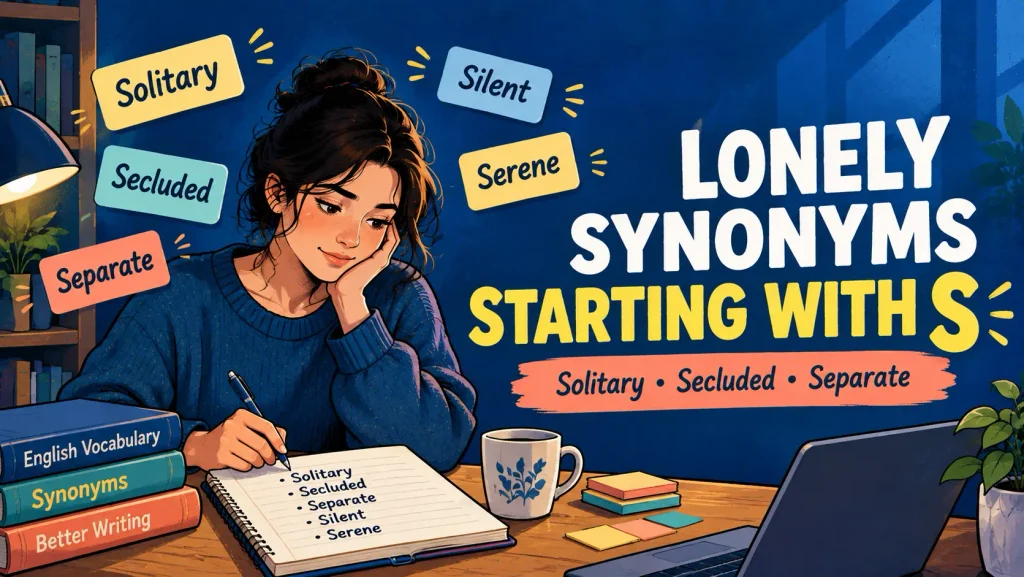
Useful lonely synonyms starting with S include solitary, secluded, separate, solitary-minded, and secluded. Among these, solitary is the most common and natural choice when describing someone or something that is alone.
Solitary can describe peaceful time alone, while secluded usually suggests being away from other people. For example, “She enjoyed a solitary walk” sounds peaceful, while “He lived in a secluded cabin” focuses more on physical separation from others.
FAQ: People Also Ask
What is a word for intense loneliness?
For intense loneliness, try desolate, forsaken, or bereft. These words go beyond simple loneliness to show deep emotional pain and abandonment.
“Desolate” is often used for overwhelming emptiness, while “bereft” suggests loss of something or someone important.
Both work well in emotional writing, poetry, or personal essays describing a heavy, aching kind of loneliness.
What is a fancy word for being alone?
“Solitary” and “solitude” are elegant, formal ways to describe being alone. “Cloistered” and “reclusive” also sound sophisticated, often describing someone who deliberately withdraws from the world.
These words fit well in formal essays, literature, or professional writing where “alone” might feel too plain or casual for the tone you want.
What are some positive synonyms for “lonely”?
Solitary, solo, and self reliant can describe alone time positively. These words suggest independence and peace rather than sadness. For example, “a solitary hike” sounds calm and intentional.
Using positive synonyms helps writers show that being alone can be a healthy, even enjoyable choice, not always something negative or painful.
What is a stronger word for “alone”?
Stronger words for “alone” include isolated, abandoned, and marooned. These words add intensity and emotion that plain “alone” lacks. “Isolated” suggests being cut off from others, while “marooned” implies being stuck with no way out.
Choose based on whether you want a neutral, sad, or dramatic tone.
What is another word for alone and unhappy?
Another word for alone and unhappy can be lonesome, forlorn, desolate, isolated, or miserable. Lonesome suggests sadness caused by being alone, while forlorn describes someone who feels lonely, abandoned, or unhappy. Desolate is stronger and suggests deep emotional emptiness.
For example, “She felt lonesome after moving away from her friends” shows sadness caused by being alone. In more emotional writing, “He looked forlorn and forgotten” gives the feeling of both loneliness and unhappiness.
What is another word for lonely in an essay?
Another word for lonely in an essay depends on the meaning and tone. Use isolated for being cut off from others, solitary for being alone, forlorn for sad loneliness, alienated for feeling disconnected, and desolate for deep emotional emptiness.
For example, “The character felt alienated from society” sounds more precise than simply saying “The character felt lonely.” Choosing a specific synonym makes academic and descriptive writing clearer and more expressive.
Conclusion
Learning synonyms for words like “lonely” does more than expand your vocabulary it sharpens how clearly you can express real feelings. A well chosen word can turn a flat sentence into one that truly connects with a reader, whether you’re writing a blog post, a school essay, or a heartfelt email.
Strong word choice makes speaking and writing feel natural instead of repetitive or stiff.
Try using a few of these words the next time you write. Swap “lonely” for “forlorn” in a story, or use “solitary” instead of “alone” in an email about your quiet weekend.
Small changes like these build stronger writing habits over time, and they make your communication feel more thoughtful and precise.
“Language is the road map of a culture. It tells you where its people come from and where they are going.” Rita Mae Brown
The more words you know, the more precisely you can describe exactly how you feel and that is a skill worth practicing every single day.
“Words are, in my not so humble opinion, our most inexhaustible source of magic.” J.K. Rowling

Amelia is a linguistics graduate and lifelong word nerd who believes the right word can change how a sentence feels. She writes and edits vocabulary guides for SynonymKit, helping readers sound sharper and more confident in their writing.