50 Synonyms for Mad: Better Words to Say You’re Angry
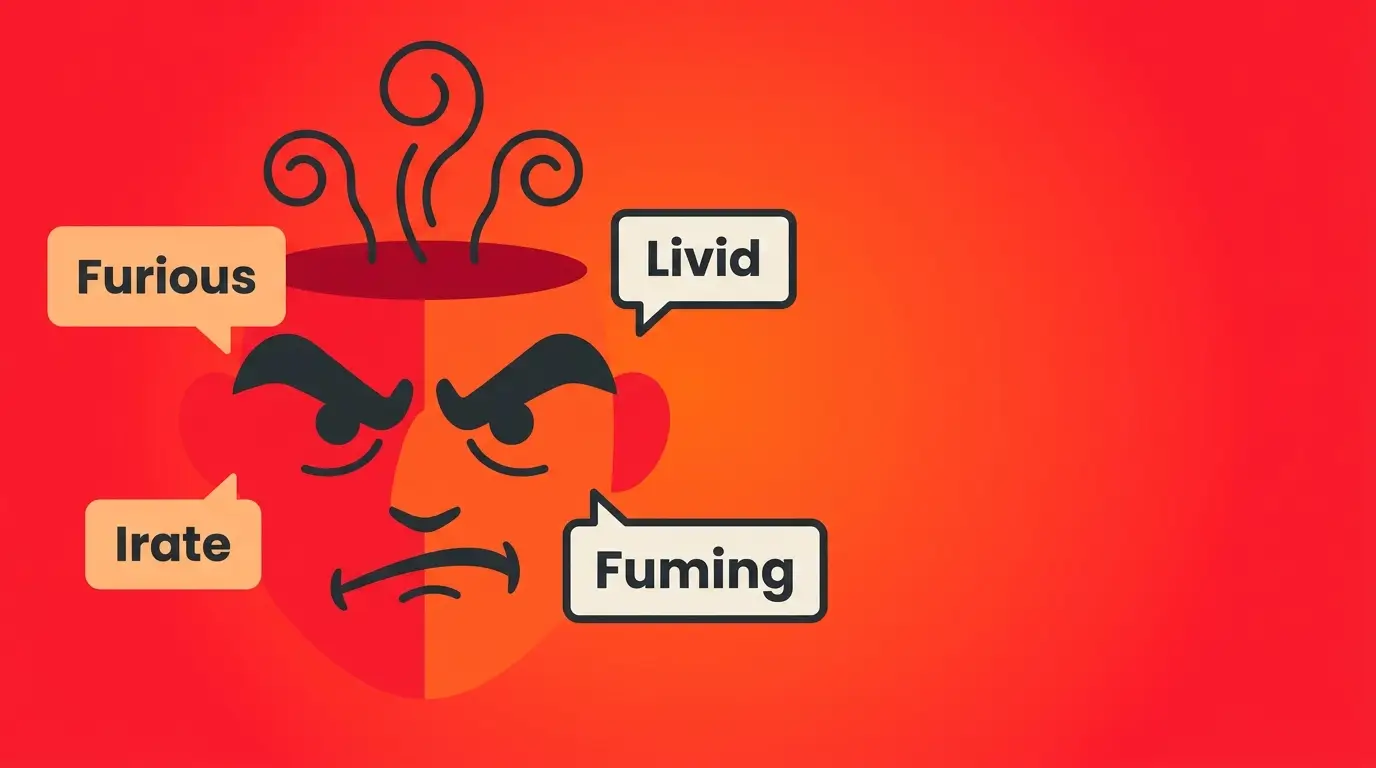
A synonym for mad is any word that means angry, such as furious, irate, livid, or annoyed. These words all describe strong feelings of anger. Some are mild, like “annoyed,” and some are strong, like “livid.”
Using different synonyms for mad makes your writing feel more real and clear.
Your little brother eats the last slice of pizza you were saving. Your face gets hot. You want to yell, but the only word in your head is “mad.” It feels flat.
It doesn’t match how big the feeling is. This happens to everyone, every day, in emails, texts, and stories.
Say your friend cancels plans for the third time. You are not just “mad.” Picking the right word tells people exactly how you feel.
Students need these words to write better essays and stop repeating “mad” ten times in one page. Bloggers need them to keep readers hooked with fresh language.
Content writers need them to sound skilled and avoid sounding robotic. Daily English users need them to talk about real feelings in a real way.
“Anger is one letter short of danger.”
That old saying is short, but it says a lot. The right word can calm a moment down or heat it up.
“For every minute you remain angry, you give up sixty seconds of peace of mind.”
Words matter. Let’s find better ones.
Why Learning Synonyms for Mad Matters
Anger is one of the most common feelings people write about, yet many writers use the same three or four words for it. That gets boring fast. Learning new synonyms for mad fixes that problem right away.
“Speak when you are angry, and you will make the best speech you will ever regret.”
Choosing calm, clear words even in an angry moment can save you from saying something you don’t mean. Below is a full list of 50 words you can use instead of “mad,” each with a simple meaning and two short examples.
1. Angry
- Meaning: This means you feel strong displeasure or upset about something.
- Examples: She was angry about the broken toy. He got angry at the rude comment.
2. Furious
- Meaning: This means extremely angry, almost too angry to stay calm.
- Examples: Dad was furious when the car got scratched. She looked furious after the game.
3. Irate
- Meaning: This means very angry, often shown through loud or sharp words.
- Examples: The irate customer demanded a refund today. He sent an irate email to support.
4. Livid
- Meaning: This means extremely angry, so angry your face turns red.
- Examples: Mom was livid about the mess. She turned livid when he lied.
5. Enraged
- Meaning: This means filled with rage, almost too angry to think clearly.
- Examples: The enraged fans booed the referee loudly. He became enraged over the delay.
6. Fuming
- Meaning: This means silently very angry, like smoke coming out of your ears.
- Examples: She sat there fuming after the meeting. He was fuming about the traffic jam.
7. Incensed
- Meaning: This means made very angry, usually by something unfair or wrong.
- Examples: Voters were incensed by the new law. She felt incensed at his excuse.
8. Outraged
- Meaning: This means shocked and angry about something that feels very unfair.
- Examples: Neighbors were outraged by the loud construction.
9. Irritated
- Meaning: This means slightly angry or bothered by a small, annoying thing.
- Examples: The buzzing fly irritated her all day. He felt irritated by the constant noise.
10. Annoyed
- Meaning: This means a little angry because something keeps bothering you.
- Examples: She was annoyed by his constant tapping. I felt annoyed waiting in line.
11. Agitated
- Meaning: This means upset and unable to stay calm or still.
- Examples: He paced the room, feeling agitated. The dog looked agitated during the storm.
12. Infuriated
- Meaning: This means made extremely angry, almost like a fire inside.
- Examples: The unfair grade infuriated the whole class. She was infuriated by his silence.
13. Cross
- Meaning: This is a simple, older word for feeling annoyed or slightly angry.
- Examples: Grandma got cross about the mud. He was cross after losing his keys.
14. Indignant
- Meaning: This means angry because something feels unfair or unjust to you.
- Examples: She was indignant about the false accusation. He gave an indignant reply to critics.
15. Exasperated
- Meaning: This means very annoyed and tired from something happening again and again.
- Examples: The teacher looked exasperated by the noise. She sighed, exasperated with the delays.
16. Vexed
- Meaning: This is an old word meaning annoyed or troubled by something small.
- Examples: He seemed vexed by the puzzle. She was vexed over the missing file.
17. Riled
- Meaning: This means stirred up and angry, often after teasing or arguing.
- Examples: His comment riled her up fast. Don’t get riled over small things.
18. Seething
- Meaning: This means quietly boiling with anger that you try to hide.
- Examples: She stood there seething after the insult. He was seething but stayed silent.
19. Steamed
- Meaning: This is a casual word meaning angry, like steam building up.
- Examples: He got steamed about the parking ticket. She was steamed after the delay.
20. Heated
- Meaning: This means angry and intense, often used to describe arguments.
- Examples: The debate turned heated within minutes. They had a heated argument yesterday.
21. Wrathful
- Meaning: This means full of deep, powerful anger, often in stories or old texts.
- Examples: The wrathful king punished the traitors. Her wrathful glare silenced the room.
22. Hot tempered
- Meaning: This describes someone who gets angry quickly and easily.
- Examples: He is known as hot tempered. The hot tempered coach yelled at players.
23. Fired up
- Meaning: This means excited and angry, ready to react strongly.
- Examples: She got fired up about the unfair rule. He was fired up during the debate.
24. Peeved
- Meaning: This is a light word for slightly annoyed or bothered.
- Examples: I was a bit peeved by the noise. She looked peeved at the joke.
25. Miffed
- Meaning: This means mildly upset or annoyed about something small.
- Examples: He was miffed about being left out. She seemed miffed by the comment.
26. Ticked off
- Meaning: This is a casual phrase meaning annoyed or angry about something.
- Examples: She was ticked off by the delay. He got ticked off at the price.
27. Provoked
- Meaning: This means made angry on purpose by someone’s words or actions.
- Examples: He felt provoked by the constant teasing. She was provoked into an argument.
28. Resentful
- Meaning: This means angry and bitter about something that happened before.
- Examples: She felt resentful about the unfair choice. He stayed resentful for weeks.
29. Bitter
- Meaning: This means angry and sad about something for a long time.
- Examples: He grew bitter after losing the job. She sounded bitter about the breakup.
30. Hostile
- Meaning: This means angry and unfriendly, ready to argue or fight.
- Examples: The hostile crowd shouted at the speaker. He gave a hostile reply.
31. Aggravated
- Meaning: This means made more angry or annoyed by something extra.
- Examples: The delay aggravated her already bad mood. He felt aggravated by the noise.
32. Irascible
- Meaning: This describes a person who becomes angry very easily and often.
- Examples: The irascible old man yelled at kids. Her irascible boss scared new staff.
33. Testy
- Meaning: This means easily annoyed or short tempered, especially when tired.
- Examples: He grew testy after the long flight. She sounded testy on the phone.
34. Grumpy
- Meaning: This means bad tempered and easily annoyed, often shown by complaining.
- Examples: He is always grumpy in the morning. The grumpy cashier barely spoke.
35. Sore
- Meaning: This is a casual word meaning upset or angry about something.
- Examples: He’s still sore about losing the game. She felt sore over the joke.
36. Piqued
- Meaning: This means slightly annoyed, often because of hurt pride.
- Examples: Her pride was piqued by the comment. He felt piqued at being ignored.
37. Boiling
- Meaning: This means extremely angry, like water heating up fast.
- Examples: He was boiling after the unfair call. She sat there boiling with rage.
38. Raging
- Meaning: This means showing very strong, wild, and uncontrolled anger.
- Examples: The raging fans stormed the field. He was raging about the theft.
39. Explosive
- Meaning: This describes anger that bursts out suddenly and strongly.
- Examples: He has an explosive temper sometimes. Her explosive reaction shocked everyone there.
40. Frustrated
- Meaning: This means upset because something is not working the way you want.
- Examples: She felt frustrated with the slow computer. He was frustrated by the traffic.
41. Displeased
- Meaning: This is a formal word meaning not happy or somewhat angry.
- Examples: The manager was displeased with the report. She looked displeased at dinner.
42. Disgruntled
- Meaning: This means annoyed and unhappy, often about being treated unfairly.
- Examples: The disgruntled worker filed a complaint. He seemed disgruntled about the schedule.
43. Offended
- Meaning: This means hurt and angry because of something rude or unfair.
- Examples: She felt offended by his joke. He was offended by the rude comment.
44. Wound up
- Meaning: This means tense and angry, ready to react at any moment.
- Examples: He got wound up before the meeting. She was wound up all day.
45. Cranky
- Meaning: This means easily annoyed, often because of being tired or hungry.
- Examples: The baby was cranky before nap time. He gets cranky without coffee.
46. Snappy
- Meaning: This means quick to react with sharp, angry words.
- Examples: She was snappy after a long day. He gave a snappy, rude reply.
47. Hot under the collar
- Meaning: This phrase means becoming very angry or upset quickly.
- Examples: He got hot under the collar fast. She was hot under the collar today.
48. Bent out of shape
- Meaning: This casual phrase means very upset or angry about something small.
- Examples: Don’t get bent out of shape over this. He was bent out of shape yesterday.
49. Beside oneself
- Meaning: This means so angry or upset that you can barely control it.
- Examples: She was beside herself with anger. He was beside himself over the loss.
50. Up in arms
- Meaning: This phrase means very angry and ready to protest or complain.
- Examples: Parents were up in arms about the change. Fans were up in arms online.
Synonyms for Mad Person
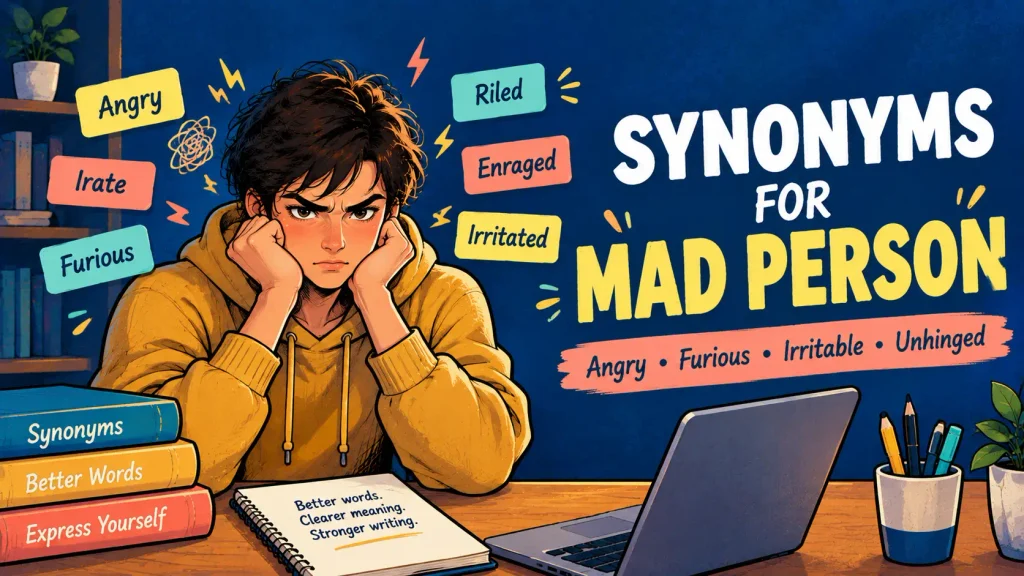
Someone who is often angry can be called a hothead, a grump, or irascible. These words describe a person’s general mood, not just one moment.
A “hothead” reacts fast without thinking. A “grump” complains often, even about small things.
Calling someone irascible means they get angry easily and often, almost like it’s part of their personality.
Synonyms for Mad at Someone
When you are angry with a specific person, you might say you are irritated with them, fuming at them, or resentful toward them.
You could also say you have a grudge against someone, meaning you stay angry for a long time. These phrases show anger aimed directly at a person, not just a general bad mood.
Synonyms for Mad or Angry
“Mad” and “angry” are often used the same way in everyday talk. Strong choices include furious, livid, and irate. Softer choices include annoyed, cross, and miffed.
Picking between mad or angry synonyms depends on how strong the feeling is and whether your writing is casual or more formal in tone.
Synonyms for Being Mad
Synonyms for being mad include being angry, irritated, annoyed, frustrated, upset, furious, livid, and enraged. These expressions range from mild irritation to extreme anger.
For mild feelings, annoyed, irritated, or peeved work well. For stronger emotions, use furious, livid, enraged, or seething. Choosing the right expression helps show how intense the anger really is.
Another Word for Mad and Frustrated

Another word for mad and frustrated can be exasperated, aggravated, irritated, annoyed, or fed up. These words describe anger that often comes from problems, delays, repeated mistakes, or situations that are difficult to control.
Exasperated is especially useful when you are tired of dealing with the same problem again and again.
For example, you could say, “She was exasperated by the constant delays” or “He was aggravated by the slow internet.”
Synonyms for Mad That Start With M
A few good options starting with the letter M include miffed, which means slightly annoyed. There is also maddened, a stronger word for someone pushed to anger.
Moody works too, describing someone who often shifts into an angry or upset mood without much warning at all.
Slang Synonyms for Mad
Casual, spoken words for mad include ticked off, steamed, and salty. “Salty” is popular online and in texting to mean annoyed or bitter about something small.
Heated also works as slang, often used when talking about online arguments. These words feel casual, so save them for friendly chats.
Synonyms for Mad and Angry
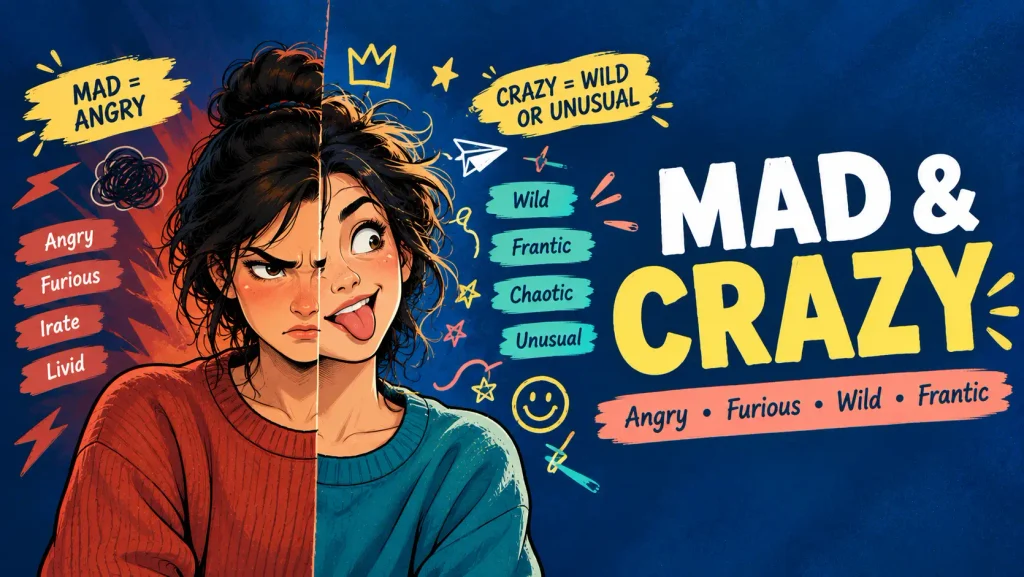
The words mad and angry can have different meanings, so the best synonym depends on the context. For example, when mad means angry, useful alternatives include angry, furious, irritated, enraged, livid, and fuming. However, when mad means mentally confused or wildly excited, words such as wild, frantic, chaotic, or unusual may fit better.
For example, “She was mad about the delay” means she was angry, while “That was a mad idea” can mean the idea was wild or unusual. Therefore, always consider the intended meaning before replacing “mad” with another word.
Frequently Asked Questions
What are the 20 words for mad?
Twenty strong choices are angry, furious, irate, livid, enraged, fuming, incensed, outraged, irritated, annoyed, agitated, infuriated, cross, indignant, exasperated, vexed, riled, seething, steamed, and heated.
Each word carries a slightly different strength, from mildly annoyed words like “cross” to very strong words like “livid.”
Mixing these into your writing keeps sentences fresh and stops the same word from repeating too often.
What are 5 synonyms for angry?
Five solid synonyms for angry are furious, irate, livid, enraged, and incensed. All five describe strong anger, stronger than simple annoyance. “Furious” and “livid” are common in everyday speech.
“Irate” often describes angry customers or callers. “Enraged” and “incensed” fit stories or news writing where the anger feels serious and intense.
How do you say “mad” in a nice way?
To soften the word “mad,” try gentler terms like upset, bothered, or displeased. You could say “I feel a little upset” instead of “I’m mad.”
Words like “frustrated” also sound calmer and more mature. These softer words still share your true feeling, but they sound less harsh, which helps keep conversations calm and respectful.
What to say instead of “mad”?
Instead of “mad,” try angry, annoyed, irritated, upset, or frustrated, depending on how strong the feeling is.
For very strong anger, use furious, livid, or enraged. For mild anger, use miffed, peeved, or cross.
Choosing the right replacement makes your sentence clearer and shows exactly how big or small the feeling really is.
What Is Another Word for “Mad” in an Essay?
Another word for mad in an essay depends on the level and type of anger. Use angry for a general description, irritated for mild anger, frustrated when something is not going as expected, and furious or enraged for very strong anger.
For more formal writing, irate, indignant, displeased, exasperated, and resentful can provide more precise descriptions. Choosing a specific word makes an essay clearer and helps readers understand exactly why the person feels angry.
Conclusion
Learning new synonyms for mad does more than fill space in a sentence. It helps your writing feel honest and clear. A reader can tell the difference between someone who is mildly annoyed and someone who is truly furious, but only if you choose the right word.
This small skill makes essays stronger, blog posts more interesting, and everyday talking feel more natural.
Try using one new word from this list in your next email, text, or story. Swap “mad” for “irritated” when the feeling is small.
Swap it for “livid” when the feeling is huge. Practice makes these words feel normal instead of forced.
“He who angers you conquers you.”
Remember that words give you control over a feeling that can otherwise feel out of control.
“Never let the sun go down on your anger.”
Use these fifty words often. Your writing, and your conversations, will feel sharper, calmer, and more real because of it.

James is a former English teacher turned content strategist who’s passionate about making language learning less intimidating. At SynonymKit, he focuses on curating word lists that are practical for everyday writing, essays, and professional communication.