

50 Synonyms for Fear (With Simple Meanings and Examples)
A synonym for fear is a word that means a strong feeling of danger or worry, like dread, terror, or fright. People use these words to describe fear in different ways, from mild worry to deep terror.
Learning them helps you speak and write with more feeling and detail.
The room went dark, and your heart started pounding before you even knew why. That small jump in your chest is fear, and English has dozens of ways to name it.
Think of a student before a big exam, checking the clock again and again. That quiet dread has a name too, and it is not always “fear.”
For students, these words help essays sound sharper and more precise. Bloggers, they add color to stories about real feelings. For content writers, they help avoid using the same word again and again.
For daily English users, they make everyday talk feel more natural and honest.
“Fear is the path to the dark side.” This old idea reminds us that fear is powerful, and naming it well gives us control over it.
“He who fears he shall suffer, already suffers what he fears.” Words for fear let us catch that suffering early, name it, and let it go.
This guide gives you 50 clear synonyms for fear, each with a simple meaning and two short examples you can use right away.
Main List: 50 Synonyms for Fear
1. Fright
- Meaning: A sudden, short feeling of fear or surprise.
- Examples: The loud bang frightened her. He jumped back in fright at the spider.
2. Terror
- Meaning: A very strong and intense feeling of fear.
- Examples: The child screamed in pure terror. Terror filled the room during the storm.
3. Dread
- Meaning: A heavy fear about something that may happen soon.
- Examples: She felt dread before the exam. He walked to work with quiet dread.
4. Panic
- Meaning: A sudden fear that makes you act without thinking.
- Examples: Panic spread through the crowd fast. He froze in panic on stage.
5. Horror
- Meaning: A strong fear mixed with shock or disgust.
- Examples: She watched the crash in horror. The horror movie kept them awake.
6. Alarm
- Meaning: A sudden worry that something bad might happen.
- Examples: His face showed alarm at the news. She raised the alarm quickly.
7. Apprehension
- Meaning: A worried feeling about something coming in the future.
- Examples: He felt apprehension before the interview. Her apprehension grew as the day came.
8. Anxiety
- Meaning: A nervous feeling of fear about what might happen.
- Examples: Anxiety kept her awake all night. His hands shook with anxiety.
9. Trepidation
- Meaning: A shaky, nervous fear before doing something hard.
- Examples: She entered the room with trepidation. He felt trepidation before the flight.
10. Phobia
- Meaning: A strong, unreasonable fear of one specific thing.
- Examples: He has a phobia of heights. Her phobia of dogs began young.
11. Angst
- Meaning: A deep, uneasy fear or worry about life.
- Examples: Teen angst filled his diary pages. She wrote about angst and doubt.
12. Dismay
- Meaning: A sudden fear mixed with sadness or disappointment.
- Examples: He looked at the bill in dismay. Dismay crossed her face instantly.
13. Consternation
- Meaning: A feeling of worry and confusion caused by surprise.
- Examples: The news caused great consternation at work. She stared in consternation.
14. Unease
- Meaning: A mild, uncomfortable feeling that something is wrong.
- Examples: A sense of unease filled the house. He felt unease near the cliff.
15. Worry
- Meaning: A feeling of thinking too much about problems.
- Examples: She couldn’t hide her worry today. His worry grew with each hour.
16. Foreboding
- Meaning: A strong feeling that something bad will happen soon.
- Examples: A sense of foreboding filled the sky. He felt foreboding before the trip.
17. Timidity
- Meaning: A shy fear of speaking or acting boldly.
- Examples: Her timidity kept her silent in class. He spoke with timidity at first.
18. Nervousness
- Meaning: A jumpy, uneasy feeling before something important happens.
- Examples: His nervousness showed in his shaky voice. She hid her nervousness well.
19. Distress
- Meaning: A strong feeling of pain, fear, or worry.
- Examples: The lost child cried in distress. Distress filled her voice on the phone.
20. Fearfulness
- Meaning: A general state of feeling afraid often or easily.
- Examples: His fearfulness made travel hard for him. She struggled with fearfulness as a child.
21. Cowardice
- Meaning: A lack of courage caused by strong fear.
- Examples: Running away was seen as cowardice. He was ashamed of his cowardice.
22. Funk
- Meaning: An informal word for a nervous, fearful mood.
- Examples: He was in a funk before the game. She sank into a nervous funk.
23. Jitters
- Meaning: Small nervous feelings before something new or scary.
- Examples: The jitters hit her before the speech. He got the jitters on stage.
24. Qualm
- Meaning: A small, uneasy doubt or fear about something.
- Examples: She had a qualm about the plan. He felt a qualm before signing.
25. Misgiving
- Meaning: A feeling of doubt or fear about a choice.
- Examples: He had misgivings about the trip. Her misgivings grew with each mile.
26. Scare
- Meaning: A sudden short feeling of fear or fright.
- Examples: That noise gave me a scare. The health scare changed his habits.
27. Cold feet
- Meaning: A sudden fear that stops you before an event.
- Examples: He got cold feet before the wedding. She had cold feet about moving.
28. Chill
- Meaning: A sudden fear that feels like coldness inside.
- Examples: A chill ran down his spine. The ghost story sent a chill through her.
29. Shock
- Meaning: A sudden strong feeling of fear or surprise.
- Examples: The news left her in shock. He froze in shock at the sound.
30. Trembling
- Meaning: A shaking feeling caused by strong fear or cold.
- Examples: Her hands were trembling with fear. He spoke while trembling slightly.
31. Agitation
- Meaning: A nervous, worried state that shows in your actions.
- Examples: His agitation grew as time passed. She paced the room in agitation.
32. Wariness
- Meaning: A careful fear that makes you watch closely.
- Examples: He approached the dog with wariness. Her wariness kept her safe there.
33. Hesitation
- Meaning: A pause caused by fear or doubt before acting.
- Examples: She answered without any hesitation. His hesitation showed his hidden fear.
34. Intimidation
- Meaning: A fear caused by someone trying to scare you.
- Examples: He used intimidation to win the fight. She refused to bow to intimidation.
35. Anguish
- Meaning: A deep pain mixed with fear or sadness.
- Examples: He cried out in anguish. Her anguish was clear on her face.
36. Nightmare
- Meaning: A frightening dream, or any deeply scary experience.
- Examples: She woke up from a nightmare. The trip became a total nightmare.
37. Timorousness
- Meaning: A formal word for being easily frightened or shy.
- Examples: His timorousness kept him from speaking up. She spoke with quiet timorousness.
38. Faintheartedness
- Meaning: A lack of courage caused by weak nerves.
- Examples: His faintheartedness stopped him from trying. She hated her own faintheartedness.
39. Skittishness
- Meaning: A jumpy fear that makes someone easily startled.
- Examples: The horse showed skittishness near loud noises. Her skittishness grew after the accident.
40. Jumpiness
- Meaning: A nervous state where small things startle you easily.
- Examples: His jumpiness increased after the alarm. She laughed off her own jumpiness.
41. Disquiet
- Meaning: A quiet but steady feeling of fear or worry.
- Examples: A sense of disquiet filled the office. He felt disquiet reading the letter.
42. Perturbation
- Meaning: A formal word for worry or fearful disturbance.
- Examples: The report caused deep perturbation. She hid her perturbation calmly.
43. Frightfulness
- Meaning: The quality of being very scary or fear causing.
- Examples: The frightfulness of the storm shocked everyone. He described the frightfulness of the scene.
44. Dreadfulness
- Meaning: A strong sense of something terrible and fearful.
- Examples: The dreadfulness of the news spread fast. She sensed the dreadfulness ahead.
45. Petrification
- Meaning: A state of being frozen still from strong fear.
- Examples: Petrification kept him rooted to the spot. Her petrification lasted only seconds.
46. Timidness
- Meaning: A gentle fear that makes someone shy or quiet.
- Examples: His timidness faded as he practiced. She spoke past her timidness bravely.
47. Cravenness
- Meaning: A strong, shameful fear that stops brave action.
- Examples: His cravenness disappointed his teammates. She refused to act with cravenness.
48. Pusillanimity
- Meaning: A formal word meaning a lack of courage.
- Examples: His pusillanimity surprised everyone that day. She never showed such pusillanimity.
49. Diffidence
- Meaning: A shy fear of trusting your own ability.
- Examples: His diffidence held back his ideas. She overcame her diffidence slowly.
50. Nervous tension
- Meaning: A tight, fearful feeling held in the body.
- Examples: Nervous tension filled the waiting room. He released his nervous tension slowly.
Words to Describe Fear
Words to describe fear include frightened, terrified, nervous, anxious, alarmed, apprehensive, fearful, panicked, uneasy, and horrified. Each word gives a slightly different impression of the emotion.
For mild fear, uneasy, nervous, or apprehensive may work well. For stronger fear, use terrified, horrified, panicked, or fearful. In creative writing, nouns such as dread, terror, trepidation, and foreboding can make descriptions more vivid and emotional.
Synonyms for Fear of the Unknown
The fear of the unknown is one of the most common fears people share. It shows up as dread, apprehension, or unease when facing something new or unclear, like a new job or an unfamiliar place.
Writers often use foreboding or trepidation to describe this feeling. These words work well because they capture worry without naming an exact cause, which fits the vague nature of not knowing what comes next.
Synonyms for Fear of Failure
Fear of failure often feels like apprehension, anxiety, or a nagging dread before trying something new. Students and workers both feel this before tests, interviews, or big projects. Words like misgiving and hesitation describe the doubt that comes with it.
Naming this fear clearly, instead of just saying “I’m scared,” helps people talk about it honestly and start working through it with more confidence.
Intense Fear Synonym
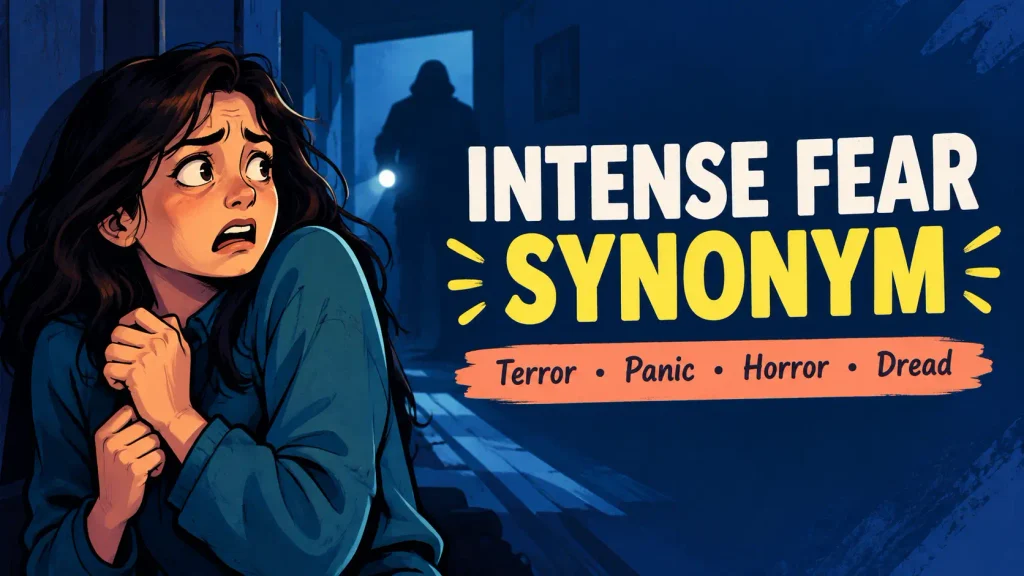
An intense fear synonym is a word that describes an extremely strong feeling of fear. Useful choices include terror, horror, panic, dread, and fright. Among these, terror usually describes very powerful fear, while panic suggests fear that causes a person to react suddenly or lose control.
For example, you could say, “She was filled with terror when she heard the noise.” For a sudden overwhelming reaction, “He ran in panic” is more natural. Choosing the right synonym depends on how strong the fear is and how the person responds to it.
Synonyms and Antonyms for Fear
Good synonyms for fear include dread, terror, panic, and apprehension. The opposite of fear, called an antonym, includes words like courage, boldness, confidence, and fearlessness.
Knowing both sides helps writers show change in a story, like a character moving from timidity to bravery.
This contrast makes writing feel alive and shows growth, which readers connect with more than a single flat description.
Fear Antonyms
Common antonyms of fear include courage, bravery, confidence, boldness, fearlessness, and calmness. These words describe different ways of responding when a person is not controlled by fear.
For example, courage means facing something difficult despite fear, while confidence suggests trust in your own ability. Fearlessness describes a lack of fear, and calmness focuses on remaining peaceful instead of becoming frightened or anxious.
Synonyms for Fear and Anxiety
Fear and anxiety are close cousins but not identical twins. Fear usually reacts to something real and present, while anxiety often reacts to something imagined or future. Shared synonyms include dread, unease, apprehension, and nervousness.
Writers describing both together might use angst or distress. Using the right word helps readers understand whether a character faces a real threat or a worried mind.
Poetic Words for Fear

Poetic words for fear can make creative writing more emotional and descriptive. Good choices include dread, terror, trepidation, foreboding, disquiet, anguish, and trembling. These words can describe fear through mood, emotion, or physical reaction rather than simply saying “fear.”
For example, a writer might describe “a shadow of dread” before a difficult event or “a trembling heart” during a frightening moment. Foreboding is especially useful when a character senses that something bad may happen, while anguish can express fear mixed with deep emotional pain.
Synonyms for Fear of God
The fear of God, found often in religious writing, means deep respect and awe, not simple terror. Synonyms here include reverence, awe, and veneration, though dread still appears in older texts.
This kind of fear is about honoring something greater than yourself. It differs from everyday fear because it carries respect and humility instead of danger, which is worth noting in essays or religious discussions.
Biblical Synonyms for Fear

Biblical synonyms for fear can include awe, reverence, dread, trembling, and terror, depending on the passage and context. In many religious contexts, fear can describe deep reverence toward God, while other passages use fear in the ordinary sense of being afraid of danger or judgment.
Awe and reverence are especially suitable when the meaning involves honoring God. Dread or terror may be more appropriate when the context describes intense fear. Because biblical language can vary by translation, the exact meaning should always be understood from the surrounding passage.
Synonyms for Fear of the Lord
Synonyms for fear of the Lord include reverence, awe, respect, veneration, and devotion, depending on the religious context. In biblical and religious writing, “fear of the Lord” often refers to honoring God with deep respect and humility rather than simply being frightened.
Reverence emphasizes deep respect, while awe expresses a sense of wonder and greatness. Veneration conveys profound respect or honor. The best choice depends on whether the sentence focuses on respect, worship, humility, or spiritual devotion.
FAQ: People Also Ask
What are 5 synonyms for scared?
Five common synonyms for scared are frightened, terrified, alarmed, panicked, and nervous. Each one shows a slightly different level of fear, from mild to extreme.
Frightened and nervous suit smaller worries, while terrified and panicked describe intense, overwhelming fear.
Choosing the right one depends on how strong the fear feels in your sentence or story.
What are 5 synonyms for afraid?
Five useful synonyms for afraid are fearful, apprehensive, timid, anxious, and frightened. Timid works well for shy, quiet fear, while apprehensive fits worry about future events.
Anxious suits ongoing nervous feelings, and frightened describes sudden fear. Using different words instead of repeating “afraid” makes writing feel richer and more natural to read.
What are the 7 types of fear?
Common types include fear of failure, fear of rejection, fear of the unknown, fear of loss, fear of death, fear of judgment, and fear of pain. Each type affects people differently, shaping choices at work, school, and relationships.
Recognizing which type you feel is the first step toward naming it clearly and working through it in a healthy way.
What can you say instead of fear?
Instead of “fear,” try dread, terror, anxiety, apprehension, or unease, depending on the strength of the feeling. For milder worry, use concern or nervousness.
For intense fear, choose terror, horror, or panic. Matching the word to the situation makes your writing more accurate and more interesting for readers to follow.
Another Word for Fear in an Essay
Another word for fear in an essay depends on the exact meaning you want to express. Dread works well for fear about something that may happen, while apprehension describes worried uncertainty. Terror is better for extreme fear, and unease suits a mild or uncomfortable feeling.
For formal academic writing, words such as apprehension, anxiety, trepidation, concern, and distress can provide more precise descriptions. Instead of replacing “fear” automatically, choose a synonym that matches the intensity and context of your sentence.
Conclusion
Learning synonyms for fear does more than expand your vocabulary; it gives you sharper tools for writing and speaking. Instead of repeating “scared” or “afraid” again and again, you can choose the exact shade of feeling you mean, from a small qualm to full terror.
This skill matters in blogging, where fresh words keep readers engaged, and in daily conversation, where clear words help others understand you better.
“Fear is only as deep as the mind allows.” This thought is a good reminder that naming our fear, with the right word, is often the first step to managing it well.
Try using a few of these words in your next email, essay, or story. Notice how the tone shifts when you swap “afraid” for “apprehensive,” or “scared” for “wary.”
“Feel the fear and do it anyway.” That courage grows easier once you can name exactly what you are facing, in your own clear words.
Practice makes these words stick. Pick three new synonyms from this list today, and use each one in a real sentence before the day ends.
Small steps like this build strong, confident writing over time, one word at a time.

Amelia is a linguistics graduate and lifelong word nerd who believes the right word can change how a sentence feels. She writes and edits vocabulary guides for SynonymKit, helping readers sound sharper and more confident in their writing.