70 Powerful Synonyms for Weak (With Meanings & Examples)
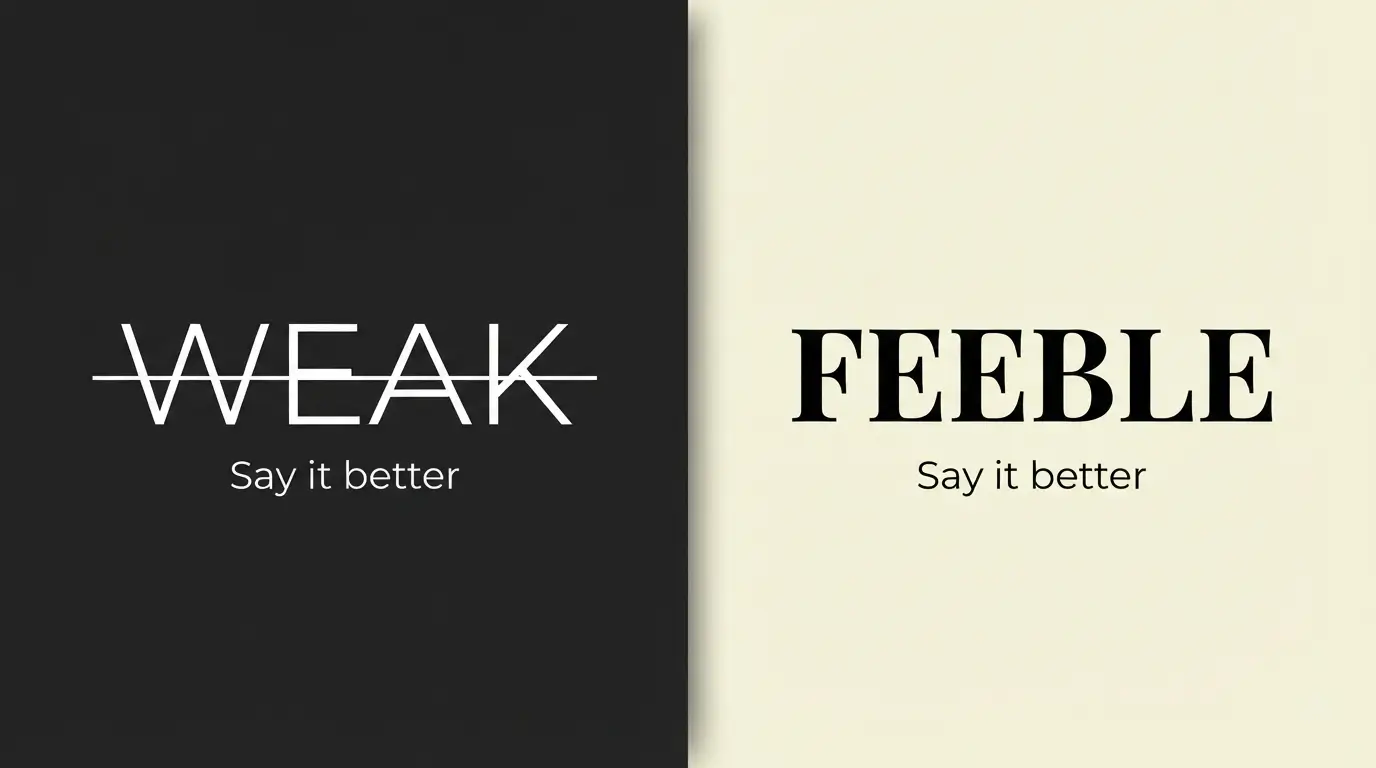
A synonym for weak is any word that means lacking strength, power, or force like feeble, frail, fragile, or powerless. These words describe a person, object, argument, or signal that has little energy, force, or ability to hold up under pressure. Using the right one makes your writing clearer and more precise.
Picture this: you’re writing an email to your boss about a project, and you type the sentence “Our plan feels weak.” You stop. Something about that word feels flat, almost lazy.
So you swap it for “our plan feels shaky,” and suddenly the sentence has more life. That small swap is the whole idea behind this guide.
Here’s a simple example. A tea bag left too long in cold water makes weak tea. But a writer might call that same tea “watery” or “diluted” instead, and the sentence instantly sounds more natural.
For bloggers, they keep readers hooked instead of bored. For content writers, they avoid repeating the same word ten times in one article.
Everyday English speakers, they simply make conversation sound sharper and more confident.
“Words are the clothes that thoughts wear.” Anonymous
Learning synonyms is not about sounding fancy. It is about saying exactly what you mean, every single time.
“A rich vocabulary is a bridge between confusion and clarity.” Anonymous
Why Synonyms for “Weak” Matter So Much
The word “weak” is one of the most overused adjectives in the English language. It shows up in essays, business emails, product reviews, and everyday chats. But it is a vague word. It doesn’t tell your reader how something is weak physically? emotionally? logically?
“The difference between the almost right word and the right word is really a large matter.” Anonymous
That’s exactly why this list exists. Below, you’ll find 70 carefully chosen alternatives to “weak,” each with a simple, Grade 3 level meaning and two short example sentences. Whether you need a word for a weak person, a weak argument, weak tea, or a weak signal, you’ll find it here.
70 Synonyms for Weak
1. Feeble
- Meaning: Very weak in strength, often because of sickness or age.
- Examples: The old man had a feeble grip on the rail. Her voice sounded feeble after the long illness.
2. Frail
- Meaning: Physically weak and delicate, often used for older people.
- Examples: His frail hands shook as he wrote. The frail kitten needed extra warm milk.
3. Fragile
- Meaning: Easily broken, damaged, or hurt because it lacks strength.
- Examples: The fragile vase cracked during the move. Her fragile confidence broke after one comment.
4. Delicate
- Meaning: Soft, easily damaged, and needing careful, gentle treatment.
- Examples: The flower had delicate, thin petals. He handled the delicate topic with care.
5. Faint
- Meaning: Barely noticeable in strength, sound, light, or feeling.
- Examples: A faint smell of smoke filled the room. She gave a faint smile and left.
6. Powerless
- Meaning: Having no power or ability to change a situation.
- Examples: He felt powerless during the long storm. The small team was powerless against giants.
7. Helpless
- Meaning: Unable to help yourself or protect against harm.
- Examples: The helpless puppy cried in the rain. She felt helpless watching the news alone.
8. Puny
- Meaning: Small and weak, often compared to something much bigger.
- Examples: His puny arms could not lift the box. The team looked puny next to rivals.
9. Sickly
- Meaning: Often ill, and appearing weak or unhealthy because of it.
- Examples: The sickly child stayed home from school. Her plant looked pale and sickly.
10. Debilitated
- Meaning: Made physically weak, usually because of illness or injury.
- Examples: The flu left him debilitated for a week. Years of pain left her debilitated.
11. Weakened
- Meaning: Made less strong than before, often over time or by force.
- Examples: The storm weakened the old wooden bridge. Stress had clearly weakened his immune system.
12. Enfeebled
- Meaning: Made weak, especially in body or overall strength and energy.
- Examples: The illness left her badly enfeebled. War enfeebled the once strong little nation.
13. Exhausted
- Meaning: Extremely tired, with almost no strength or energy remaining.
- Examples: She felt exhausted after the twelve hour shift. His legs were exhausted by the climb.
14. Drained
- Meaning: Left with no energy, as if strength was taken away.
- Examples: The meeting left me completely drained. He felt drained after the emotional call.
15. Flimsy
- Meaning: Thin, weak, or badly made, and easy to break or bend.
- Examples: The flimsy umbrella broke in the wind. Her excuse sounded flimsy and unconvincing.
16. Rickety
- Meaning: Weak and shaky, likely to fall apart or collapse soon.
- Examples: They climbed the rickety old wooden stairs. The rickety chair wobbled under his weight.
17. Shaky
- Meaning: Not steady, trembling, or unreliable because of little strength.
- Examples: Her shaky hands spilled the hot coffee. His plan sounded shaky at best.
18. Unsteady
- Meaning: Not firm or balanced, likely to fall or fail.
- Examples: The toddler took unsteady steps across the room. His voice sounded unsteady during the speech.
19. Wobbly
- Meaning: Moving unsteadily from side to side, lacking firm support.
- Examples: The table had one wobbly leg. Her knees felt wobbly after the run.
20. Vulnerable
- Meaning: Easily hurt or harmed because of little protection or strength.
- Examples: New employees often feel vulnerable at first. The vulnerable village had no defenses.
21. Defenseless
- Meaning: Without any protection, and unable to fight back or resist.
- Examples: The defenseless animal ran from the fire. They felt defenseless against the online attack.
22. Impotent
- Meaning: Lacking the power or ability to make any real difference.
- Examples: His impotent anger changed absolutely nothing that day. The council seemed impotent during the crisis.
23. Ineffective
- Meaning: Not producing the intended result because it lacks real power.
- Examples: The medicine proved ineffective against her cold. His ineffective apology fixed nothing at all.
24. Ineffectual
- Meaning: Failing to achieve the desired effect, despite trying hard enough.
- Examples: Their ineffectual effort didn’t stop the leak. He felt ineffectual as a new manager.
25. Inadequate
- Meaning: Not enough or not good enough for what is needed.
- Examples: The inadequate budget delayed the whole project. Her training felt inadequate for the job.
26. Insufficient
- Meaning: Not enough in amount, strength, or quality for the purpose.
- Examples: They had insufficient proof to win the case. The light was insufficient for reading.
27. Deficient
- Meaning: Lacking something important that is needed to be strong.
- Examples: His diet was deficient in basic vitamins. The report felt deficient in real detail.
28. Unconvincing
- Meaning: Not able to make people believe or trust something fully.
- Examples: His alibi sounded unconvincing to the detective. The ad felt unconvincing and oddly forced.
29. Unsound
- Meaning: Not based on solid logic, facts, or a strong foundation.
- Examples: Her reasoning was clearly unsound and confusing. The old bridge was structurally unsound.
30. Untenable
- Meaning: Impossible to defend or support because it is too weak.
- Examples: His position became untenable after the leak. The plan was financially untenable long term.
31. Wishy washy
- Meaning: Lacking firm opinions, strength, or clear decisions in general.
- Examples: Her wishy washy answer frustrated the whole team. He gave a wishy washy response as usual.
32. Spineless
- Meaning: Lacking courage or firm character, especially when facing pressure.
- Examples: The spineless manager avoided every hard conversation. Critics called the decision spineless and weak.
33. Timid
- Meaning: Shy, nervous, and lacking confidence or boldness in most situations.
- Examples: The timid student rarely raised her hand. He gave a timid knock at the door.
34. Meek
- Meaning: Quiet, gentle, and unwilling to argue, fight, or push back.
- Examples: She gave a meek nod and stayed silent. His meek tone surprised everyone in the room.
35. Submissive
- Meaning: Too willing to obey others without offering any resistance.
- Examples: The submissive employee never questioned unfair rules. His submissive attitude worried his close friends.
36. Weak willed
- Meaning: Lacking the strength to resist temptation or stick to decisions.
- Examples: Being weak willed, he skipped the gym again. Her weak willed cousin quit every diet fast.
37. Irresolute
- Meaning: Unable to decide firmly, and often changing your mind quickly.
- Examples: The irresolute leader delayed every major decision. She felt irresolute about switching careers.
38. Indecisive
- Meaning: Finding it hard to make a firm choice or decision.
- Examples: He is indecisive when picking a restaurant. Her indecisive nature slowed the whole meeting.
39. Wavering
- Meaning: Moving between choices, unsure, and lacking a firm final decision.
- Examples: His wavering support worried the campaign team. She stood wavering at the store entrance.
40. Faltering
- Meaning: Losing strength, confidence, or steadiness while trying to continue.
- Examples: Her faltering voice cracked during the toast. The faltering economy worried every small business.
41. Sluggish
- Meaning: Moving slowly, with little energy, strength, or enthusiasm at all.
- Examples: The sluggish traffic barely moved for an hour. He felt sluggish after the big lunch.
42. Lethargic
- Meaning: Feeling extremely tired, slow, and without any real energy.
- Examples: The heat made everyone lethargic by noon. Her lethargic mood lasted the whole afternoon.
43. Languid
- Meaning: Slow moving and lacking energy, often in a relaxed, dreamy way.
- Examples: They spent a languid afternoon by the lake. His languid walk suited the lazy day.
44. Listless
- Meaning: Lacking energy or enthusiasm, and showing little interest in anything.
- Examples: The sick child seemed listless all morning. She felt listless after the long flight.
45. Fatigued
- Meaning: Very tired, physically or mentally, from work or effort.
- Examples: The fatigued hikers rested under a tree. He felt fatigued after the double shift.
46. Tired
- Meaning: Needing rest because your strength or energy has been used up.
- Examples: She was too tired to cook dinner. The tired dog slept through the storm.
47. Worn out
- Meaning: Completely tired or damaged from too much use over time.
- Examples: His worn out shoes finally fell apart. She felt worn out after moving house alone.
48. Run down
- Meaning: Weak and tired, often from stress, overwork, or poor health.
- Examples: He felt run down after weeks of overtime. The run down old house needed serious repairs.
49. Anemic
- Meaning: Weak and pale, often used for people lacking iron or energy.
- Examples: She felt anemic and dizzy all week. His anemic performance disappointed the whole coaching staff.
50. Pale
- Meaning: Lacking color or strength, often describing tired or sickly skin.
- Examples: He looked pale after skipping breakfast again. Her pale face worried her close friends.
51. Dim
- Meaning: Weak or faint, often describing light, memory, or a hope.
- Examples: A dim light flickered in the hallway. His hopes grew dim after the rejection.
52. Faded
- Meaning: Lost original strength, color, or brightness slowly over time.
- Examples: The faded photo showed her grandparents smiling. His enthusiasm faded after the first setback.
53. Muted
- Meaning: Softened or reduced in strength, sound, color, or emotion.
- Examples: The crowd gave a muted response at first. Her muted colors suited the calm room.
54. Subdued
- Meaning: Quieter and less intense than usual, showing less energy.
- Examples: The team felt subdued after the tough loss. He seemed subdued during dinner tonight.
55. Watered down
- Meaning: Made weaker by adding something, or by removing key strength.
- Examples: The juice tasted watered down and bland today. The watered down policy pleased almost nobody involved.
56. Diluted
- Meaning: Made weaker in strength, usually by mixing with something else.
- Examples: The diluted paint looked thin and pale. His message felt diluted after so many edits.
57. Thin
- Meaning: Lacking body, strength, or substance, whether physical or in argument.
- Examples: The soup tasted thin and needed salt. His alibi seemed thin under close questioning.
58. Insipid
- Meaning: Lacking flavor, energy, or interest; dull and rather uninspiring overall.
- Examples: The movie felt insipid and painfully slow. The insipid speech put half the room to sleep.
59. Bland
- Meaning: Lacking strong flavor, character, or excitement of any real kind.
- Examples: The bland meal needed more spice badly. His bland presentation failed to impress anyone.
60. Tasteless
- Meaning: Lacking flavor or strength, often describing weak or watery food.
- Examples: The tasteless broth needed more seasoning fast. Overcooked, the vegetables turned tasteless and mushy.
61. Weak kneed
- Meaning: Lacking courage or firmness, especially when facing a hard choice.
- Examples: The weak kneed board avoided the tough decision. He felt weak kneed before the big interview.
62. Cowardly
- Meaning: Lacking courage, and avoiding danger, risk, or difficult, brave action.
- Examples: His cowardly silence let the bully win. She called the excuse cowardly and unfair.
63. Fainthearted
- Meaning: Lacking courage or confidence, especially when trying something hard.
- Examples: The fainthearted climber turned back at noon. Her fainthearted attempt barely moved the needle.
64. Namby pamby
- Meaning: Weak, overly soft, and lacking any real firmness or strength.
- Examples: His namby pamby feedback helped no one improve. The show felt namby pamby and far too safe.
65. Soft
- Meaning: Lacking toughness, strength, or firmness, in body or in character.
- Examples: Critics called the new rule too soft. His soft handshake surprised the older manager.
66. Tender
- Meaning: Delicate and easily hurt, often used for feelings or bruises.
- Examples: Her tender ankle still hurt from the fall. He spoke gently about the tender subject.
67. Brittle
- Meaning: Hard but easily broken, snapped, or cracked under small pressure.
- Examples: The brittle old paper tore in half. Their brittle friendship ended after one argument.
68. Crumbling
- Meaning: Breaking apart slowly into small, weak, and scattered pieces.
- Examples: The crumbling wall finally collapsed last spring. Their crumbling business struggled through the recession.
69. Decrepit
- Meaning: Weakened and worn out by age, long use, or neglect.
- Examples: The decrepit barn leaned dangerously to one side. His decrepit old car finally stopped starting.
70. Infirm
- Meaning: Physically weak, usually because of old age or long illness.
- Examples: Her infirm grandfather now uses a walker. The infirm patient needed round the clock care.
More Ways to Say Weak (Long Tail Topics)
Synonyms for Weak Person
A weak person can be described as timid, spineless, fainthearted, or meek, depending on the situation. These words focus on character rather than the body. Someone who avoids conflict might be called submissive, while someone who gives up easily is weak willed. Choose the word that matches the exact behavior you’re describing, not just the general idea of weakness.
Weak Point Synonyms
A weak point is often called a flaw, shortcoming, soft spot, or vulnerability. Businesses talk about weak points in strategy, while athletes discuss weak points in training. Using soft spot feels casual, while vulnerability sounds more formal and professional. Pick based on your audience and the tone of your writing.
Synonyms for Weaken
To weaken something means to make it less strong. Good alternatives include undermine, erode, sap, drain, and debilitate. Erode works well for slow, gradual weakening, like trust eroding over time. Sap suits energy or strength being pulled away quickly. Match the verb to the speed and cause of the weakening.
Weak Argument Synonyms
A weak argument can be called flimsy, unconvincing, unsound, or shaky. In debates and essays, untenable works well for a position that cannot be defended at all. Flimsy suits everyday writing, while unsound fits academic or logical contexts.
These words help critique ideas clearly without sounding repetitive or harsh.
Synonyms and Antonyms for Weak
Common synonyms for weak include feeble, frail, and fragile. Antonyms, or opposite words, include strong, powerful, sturdy, and robust. Knowing both sides helps you compare things clearly, like describing a weak signal versus a strong one.
This contrast makes your writing more balanced and easier to follow.
Frequently Asked Questions
What to say instead of “very weak”?
Instead of “very weak,” try feeble, frail, powerless, or debilitated. These words already carry strong meaning, so you don’t need “very” in front of them. For example, “she felt debilitated” sounds more natural than “she felt very weak.”
Strong single words almost always read better than a weak word paired with an intensifier like “very” or “really.”
What is another word for “weak” or “strong”?
Another word for weak is feeble, frail, or fragile. Another word for strong is powerful, sturdy, or robust. These pairs sit at opposite ends of the same idea. Using them together in one sentence, like “his weak excuse against her strong evidence,” creates clear contrast and makes your writing far more engaging and precise.
What is a slang word for weak?
Casual, slang style words for weak include wimpy, boring, soft, and wishy washy. These fit informal conversation, texting, or casual blog posts, but they usually don’t belong in formal writing like reports or essays.
“That excuse was so boring” works fine in daily talk, but “unconvincing” fits better in a professional email.
What is a positive synonym for “weakness”?
A more positive way to describe a weakness is to call it a growth area, a soft spot, or an area for improvement. These phrases are common in job interviews and performance reviews because they frame the weakness as something fixable.
Instead of saying “my biggest weakness,” try “an area I’m actively improving” for a more confident, positive tone.
Conclusion
Learning synonyms for a simple word like “weak” does more than expand your vocabulary. It sharpens your writing, makes your speaking sound more confident, and helps you express exact meaning instead of vague, repeated words.
A strong vocabulary turns an average essay into a memorable one, and it turns a forgettable blog post into content people actually want to read.
“To learn a new word is to see the world a little more clearly.” Anonymous
Try using three or four of these words in your next email, essay, or social media caption. Notice how much more precise your writing feels.
Over time, this small habit builds real fluency, and it becomes second nature to reach for the perfect word instead of the easiest one.
“Small words, chosen well, carry the weight of strong ideas.” Anonymous
Keep this list nearby, revisit it often, and practice a little every day. Whether you’re a student polishing an essay, a blogger crafting a hook, or simply someone who loves language, these 70 words will help you say exactly what you mean with strength, clarity, and confidence.

Amelia is a linguistics graduate and lifelong word nerd who believes the right word can change how a sentence feels. She writes and edits vocabulary guides for SynonymKit, helping readers sound sharper and more confident in their writing.