
50 Synonyms for Depressed (With Meanings and Easy Examples)
A synonym for depressed is a word that shows deep sadness or low mood, such as gloomy, despondent, or downhearted. These words help you describe sadness in different ways, from mild low feelings to very heavy, hopeless emotions, without repeating the same word again and again.
Picture this. You open your notebook to write a short story, and your main character just lost her job. You type “she felt depressed” and then stop.
That word feels flat. It does not show how deep or how small her sadness really is. This happens to almost every writer at some point.
Learning synonyms for depressed solves this problem. Instead of one tired word, you get a whole toolbox of choices. A student writing an essay can pick a word that fits the tone of the assignment. A blogger can make a post feel more personal and less robotic.
A content writer can avoid repeating the same word five times in one article. Someone chatting with a friend can pick a softer or stronger word depending on the moment.
Each of these people needs the right shade of sadness, not just one flat word.
“Words are, of course, the most powerful drug used by persons.”
That quote reminds us that word choice shapes how people feel when they read our writing.
“The difference between the right word and the almost right word is the difference between lightning and a lightning bug.”
That is exactly why picking the right synonym for depressed matters so much in daily writing.
Body Quote
As you build your own word list, keep this thought close.
“To affect the quality of the day, that is the highest of arts.”
Choosing the right word to describe a mood is a small way of shaping how a whole piece of writing feels to the reader.
Main Content: 50 Synonyms for Depressed
1. Sad
- Meaning: Feeling unhappy or sorry about something that happened.
- Examples: She felt sad after the movie ended. He looked sad all morning.
2. Downhearted
- Meaning: Feeling low in spirit after something disappointing happens.
- Examples: He was downhearted after losing the match. She felt downhearted about the news.
3. Despondent
- Meaning: Feeling like nothing will get better soon.
- Examples: He grew despondent after weeks of bad luck. She sounded despondent on the phone.
4. Dejected
- Meaning: Feeling low after a disappointment or failure.
- Examples: The team looked dejected after the loss. He felt dejected walking home alone.
5. Gloomy
- Meaning: Feeling dark and low, like a cloudy day inside.
- Examples: She felt gloomy all weekend long. His gloomy mood worried his friends.
6. Glum
- Meaning: Feeling quietly sad and not talkative.
- Examples: He stayed glum during the whole dinner. She looked glum at her desk today.
7. Miserable
- Meaning: Feeling very unhappy and uncomfortable inside.
- Examples: He felt miserable after the breakup. The rainy trip left her miserable.
8. Melancholy
- Meaning: Feeling a gentle, quiet sadness that lingers.
- Examples: Old songs often make her feel melancholy. He wrote a melancholy poem last night.
9. Sorrowful
- Meaning: Feeling deep sadness, often after a loss.
- Examples: Her sorrowful eyes told the whole story. He gave a sorrowful nod and left.
10. Blue
- Meaning: A simple, casual word for feeling sad.
- Examples: I have been feeling blue lately. She gets blue during winter months.
11. Low
- Meaning: Feeling weak in mood and energy.
- Examples: He has felt low all week. Her energy and mood stayed low.
12. Downcast
- Meaning: Looking or feeling sad, often shown through the eyes.
- Examples: He walked away with downcast eyes. She wore a downcast look today.
13. Disheartened
- Meaning: Losing hope or courage after a setback.
- Examples: The bad grade left him disheartened. She felt disheartened by the rejection.
14. Discouraged
- Meaning: Losing confidence after things go wrong repeatedly.
- Examples: He grew discouraged after failing twice. She felt discouraged by the slow progress.
15. Crestfallen
- Meaning: Suddenly sad after losing something you wanted badly.
- Examples: He looked crestfallen when he lost the prize. She was crestfallen after the news.
16. Heartbroken
- Meaning: Feeling deep pain after losing someone or something loved.
- Examples: She was heartbroken after the goodbye. He felt heartbroken for months after.
17. Forlorn
- Meaning: Feeling sad and alone, almost abandoned.
- Examples: The forlorn dog waited by the door. He felt forlorn in the empty house.
18. Dispirited
- Meaning: Losing energy and hope after a hard event.
- Examples: The dispirited team walked off the field. She felt dispirited after the exam.
19. Woeful
- Meaning: Full of sadness and misfortune.
- Examples: He told a woeful story about his trip. Her woeful sigh filled the room.
20. Wretched
- Meaning: Feeling deeply unhappy and unwell inside.
- Examples: He felt wretched after the long illness. She looked wretched during exam week.
21. Morose
- Meaning: Feeling sad and unwilling to talk much.
- Examples: He stayed morose throughout the party. Her morose mood surprised her coworkers.
22. Somber
- Meaning: Feeling serious and heavy with sadness.
- Examples: The room felt somber after the news. He gave a somber speech that day.
23. Dismal
- Meaning: Feeling gloomy, often matching dull weather or events.
- Examples: The dismal weather matched her mood. He described the trip as dismal.
24. Bleak
- Meaning: Feeling hopeless about how things will turn out.
- Examples: The future looked bleak to him. She felt bleak after the diagnosis news.
25. Hopeless
- Meaning: Feeling like nothing good will happen again.
- Examples: He felt hopeless after losing his job. She sounded hopeless on the call.
26. Defeated
- Meaning: Feeling like you have lost and cannot try again.
- Examples: He felt defeated after the third attempt. She looked defeated at the end.
27. Demoralized
- Meaning: Losing confidence and motivation after repeated setbacks.
- Examples: The demoralized staff stopped trying hard. He felt demoralized after the review.
28. Heavy hearted
- Meaning: Carrying deep sadness that feels like a weight.
- Examples: She left the funeral heavy hearted. He felt heavy hearted saying goodbye.
29. Low spirited
- Meaning: Having little energy or joy inside.
- Examples: He has been low spirited since Monday. She felt low spirited after the move.
30. Down in the dumps
- Meaning: A casual phrase for feeling sad and flat.
- Examples: He has been down in the dumps lately. She felt down in the dumps today.
31. Distressed
- Meaning: Feeling upset and worried at the same time.
- Examples: She sounded distressed on the phone call. He looked distressed after the meeting.
32. Troubled
- Meaning: Feeling worried and unsettled inside.
- Examples: He seemed troubled by the letter. She felt troubled after the argument.
33. Weary
- Meaning: Feeling tired in both body and mood.
- Examples: He felt weary after the long week. Her weary voice worried her mother.
34. Downtrodden
- Meaning: Feeling worn down by hardship or unfair treatment.
- Examples: The downtrodden workers rarely complained aloud. He felt downtrodden after years of struggle.
35. Anguished
- Meaning: Feeling severe emotional pain or distress.
- Examples: Her anguished cry filled the hallway. He wrote an anguished letter home.
36. Grief stricken
- Meaning: Overwhelmed with sadness after a major loss.
- Examples: The grief stricken family stayed silent. She remained grief stricken for weeks.
37. Desolate
- Meaning: Feeling completely alone and without comfort.
- Examples: He felt desolate after everyone left. Her desolate tone worried her friend.
38. Despairing
- Meaning: Feeling like there is no hope left at all.
- Examples: He gave a despairing look at the results. She felt despairing after the setback.
39. Unhappy
- Meaning: A simple word for not feeling happy or content.
- Examples: He seemed unhappy with the decision. She has felt unhappy for months.
40. Cheerless
- Meaning: Lacking any joy, brightness, or comfort.
- Examples: The cheerless office felt cold and quiet. He gave a cheerless smile back.
41. Joyless
- Meaning: Completely without happiness or excitement.
- Examples: The joyless meeting dragged on for hours. She felt joyless during the holidays.
42. Downbeat
- Meaning: Having a negative, low, or discouraged tone.
- Examples: His downbeat message worried his coworkers. She sounded downbeat about the plan.
43. Dour
- Meaning: Looking stern, gloomy, and unfriendly.
- Examples: The dour manager rarely smiled at work. He gave a dour reply to the question.
44. Sullen
- Meaning: Quiet, moody, and slightly angry with sadness.
- Examples: The teenager stayed sullen through dinner. She gave a sullen shrug and left.
45. Mournful
- Meaning: Full of sorrow, often shown through sound or expression.
- Examples: The mournful song made everyone quiet. He wore a mournful look all day.
46. Doleful
- Meaning: Showing sadness through your face or voice.
- Examples: The dog gave a doleful look up. She spoke in a doleful whisper.
47. Funereal
- Meaning: Very serious and sad, like a funeral mood.
- Examples: The funereal silence filled the old house. His funereal tone scared the children.
48. Saddened
- Meaning: Made to feel sad by something that happened.
- Examples: She was saddened by the sudden news. He felt saddened after the goodbye.
49. Disconsolate
- Meaning: So sad that nothing seems to bring comfort.
- Examples: He remained disconsolate after the loss. She looked disconsolate at the station.
50. Dolorous
- Meaning: A formal, literary word for feeling great sorrow.
- Examples: The dolorous poem described years of pain. His dolorous tone matched the story.
Synonyms for Depressed Mood
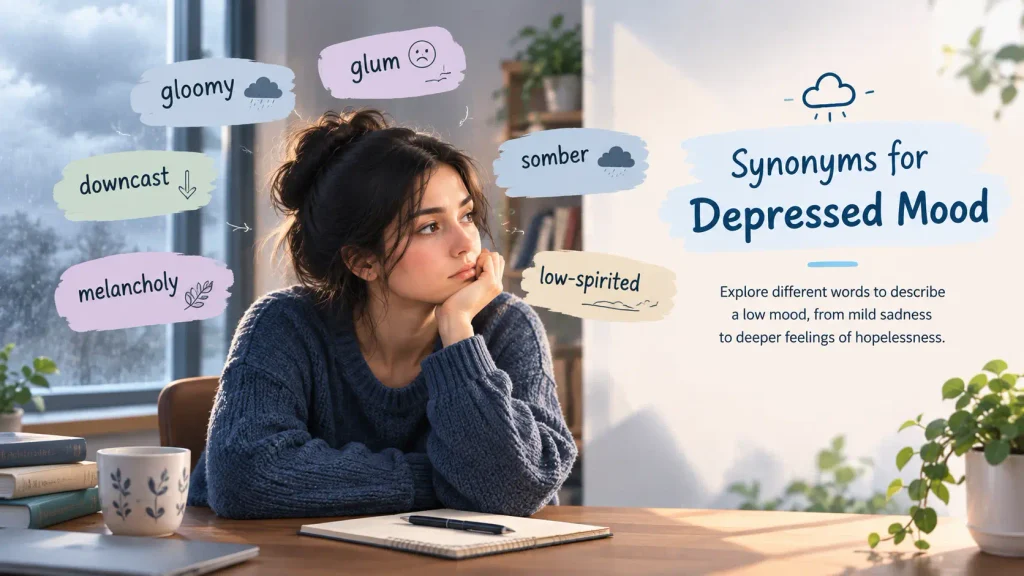
Common synonyms for depressed mood include gloomy, downcast, low-spirited, cheerless, somber, glum, and melancholy. These words can describe different shades of sadness or low mood.
A gloomy mood suggests general sadness, while glum often describes someone quiet and unhappy. Melancholy can suggest a gentle or lingering sadness, whereas somber describes a serious and heavy emotional atmosphere.
The best word depends on the context and the intensity of the feeling you want to describe.
Synonyms for Depressed Person
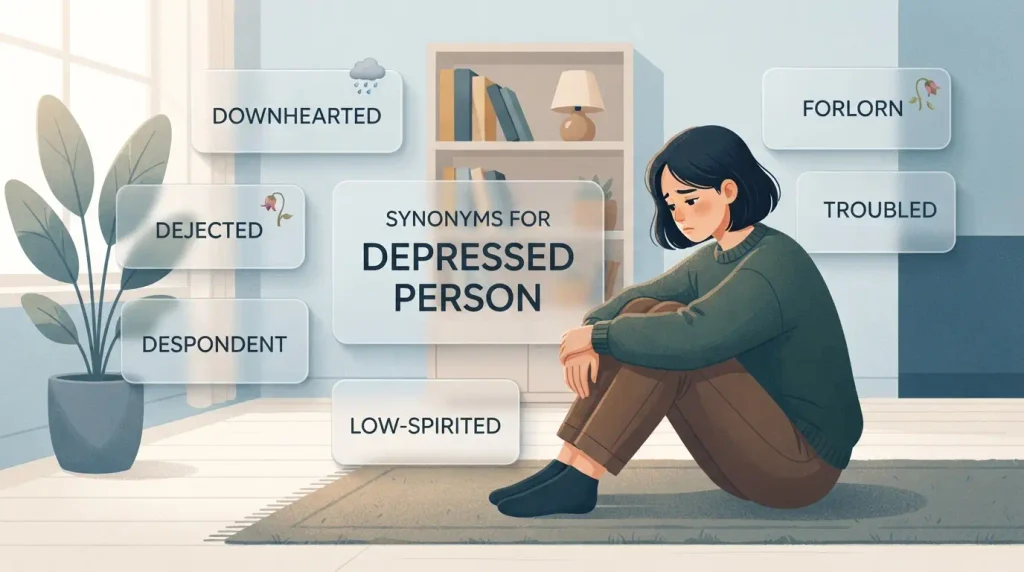
When you talk about a depressed person, softer and more respectful words work best. Terms like downhearted, dejected, weary, or low spirited describe someone going through a hard time without sounding harsh.
These words fit well in stories, articles, or everyday conversation about someone close to you.
Unique Words to Describe Depression and Anxiety
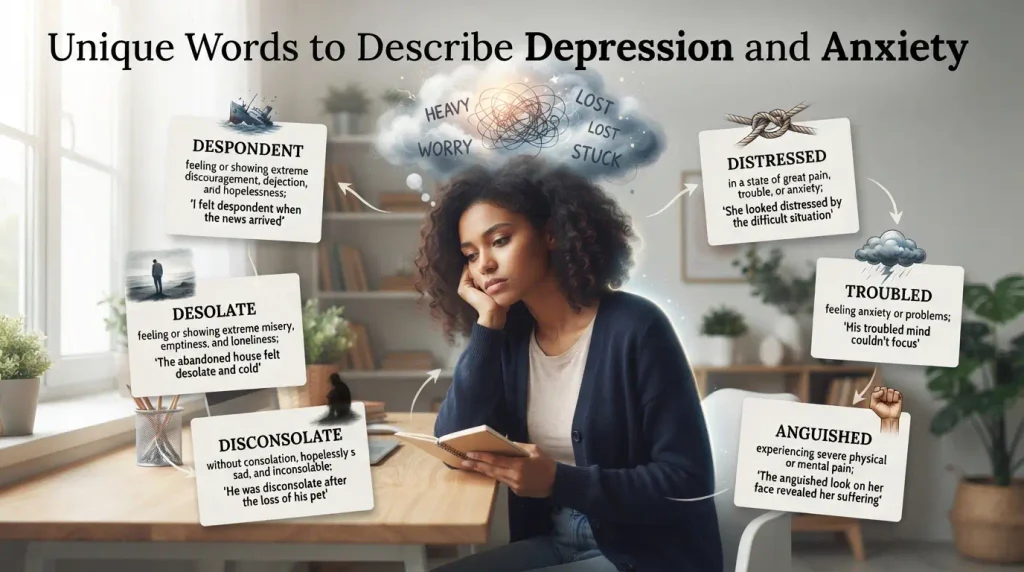
When you need unique words to describe depression and anxiety, try terms such as anguished, distressed, troubled, despondent, desolate, and disconsolate. Each word describes a slightly different emotional experience.
For example, distressed can suggest emotional pain mixed with worry, while despondent suggests a loss of hope. Desolate can describe a deep feeling of loneliness, while anguished points to severe emotional pain.
These words can help writers describe difficult emotions more precisely without repeatedly using the words depressed or anxious.
Fancy Synonyms for Depressed
Sometimes writing calls for a more elegant tone. Words like despondent, disconsolate, dolorous, and funereal give your writing a formal or literary feel.
These fancy synonyms work well in poetry, essays, or creative pieces where simple words feel too plain for the moment.
Good Synonyms for Depressed
The best everyday choices balance clarity and warmth. Gloomy, miserable, downhearted, and blue are all good synonyms for depressed because they are easy to understand and sound natural in daily speech.
They fit casual chats, blog posts, and simple school writing equally well.
Depressed Synonyms Slang
If you are looking for depressed synonyms slang, common casual expressions include feeling blue, down in the dumps, feeling low, bummed out, and downbeat.
These expressions are generally more informal than words such as despondent or disconsolate. For example, someone might say, “I’ve been feeling blue lately” or “I’m really down in the dumps today.”
Slang and casual expressions can work well in conversations and informal writing, but they may not be appropriate when discussing clinical depression or serious mental health concerns.
Synonyms for Depression and Loneliness
Some words can describe feelings connected with both depression and loneliness, including forlorn, desolate, isolated, sorrowful, melancholy, and disconsolate.
Forlorn often suggests sadness combined with loneliness or abandonment. Desolate can describe a deeper feeling of being completely alone, while melancholy suggests a quieter and more lingering sadness.
The right word depends on whether you want to emphasize sadness, loneliness, hopelessness, or emotional pain.
Synonyms and Antonyms for Depressed
Pairing synonyms with opposites helps readers understand a word faster. Synonyms include gloomy, dejected, and despondent, while antonyms include cheerful, joyful, upbeat, and content.
Seeing both sides side by side makes it much easier to remember how each word feels in context.
FAQ Section
What are other words for depression?
Common words linked to depression include sadness, sorrow, gloom, despair, and melancholy. In casual speech, people also say “the blues” or “a low mood.”
These words describe a heavy or lasting sad feeling, though the exact tone changes depending on how strong or how long the feeling lasts.
What are 5 synonyms for sad?
Five simple synonyms for sad are unhappy, gloomy, downhearted, sorrowful, and blue. Each one carries a slightly different weight. Unhappy feels light and general, while sorrowful feels deeper and more serious.
Choosing between them depends on how strong the sadness is in your sentence.
What is another word for “depressive”?
Depressive can be replaced with gloomy, dismal, somber, or bleak, depending on the sentence. These words often describe a mood, a place, or a piece of writing rather than a person directly. They work well when describing dark weather, sad stories, or heavy atmospheres.
What is a low mood synonym in medical terms?
A low mood may be described as sadness, dysphoria, depressed mood, or emotional distress, depending on the context. In medical or mental health writing, “depressed mood” is generally more precise than using an ordinary synonym such as gloomy or blue.
A low mood does not automatically mean someone has clinical depression. The meaning depends on the person’s symptoms, duration, and overall situation.
What is a more intense word for “depressed”?
For a stronger feeling, try despondent, disconsolate, anguished, or grief stricken. These words show a deeper, heavier sadness than simple words like sad or blue.
They fit moments of major loss, long struggle, or overwhelming disappointment in both writing and speech.
What are some depressed synonyms and antonyms?
Common depressed synonyms include sad, gloomy, downhearted, despondent, dejected, melancholy, and miserable. Common antonyms include happy, cheerful, joyful, upbeat, optimistic, and content.
The best synonym or antonym depends on the context because depressed can describe different levels of sadness, mood, or emotional state.
Conclusion
Learning new synonyms for depressed does more than fill up a word list. It changes how clearly you can speak and write about real feelings. A wider vocabulary helps your blog posts feel fresh instead of repetitive.
It helps your essays sound more thoughtful and precise. It even helps everyday conversations feel warmer, because you can match your words to the exact mood you want to share.
Try using a few of these words the next time you write an email, a journal entry, or a school essay. Swap out a tired word for one that fits better.
Over time, this small habit builds a much stronger writing voice, and people will notice the difference in how clearly you express emotion.
“The limits of my language mean the limits of my world.”
A bigger vocabulary gives you a bigger world to describe, one word at a time.
“Language is the dress of thought.”
Dress your thoughts well, and your writing will always feel more honest and more alive.

Sarah is a freelance content writer and grammar enthusiast with over 6 years of experience helping students and bloggers write with more clarity. She joined SynonymKit to make vocabulary-building simple and accessible for everyone, one word list at a time.