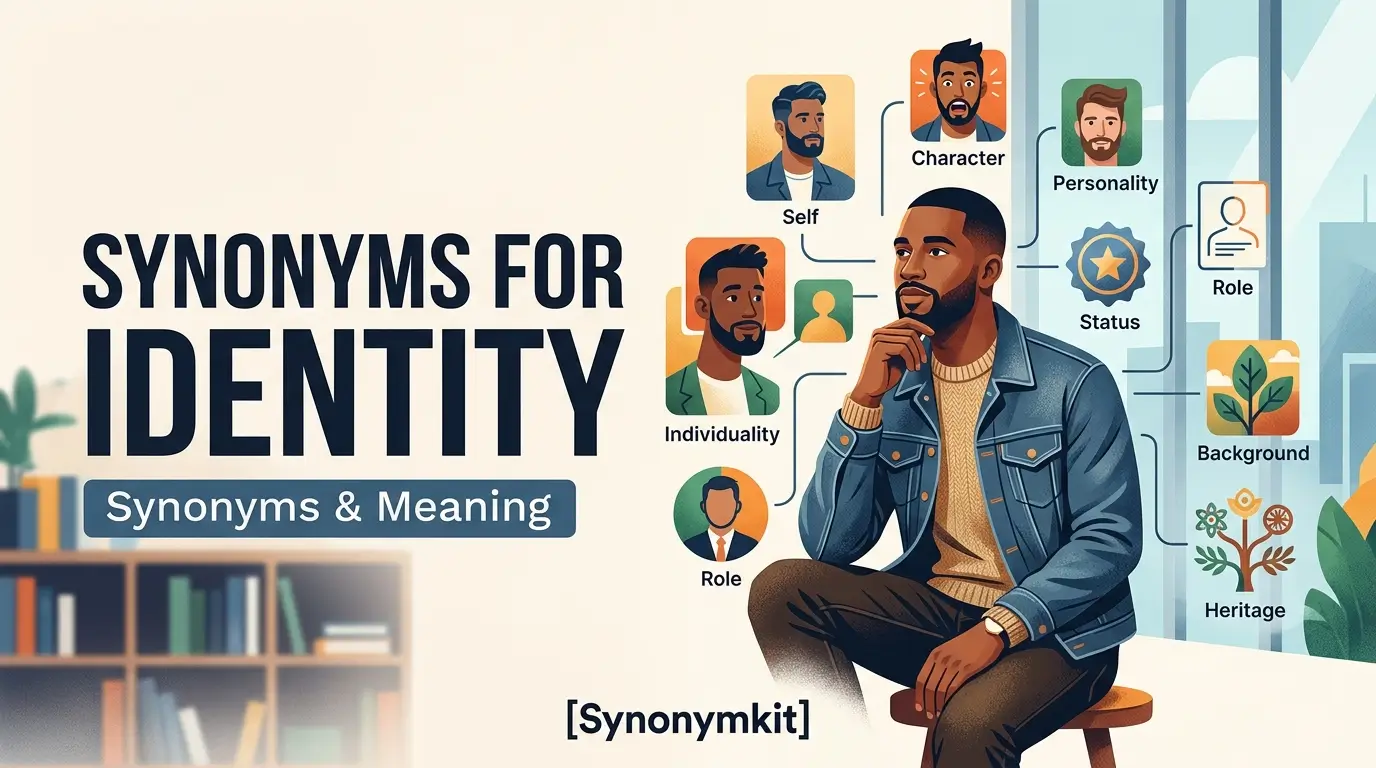
55 Synonyms for Identity: Powerful Words for Who You Are
A synonym for identity is a word that describes who someone is, what makes them unique, or how they see themselves. Useful choices include character, personality, individuality, selfhood, nature, persona, and uniqueness. The best synonym depends on whether you mean a person, group, role, or sense of self.
Imagine meeting someone new at school or work. You may learn their name first, then their interests, values, job, or background. Soon, you begin to understand what makes that person different from others. The right words help us describe these details clearly.
For example, a writer may say, “Her personality makes her easy to remember” instead of repeating the word identity.
Learning synonyms for identity is useful because the same word does not always fit every sentence. A student can choose clearer words in an essay. A blogger can avoid boring repetition. A content writer can make descriptions more natural. Daily English users can explain people and ideas with greater detail.
“The right word can make a simple idea much clearer.”
Good vocabulary also helps you express ideas about people, groups, culture, roles, and personal qualities.
“Words give shape to the ideas we carry.”
Below, you will find 55 useful alternatives, with simple meanings and real life examples.
1. Character
- Meaning: Character describes the qualities that show what kind of person someone is.
- Examples: Her character is kind and honest.
Good character earns people’s trust.
2. Personality
- Meaning: Personality describes the way a person usually thinks, feels, and behaves.
- Examples: His personality is warm and friendly.
Her personality makes people feel comfortable.
3. Individuality
- Meaning: Individuality means the special qualities that make someone different from others.
- Examples: Her clothes show her individuality.
Artists often express their individuality through work.
4. Selfhood
- Meaning: Selfhood means the feeling of being a separate and unique person.
- Examples: Travel changed his sense of selfhood.
Writing helped her understand her selfhood.
5. Persona
- Meaning: Persona means the image or personality someone shows to other people.
- Examples: His public persona seems very confident.
The actor created a funny persona.
6. Uniqueness
- Meaning: Uniqueness means the special quality that makes someone or something unlike others.
- Examples: Her uniqueness makes her memorable.
The brand celebrates its uniqueness.
7. Self
- Meaning: Self means the person you are, including your thoughts, feelings, and qualities.
- Examples: She is learning about herself.
He feels proud of his true self.
8. Being
- Meaning: Being refers to the existence and nature of a person.
- Examples: Every person has a unique being.
The story explores human being deeply.
9. Nature
- Meaning: Nature means the basic qualities and habits that make someone who they are.
- Examples: Her gentle nature helps others.
His calm nature is easy to notice.
10. Essence
- Meaning: Essence means the most important quality that makes someone or something what it is.
- Examples: Kindness is her true essence.
The poem captures freedom’s essence.
11. Profile
- Meaning: Profile means information that gives a clear picture of a person or organization.
- Examples: I updated my online profile.
Her profile shows years of experience.
12. Background
- Meaning: Background means the experiences, family, culture, or education that shape someone.
- Examples: We have different family backgrounds.
His background shaped his career.
13. Heritage
- Meaning: Heritage means traditions, culture, and history passed through families or groups.
- Examples: She values her cultural heritage.
The museum protects local heritage.
14. Culture
- Meaning: Culture means the shared beliefs, customs, values, and habits of a group.
- Examples: Food can reflect culture.
Their culture values family time.
15. Origin
- Meaning: Origin means the place, family, or situation where someone or something began.
- Examples: She knows her family origin.
The story has an unusual origin.
16. Background Identity
- Meaning: Background identity describes important personal or cultural details that shape someone’s sense of self.
- Examples: Her background identity matters to her.
Stories can explore background identity.
17. Self Image
- Meaning: Self image means the picture or idea someone has about themselves.
- Examples: Exercise improved his self image.
Her self image became more positive.
18. Self Concept
- Meaning: Self concept means the beliefs someone has about their own qualities and abilities.
- Examples: School can shape self concept.
Success improved her self concept.
19. Self Perception
- Meaning: Self perception means how someone sees, understands, and judges themselves.
- Examples: His self perception changed slowly.
Feedback can affect self perception.
20. Self Awareness
- Meaning: Self awareness means understanding your own feelings, actions, strengths, and weaknesses.
- Examples: Self awareness helps people grow.
She developed strong self awareness.
21. Individuality
- Meaning: Individuality is the quality that shows how one person differs from another.
- Examples: Fashion can show individuality.
Her art reflects her individuality.
22. Distinctiveness
- Meaning: Distinctiveness means having clear qualities that make someone or something easy to recognize.
- Examples: The logo has strong distinctiveness.
His voice has real distinctiveness.
23. Uniqueness
- Meaning: Uniqueness describes something special that cannot easily be matched by others.
- Examples: Her uniqueness attracts attention.
Every culture has its uniqueness.
24. Authenticity
- Meaning: Authenticity means being genuine, real, and true to yourself.
- Examples: People value her authenticity.
His writing shows great authenticity.
25. Genuineness
- Meaning: Genuineness means being sincere, honest, and not pretending to be someone else.
- Examples: Her genuineness is easy to see.
Readers appreciate his genuineness.
26. Originality
- Meaning: Originality means having ideas or qualities that are fresh and different.
- Examples: Her originality impressed the judges.
The design shows great originality.
27. Signature
- Meaning: Signature can mean a special feature that is strongly linked with someone.
- Examples: Blue became his signature color.
Humor is her signature style.
28. Mark
- Meaning: Mark means a feature or sign that helps show who someone is.
- Examples: His accent is a clear mark.
Kindness left a lasting mark.
29. Trait
- Meaning: A trait is a particular quality that is part of someone’s personality.
- Examples: Patience is her strongest trait.
Honesty is a valuable trait.
30. Quality
- Meaning: Quality means a feature or characteristic that describes a person or thing.
- Examples: Courage is a useful quality.
Her best quality is kindness.
31. Characteristic
- Meaning: A characteristic is a noticeable feature or quality belonging to someone.
- Examples: Patience is his key characteristic.
Each bird has different characteristics.
32. Attribute
- Meaning: An attribute is a quality or feature that helps describe someone.
- Examples: Honesty is an important attribute.
Leadership is a useful attribute.
33. Feature
- Meaning: Feature means a noticeable quality that helps describe or recognize someone.
- Examples: Her smile is a lovely feature.
The website has useful features.
34. Role
- Meaning: Role means the position or function someone has in a group or situation.
- Examples: She has a leadership role.
His role changed after promotion.
35. Status
- Meaning: Status means a person’s position or standing within a group or society.
- Examples: Her status changed after promotion.
Social status can affect opportunities.
36. Position
- Meaning: Position means the place or role someone holds in a group or situation.
- Examples: He explained his position clearly.
Her position gives her responsibility.
37. Reputation
- Meaning: Reputation means the general opinion people have about someone or something.
- Examples: She has a good reputation.
His reputation grew through honest work.
38. Image
- Meaning: Image means the way a person, brand, or group is seen by others.
- Examples: The company changed its image.
Her public image is professional.
39. Brand
- Meaning: Brand can describe the unique image and qualities linked with a person or company.
- Examples: She built a strong personal brand.
The brand feels young and modern.
40. Name
- Meaning: Name can identify a person, group, place, or thing in everyday communication.
- Examples: Please write your name here.
Her name became widely known.
41. Label
- Meaning: Label means a word or description used to place someone into a group.
- Examples: He dislikes that label.
Labels cannot explain everyone.
42. Role Identity
- Meaning: Role identity describes how a person’s social role becomes part of their sense of self.
- Examples: Teaching shaped her role identity.
His job affects his role identity.
43. Social Identity
- Meaning: Social identity describes how people see themselves as members of social groups.
- Examples: Groups can shape social identity.
Friendship may influence social identity.
44. Personal Identity
- Meaning: Personal identity describes the qualities and experiences that make a person who they are.
- Examples: Travel shaped her personal identity.
His choices reflect personal identity.
45. Group Identity
- Meaning: Group identity describes the shared feeling of belonging to a particular group.
- Examples: Sports can build group identity.
The club has strong group identity.
46. Cultural Identity
- Meaning: Cultural identity describes the culture, traditions, and values that connect someone to a group.
- Examples: Music can express cultural identity.
Food often reflects cultural identity.
47. Individual Profile
- Meaning: Individual profile means a collection of details that describes one particular person.
- Examples: The website shows each individual profile.
Her individual profile looks complete.
48. Self Definition
- Meaning: Self definition means the way someone describes and understands who they are.
- Examples: Writing supports self definition.
His work reflects self definition.
49. Self Understanding
- Meaning: Self understanding means knowing your feelings, values, needs, and personal qualities.
- Examples: Journaling can improve self understanding.
Experience often builds self understanding.
50. Sense of Self
- Meaning: Sense of self means a person’s understanding of who they are.
- Examples: Family can shape your sense of self.
Success strengthened her sense of self.
51. Self Expression
- Meaning: Self expression means showing your thoughts, feelings, ideas, or personality to others.
- Examples: Art allows self expression.
Her clothes are a form of self expression.
52. Identity Profile
- Meaning: Identity profile means a set of details that describes important parts of someone’s identity.
- Examples: The form asks for an identity profile.
Researchers created an identity profile.
53. Distinction
- Meaning: Distinction means a clear difference that makes one person or thing stand apart.
- Examples: Her voice has a clear distinction.
The award gave him distinction.
54. Characterization
- Meaning: Characterization is the way a person or character is described through qualities and actions.
- Examples: The novel uses strong characterization.
Her actions improve the characterization.
55. Identifying Features
- Meaning: Identifying features are details that help people recognize or describe someone clearly.
- Examples: The photo shows identifying features.
His voice has unique identifying features.
Synonyms for Freedom and Independence
Although this phrase does not directly match identity, freedom and independence can connect closely with personal identity. Words such as autonomy, liberty, self rule, independence, and self determination describe the ability to make your own choices. These ideas can shape how people understand themselves.
Use them when your writing discusses personal control, rights, choices, or independence rather than identity itself.
Synonyms for Freedom of Choice
Freedom of choice means having the power to select between different options. For identity related writing, words such as autonomy, agency, independence, and self determination may fit when explaining personal decisions. These words should not replace identity in every sentence.
Choose them when the main idea is about control over decisions, rather than the qualities that describe who someone is.
Synonyms and Antonyms for Freedom
Freedom has synonyms such as liberty, independence, autonomy, and self rule. Its antonyms include restriction, control, captivity, dependence, and oppression. While these words focus on freedom, they can appear in discussions about identity when people explain personal rights or social roles.
Always check the sentence before choosing a replacement because related words may have different meanings.
Poetic Synonyms for Freedom
Poetic writing often uses words such as liberty, release, openness, liberation, flight, and independence to create a stronger feeling. These words can make a poem, story, or creative passage sound more emotional.
However, they are not direct synonyms for identity. For a poetic description of identity, words like essence, selfhood, individuality, spirit, and persona may create a more personal and expressive tone.
FAQ: People Also Ask
What are 5 strong synonyms?
Five strong synonyms for identity are individuality, personality, character, selfhood, and persona. Each word has a slightly different use. Individuality highlights what makes someone different. Personality focuses on behavior and personal qualities. Character often describes moral qualities. Selfhood focuses on the inner sense of being a person. Persona describes the image or personality someone presents to others.
What is freedom in 3 words?
Freedom can be described in three simple words: choice, independence, and liberty. Choice means having options. Independence means being able to act without unwanted control. Liberty means having the right or ability to act freely. These words are useful when writing about rights, personal decisions, society, or government.
However, freedom and identity are different ideas, even though they can strongly influence each other.
What are some beautiful words to describe freedom?
Beautiful words for freedom include liberty, liberation, independence, openness, release, autonomy, and self determination. In creative writing, words such as flight, openness, and liberation can create a stronger emotional picture. The best choice depends on your sentence.
If you want a formal tone, “liberty” or “autonomy” may work well. For poetry, “flight” or “release” can sound more expressive.
What’s another word for creative freedom?
Another word for creative freedom is artistic freedom. You can also use creative liberty, artistic independence, creative autonomy, or freedom of expression, depending on the sentence. These terms describe the ability to create, write, design, or make art without unwanted limits.
For example, a writer may value creative autonomy because it allows them to explore original ideas and develop their own style.
Conclusion
Learning synonyms for identity gives you more ways to explain people, personalities, groups, roles, and personal qualities. Instead of using the same word again and again, you can choose a word that gives your sentence a more exact meaning.
For example, personality works well when you discuss behavior. Individuality is useful when you want to show how someone is different. Selfhood works better for deeper ideas about the inner self. Heritage and cultural identity can help when discussing family, traditions, and culture. Persona is useful when talking about the image someone presents to others.
This wider vocabulary can make your essays, blog posts, emails, stories, and conversations clearer. It can also help you sound more natural and confident when speaking English.
Try choosing one new synonym each day. Write a short sentence with it. Then use it in a message, essay, or conversation. Small practice can build strong vocabulary over time.
“Better vocabulary gives you better ways to share your thoughts.”
You do not need to memorize all 55 words at once. Start with the words that match your daily needs, understand their differences, and use them naturally.
“The more words you know, the more clearly you can express yourself.”

James is a former English teacher turned content strategist who’s passionate about making language learning less intimidating. At SynonymKit, he focuses on curating word lists that are practical for everyday writing, essays, and professional communication.