55 Synonyms for Destruction: Powerful Words for Damage and Ruin
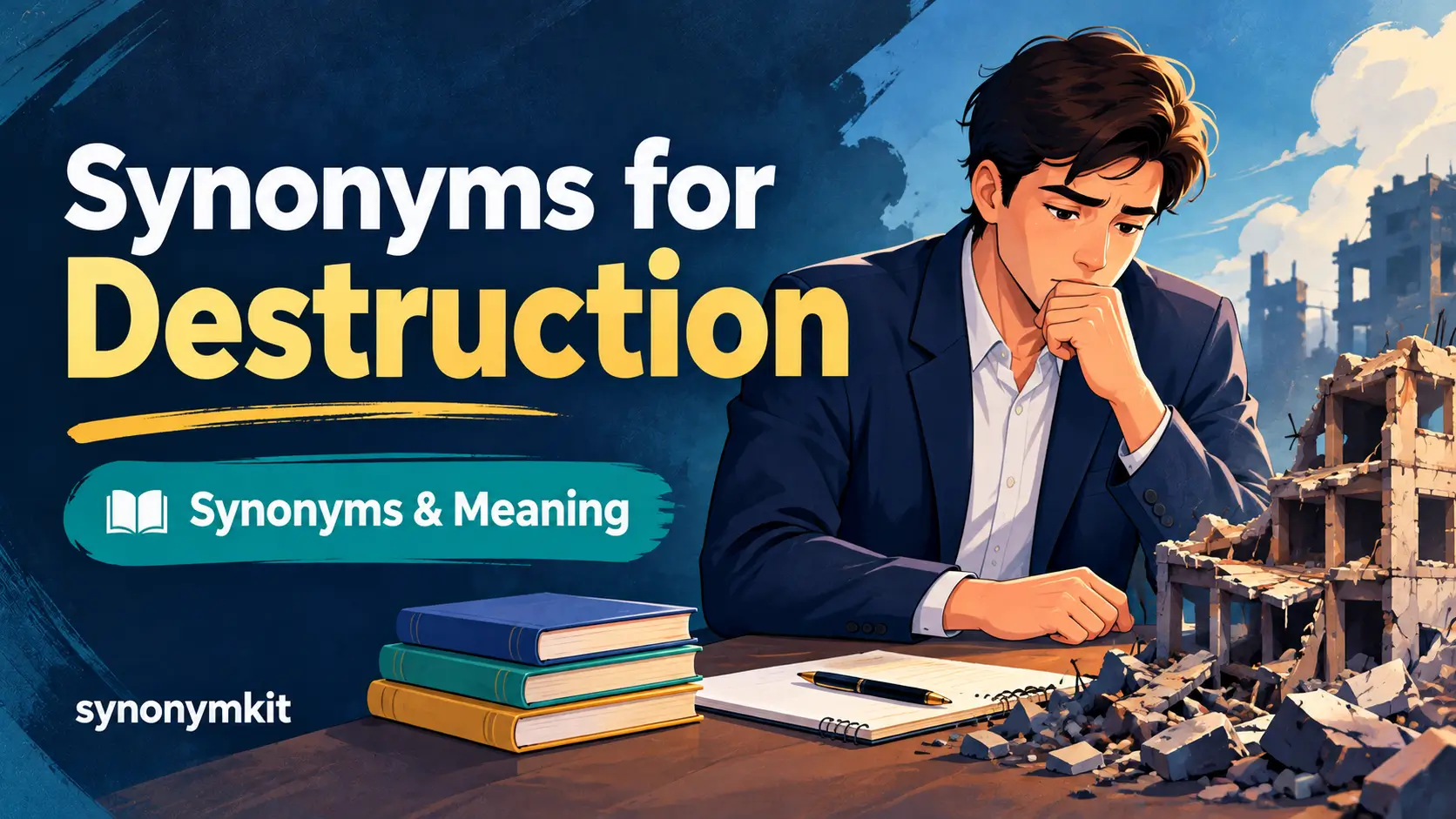
Synonyms for destruction include ruin, devastation, demolition, wreckage, and annihilation. These words describe the act of damaging something, breaking it apart, or ending its existence. The best word depends on the situation, such as a damaged building, a ruined plan, or a place harmed by a disaster.
A powerful storm hits a town. Roofs fall, trees break, and roads fill with debris. People look at the damage and search for the right words to explain what happened. In another situation, a fire may destroy a home, or a bad choice may ruin someone’s plans. Different events need different words to describe their effects.
Learning words related to destruction helps you explain serious events with care and detail. Students can use them to write stronger stories and essays. Bloggers can choose clear words that help readers understand an event.
Content writers can make articles more exact and engaging. Daily English users can describe problems and events with greater confidence.
For example, saying a fire caused devastation can show that the damage was severe. Saying it caused wreckage helps readers picture the broken remains. Choosing the right word makes your message clearer and easier to understand.
“The right words help us describe even the hardest events.”
Words also carry different levels of meaning. Some describe simple damage, while others suggest complete ruin or the end of something.
“Clear language turns a difficult idea into an easy one.”
Learning these terms will help you choose words that fit your meaning and your audience.
55 Synonyms for Destruction
1. Ruin
- Meaning: Ruin means serious damage that leaves something in poor condition.
- Examples: The flood brought ruin to nearby farms. His careless choice led to financial ruin.
2. Devastation
- Meaning: Devastation means very great damage caused to a place or thing.
- Examples: The storm caused devastation across the town. Families returned to see the devastation firsthand.
3. Demolition
- Meaning: Demolition means pulling down a building or structure on purpose.
- Examples: The crew began demolition early Monday morning. Demolition cleared space for the new school.
4. Annihilation
- Meaning: Annihilation means the complete destruction of something or someone.
- Examples: The story describes the annihilation of an empire. The team feared total annihilation during battle.
5. Wreckage
- Meaning: Wreckage means broken parts left after something has been badly damaged.
- Examples: Rescuers searched the wreckage after sunrise. Cars lay among the wreckage after the crash.
6. Damage
- Meaning: Damage means harm that makes something less useful or valuable.
- Examples: Heavy rain caused damage to our roof. The repair team checked the damage carefully.
7. Ruination
- Meaning: Ruination means the process of bringing something into a ruined state.
- Examples: Poor planning caused the business’s ruination. The drought threatened the ruination of local crops.
8. Devastating loss
- Meaning: A devastating loss means losing something important in a deeply harmful way.
- Examples: The family faced a devastating loss. The fire caused a devastating loss of homes.
9. Desolation
- Meaning: Desolation means a state where a place looks empty, ruined, and abandoned.
- Examples: The old village showed signs of desolation. Winter storms left desolation across the coast.
10. Dismantling
- Meaning: Dismantling means taking something apart piece by piece.
- Examples: Workers started dismantling the broken machine. The team finished dismantling the old stage.
11. Eradication
- Meaning: Eradication means removing something completely so it no longer exists.
- Examples: The program supports eradication of the disease. The plan aims for eradication of harmful pests.
12. Extinction
- Meaning: Extinction means the complete loss of a type of living thing.
- Examples: Habitat loss can lead to extinction. Scientists work to prevent the extinction of rare birds.
13. Collapse
- Meaning: Collapse means falling down or failing suddenly and completely.
- Examples: The weak roof collapsed during the storm. Years of debt caused the company’s collapse.
14. Breakdown
- Meaning: Breakdown means a failure that stops something from working properly.
- Examples: The machine suffered a sudden breakdown. Poor care led to the system’s breakdown.
15. Rupture
- Meaning: Rupture means a break or split that causes damage.
- Examples: The pipe rupture flooded the basement. A sudden rupture stopped the water supply.
16. Shattering
- Meaning: Shattering means breaking something into many small pieces.
- Examples: The falling branch caused the window’s shattering. Shattering glass covered the kitchen floor.
17. Breakage
- Meaning: Breakage means damage that causes something to crack or break apart.
- Examples: Careful packing can prevent breakage during travel. The store recorded breakage among fragile items.
18. Destruction
- Meaning: Destruction means the act of ruining, damaging, or ending something.
- Examples: The fire caused destruction across several blocks. The report describes the destruction of forests.
19. Obliteration
- Meaning: Obliteration means wiping something out so almost nothing remains.
- Examples: The blast caused the obliteration of the bridge. The story shows the town’s sudden obliteration.
20. Elimination
- Meaning: Elimination means removing something completely from a group or place.
- Examples: The plan supports the elimination of unsafe materials. Elimination of waste helped the factory save money.
21. Decimation
- Meaning: Decimation means causing severe loss or destroying a large part of something.
- Examples: The disease led to decimation of the herd. The storm caused decimation of nearby crops.
22. Disintegration
- Meaning: Disintegration means breaking into smaller parts until something falls apart.
- Examples: The old wall showed signs of disintegration. Water caused the rock’s gradual disintegration.
23. Degradation
- Meaning: Degradation means a decline in quality, strength, or condition.
- Examples: Pollution caused degradation of the river. Years of neglect led to building degradation.
24. Depredation
- Meaning: Depredation means harmful damage caused by attacks, theft, or destruction.
- Examples: Farmers reported depredation by wild animals. The report described depredation during the conflict.
25. Despoilation
- Meaning: Despoilation means damaging or spoiling a place by taking or destroying its resources.
- Examples: The mine caused despoilation of the landscape. Residents protested the despoilation of their coastline.
26. Ravaging
- Meaning: Ravaging means causing widespread damage to a place or group.
- Examples: The hurricane kept ravaging the coastal town. Wildfires were ravaging forests throughout the region.
27. Devouring
- Meaning: Devouring means consuming or destroying something quickly and completely.
- Examples: The flames kept devouring the wooden house. The fire was devouring everything in its path.
28. Rupturing
- Meaning: Rupturing means splitting or bursting something open through force or pressure.
- Examples: Pressure was rupturing the damaged water pipe. The blast risked rupturing the storage tank.
29. Thwarting
- Meaning: Thwarting means stopping a plan or action from succeeding.
- Examples: Their quick action thwarted the attack. Strong security thwarted the planned break in.
30. Subversion
- Meaning: Subversion means weakening or damaging a system from within.
- Examples: The plot involved subversion of the government. False claims encouraged subversion of public trust.
31. Overthrow
- Meaning: Overthrow means removing a leader or government from power.
- Examples: The uprising led to the king’s overthrow. Citizens planned the overthrow of the dictator.
32. Defacement
- Meaning: Defacement means spoiling the look of something by marking or damaging it.
- Examples: The school reported defacement of its walls. Workers repaired the statue after its defacement.
33. Mutilation
- Meaning: Mutilation means badly damaging or cutting parts off something.
- Examples: The report covered the mutilation of ancient statues. Officials condemned the mutilation of public art.
34. Disfigurement
- Meaning: Disfigurement means damage that badly changes someone’s or something’s appearance.
- Examples: The accident caused facial disfigurement. The fire left visible disfigurement on the building.
35. Corruption
- Meaning: Corruption means damage to the honesty, quality, or purity of something.
- Examples: Corruption weakened trust in public office. Heat caused corruption of the stored food.
36. Spoilage
- Meaning: Spoilage means damage that makes food or goods unusable.
- Examples: Warm weather caused spoilage of fresh milk. Proper storage helps prevent food spoilage.
37. Waste
- Meaning: Waste means using or losing something in a way that ruins its value.
- Examples: Careless cutting caused waste of useful wood. The leak led to waste of clean water.
38. Decay
- Meaning: Decay means gradual damage that makes something weaker or less sound.
- Examples: Moisture caused decay in the wooden floor. The empty house showed signs of decay.
39. Erosion
- Meaning: Erosion means the gradual wearing away of land or material.
- Examples: Heavy rain increased erosion along the hillside. Plant roots help slow soil erosion.
40. Corrosion
- Meaning: Corrosion means the gradual wearing away of metal through chemical action.
- Examples: Salt water caused corrosion on the gate. Workers replaced the pipe damaged by corrosion.
41. Attrition
- Meaning: Attrition means gradual weakening caused by repeated pressure or loss.
- Examples: Years of conflict caused attrition among the troops. Repeated delays led to attrition of public trust.
42. Impairment
- Meaning: Impairment means damage that reduces how well something works.
- Examples: The crash caused impairment of the engine. Noise can cause hearing impairment over time.
43. Rupture of order
- Meaning: A rupture of order means a break in peace, control, or normal life.
- Examples: The riot caused a rupture of order. Leaders worked to prevent a rupture of order.
44. Destruction of property
- Meaning: Destruction of property means damaging or ruining buildings, objects, or belongings.
- Examples: The storm caused destruction of property downtown. Police investigated the destruction of property overnight.
45. Catastrophe
- Meaning: A catastrophe is a terrible event that causes great harm or loss.
- Examples: The earthquake became a national catastrophe. Quick action helped limit the catastrophe’s effects.
46. Calamity
- Meaning: A calamity is an event that causes serious damage or suffering.
- Examples: The drought became a calamity for farmers. The town worked together after the calamity.
47. Havoc
- Meaning: Havoc means widespread confusion, damage, or disorder caused by an event.
- Examples: The storm wreaked havoc across the island. The broken water main caused havoc downtown.
48. Carnage
- Meaning: Carnage means widespread killing or severe destruction during a violent event.
- Examples: The novel describes carnage after the battle. Emergency crews arrived to face terrible carnage.
49. Ruins
- Meaning: Ruins are the broken remains of buildings or other structures.
- Examples: Tourists walked through the ancient ruins. The old castle stood in ruins for centuries.
50. Inferno
- Meaning: An inferno is a huge, uncontrolled fire that causes great destruction.
- Examples: Firefighters battled the inferno through the night. The warehouse became an inferno within minutes.
51. Slaughter
- Meaning: Slaughter means the killing of many people or animals.
- Examples: The history book records the slaughter of civilians. The farmer prevented further slaughter of the herd.
52. Extirpation
- Meaning: Extirpation means the complete removal of a group from a place.
- Examples: Conservation efforts aim to stop local extirpation. Hunting once threatened the extirpation of native wolves.
53. Liquidation
- Meaning: Liquidation means closing a business by selling its assets to pay debts.
- Examples: The firm entered liquidation after heavy losses. Liquidation ended the store’s long business history.
54. Disruption
- Meaning: Disruption means interrupting normal activity or stopping a system from working smoothly.
- Examples: The storm caused disruption to train services. The power cut brought disruption to the office.
55. Undoing
- Meaning: Undoing means an action or event that causes someone’s failure or ruin.
- Examples: His pride became his undoing in the end. Poor choices led to the project’s undoing.
A useful note: These words are related to destruction, but they are not interchangeable in every sentence. Demolition usually refers to taking structures down, decay describes gradual deterioration, and annihilation suggests complete destruction. Choose the word that matches the event and its level of harm.
“A precise word can tell a much bigger story.”
Synonyms for Destruction That Start With C
Words beginning with C can describe different forms of destruction. Catastrophe and calamity describe events that cause great harm. Carnage refers to widespread killing or severe violence, while corruption can describe damage to honesty or quality.
Choose the word that fits your sentence. For example, a flood may become a catastrophe, while dishonesty can lead to corruption in an organization.
Synonyms for Destruction That Start With S
Several S words describe damage, loss, or the act of ruining something. Shattering means breaking something into pieces, while spoilage refers to goods or food becoming unusable. Subversion describes weakening a system from within.
These words work in different settings, from everyday conversations to formal writing. Use the word that best explains what was harmed and how the damage occurred.
Synonyms for Destruction of Property
Destruction of property refers to damage to buildings, vehicles, equipment, or personal belongings. Useful alternatives include vandalism, property damage, wreckage, and demolition. Vandalism usually involves deliberate damage, while demolition means taking down a structure.
For example, a broken shop window may be property damage, while a building removed during redevelopment undergoes demolition. These terms help writers describe events clearly and accurately.
Synonyms for Destruction and Devastation
Destruction and devastation both describe serious harm, but devastation often emphasizes the scale or emotional impact of the damage. Other related words include ruin, desolation, havoc, and annihilation.
A storm may cause devastation across a town, while a failed plan may lead to ruin. In formal writing, select the word that matches the event’s severity instead of using the strongest term every time.
Frequently Asked Questions
What Is a Fancy Word for Destroy?
A fancy word for destroy is obliterate, which means to wipe something out completely. Other formal choices include annihilate, demolish, and eradicate. You might use demolish when discussing a building, eradicate when describing the removal of a harmful problem, and obliterate when something is completely wiped away.
The best choice depends on your sentence, your audience, and how much damage you want to describe.
What Is a Stronger Word for “Destroyed”?
Annihilated is a stronger word for destroyed when something has been completely wiped out. Obliterated also suggests that almost nothing remains. For example, you could say, “The blast destroyed the old wall,” or use stronger language to describe complete destruction. However, strong words should match the facts.
If an object is only partly damaged, words like ruined, wrecked, or damaged may be more accurate.
What Is a Fancy Word for Damage?
Deterioration is a formal word for damage that develops over time. It works well when describing buildings, roads, equipment, or other things that slowly become worse. Other choices include impairment, which means reduced ability to function, and degradation, which means a decline in quality or condition.
For example, writers can describe the deterioration of an old building or the impairment of a machine after an accident.
What Are Some Unique Words for “Destruction”?
Some less common words for destruction include despoilation, depredation, extirpation, and disintegration. Despoilation refers to damaging or spoiling a place, while depredation involves harmful attacks or acts of plunder.
Extirpation describes the complete removal of a group from a place. Disintegration means breaking into smaller parts. These words can add variety to formal writing, history essays, and detailed reports, but explain unfamiliar terms when writing for general readers.
Conclusion
Learning synonyms for destruction helps you describe damage, loss, and change with greater accuracy. Instead of repeating the same word in every sentence, you can choose a term that fits the event. Words like ruin, demolition, devastation, and collapse each express a different idea. Understanding these differences makes your writing clearer and more useful.
Students can use these words in essays, reports, and creative stories. Bloggers can use them to explain news, disasters, and historical events. Content writers can choose precise language for articles and website pages.
Daily English users can also use these terms to explain problems, accidents, and difficult situations.
Start by learning five new words from this list. Write a sentence for each word and think about the kind of damage it describes. Then try using the words in emails, school assignments, blog posts, or everyday conversations. Always choose a word that matches the facts and the tone of your message.
Remember that a bigger word is not always a better word. Simple language is often the clearest choice, especially when your readers need to understand serious events.
“Good writing begins with choosing words that fit your meaning.”
Keep practicing, explore new vocabulary, and use each synonym with care. Over time, you will become more confident in both your writing and your speech.
“Every new word gives you another way to express an idea.”

Sarah is a freelance content writer and grammar enthusiast with over 6 years of experience helping students and bloggers write with more clarity. She joined SynonymKit to make vocabulary-building simple and accessible for everyone, one word list at a time.