50 Synonyms for Ability: Better Words for Skills, Talent, and Strength
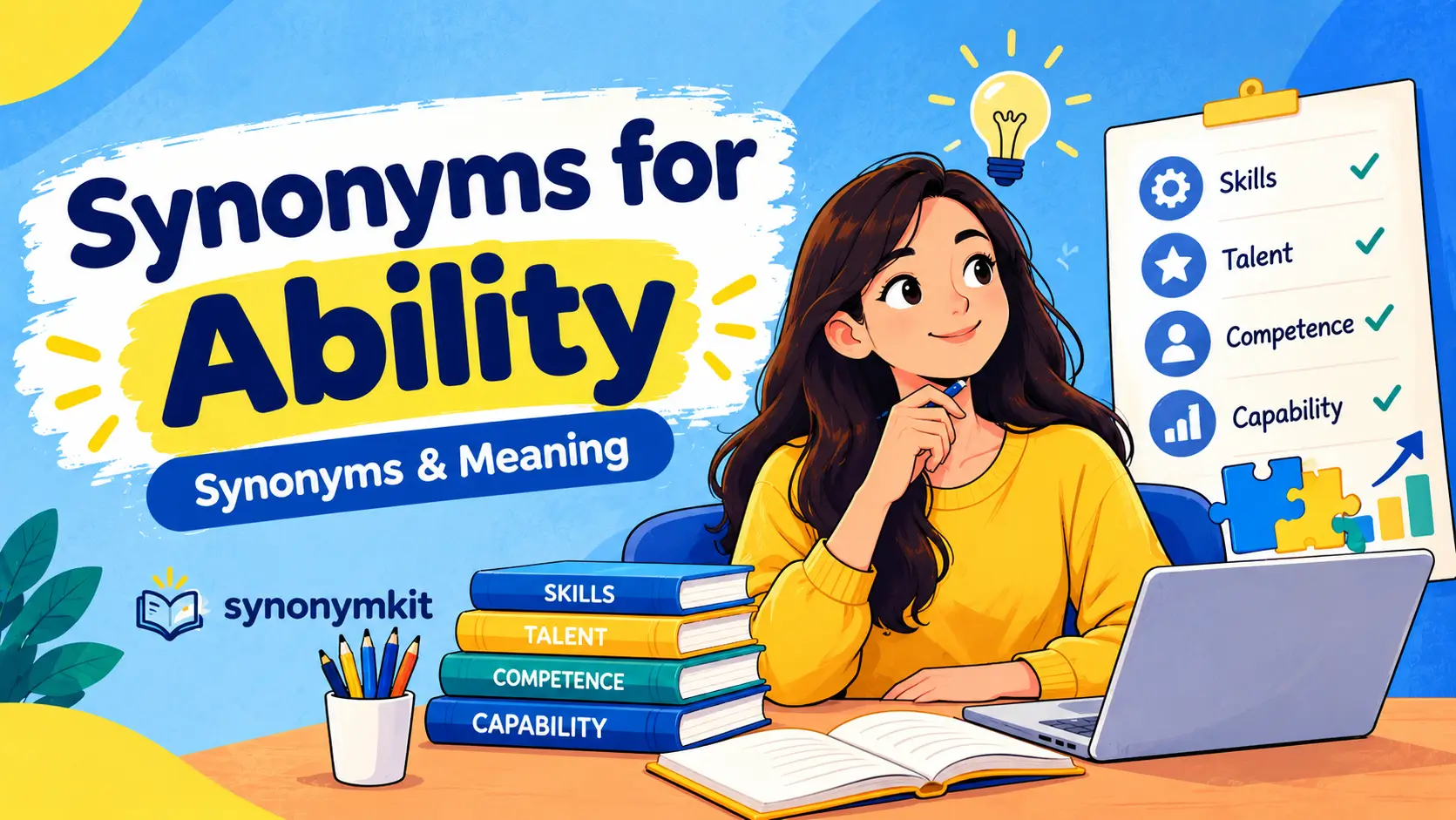
Common synonyms for ability include skill, talent, capability, capacity, competence, and aptitude. The right word depends on the context. Skill usually refers to something learned through practice, while talent suggests a natural gift. Capability and competence are useful in professional, academic, and everyday writing.
Imagine a student who solves a difficult math problem after weeks of practice. Her teacher might praise her problem solving skills. At work, someone who handles challenging tasks successfully may be described as capable and competent.
Although these words are related to ability, each one highlights a slightly different strength.
The word ability is useful, but repeating it too often can make your writing sound ordinary. Choosing a more precise alternative helps readers understand whether you mean a learned skill, a natural talent, practical knowledge, mental strength, or the power to complete a task.
Students can use these words to make essays and assignments more varied. Bloggers can create smoother, more engaging content, while content writers can describe people and their strengths more accurately.
In everyday conversations, the right vocabulary can also help you express your thoughts with greater confidence.
You do not need to use complicated words to sound intelligent. The goal is to choose words that communicate your meaning clearly. The following list includes 50 useful alternatives, along with simple definitions and examples.
50 Synonyms for Ability
1. Skill
Meaning: The ability to do something well, usually developed through practice, training, or experience.
Examples:
- She has excellent writing skills.
- He developed the skill through regular practice.
2. Talent
Meaning: A natural ability that helps someone perform a particular activity well.
Examples:
- Mia has a natural talent for music.
- His artistic talent impressed the entire class.
3. Capability
Meaning: The power or ability to complete a task or achieve a particular result.
Examples:
- The team demonstrated its capability to solve complex problems.
- This software has the capability to process large amounts of data.
4. Capacity
Meaning: The ability or potential to perform an activity, handle responsibility, or manage a certain amount of work.
Examples:
- She has the capacity to lead a large team.
- He has a remarkable capacity for learning new skills.
5. Competence
Meaning: The knowledge and skills needed to perform a task successfully and reliably.
Examples:
- Her competence made her a trusted team member.
- The manager recognized his competence in handling difficult situations.
6. Aptitude
Meaning: A natural ability to learn or develop skill in a particular subject or activity.
Examples:
- He has a strong aptitude for mathematics.
- Her aptitude for languages became clear at an early age.
7. Proficiency
Meaning: A high level of practical skill or knowledge in a particular area.
Examples:
- She gained proficiency in English through daily practice.
- His computer proficiency helped him complete the project efficiently.
8. Expertise
Meaning: Advanced knowledge or skill gained through education, training, and experience.
Examples:
- Her expertise in marketing helped the company grow.
- We relied on his technical expertise to solve the problem.
9. Gift
Meaning: A natural ability that makes someone especially good at an activity.
Examples:
- She has a gift for explaining difficult ideas.
- His gift for storytelling keeps readers interested.
10. Flair
Meaning: A natural talent for doing something creatively, attractively, or with style.
Examples:
- She has a flair for interior design.
- His flair for writing makes his stories memorable.
11. Genius
Meaning: Exceptional intellectual, creative, or inventive ability.
Examples:
- Her scientific genius changed the way the team approached the problem.
- The invention demonstrated his creative genius.
12. Knack
Meaning: A natural or easily developed skill for doing something well.
Examples:
- He has a knack for fixing broken appliances.
- She has a knack for making people feel welcome.
13. Strength
Meaning: A quality or area in which someone performs particularly well.
Examples:
- Clear communication is one of her greatest strengths.
- His strength lies in solving practical problems.
14. Power
Meaning: The ability or force to act, influence others, or achieve something.
Examples:
- She has the power to influence important decisions.
- Education gives people the power to create change.
15. Potential
Meaning: The possibility or ability to develop, improve, or achieve something in the future.
Examples:
- The young student has great potential.
- Her potential to become a skilled leader is impressive.
16. Competency
Meaning: A specific combination of knowledge, skills, and behaviors needed to perform a task effectively.
Examples:
- Communication is an important workplace competency.
- The training program helped him develop the required competencies.
17. Efficiency
Meaning: The ability to complete work with minimal wasted time, effort, or resources.
Examples:
- Her efficiency helps the team meet tight deadlines.
- The new system improved the department’s efficiency.
18. Effectiveness
Meaning: The ability to produce the intended result or achieve a particular goal.
Examples:
- His effectiveness as a teacher became clear through his students’ progress.
- The manager improved the team’s effectiveness through better planning.
19. Aptness
Meaning: Suitability or appropriateness for a particular purpose; in some contexts, it can describe a natural readiness or ability.
Examples:
- Her aptness for the role became clear during the interview.
- The coach noticed his aptness for tactical decision making.
20. Acumen
Meaning: The ability to understand situations quickly and make sound judgments, especially in business or practical matters.
Examples:
- Her business acumen helped the company identify new opportunities.
- His financial acumen made him a valuable adviser.
21. Intelligence
Meaning: The ability to learn, understand, reason, and solve problems.
Examples:
- Her intelligence helped her understand complex theories.
- The task required intelligence and careful thinking.
22. Know How
Meaning: Practical knowledge of how to perform a task or handle a situation.
Examples:
- He has the technical know how to repair the equipment.
- Her business know how helped the team avoid costly mistakes.
23. Mastery
Meaning: A very high level of skill or knowledge gained through extensive learning and practice.
Examples:
- She achieved mastery of the piano after years of practice.
- His mastery of grammar improved the quality of his writing.
24. Dexterity
Meaning: The ability to use the hands or body skillfully and accurately.
Examples:
- The surgeon’s dexterity was essential during the procedure.
- The artist used her dexterity to create detailed designs.
25. Agility
Meaning: The ability to move, think, or respond quickly and easily.
Examples:
- The athlete demonstrated impressive agility on the field.
- Mental agility helps employees respond to unexpected challenges.
26. Resourcefulness
Meaning: The ability to find practical and creative ways to solve problems, especially when resources are limited.
Examples:
- Her resourcefulness helped the team finish the project on time.
- He used his resourcefulness to repair the equipment with limited tools.
27. Ingenuity
Meaning: The ability to develop clever, original, or inventive solutions.
Examples:
- Their ingenuity helped reduce production costs.
- She used ingenuity to turn an ordinary space into a creative workspace.
28. Creativity
Meaning: The ability to generate original ideas, designs, or solutions.
Examples:
- Her creativity brings fresh ideas to every project.
- Creativity can help students approach problems in new ways.
29. Versatility
Meaning: The ability to perform different tasks or adapt to a variety of roles.
Examples:
- His versatility makes him a valuable member of the team.
- She demonstrated versatility by working in several departments.
30. Adaptability
Meaning: The ability to adjust to new conditions, challenges, or expectations.
Examples:
- Her adaptability helped her succeed in a changing workplace.
- Adaptability is useful when learning unfamiliar tasks.
31. Resilience
Meaning: The ability to recover from difficulties and continue moving forward.
Examples:
- His resilience helped him overcome repeated setbacks.
- She showed resilience while adjusting to a new environment.
32. Endurance
Meaning: The ability to continue an activity despite physical effort, discomfort, or difficulty.
Examples:
- Long distance running requires considerable endurance.
- Her endurance helped her complete the demanding training program.
33. Stamina
Meaning: The physical or mental energy needed to sustain effort over a long period.
Examples:
- The demanding job requires physical stamina.
- She built her mental stamina through consistent practice.
34. Flexibility
Meaning: The ability to change or adjust according to different needs or circumstances.
Examples:
- Her flexibility allows her to manage changing priorities.
- The job requires flexibility and a willingness to learn.
35. Facility
Meaning: Natural ease or skill in learning, understanding, or performing something.
Examples:
- She has a remarkable facility for learning languages.
- His facility with numbers made accounting easier for him.
36. Initiative
Meaning: The ability and willingness to take action independently without waiting for instructions.
Examples:
- She showed initiative by suggesting a better process.
- His initiative helped the team solve the problem early.
37. Leadership
Meaning: The ability to guide, support, and motivate people toward a shared goal.
Examples:
- Her leadership helped the team work together effectively.
- He demonstrated leadership during a challenging project.
38. Judgment
Meaning: The ability to make sensible decisions after considering facts and circumstances.
Examples:
- She showed good judgment when handling the complaint.
- His judgment helped the company avoid unnecessary risks.
39. Reasoning
Meaning: The ability to think logically, connect ideas, and reach conclusions.
Examples:
- Her reasoning helped explain the solution.
- Strong reasoning skills are useful in academic writing.
40. Understanding
Meaning: The ability to grasp the meaning, nature, or operation of something.
Examples:
- She has a clear understanding of the subject.
- His understanding of customer needs improved the service.
41. Insight
Meaning: The ability to recognize important details or understand a situation deeply.
Examples:
- Her insight helped the team identify the real problem.
- The report showed his insight into consumer behavior.
42. Perception
Meaning: The ability to notice, interpret, or recognize information and details.
Examples:
- Her sharp perception helped her notice small changes.
- Good perception is useful when reading people’s reactions.
43. Coordination
Meaning: The ability to organize different actions or movements so they work together smoothly.
Examples:
- Good coordination helps athletes perform complex movements.
- The project required coordination between several departments.
44. Communication
Meaning: The ability to share information, thoughts, and ideas clearly with others.
Examples:
- Strong communication helps build trust within a team.
- Her communication skills made the presentation easy to follow.
45. Problem Solving Ability
Meaning: The ability to identify problems, evaluate possible solutions, and choose an effective response.
Examples:
- His problem solving ability helped resolve the technical issue.
- Employers often value strong problem solving skills.
46. Analytical Thinking
Meaning: The ability to examine information carefully, identify patterns, and reach logical conclusions.
Examples:
- Analytical thinking helped her interpret the research findings.
- The role requires analytical thinking and attention to detail.
47. Practicality
Meaning: The ability to focus on realistic, useful, and workable solutions.
Examples:
- Her practicality helped the team choose an affordable option.
- He approached the challenge with practicality and common sense.
48. Precision
Meaning: The ability to perform or communicate something accurately and carefully.
Examples:
- The task required precision and patience.
- Her precision made the final report more reliable.
49. Reliability
Meaning: The quality of being dependable and consistently able to do what is expected.
Examples:
- His reliability made him a trusted colleague.
- The manager values reliability as much as technical skill.
50. Proficiency in Practice
Meaning: The demonstrated ability to apply knowledge or skills effectively in real situations.
Examples:
- Her proficiency in practice improved after working with experienced colleagues.
- The course helped students develop proficiency in practical tasks.
Synonyms for Ability to Do Something
Useful alternatives for ability to do something include capability, capacity, skill, competence, proficiency, and power. Each word highlights a different aspect of being able to complete a task.
Skill is appropriate when the ability has been developed through practice. Capability focuses on what a person or system can do, while capacity can describe the ability to handle a particular amount of work or responsibility. Competence suggests that someone has the knowledge and skill needed to perform reliably.
Examples:
- She has the skill to create professional designs.
- He has the capability to manage a large project.
- The team has the capacity to handle additional work.
- Her competence makes her suitable for the position.
Synonyms for Ability to Learn
When describing someone’s ability to learn, useful words include aptitude, learning capacity, intelligence, potential, and facility.
Aptitude is especially useful when someone appears naturally suited to learning a particular subject. Learning capacity refers to how much or how effectively someone can learn. Potential focuses on what a person may achieve as their knowledge and skills develop.
Examples:
- He has a natural aptitude for science.
- Her learning capacity allows her to understand new concepts quickly.
- The student has considerable potential to improve.
- She has a facility for learning new languages.
Synonyms for Ability to Work Under Pressure
Useful alternatives include composure, resilience, adaptability, endurance, and stamina. These words describe related but different strengths.
Composure means remaining calm in stressful situations. Resilience refers to recovering from difficulties, while adaptability describes adjusting to changing demands. Endurance and stamina emphasize the ability to sustain effort over time.
Examples:
- She maintained her composure during the difficult meeting.
- His durability helped him recover after a setback.
- Her adaptability helped her manage changing deadlines.
- The role requires mental stamina and patience.
These alternatives can be useful in professional profiles, performance reviews, and job applications.
Synonyms for Ability to Adapt
Common alternatives include adaptability, flexibility, versatility, agility, and resourcefulness.
Adaptability is the most direct choice when someone adjusts to new situations. Flexibility suggests a willingness to change plans or methods. Versatility highlights the ability to perform different kinds of tasks, while agility emphasizes responding quickly.
Examples:
- Her adaptability helped her settle into a new role.
- The manager values flexibility when priorities change.
- His versatility allows him to work across different departments.
- The team showed agility when responding to unexpected changes.
Synonyms for Ability on a Resume
When writing a resume, specific terms often communicate more than the general word ability. Useful alternatives include skills, competencies, proficiency, expertise, strengths, and capabilities.
Choose a term that matches the experience you can demonstrate. Proficiency works well for a skill you can perform confidently. Expertise suggests advanced knowledge, while competencies can describe a combination of skills and professional behaviors.
Instead of writing:
- “Ability to communicate with clients”
You could write:
- “Strong client communication skills”
- “Proficiency in written and verbal communication”
- “Experience communicating with clients across multiple departments”
Instead of saying “ability to manage projects,” consider project management skills or demonstrated project management experience.
Specific wording makes a resume easier to understand and helps employers see what you can actually do.
Frequently Asked Questions
What is a better word than ability?
There is no single word that is always better than ability. The best alternative depends on the sentence. Skill works for abilities developed through practice, talent suggests a natural gift, and capability emphasizes what someone can do.
For professional writing, competence, proficiency, or expertise may be more precise when they accurately describe a person’s experience.
What is another word for ability?
Other words for ability include skill, talent, capability, capacity, competence, aptitude, proficiency, and expertise.
The meanings are slightly different. A skill is often learned, talent usually suggests a natural strength, and expertise refers to advanced knowledge or experience. Choose the alternative that matches the kind of ability you want to describe.
What are five strong synonyms for ability?
Five useful alternatives are capability, competence, proficiency, expertise, and aptitude.
- Capability: The power to complete a task.
- Competence: The knowledge and skill needed to perform well.
- Proficiency: A strong practical level of skill.
- Expertise: Advanced knowledge and experience.
- Aptitude: A natural ability to learn or perform something.
These words are particularly useful when you want to describe a specific strength.
What’s another word for special ability?
A special ability can be described as a talent, gift, knack, flair, aptitude, or special skill.
Talent and gift often indicate a natural strength. Flair is common when describing creative ability, while knack refers to being naturally good at a particular activity. In formal writing, specialized skill or expertise may be more suitable.
Conclusion
Learning different words for ability can make your English clearer, more precise, and less repetitive. The right synonym helps explain whether you are talking about a learned skill, a natural talent, professional knowledge, mental strength, or the capacity to complete a task.
Use skill when describing something developed through practice, and choose talent when referring to a natural gift. Expertise highlights advanced knowledge, while competence and proficiency are useful when describing practical performance.
Words such as adaptability, resourcefulness, and resilience can communicate specific strengths in work, education, and everyday life.
These alternatives can improve essays, blog posts, professional profiles, resumes, and conversations. However, using a complicated word is not always necessary. A simple, accurate word is often more effective than an impressive word that does not quite fit.
Start by practicing a few alternatives in your own sentences. Describe a skill you have learned, a talent you admire, or a challenge you handled successfully. As you become familiar with their meanings, choosing the right word will feel more natural.
A stronger vocabulary is not about using the most difficult words. It is about expressing your ideas with clarity, confidence, and precision.

James is a former English teacher turned content strategist who’s passionate about making language learning less intimidating. At SynonymKit, he focuses on curating word lists that are practical for everyday writing, essays, and professional communication.