Synonyms of Narcissist: 40 Words to Describe Self Centered People
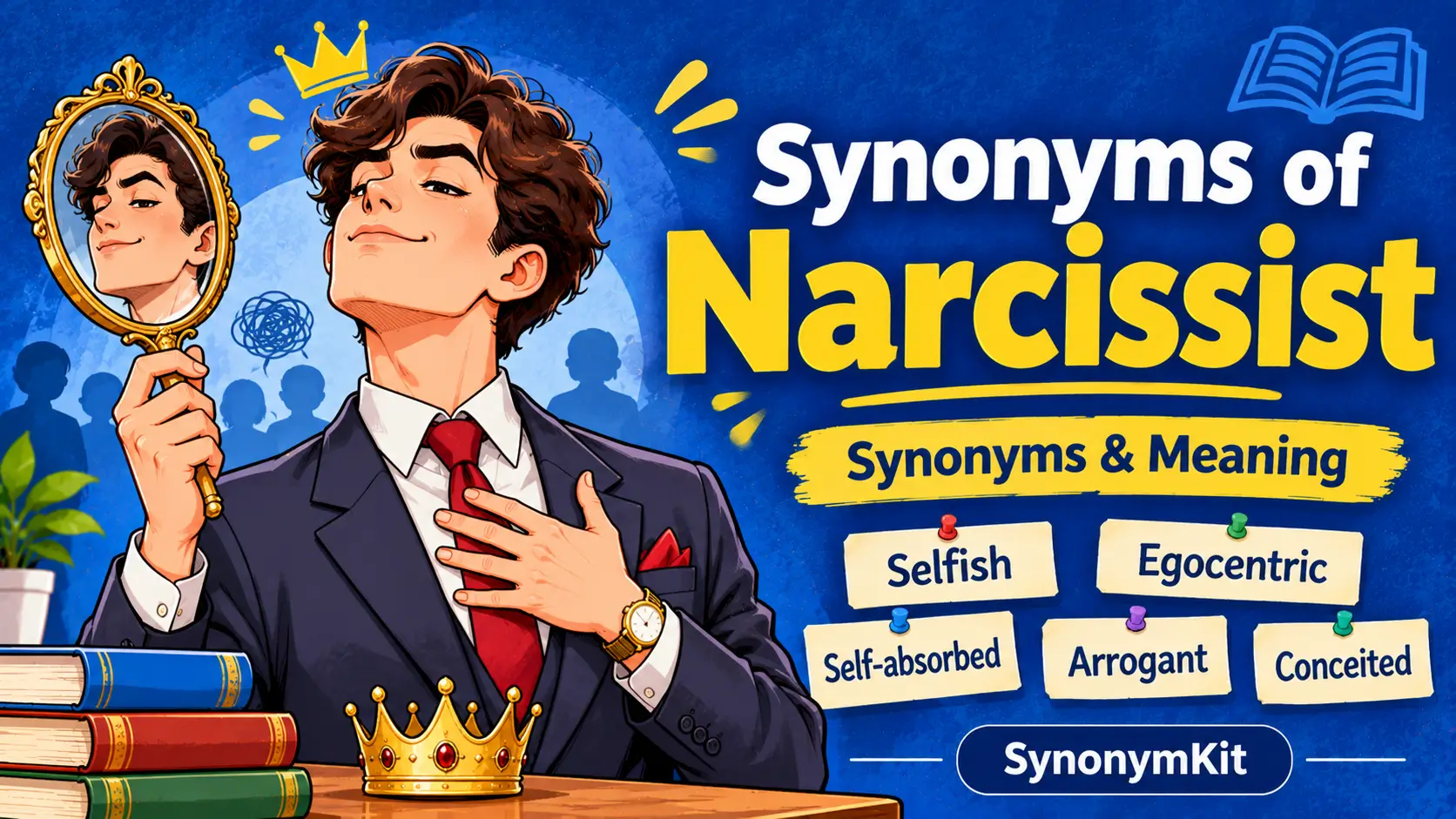
Synonyms of narcissist include egotist, self centered person, conceited person, egomaniac, and self absorbed individual. These words describe people who think highly of themselves, seek attention, or care little about others’ feelings. Some words sound mild, while others describe stronger forms of pride and selfish behavior.
Emma worked with a person who always wanted praise. He talked about his success, ignored other people’s ideas, and became upset when someone else received attention. During team meetings, he often made every topic about himself. His behavior made working together difficult.
For example, when a friend shared good news, a self centered person might quickly change the subject to talk about their own achievements.
Learning different words for this behavior can help you express your thoughts more clearly. Students can use these words in essays and schoolwork. Bloggers can make their articles more useful and engaging. Content writers can avoid repeating the same words. Daily English users can describe people’s actions with greater care.
The right word also helps you explain the difference between confidence, pride, and selfishness.
“True strength includes respect for other people.”
Choosing polite and accurate language matters when discussing difficult personalities. A strong word may express anger, while a softer word may simply describe someone’s behavior.
“Kindness begins when we make room for others.”
Here are 40 useful words and expressions for describing someone who shows excessive self interest, pride, or a strong need for attention. Some are direct alternatives, while others describe related personality traits.
1. Egotist
- Meaning: An egotist thinks too highly of themselves and puts personal needs first.
- Examples: Mark is an egotist at work.
- Examples: The egotist always praises his own ideas.
2. Egoist
- Meaning: An egoist cares mostly about personal interests, comfort, and happiness.
- Examples: He acts like an egoist.
- Examples: The egoist rarely helps his friends.
3. Egomaniac
- Meaning: An egomaniac has an extremely high opinion of themselves and their importance.
- Examples: Nobody enjoys working with that egomaniac.
- Examples: He behaves like a famous egomaniac.
4. Self Centered Person
- Meaning: A self centered person thinks mainly about their own needs and feelings.
- Examples: She is a self centered person.
- Example: His self centered ways hurt their friendship.
5. Self Absorbed Person
- Meaning: A self absorbed person focuses too much on their own thoughts and feelings.
- Examples: Tom seems completely self absorbed today.
- Examples: The self absorbed man ignored everyone’s questions.
6. Conceited Person
- Meaning: A conceited person believes they are better than most other people.
- Examples: Jake sounds rather conceited today.
- Examples: The conceited student never accepts advice.
7. Arrogant Person
- Meaning: An arrogant person acts as though they are better than others.
- Examples: The arrogant manager dismissed my suggestion.
- Examples: Nobody liked his arrogant attitude.
8. Vain Person
- Meaning: A vain person cares too much about their looks or image.
- Examples: She spends hours checking her appearance.
- Examples: His vain nature often causes problems.
9. Boastful Person
- Meaning: A boastful person talks too much about their achievements and abilities.
- Examples: Peter is always boasting about money.
- Examples: Her boastful comments annoyed the group.
10. Braggart
- Meaning: A braggart often talks proudly about personal success to impress others.
- Examples: That braggart never stops talking.
- Examples: Everyone heard his latest bragging story.
11. Show Off
- Meaning: A show off tries hard to attract attention through actions or possessions.
- Examples: He acts like a show off.
- Examples: The show off bought another expensive watch.
12. Self Important Person
- Meaning: A self important person believes their opinions and needs matter most.
- Examples: The self important boss interrupted everyone.
- Examples: His self important manner upset the team.
13. Bighead
- Meaning: A bighead is someone who thinks they are very important.
- Examples: Stop acting like such a bighead.
- Examples: Nobody likes that rude bighead.
14. Narcissistic Person
- Meaning: A narcissistic person shows too much self love and needs constant admiration.
- Examples: His narcissistic behavior hurt his friends.
- Examples: She noticed his narcissistic attitude early.
15. Self Loving Person
- Meaning: A self loving person places great importance on their own needs and image.
- Examples: He seems focused only on himself.
- Examples: Her self love sometimes becomes excessive pride.
16. Prima Donna
- Meaning: A prima donna expects special treatment and dislikes being challenged by others.
- Examples: The singer acted like a prima donna.
- Examples: Nobody wanted to upset the prima donna.
17. Diva
- Meaning: A diva may demand special attention and expect others to meet their needs.
- Examples: She behaved like a demanding diva.
- Examples: The diva wanted everyone to listen.
18. Snob
- Meaning: A snob believes they are better because of money, status, or taste.
- Examples: He sounds like a real snob.
- Examples: The snob refused their simple invitation.
19. Self Promoter
- Meaning: A self promoter constantly tries to make others notice their achievements.
- Examples: He is a clever self promoter.
- Examples: The self promoter shared another success story.
20. Attention Seeker
- Meaning: An attention seeker does things mainly to receive notice from others.
- Examples: She often acts like an attention seeker.
- Examples: The attention seeker interrupted their conversation.
21. Grandstander
- Meaning: A grandstander makes dramatic displays to attract attention and admiration.
- Examples: He became a grandstander during meetings.
- Examples: The grandstander wanted all the applause.
22. Self Admiring Person
- Meaning: A self admiring person spends too much time praising their own qualities.
- Examples: He is always admiring himself.
- Examples: Her self admiring comments seemed endless.
23. Me First Person
- Meaning: A me first person always puts personal wishes ahead of other people’s needs.
- Examples: He has a me first attitude.
- Examples: The me first person ignored their requests.
24. Selfish Person
- Meaning: A selfish person cares more about personal benefits than helping others.
- Examples: He refused to share his lunch.
- Examples: Her selfish choices hurt the family.
25. Manipulator
- Meaning: A manipulator uses others’ feelings or actions to get personal benefits.
- Examples: He manipulated his friends for money.
- Examples: The manipulator changed the whole story.
26. Control Freak
- Meaning: A control freak wants to decide how everything should happen.
- Examples: My boss is a control freak.
- Examples: The control freak rejected every suggestion.
27. Bully
- Meaning: A bully uses cruel words or actions to control or hurt others.
- Examples: The bully made fun of him.
- Examples: She stood up to the school bully.
28. Tyrant
- Meaning: A tyrant uses power unfairly and expects everyone to obey.
- Examples: The tyrant never listened to workers.
- Examples: His team feared the angry tyrant.
29. Exploiter
- Meaning: An exploiter uses other people unfairly to gain personal rewards.
- Examples: The exploiter took credit for everything.
- Examples: Nobody trusted that dishonest exploiter.
30. Self Obsessed Person
- Meaning: A self obsessed person thinks about themselves more than anything else.
- Examples: He seems completely self obsessed lately.
- Examples: The self obsessed woman ignored their feelings.
31. Cocky Person
- Meaning: A cocky person shows too much confidence and little respect for others.
- Examples: His cocky attitude annoyed everyone.
- Examples: The cocky player ignored his coach.
32. Pompous Person
- Meaning: A pompous person acts more important and clever than they really are.
- Examples: The pompous speaker bored everyone.
- Examples: His pompous words sounded ridiculous.
33. Self Righteous Person
- Meaning: A self righteous person believes their actions and opinions are always right.
- Examples: She sounded self righteous during the debate.
- Examples: The self righteous man blamed everyone else.
34. Inconsiderate Person
- Meaning: An inconsiderate person does not think about other people’s feelings or needs.
- Examples: He made an inconsiderate comment.
- Examples: Her inconsiderate behavior upset everyone.
35. Insensitive Person
- Meaning: An insensitive person ignores or fails to understand other people’s feelings.
- Examples: His insensitive joke hurt her.
- Examples: The insensitive friend never apologized.
36. Entitled Person
- Meaning: An entitled person believes they deserve special treatment without earning it.
- Examples: He expects everyone to serve him.
- Examples: The entitled customer demanded special attention.
37. Domineering Person
- Meaning: A domineering person tries to control others and make every decision.
- Examples: Her domineering style upset the group.
- Examples: He always wants the final decision.
38. Self Serving Person
- Meaning: A self serving person makes choices mainly to gain personal advantages.
- Examples: His self serving plan failed quickly.
- Examples: She made a self serving decision.
39. Glory Seeker
- Meaning: A glory seeker wants praise, fame, and recognition from other people.
- Examples: He became a glory seeker overnight.
- Examples: The glory seeker wanted public praise.
40. Self Aggrandizer
- Meaning: A self aggrandizer makes themselves seem more important, powerful, or successful.
- Examples: He is a skilled self aggrandizer.
- Examples: The self aggrandizer exaggerated his achievements.
Synonyms of Narcissist Woman
Words used to describe a narcissistic woman include egotist, conceited person, attention seeker, self absorbed person, and vain person. These expressions describe different behaviors rather than defining someone by gender.
For example, a woman who always demands praise may be called an attention seeker. Choose words based on her actual actions, not stereotypes about women.
Synonyms of Narcissist Male
Useful words for describing a narcissistic man include egomaniac, braggart, arrogant person, show off, and self important person. These terms can describe someone who constantly praises himself or expects special treatment.
For example, a man who always talks about his success may be called boastful. These words describe behavior and can apply to any gender.
Synonyms of Narcissistic Behavior
Narcissistic behavior can include self importance, excessive pride, attention seeking, manipulation, and a lack of empathy. Other useful expressions include controlling behavior and constant self promotion.
These terms help explain actions without making a medical judgment. A person may show some of these traits without having a personality disorder.
What’s Another Word for Narcissism?
Another word for narcissism depends on the meaning you want to express. Self absorption, excessive self love, egotism, vanity, and self importance are useful related terms.
Egotism describes excessive focus on oneself, while vanity often relates to appearance or personal image. These words are related, but they are not exact replacements in every sentence.
Synonyms and Antonyms of Narcissist
Synonyms for narcissist include egotist, egomaniac, self centered person, braggart, and conceited person. Some useful opposite words include altruist, humble person, empathic person, and selfless individual.
These words describe people who care about others and show respect. The best choice depends on whether you want to describe excessive pride or its opposite.
Frequently Asked Questions
1. What Is Another Name for a Narcissist?
Another name for a narcissist is egotist, egomaniac, or self centered person. These words describe someone who thinks mostly about themselves and may expect praise from others. You can also use conceited person, braggart, or self absorbed individual.
However, each word has a slightly different meaning. Choose the term that best describes the person’s actions and attitude.
2. What Is Narcissistic in Simple Words?
Narcissistic means thinking too highly of yourself and giving too much importance to your own needs. A narcissistic person may want constant praise, expect special treatment, or struggle to understand other people’s feelings.
For example, someone who always turns conversations toward their own achievements may show narcissistic traits.
However, confidence and healthy self respect are not the same as narcissism.
3. What Is Similar to a Narcissist?
An egotist, egomaniac, conceited person, or self centered individual may show behavior similar to a narcissist. These people may focus heavily on their own importance, seek attention, or ignore others’ opinions.
However, these terms do not all have the same meaning. Someone who acts selfishly in one situation should not automatically receive a label about their entire personality.
4. What Are the Five Signs of a Narcissist?
Five possible signs of narcissistic traits include an excessive need for praise, a strong sense of self importance, difficulty accepting criticism, limited empathy, and expecting special treatment.
Some people may also exaggerate their achievements or use others to reach personal goals.
These signs alone cannot confirm a diagnosis. Only a qualified mental health professional can assess narcissistic personality disorder.
Conclusion
Learning different synonyms of narcissist helps you describe personality traits with greater accuracy. Words such as egotist, egomaniac, conceited person, and self absorbed individual can make your writing more varied and clear. However, each word carries a slightly different meaning, so it is important to choose the right one.
These words are useful in many areas of English. Students can use them in essays, stories, and classroom discussions. Bloggers can create more interesting articles without repeating the same expressions.
Content writers can explain difficult personality traits in simple language. Daily English users can also use these terms in conversations when describing someone’s actions.
Start by learning five words from this list. Write one sentence for each word and try using them in your emails, essays, or daily conversations. Pay attention to the difference between mild words like self centered and stronger words like egomaniac.
Remember that not every confident or proud person is a narcissist. Focus on actions rather than making quick judgments about people.
“Good communication starts with choosing the right words.”
With regular practice, your vocabulary will grow, your writing will become clearer, and your English will sound more natural.
“The best words express ideas clearly and kindly.”

James is a former English teacher turned content strategist who’s passionate about making language learning less intimidating. At SynonymKit, he focuses on curating word lists that are practical for everyday writing, essays, and professional communication.