Synonyms for Problem: 50 Better Words to Improve Your English
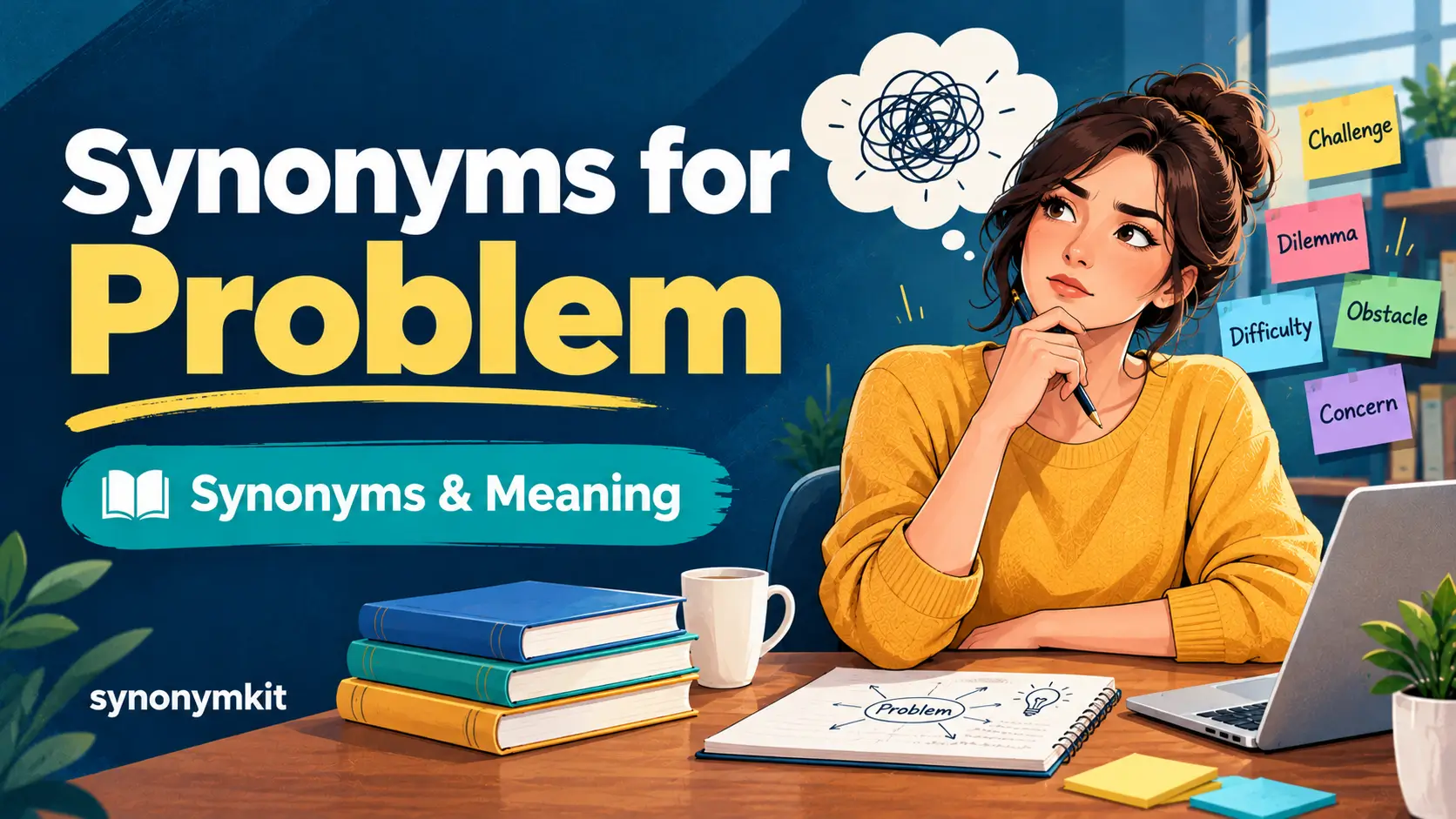
Synonyms for problem include difficulty, challenge, trouble, obstacle, concern, and complication. The best word depends on the situation. Some words describe a small mistake, while others describe a serious concern or a hard task. Choosing the right word helps you speak clearly and make your writing more useful.
Imagine you are writing a school essay or sending an email at work. You notice that the word “problem” appears in every other sentence. Your message feels repetitive, and you want to make it sound better. Learning a few new words can help you share your ideas with more care.
For example, a broken laptop may be a technical fault, while a difficult school task may be a challenge. Both situations need attention, but each word describes them in a different way.
Students can use new words to make essays more interesting. Bloggers can keep readers engaged with fresh language.
Content writers can explain difficult ideas in simple terms. Daily English users can speak with more confidence and avoid repeating the same words.
You do not need to learn every word at once. Start with common alternatives, understand their meanings, and practice them in short sentences. Soon, choosing the right word will feel easier.
“The secret of getting ahead is getting started.”
Every new word gives you another way to express your thoughts. Small steps can lead to better writing and clearer speech.
“Well done is better than well said.”
50 Synonyms for Problem
1. Difficulty
- Meaning: A difficulty is something that makes a task hard to finish.
- Examples: I had difficulty opening the jar. She faced difficulty during her first lesson.
2. Challenge
- Meaning: A challenge is a hard task that needs effort and skill.
- Examples: Learning to swim was a challenge. He accepted the challenge with a smile.
3. Trouble
- Meaning: Trouble is something that causes worry, harm, or extra work.
- Examples: The old car caused trouble again. We had trouble finding the right address.
4. Obstacle
- Meaning: An obstacle is something that blocks progress or makes success harder.
- Examples: Cost was an obstacle to travel. She moved past every obstacle with courage.
5. Concern
- Meaning: A concern is something that makes people feel worried or unsure.
- Examples: Safety is our biggest concern today. He shared his concern with the teacher.
6. Complication
- Meaning: A complication is something that makes a situation harder to manage.
- Examples: Rain caused a complication during the trip. We solved the complication through careful planning.
7. Issue
- Meaning: An issue is a matter that needs attention or discussion.
- Examples: We found an issue with the printer. The team discussed the issue after lunch.
8. Matter
- Meaning: A matter is something that needs thought, action, or discussion.
- Examples: This matter needs your attention today. We discussed the matter in private.
9. Setback
- Meaning: A setback is something that slows progress or delays success.
- Examples: The delay was a small setback. She recovered quickly after the setback.
10. Hurdle
- Meaning: A hurdle is a difficulty that must be overcome to move forward.
- Examples: Finding work was his first hurdle. We cleared another hurdle this week.
11. Dilemma
- Meaning: A dilemma is a hard choice between two possible actions.
- Examples: She faced a dilemma about moving. His dilemma required careful thought.
12. Crisis
- Meaning: A crisis is a serious situation that needs quick action.
- Examples: The team acted fast during the crisis. Good planning helped us manage the crisis.
13. Emergency
- Meaning: An emergency is a serious event that needs immediate help.
- Examples: Call for help during an emergency. The staff handled the emergency calmly.
14. Mistake
- Meaning: A mistake is an action or choice that is not correct.
- Examples: Everyone makes a mistake sometimes. He fixed his mistake before submitting the form.
15. Error
- Meaning: An error is something incorrect that happens while doing a task.
- Examples: I found an error in the report. She corrected the error before sending it.
16. Fault
- Meaning: A fault is a defect or mistake that causes something to fail.
- Examples: The fault was in the cable. We found a fault in the system.
17. Defect
- Meaning: A defect is a flaw that makes something less useful or safe.
- Examples: The shop replaced the item with a defect. Check every part for a defect.
18. Glitch
- Meaning: A glitch is a small fault that causes a brief problem.
- Examples: A glitch stopped the app from loading. The website had a glitch this morning.
19. Bug
- Meaning: A bug is a fault in a computer program or system.
- Examples: The developer found a bug in the app. A software update fixed the bug.
20. Snag
- Meaning: A snag is a small problem that delays a plan.
- Examples: We hit a snag during setup. One snag delayed the party preparations.
21. Hiccup
- Meaning: A hiccup is a small problem that causes a short delay.
- Examples: We had a hiccup with the booking. The launch went well after one hiccup.
22. Barrier
- Meaning: A barrier is something that prevents people from moving forward.
- Examples: Cost can be a barrier to learning. They removed a barrier to better service.
23. Block
- Meaning: A block is something that stops progress or prevents action.
- Examples: We found a block in the process. The road block slowed our journey.
24. Limitation
- Meaning: A limitation is something that reduces what a person or thing can do.
- Examples: Time is a limitation for this project. The tool has one clear limitation.
25. Weakness
- Meaning: A weakness is a part that is not strong or effective.
- Examples: The plan has one major weakness. She worked hard to address her weakness.
26. Risk
- Meaning: A risk is the chance that something bad may happen.
- Examples: There is a risk of losing data. We checked each risk before starting.
27. Threat
- Meaning: A threat is something that may cause harm or danger.
- Examples: The storm posed a threat to homes. They took action against the threat.
28. Worry
- Meaning: A worry is something that makes a person feel uneasy or afraid.
- Examples: Money was his biggest worry that month. She shared her worry with a friend.
29. Dispute
- Meaning: A dispute is a disagreement between people about something important.
- Examples: The neighbors settled their dispute peacefully. A payment dispute delayed the order.
30. Conflict
- Meaning: A conflict is a serious disagreement between people or groups.
- Examples: The conflict began over a small mistake. They worked together to end the conflict.
31. Disagreement
- Meaning: A disagreement happens when people have different views about something.
- Examples: Their disagreement lasted only a few minutes. We settled the disagreement through calm talks.
32. Complaint
- Meaning: A complaint tells someone that something seems wrong or unfair.
- Examples: The customer made a complaint about delivery. We answered the complaint the same day.
33. Grievance
- Meaning: A grievance is a complaint about unfair treatment or a wrong action.
- Examples: She filed a grievance with the office. The manager listened to his grievance carefully.
34. Predicament
- Meaning: A predicament is a difficult situation that is hard to escape.
- Examples: We were in a strange predicament. He found a way out of the predicament.
35. Mess
- Meaning: A mess is a confused or difficult situation that needs fixing.
- Examples: The missing files made a mess. We cleaned up the mess before closing.
36. Snarl
- Meaning: A snarl is a tangled or confusing situation that is hard to solve.
- Examples: The paperwork became a snarl quickly. She untangled the snarl with patience.
37. Quandary
- Meaning: A quandary is a difficult situation where the right choice is unclear.
- Examples: He was in a quandary about college. The choice left her in a quandary.
38. Adversity
- Meaning: Adversity is a hard time that tests a person’s strength.
- Examples: They stayed hopeful during adversity. Adversity taught him to be more patient.
39. Hardship
- Meaning: Hardship is a condition that causes pain, difficulty, or struggle.
- Examples: The family faced hardship after moving. They supported each other through hardship.
40. Burden
- Meaning: A burden is a heavy task or worry that is hard to bear.
- Examples: The extra cost became a burden. She shared the burden with her team.
41. Complication
- Meaning: A complication is an added difficulty that makes a task less simple.
- Examples: A late reply added a complication. We handled the complication before the deadline.
42. Drawback
- Meaning: A drawback is a feature that makes something less useful or appealing.
- Examples: The main drawback is the high price. Every plan has a drawback to consider.
43. Shortcoming
- Meaning: A shortcoming is a weakness that stops something from being its best.
- Examples: The report had one clear shortcoming. He worked to correct the shortcoming.
44. Flaw
- Meaning: A flaw is a fault that makes something imperfect or less effective.
- Examples: We noticed a flaw in the design. The team fixed the flaw before launch.
45. Discrepancy
- Meaning: A discrepancy is a difference between facts or details that should match.
- Examples: We found a discrepancy in the figures. She checked the discrepancy with the accountant.
46. Challenge point
- Meaning: A challenge point is a part of a task that needs extra effort.
- Examples: Time management is a challenge point for me. We discussed each challenge point before starting.
47. Concerned matter
- Meaning: A concerned matter is something people feel needs care or attention.
- Examples: Staff safety is a concerned matter here. We raised the matter during the meeting.
48. Question
- Meaning: A question is something that needs an answer or further thought.
- Examples: I have a question about the bill. His question started a useful discussion.
49. Complication point
- Meaning: A complication point is a part of a process that makes work harder.
- Examples: We found a complication point in testing. The team fixed it before launch.
50. Difficulty area
- Meaning: A difficulty area is a part of a task where people often struggle.
- Examples: Grammar is my main difficulty area. The tutor helped me with that area.
“The greatest glory in living lies not in never falling, but in rising every time we fall.”
Synonyms for Problem Solving
Problem solving means finding ways to fix a difficult situation. Related phrases include troubleshooting, solution finding, critical thinking, and analytical thinking. Troubleshooting often applies to machines or technology, while critical thinking helps people study facts and make good choices.
These terms are useful in school, business, and daily life. Choose the phrase that best describes the skill or action you want to explain.
Formal Synonyms for Problem
Formal alternatives include difficulty, complication, concern, obstacle, discrepancy, and matter requiring attention. In a report, “discrepancy” works when two sets of facts do not match. In a business email, “matter requiring attention” can sound polite and clear.
For academic writing, “difficulty” or “challenge” may fit well. Always consider the meaning before replacing “problem” with a more formal word.
Synonyms for Problem Statement
A problem statement explains the main difficulty that a project, study, or report aims to address. Related terms include research problem, central question, statement of concern, and description of the problem.
In academic writing, a problem statement should clearly explain what needs attention and why it matters. Choose a term that fits your assignment, and make sure your statement describes the issue without adding unrelated details.
Synonyms for Problem or Issue
The words problem and issue can often be replaced with matter, concern, difficulty, challenge, or obstacle. However, the best choice depends on the meaning. A concern may involve worry, while an obstacle blocks progress.
A matter can simply be a subject for discussion. In professional writing, choosing a specific word helps readers understand what needs attention and what action may be required.
Synonyms for Problem Solver
A problem solver is someone who finds ways to handle difficult situations. Related terms include troubleshooter, solution finder, critical thinker, and creative thinker. A troubleshooter often identifies what is wrong with a system, while a critical thinker studies facts before making a choice.
These words can help describe skills on a résumé, in a job interview, or in a school assignment. Choose the term that best matches the person’s strengths.
Frequently Asked Questions
What is a better word than problem?
A better word than “problem” depends on the situation. Challenge can describe a task that takes effort, while obstacle means something that blocks progress. Use concern when something causes worry, and difficulty when something is hard to do.
For a small technical fault, “glitch” may fit. In everyday writing, choose the word that gives readers the clearest idea of what has gone wrong.
How do you say problem in a formal way?
You can use difficulty, complication, concern, discrepancy, or matter requiring attention in formal writing. For example, “We identified a discrepancy in the report” is more precise than “We found a problem.” In a business email, “This matter requires further review” sounds professional and respectful.
Academic writing may use “research problem” or “central question.” The best alternative depends on the subject and the level of detail required.
What are some synonyms for problem?
If you mean words for a serious or major problem, consider crisis, predicament, hardship, adversity, and major obstacle. A crisis usually needs quick action, while a predicament is a difficult situation with no easy way out.
Hardship often describes a long period of struggle. These words are stronger than everyday terms such as “trouble.” Use them when the situation is serious enough to match their meaning.
What is a better word for problem statement?
Depending on the context, you can use research problem, central question, statement of concern, or description of the problem. In a school assignment, “research problem” may work when you explain what your study will investigate. “Central question” is useful when the work focuses on answering a specific question.
A good problem statement explains what needs to be addressed, why it matters, and what the study or project will examine.
Conclusion
Learning synonyms for problem helps you communicate with greater clarity and confidence. Words such as difficulty, challenge, obstacle, concern, and complication give you different ways to explain what is happening. Each word has its own meaning, so choosing carefully can make your message more accurate.
Students can use these alternatives in essays and assignments. Bloggers can make their articles more engaging, while content writers can avoid repeating the same words. In daily conversations, a wider vocabulary helps you explain your thoughts and understand other people.
Start by learning a few common words. Try using “challenge” for a difficult task, “concern” for something that causes worry, and “obstacle” for something that blocks progress. Practice these words in emails, reports, schoolwork, and everyday conversations.
You do not need to use complicated language to become a better writer. Clear words and correct meanings matter most. Read each sentence after choosing a synonym to make sure it says what you intend.
“It always seems impossible until it’s done.”
Keep building your vocabulary one word at a time. With regular practice, you can make your writing stronger, your speech clearer, and your communication more effective.
“Learning never exhausts the mind.”

Amelia is a linguistics graduate and lifelong word nerd who believes the right word can change how a sentence feels. She writes and edits vocabulary guides for SynonymKit, helping readers sound sharper and more confident in their writing.