50 Synonyms for Similar: Words, Meanings, and Examples
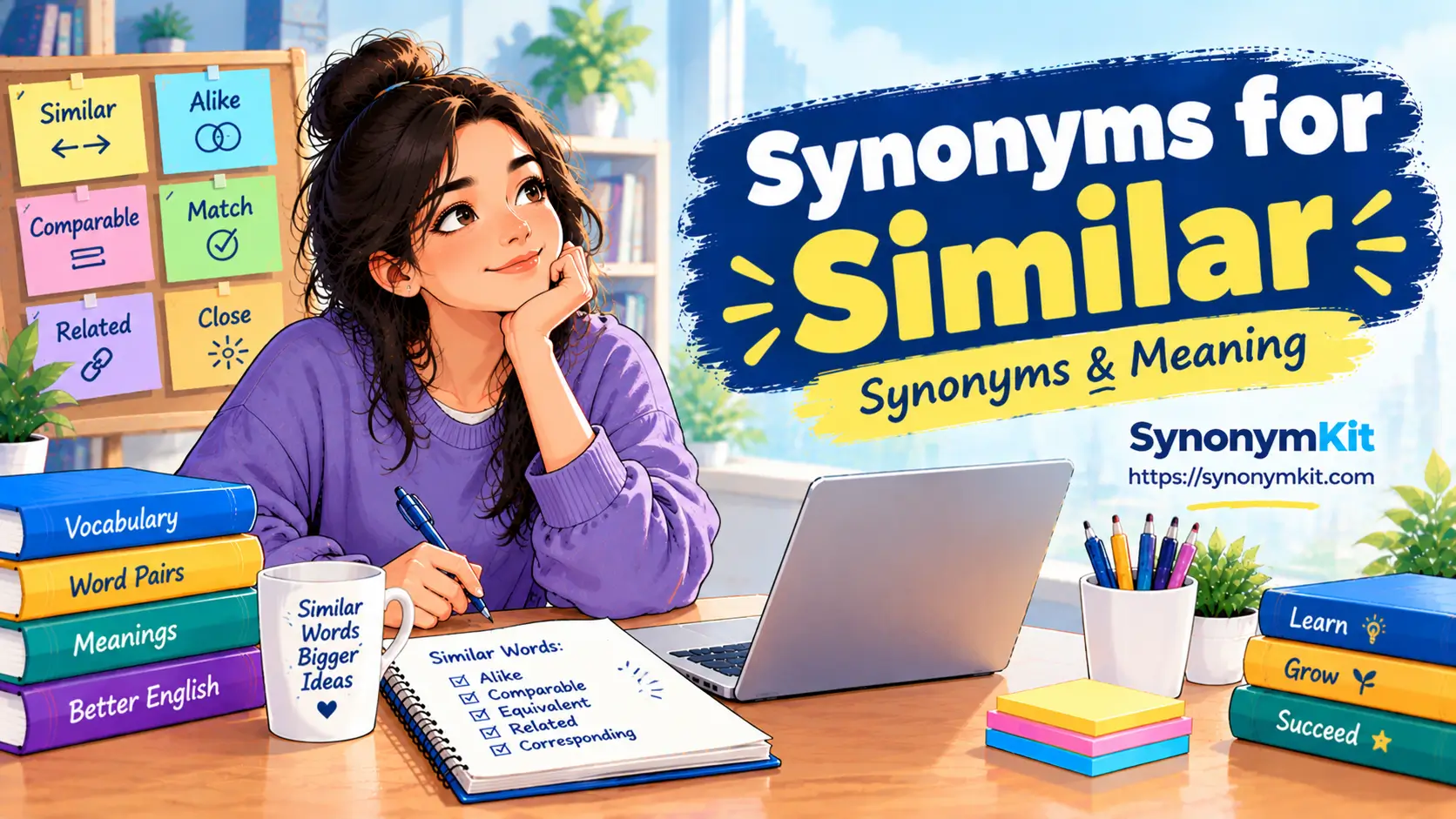
The best synonyms for similar include alike, comparable, related, equivalent, and resembling. These words describe people, things, ideas, or situations that share features. Some work well in daily speech, while others suit essays, formal writing, and work. Choose the word that best fits your meaning and sentence.
Imagine two friends who wear the same color shirts, enjoy the same games, and love the same food. They have a lot in common, even though they are not exactly alike. In school, at work, or in daily life, we often notice these shared features.
For example, two phones may look alike but have different prices and features. Choosing the right word helps you explain this kind of match with ease.
Students can use these words to make essays clearer and avoid repeating the same terms. Bloggers can make their posts more engaging and easy to read.
Content writers can describe products, ideas, and people with greater care. Daily English users can speak with more confidence and share their thoughts clearly.
Learning different words also helps you understand small changes in meaning. Some words show a close match, while others suggest that two things share only a few features.
“Great writing begins with clear thoughts and simple words.”
A good word choice can make even a short sentence more useful. You do not need difficult words to express a clear idea. You only need to choose the word that fits.
“A little practice can make every sentence stronger.”
Use these words to describe things that share features, look alike, or have nearly the same meaning. Each word has a simple meaning and two examples.
1. Alike
- Meaning: Alike means two people or things share many of the same features.
- Examples: The twins look very much alike. Our bags are alike in color.
2. Comparable
- Meaning: Comparable means two things are similar enough to compare fairly.
- Examples: Both phones offer comparable camera quality. Their test scores are quite comparable.
3. Resembling
- Meaning: Resembling means looking like or having features in common with something else.
- Examples: Her drawing resembles a real flower. The puppy resembles its mother.
4. Related
- Meaning: Related means two things have a link or share something in common.
- Examples: These topics are closely related. Our ideas are related to the same problem.
5. Equivalent
- Meaning: Equivalent means having the same value, purpose, or effect as something else.
- Examples: These coins are equivalent in value. Both routes take an equivalent amount of time.
6. Much the Same
- Meaning: Much the same means nearly alike, with only small differences between things.
- Examples: Our daily routines are much the same. Both shops sell much the same products.
7. Close
- Meaning: Close means two things are alike in many ways or details.
- Examples: Their answers are very close. We have close views on this issue.
8. Kindred
- Meaning: Kindred describes people or ideas that share similar feelings, qualities, or interests.
- Examples: They have kindred interests in art. We share kindred views about learning.
9. Corresponding
- Meaning: Corresponding means matching another thing in position, type, or purpose.
- Examples: Please check the corresponding page numbers. Each student received a corresponding name tag.
10. Analogous
- Meaning: Analogous means similar in certain ways, even when two things differ.
- Examples: A heart is analogous to a pump. These two cases are analogous in nature.
11. Parallel
- Meaning: Parallel describes things that follow a similar pattern or share matching features.
- Examples: Their careers followed parallel paths. The stories have parallel themes.
12. Near
- Meaning: Near can mean almost the same in amount, level, or quality.
- Examples: Both teams reached near equal scores. The final price was near the original cost.
13. Identical
- Meaning: Identical means exactly the same in every important detail or feature.
- Examples: The two keys look identical. They wore identical shirts to school.
14. Homogeneous
- Meaning: Homogeneous describes a group made up of similar people, parts, or qualities.
- Examples: The mixture looks homogeneous throughout. The class has a homogeneous set of needs.
15. Uniform
- Meaning: Uniform means staying the same across a group, place, or set.
- Examples: The team showed uniform effort. All rooms have a uniform design.
16. Consistent
- Meaning: Consistent means staying similar in quality, behavior, or results over time.
- Examples: Her work is consistent each week. The colors remain consistent across pages.
17. Matching
- Meaning: Matching means fitting or going well with another thing in style or type.
- Examples: She bought matching shoes and bags. The curtains match the sofa.
18. Kindred Spirited
- Meaning: Kindred spirited describes people who share feelings, values, or ways of thinking.
- Examples: We are kindred spirited friends. The artists are kindred spirited in their work.
19. Correspondent
- Meaning: Correspondent can describe things that match or relate to each other in a system.
- Examples: Find the correspondent label on this chart. Each code has a correspondent entry.
20. Compatible
- Meaning: Compatible means two things can work or exist well together.
- Examples: This app is compatible with my phone. Their plans are compatible with our goals.
21. Cognate
- Meaning: Cognate describes words that share a common origin and often have related forms.
- Examples: English and German have cognate words. The teacher explained this cognate term.
22. Interrelated
- Meaning: Interrelated means two or more things affect or connect with each other.
- Examples: Health and sleep are interrelated. These problems are interrelated in many ways.
23. Approximate
- Meaning: Approximate means close to a number, amount, or value without being exact.
- Examples: The approximate costs are nearly equal. We need an approximate match for this size.
24. Analogous to
- Meaning: Analogous to means similar to something in a particular way or respect.
- Examples: A classroom is analogous to a small community. Her role is analogous to a team leader’s.
25. Synonymous
- Meaning: Synonymous means having the same or nearly the same meaning as another word.
- Examples: Happy is synonymous with glad. These terms are synonymous in this context.
26. Parallel to
- Meaning: Parallel to describes something that follows a similar course, pattern, or idea.
- Examples: Her story is parallel to mine. This trend is parallel to last year’s results.
27. Homologous
- Meaning: Homologous describes parts that share a similar structure or origin.
- Examples: These bones are homologous structures. The scientist compared homologous body parts.
28. Uniformly Similar
- Meaning: Uniformly similar means sharing much the same features across a whole group.
- Examples: The samples are uniformly similar in color. Each page has a uniformly similar layout.
29. Indistinguishable
- Meaning: Indistinguishable means so alike that telling two things apart is difficult.
- Examples: The copies look almost indistinguishable. Their voices sound indistinguishable over the phone.
30. Closely Related
- Meaning: Closely related means sharing a strong link, feature, or connection.
- Examples: These subjects are closely related. The two families are closely related by marriage.
31. Much Alike
- Meaning: Much alike means sharing many features, although small differences may still exist.
- Examples: The two paintings are much alike. Our opinions are much alike on this matter.
32. Near Identical
- Meaning: Near identical means almost exactly the same, with only tiny differences.
- Examples: The twins have near identical smiles. Both designs are near identical in shape.
33. Like
- Meaning: Like describes a person or thing that shares features with another.
- Examples: This jacket is like mine. Her voice sounds like her mother’s.
34. Similar looking
- Meaning: Similar looking describes people or things that appear alike in their outward features.
- Examples: Those two houses are similar looking. We chose similar looking plates for dinner.
35. Equivalent in Value
- Meaning: Equivalent in value means two things are worth the same amount.
- Examples: These gift cards are equivalent in value. Both prizes are equivalent in value.
36. Comparable in Size
- Meaning: Comparable in size means two things have roughly the same dimensions.
- Examples: The boxes are comparable in size. Our rooms are comparable in size.
37. Closely Matching
- Meaning: Closely matching means fitting another thing very well in color, shape, or detail.
- Examples: The paint is closely matching the wall. These shoes are closely matching my dress.
38. Kindred in Nature
- Meaning: Kindred in nature means sharing a similar basic character, quality, or type.
- Examples: Their goals are kindred in nature. These plants are kindred in nature.
39. Of the Same Kind
- Meaning: Of the same kind means belonging to one group or sharing the same type.
- Examples: These apples are of the same kind. Both tools are of the same kind.
40. Of a Similar Type
- Meaning: Of a similar type means belonging to a group with shared features or uses.
- Examples: These bags are of a similar type. We bought chairs of a similar type.
41. Closely Comparable
- Meaning: Closely comparable means alike enough in key features to make a fair comparison.
- Examples: Both plans are closely comparable. The products are closely comparable in quality.
42. Related in Meaning
- Meaning: Related in meaning describes words or ideas that share a link in what they express.
- Examples: These terms are related in meaning. The phrases are related in meaning, but not identical.
43. Similar in Nature
- Meaning: Similar in nature means sharing basic qualities, traits, or characteristics.
- Examples: The challenges are similar in nature. Both pets are similar in nature.
44. Analogical
- Meaning: Analogical describes reasoning or comparisons based on similarities between different things.
- Examples: The teacher used analogical reasoning. Her explanation was analogical rather than literal.
45. Corresponding in Form
- Meaning: Corresponding in form means having a matching shape or structure.
- Examples: The parts are corresponding in form. Both words are corresponding in form.
46. Interchangeable
- Meaning: Interchangeable means two things can replace each other without a major change.
- Examples: These batteries are interchangeable. The words are interchangeable in this sentence.
47. Much Comparable
- Meaning: Much comparable is an uncommon phrase; use “highly comparable” to express a close match.
- Examples: The two products are highly comparable. Their results are highly comparable this year.
48. Near Equivalent
- Meaning: Near equivalent means almost equal in value, meaning, effect, or function.
- Examples: These options are near equivalent in cost. The two phrases are near equivalent in meaning.
49. Similar minded
- Meaning: Similar minded describes people who share views, interests, or ways of thinking.
- Examples: We are similar minded about education. Similar minded friends planned the event together.
50. Comparable in Quality
- Meaning: Comparable in quality means two things have a similar level of excellence or standard.
- Examples: Both brands are comparable in quality. These essays are comparable in quality and detail.
“The right word makes a clear idea easier to understand.”
Synonyms for Similar and Different
Words such as alike, comparable, and related show shared features. In contrast, different, distinct, and unlike show how things do not match. For example, two bags may look alike but have different prices.
Using both types of words helps you explain similarities and differences clearly in schoolwork, reviews, and daily conversations.
Synonyms for Similar Words
When two words have close meanings, you can call them synonyms, but they may not work in every sentence. For example, happy and glad are close in meaning, while identical means exactly the same.
Check the context before replacing a word. This helps keep your writing clear and prevents small changes in meaning.
Synonyms for a Similar Situation
Use comparable, much the same, or closely related when two situations share important features. For example, a new job may bring challenges similar to those in a previous role.
In a formal report, “a comparable situation” sounds clear and professional. In everyday speech, “a similar situation” is simple and natural.
Synonyms for Similar Things
Choose alike, matching, comparable, or of the same kind when describing things that share features. “Matching shoes” suggests that the shoes go together, while “comparable products” means you can fairly compare their features or quality. Pick the word that fits the relationship you want to explain.
Academic Synonyms for Similar
Academic writing often uses comparable, analogous, corresponding, and equivalent. These words can make comparisons more precise. For example, “The findings are comparable” suggests that results can be assessed fairly.
“The two systems are analogous” points to a shared pattern. Choose terms based on the evidence, not just to make writing sound formal.
Frequently Asked Questions
1. What can I say instead of similar?
You can say alike, comparable, related, resembling, matching, or much the same instead of similar. The best choice depends on your sentence. Use “alike” when two things share features, “comparable” when you want to compare them, and “matching” when they go well together.
For example, “Our ideas are alike” sounds natural in daily speech, while “The results are comparable” works well in reports and essays.
2. What is another word for “same” or “similar”?
Identical is a strong choice when two things are exactly the same. Use “similar” or “alike” when they share features but may have some differences. “Equivalent” works when two things have the same value, purpose, or effect.
For example, two copies may be identical, two phones may be similar, and two amounts of money may be equivalent. Choosing carefully helps you express the right meaning.
3. What are some synonyms for “similar”?
Common synonyms for similar include alike, comparable, related, resembling, matching, analogous, parallel, and equivalent. Each word has a slightly different use. “Resembling” often describes appearance, while “related” highlights a connection.
“Analogous” is useful when comparing ideas or systems that work in similar ways. In daily conversation, “alike” is simple and natural. In formal writing, “comparable” can help explain shared features clearly.
4. What’s another word for similar to?
You can use like, resembling, comparable to, analogous to, or close to, depending on the sentence. For example, “Her dress is like mine” is simple and conversational. “The new system is comparable to the old one” sounds more formal.
Use “resembling” when describing appearance, such as “The building resembles a castle.” Remember that some phrases need specific grammar, so check how the word fits into your sentence.
Conclusion
Learning synonyms for similar can make your writing clearer, stronger, and more interesting. Instead of using the same word again and again, you can choose from words such as alike, comparable, related, matching, and equivalent. Each word helps express a slightly different idea.
Students can use these words to improve essays and school assignments. Bloggers can make their posts easier to read and more engaging.
Content writers can describe products, people, and ideas with greater care. Daily English users can also speak more clearly and avoid repeating the same expressions.
However, remember that not every synonym works in every sentence. For example, “identical” means exactly the same, while “comparable” means suitable for comparison. Always consider the meaning and context before choosing a replacement.
“Practice turns new words into useful skills.”
Start with two or three words from this list. Write them in an email, use them in an essay, or try them in a daily conversation. Then notice how each word changes your sentence.
“Clear words help you share your ideas with confidence.”
The more you practice, the easier it becomes to choose the right word. Keep learning, keep writing, and let your vocabulary grow one word at a time.

James is a former English teacher turned content strategist who’s passionate about making language learning less intimidating. At SynonymKit, he focuses on curating word lists that are practical for everyday writing, essays, and professional communication.