55 Synonyms for Emphasize to Improve Your Writing
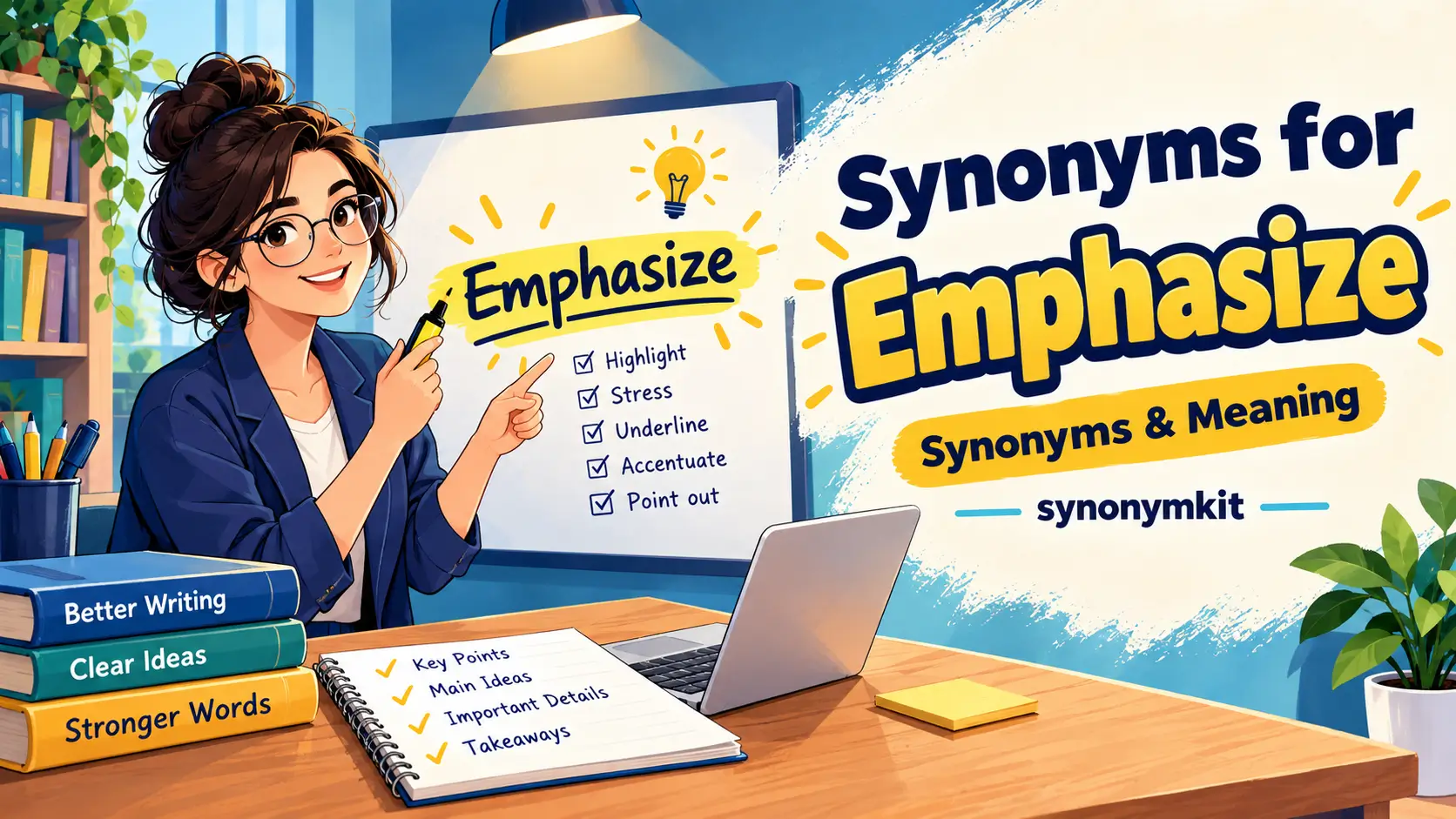
Synonyms for emphasize include highlight, stress, underline, accentuate, underscore, and spotlight. These words help you show which ideas matter most. Some work well in essays and reports, while others fit daily speech. Choosing the right word makes your message clearer, stronger, and easier for readers to understand.
Imagine writing an essay about healthy eating. You explain why fruits and vegetables are good for you, but your main point gets lost in a long paragraph.
You need a word that helps readers notice the most important idea. The right word can make your message clear and easy to follow.
For example, a teacher may highlight the main lesson before an exam. This helps students focus on the facts they need to remember.
Learning different words for emphasize can make your writing more interesting. Students can use them to improve essays and school assignments. Bloggers can make key points stand out in online articles.
Content writers can avoid using the same word too often. Daily English users can express their ideas with greater care.
You do not need to use difficult words to sound smart. Instead, choose words that fit your meaning and the people who will read your work.
“The secret of getting ahead is getting started.” Mark Twain
When you know several ways to express one idea, you can explain your thoughts with confidence. The following list will help you find the right word for different situations.
“Well done is better than well said.” Benjamin Franklin
Here are 55 useful alternatives, with simple meanings and examples to help you understand when to use each word.
1. Highlight
- Meaning: To highlight something means to draw attention to its importance.
- Examples: Please highlight the main points in blue.
- The report highlights several problems with the plan.
2. Stress
- Meaning: To stress something means to show that it is very important.
- Examples: My teacher stressed the need for practice.
- She stressed that everyone must arrive on time.
3. Underline
- Meaning: To underline means to show that a point deserves special attention.
- Examples: Underline the key sentence in your notes.
- His speech underlined the need for better schools.
4. Accentuate
- Meaning: To accentuate means to make a feature or quality more noticeable.
- Examples: Good lighting accentuates the room’s beauty.
- Her story accentuates the value of kindness.
5. Underscore
- Meaning: To underscore means to show that an idea has great importance.
- Examples: These results underscore the need for change.
- His actions underscore his love for family.
6. Spotlight
- Meaning: To spotlight means to bring something important into public view.
- Examples: The article spotlights local artists and their work.
- The event spotlights new ideas for cleaner cities.
7. Highlight the importance
- Meaning: This phrase shows why something deserves attention or care.
- Examples: The lesson highlights the importance of daily reading.
- Our meeting highlighted the importance of teamwork.
8. Point out
- Meaning: To point out means to help someone notice a fact or detail.
- Examples: She pointed out a mistake in my essay.
- Dad pointed out the safest road home.
9. Emphasize
- Meaning: To emphasize means to make an idea stand out as important.
- Examples: The coach emphasized the value of fair play.
- Please emphasize your main point in the report.
10. Reinforce
- Meaning: To reinforce means to make an idea or message stronger.
- Examples: These facts reinforce our main argument.
- Daily practice reinforces good reading habits.
11. Magnify
- Meaning: To magnify means to make something seem larger or more important.
- Examples: Fear can magnify a small problem.
- The photo magnifies tiny details on the leaf.
12. Amplify
- Meaning: To amplify means to make a message or effect stronger.
- Examples: The speaker amplified her message with clear examples.
- Social media can amplify a small local story.
13. Call attention to
- Meaning: This phrase asks people to notice a certain fact or issue.
- Examples: The poster calls attention to road safety.
- She called attention to the missing page.
14. Draw attention to
- Meaning: This phrase helps people focus on something worth noticing.
- Examples: Bright signs draw attention to the shop.
- The study draws attention to student needs.
15. Bring out
- Meaning: To bring out means to make a quality or idea easier to see.
- Examples: The story brings out her courage.
- This color brings out the beauty of the room.
16. Make clear
- Meaning: To make clear means to explain an idea so people understand it.
- Examples: Please make clear why the rule matters.
- His answer made clear what we should do.
17. Stress the importance
- Meaning: This phrase shows that a person or idea deserves serious attention.
- Examples: Parents stress the importance of good manners.
- The guide stresses the importance of safe travel.
18. Give prominence to
- Meaning: This phrase gives an idea or person a leading place.
- Examples: The article gives prominence to local history.
- The display gives prominence to student artwork.
19. Feature
- Meaning: To feature means to give something a clear place or special attention.
- Examples: The website features helpful study tips.
- Our school will feature young writers this month.
20. Showcase
- Meaning: To showcase means to present something so others can appreciate it.
- Examples: The fair showcases handmade crafts.
- Her portfolio showcases her best design work.
21. Emphasize strongly
- Meaning: This phrase expresses that a point matters a great deal.
- Examples: The doctor emphasized strongly that rest was needed.
- Our guide emphasized strongly the need for care.
22. Accentuate the importance
- Meaning: This phrase makes the value of something easier to notice.
- Examples: The report accentuates the importance of clean water.
- Her talk accentuated the importance of trust.
23. Assert
- Meaning: To assert means to state an idea clearly and with confidence.
- Examples: He asserted his right to speak.
- The writer asserts that schools need more books.
24. Declare
- Meaning: To declare means to state something clearly and openly.
- Examples: The mayor declared the park open.
- She declared that the team was ready.
25. State
- Meaning: To state means to express a fact or idea in clear words.
- Examples: Please state your main reason first.
- The notice states that pets are not allowed.
26. Specify
- Meaning: To specify means to name something clearly and exactly.
- Examples: Please specify the date on the form.
- The plan specifies who will lead each task.
27. Clarify
- Meaning: To clarify means to make a message easier to understand.
- Examples: The teacher clarified the tricky question.
- I called to clarify the meeting time.
28. Explain
- Meaning: To explain means to make an idea clear with details or examples.
- Examples: Can you explain your answer to me?
- She explained why the change was needed.
29. Demonstrate
- Meaning: To demonstrate means to show how something works or why it matters.
- Examples: The test demonstrates the value of practice.
- He demonstrated how to use the new tool.
30. Illustrate
- Meaning: To illustrate means to make an idea clear with examples or pictures.
- Examples: This chart illustrates the rise in costs.
- Her story illustrates the power of patience.
31. Highlight again
- Meaning: This phrase brings an important point to attention another time.
- Examples: I will highlight again the main safety rule.
- The teacher highlighted again the need to revise.
32. Reiterate
- Meaning: To reiterate means to say something again to make it clear.
- Examples: The manager reiterated the new office rules.
- She reiterated that honesty was important.
33. Repeat
- Meaning: To repeat means to say or do something again for clarity.
- Examples: Please repeat the last point slowly.
- He repeated the warning before we left.
34. Restate
- Meaning: To restate means to express the same idea in different words.
- Examples: Restate your argument in one clear sentence.
- She restated the goal for the whole team.
35. Emphasize further
- Meaning: This phrase adds more weight to a point already made.
- Examples: New facts emphasize further the need for action.
- His second example emphasized further the main lesson.
36. Elevate
- Meaning: To elevate means to raise the status or importance of something.
- Examples: The award elevated her work in the field.
- Good images can elevate a simple presentation.
37. Prioritize
- Meaning: To prioritize means to give something attention before other tasks.
- Examples: We prioritize safety during every trip.
- She prioritized her exam work this week.
38. Center on
- Meaning: To center on means to focus mainly on one topic.
- Examples: The discussion centers on school safety.
- His essay centers on the power of hope.
39. Focus on
- Meaning: To focus on means to give most attention to something.
- Examples: Focus on the main idea while reading.
- Our team focused on better customer service.
40. Concentrate on
- Meaning: To concentrate on means to give careful attention to one thing.
- Examples: I concentrate on my work in the morning.
- The class concentrated on solving the final problem.
41. Emphasize through
- Meaning: This phrase explains how a person makes an idea stand out.
- Examples: The artist emphasized hope through bright colors.
- She emphasized respect through her daily actions.
42. Bring into focus
- Meaning: This phrase makes an idea or detail easier to understand.
- Examples: The new facts bring the issue into focus.
- Her questions brought our main goal into focus.
43. Call out
- Meaning: To call out means to draw attention to a fact or action.
- Examples: The coach called out the team’s best effort.
- She called out the error in the report.
44. Flag
- Meaning: To flag means to mark something that needs attention.
- Examples: Please flag any errors in the document.
- The system flagged a problem with the file.
45. Note
- Meaning: To note means to mention or notice a point worth remembering.
- Examples: Please note the change in opening hours.
- The report notes a rise in school attendance.
46. Mention
- Meaning: To mention means to bring up a person, fact, or idea in speech.
- Examples: She mentioned the deadline during our call.
- He mentioned the risk in his report.
47. Emphasize by example
- Meaning: This phrase uses a real case to show why an idea matters.
- Examples: The teacher emphasized kindness by example.
- Leaders emphasize teamwork by example every day.
48. Give weight to
- Meaning: This phrase makes an idea seem more serious or convincing.
- Examples: These facts give weight to her claim.
- Expert advice gave weight to the proposal.
49. Reinforce the message
- Meaning: This phrase repeats or supports an idea to make it stronger.
- Examples: The poster reinforces the message about safe driving.
- Her actions reinforce the message of respect.
50. Make a point of
- Meaning: This phrase shows that someone treats an action as important.
- Examples: I make a point of checking my work.
- She makes a point of thanking every helper.
51. Underscore the need
- Meaning: This phrase shows why an action or change is needed.
- Examples: The delay underscores the need for better planning.
- These results underscore the need for more training.
52. Bring to the fore
- Meaning: This phrase brings an important idea or issue into view.
- Examples: The debate brought student needs to the fore.
- Her speech brought fairness to the fore.
53. Give special attention to
- Meaning: This phrase means to spend extra care or time on something.
- Examples: Give special attention to the final paragraph.
- The nurse gave special attention to each child.
54. Lay emphasis on
- Meaning: This phrase means to give special importance to a certain idea.
- Examples: The course lays emphasis on clear writing.
- The policy lays emphasis on equal treatment.
55. Put emphasis on
- Meaning: This phrase means to make one idea more important than others.
- Examples: The lesson puts emphasis on careful reading.
- Our plan puts emphasis on simple, safe steps.
“The most important thing in communication is hearing what isn’t said.” Peter Drucker
The best alternative depends on the sentence. For example, highlight suits a key point, reiterate suits a repeated message, and underscore often suits formal writing.
Synonyms for Emphasize in English
English has many alternatives for emphasize, but each word has a slightly different use. Highlight, stress, point out, and underline work well in everyday speech.
In formal writing, underscore, reinforce, and reiterate may fit better. Always choose a word that matches your sentence and keeps your meaning clear.
Synonyms for Emphasize in an Essay
In an essay, you can use underscore, highlight, demonstrate, illustrate, or reinforce to explain key ideas. Use underscore when stressing a major point, and illustrate when giving an example.
For instance, “These findings underscore the need for change” sounds formal and clear. Avoid using the same alternative in every paragraph, and make sure each word fits the evidence.
Strong Synonyms for Emphasize
When you want your message to sound stronger, consider stress, underscore, reinforce, accentuate, and assert. These words can show that a point deserves serious attention.
For example, “The results underscore the risks” makes the importance of the findings clear. Choose stronger words when the topic calls for them, rather than adding force to every sentence.
Academic Synonyms for Emphasize
Academic writing often uses underscore, demonstrate, highlight, establish, and reinforce. These words can help explain research findings, support an argument, or show why evidence matters.
For example, “The results demonstrate a clear link between sleep and learning.” Use demonstrate when evidence shows something, and underscore when you want to stress its importance. Keep claims accurate and supported by reliable sources.
Simple Synonyms for Emphasize
Simple alternatives include show, stress, point out, mention, and make clear. These words work well in everyday conversations, schoolwork, and easy to read online articles. For example, “The teacher pointed out the main mistake” is clear and natural.
If your readers are new to English, familiar words can help them understand your message without needing a dictionary.
Frequently Asked Questions
1. What words can I use instead of emphasize?
You can use highlight, stress, underscore, underline, point out, accentuate, or draw attention to instead of emphasize. The best choice depends on your sentence. Use highlight to make a detail noticeable, stress to show that something matters, and reiterate to repeat an important point.
In formal writing, underscore is often a strong option. Read your sentence aloud to check that the alternative sounds natural.
2. What is a synonym for “strongly emphasize”?
Good alternatives for strongly emphasize include stress strongly, underscore, insist on, reinforce, and make clear. The right phrase depends on what you mean. Use insist on when someone firmly demands something, such as following a rule.
Use underscore when explaining why a fact matters. For example, “The report underscores the need for better safety measures” sounds clear and professional without adding unnecessary words.
3. What is a better word for emphasis?
A better word for emphasis may be importance, stress, focus, prominence, or attention. Remember that emphasis is a noun, while emphasize is a verb. For example, “The teacher placed emphasis on reading” can become “The teacher stressed reading.”
If you need a noun, “importance” works in many sentences. Choose the replacement based on the sentence structure so that your grammar remains correct.
4. What’s another word for highlight or emphasize?
Other words for highlight or emphasize include underscore, stress, accentuate, spotlight, and draw attention to. However, these words are not always interchangeable. Spotlight often suggests bringing a person or issue into public view, while accentuate means making a quality more noticeable.
For everyday writing, point out is also useful. Check the meaning and tone before replacing a word, especially in formal reports or academic essays.
Conclusion
Learning synonyms for emphasize helps you share ideas in a clear and interesting way. Instead of using the same word again and again, you can choose an alternative that fits your message.
Words such as highlight, stress, underscore, and reinforce can make important points easier to understand.
These words are useful in many parts of life. Students can use them to improve essays, answer questions, and explain their ideas. Bloggers can guide readers toward key details in their posts.
Content writers can make articles more natural by choosing words that suit each topic. In daily conversations, simple alternatives such as point out and make clear help people communicate with ease.
Start by learning two or three new words at a time. Write a short sentence with each word, then try using it in an email, school assignment, or everyday conversation. You can also read your old writing and replace repeated words where it makes sense.
Remember, using a difficult word does not always make your writing better. The best word is the one that expresses your meaning clearly and naturally.
“Words are, of course, the most powerful drug used by persons.” Rudyard Kipling
Keep practicing, and your vocabulary will grow with time. Each new word gives you another way to express your thoughts, explain your ideas, and connect with your readers.
“The limits of my language mean the limits of my world.” Ludwig Wittgenstein

Sarah is a freelance content writer and grammar enthusiast with over 6 years of experience helping students and bloggers write with more clarity. She joined SynonymKit to make vocabulary-building simple and accessible for everyone, one word list at a time.