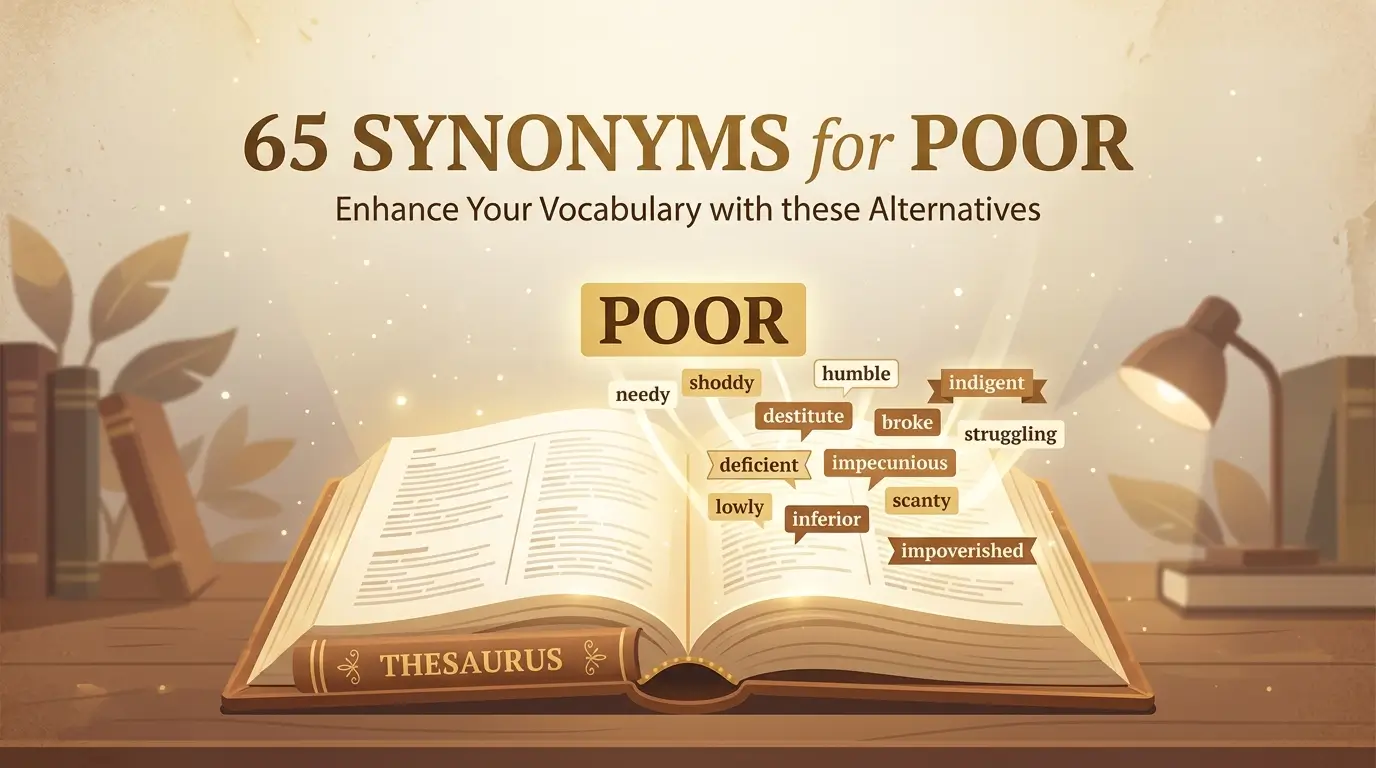
65 Powerful Synonyms for “Poor” (With Meanings and Examples)
A synonym for poor is a word that means someone has very little money, or something is low in quality. Words like “impoverished,” “needy,” and “destitute” describe a lack of money. Words like “shoddy” and “substandard” describe something badly made. Both use the word “poor.”
Picture a small shop on a quiet street. The paint is peeling, the shelves are half empty, and the owner counts coins twice before making change. You could call this a poor shop. But that one word can feel flat after a while.
A real life example: a student writing about world hunger might use “poor” ten times in one paragraph, and the teacher circles every one in red ink.
This is where synonyms come in. Students need fresh words to avoid repeating themselves in essays. Bloggers need variety to keep readers interested.
Content writers need precise words to match tone and mood. Daily English users need better ways to describe both money struggles and low quality things.
“Words are, of course, the most powerful drug used by people.” Learning new words for old ideas gives your writing that same quiet power.
Once you build a bigger word bank, your sentences stop sounding stiff and start sounding natural. “The limits of my language mean the limits of my world.” A wider vocabulary opens more of that world to you.
1. Impoverished
- Meaning: This word describes a person or place with very little money.
- Examples: The impoverished village needed clean water badly. Years of war left the nation impoverished.
2. Needy
- Meaning: This means someone lacks basic things like food or money.
- Examples: The charity gives food to needy families. She always helps her needy neighbors first.
3. Destitute
- Meaning: This describes someone with absolutely no money or resources left.
- Examples: The flood left many families completely destitute. He felt destitute after losing his job.
4. Penniless
- Meaning: This means a person has no money at all.
- Examples: He arrived in the city penniless and alone. The gambler left the table penniless again.
5. Broke
- Meaning: This casual word means someone has no money right now.
- Examples: I’m broke until payday next Friday. We were broke after the wedding costs.
6.Low Income
- Meaning: This describes a place or people earning very little money.
- Examples: The low-income village needed clean water badly. Aid workers focused on low-income regions first.
7. Underprivileged
- Meaning: This means someone has fewer chances and resources than others.
- Examples: The school supports underprivileged kids with free lunches. Underprivileged students often lack home tutors.
8. Hard up
- Meaning: This informal phrase means someone is short on money.
- Examples: We were hard up during the recession years. He’s a bit hard up this month.
9. Insolvent
- Meaning: This formal word means a business cannot pay its debts.
- Examples: The company became insolvent after two bad years. Insolvent firms often file for bankruptcy.
10. Bankrupt
- Meaning: This means a person or company legally cannot pay debts.
- Examples: The store went bankrupt last spring. He filed for bankrupt status quietly.
11. Indigent
- Meaning: This formal word describes someone extremely poor and in need.
- Examples: The clinic treats indigent patients for free. Indigent citizens often qualify for aid.
12. Struggling
- Meaning: This means someone is having a hard time with money.
- Examples: Struggling families lined up for the food bank. She’s a struggling artist right now.
13. Deprived
- Meaning: This means someone lacks things that are normally available.
- Examples: Deprived children often fall behind in school. Sleep deprived and cash deprived, he pushed through.
14. Disadvantaged
- Meaning: This describes people with fewer opportunities than most others.
- Examples: The program mentors disadvantaged teenagers after school. Disadvantaged workers face many hidden barriers.
15. Skint
- Meaning: This British slang word means completely out of money.
- Examples: I’m totally skint after the holidays. He’s always skint by month’s end.
16. Cash strapped
- Meaning: This means a person or group has very little available money.
- Examples: The cash strapped city cut public services this year. Cash strapped students often skip meals.
17. Down and out
- Meaning: This phrase describes someone with no money or luck.
- Examples: He looked down and out on the corner. The film follows a down and out boxer.
18. Impecunious
- Meaning: This fancy word means having little or no money.
- Examples: The impecunious writer lived on tea and toast. She married an impecunious but kind man.
19. Straitened
- Meaning: This formal word describes very limited or difficult money conditions.
- Examples: The family lived in straitened circumstances for years. Straitened budgets forced painful cuts everywhere.
20. Beggarly
- Meaning: This old fashioned word describes something pitifully small or poor.
- Examples: He earned a beggarly wage each week. The beggarly meal barely filled him.
“It is not the man who has too little, but the man who craves more, that is poor.” Money troubles are real, but this quote reminds us that mindset matters too.
21. Substandard
- Meaning: This means something is below the normal expected level.
- Examples: The hotel room was noisy and substandard. Substandard wiring caused the small fire.
22. Inferior
- Meaning: This means something is lower in quality than something else.
- Examples: The fake bag felt cheap and inferior. Inferior materials wore out within weeks.
23. Subpar
- Meaning: This means something falls below a normal, acceptable standard.
- Examples: The service tonight was honestly quite subpar. His subpar grades worried his parents deeply.
24. Shoddy
- Meaning: This means something is badly made and cheap.
- Examples: The shoddy furniture broke within a month. Shoddy work like this needs redoing.
25. Deficient
- Meaning: This means something is lacking a necessary part or quality.
- Examples: The report was deficient in real evidence. Her diet was deficient in iron.
26. Inadequate
- Meaning: This means something is not enough or not good enough.
- Examples: The old system proved inadequate for our needs. Inadequate funding closed the small clinic.
27. Unsatisfactory
- Meaning: This means something does not meet the needed standard.
- Examples: The teacher marked his essay as unsatisfactory. We received unsatisfactory answers from support.
28. Mediocre
- Meaning: This means something is average, not good and not bad.
- Examples: The movie was mediocre at best. He gave a mediocre performance tonight.
29. Second rate
- Meaning: This means something is not among the best available.
- Examples: They used second rate materials for the roof. It was a second rate copy overall.
30. Lousy
- Meaning: This informal word means something is very bad or unpleasant.
- Examples: We had lousy weather all weekend. That was a lousy excuse, honestly.
31. Low grade
- Meaning: This means something has low quality or low value.
- Examples: The factory used low grade steel parts. Low grade fuel damaged the engine slowly.
32. Faulty
- Meaning: This means something has a defect or does not work right.
- Examples: The faulty wire caused the outage. A faulty part delayed the whole shipment.
33. Weak
- Meaning: This means something lacks strength, power, or good quality.
- Examples: His argument felt weak under questioning. The weak signal kept dropping calls.
34. Flawed
- Meaning: This means something has mistakes or imperfections in it.
- Examples: The flawed plan fell apart quickly. Critics called the design deeply flawed.
35. Sloppy
- Meaning: This means work is careless, messy, or done badly.
- Examples: The sloppy paint job needed a redo. Sloppy handwriting confused the whole class.
36. Crummy
- Meaning: This casual word means something is poor or unpleasant.
- Examples: We stayed in a crummy little motel. He had a crummy day at work.
37. Rubbish
- Meaning: This British word means something is worthless or very bad.
- Examples: The film was absolute rubbish, honestly. That excuse sounds like total rubbish.
38. Below par
- Meaning: This means a performance or result is not good enough.
- Examples: His below par game cost the team. Sales were below par this quarter.
39. Unimpressive
- Meaning: This means something fails to impress or stand out.
- Examples: The demo was slow and unimpressive. Her unimpressive resume got no callbacks.
40. Insufficient
- Meaning: This means there is not enough of something needed.
- Examples: Insufficient rain hurt the wheat crop. He gave insufficient reasons for leaving.
“Quality is never an accident; it is always the result of intelligent effort.” Poor quality, on the other hand, is often the result of rushing.
41. Wretched
- Meaning: This means someone feels very unhappy or is in a bad state.
- Examples: The refugees lived in wretched conditions. He felt wretched after the news.
42. Pitiful
- Meaning: This means something makes you feel sadness or sympathy.
- Examples: The pitiful stray dog shivered outside. His pitiful excuse fooled nobody today.
43. Unfortunate
- Meaning: This means having bad luck or a difficult situation.
- Examples: The unfortunate man lost everything overnight. It was an unfortunate turn of events.
44. Unlucky
- Meaning: This means someone often has bad luck happen to them.
- Examples: The unlucky farmer lost his whole harvest. She’s had an unlucky year, sadly.
45. Miserable
- Meaning: This means someone feels extremely unhappy or uncomfortable.
- Examples: The miserable weather ruined our picnic. He looked miserable in the rain.
46. Sad
- Meaning: This means something causes unhappiness or a heavy heart.
- Examples: It was a sad, empty little apartment. The sad story moved everyone deeply.
47. Hapless
- Meaning: This means someone is unlucky, often through no fault of theirs.
- Examples: The hapless intern printed the wrong file. A hapless tourist lost his passport.
48. Luckless
- Meaning: This means someone consistently experiences bad fortune in life.
- Examples: The luckless team lost every match this season. He remained luckless in love.
49. Forlorn
- Meaning: This means someone looks sad, lonely, and abandoned.
- Examples: The forlorn puppy sat by the gate. She wore a forlorn expression all day.
50. Deplorable
- Meaning: This means something is shockingly bad or unacceptable.
- Examples: The prisoners lived in deplorable conditions. His deplorable manners embarrassed the whole table.
51. Feeble
- Meaning: This means something is very weak or lacking strength.
- Examples: The feeble old engine finally quit. He made a feeble attempt to apologize.
52. Meager
- Meaning: This means an amount is very small or barely enough.
- Examples: He survived on a meager salary. The harvest was meager this year.
53. Scanty
- Meaning: This means something is barely enough in amount or size.
- Examples: The scanty rainfall worried every farmer nearby. She packed scanty supplies for the trip.
54. Sparse
- Meaning: This means something is thin, spread out, or not plentiful.
- Examples: The sparse crowd disappointed the young band. Sparse vegetation covered the dry hillside.
55. Thin
- Meaning: This means something lacks substance, detail, or richness.
- Examples: The evidence against him felt thin. His argument grew thinner each minute.
56. Slight
- Meaning: This means something is small in amount or degree.
- Examples: There was only a slight improvement overall. A slight chance of rain remains.
57. Modest
- Meaning: This means an amount is small, humble, or not showy.
- Examples: He earned only a modest income teaching. Their modest home suited them fine.
58. Limited
- Meaning: This means something is restricted in size, amount, or scope.
- Examples: We had limited funds for the trip. Limited resources slowed the whole project.
59. Lacking
- Meaning: This means something needed is missing or not enough.
- Examples: The soup was lacking in flavor. His plan was lacking in detail.
60. Wanting
- Meaning: This means something falls short of what is needed.
- Examples: The final report was found wanting. His effort left much to be wanting.
61. Threadbare
- Meaning: This means something is worn thin from long, heavy use.
- Examples: He wore a threadbare old coat daily. The threadbare carpet needed replacing badly.
62. Bare
- Meaning: This means something has only the minimum, with nothing extra.
- Examples: The shelves stood completely bare that winter. They lived on bare essentials alone.
63. Down at heel
- Meaning: This phrase describes someone or something looking shabby and poor.
- Examples: The down at heel hotel needed serious renovation. He looked down at heel after the divorce.
64. Pauperized
- Meaning: This means someone has been made completely poor.
- Examples: The tax pauperized many small farmers. War pauperized the once wealthy family.
65. Necessitous
- Meaning: This formal word describes someone in great need or poverty.
- Examples: Charities focus on the most necessitous cases. The necessitous family applied for aid.
Synonyms for Poor People
When talking about groups, not just one person, writers often reach for terms like the underprivileged, the needy, or the have nots. These words describe communities lacking money, healthcare, or steady work.
News articles and reports use them often because they sound respectful and clear. Choosing the right term matters, since some old words can sound harsh or outdated today.
Synonyms for Poor Quality
For products or work that fall short, try substandard, shoddy, inferior, or second rate. These words work well in reviews, complaints, and reports about goods or services. A reviewer might say a blender is shoddy rather than just “bad.”
Using varied words like these makes criticism sound more specific and more believable to readers.
Synonyms for Poor Health
Health writing often needs softer, precise words. Try frail, ailing, infirm, or unwell instead of repeating “poor health.”
Ailing suits ongoing illness, while frail fits older people or weak patients well. These words appear often in medical articles, family stories, and news reports about wellbeing, giving writers a gentler, more accurate way to describe sickness.
Synonyms and Antonyms for Poor
Synonyms for poor include needy, impoverished, and substandard, depending on meaning. Antonyms, or opposite words, include wealthy, rich, affluent, and prosperous for money, or excellent, superior, and top notch for quality.
Knowing both sides helps writers build contrast in essays, such as comparing a poor village to a prosperous city nearby.
Synonyms for Poorly
As an adverb, poorly often becomes badly, inadequately, or weakly. You might say a team played poorly, or say they played weakly for variety. Inadequately fits formal writing, like reports on inadequately trained staff.
These small swaps keep sentences fresh, especially in essays or articles that describe performance or results across many paragraphs.
Frequently Asked Questions
How do you say “poor” in a polite way?
Polite alternatives include underprivileged, disadvantaged, or low income. These words describe a lack of money without sounding harsh or judgmental. News reports, charities, and schools often use them because they focus on circumstances, not character.
Saying someone is low income feels more respectful than calling them simply “poor” in casual or public conversation.
What is a formal way to say “poor”?
Formal writing often uses indigent, impoverished, or destitute. These words appear in legal documents, academic essays, and government reports. Indigent is especially common in legal contexts, describing someone unable to afford basic needs like housing or food. Choosing formal synonyms keeps professional writing accurate, respectful, and appropriate for serious or official settings.
What’s a slang word for poor?
Casual slang includes broke, skint, and hard up. Broke is common in American English, while skint is popular in British English.
These words work well in conversation, texting, or informal writing, but they sound too casual for essays, resumes, or formal reports. Save them for chats with friends instead.
What is another word for “very poor”?
For extreme poverty, try destitute, penniless, or impoverished. These stronger words show a deeper level of need than simply “poor.” Destitute often appears in disaster or crisis reporting, describing people who have lost everything.
Using a stronger synonym helps readers feel the true seriousness of the situation being described.
Conclusion
Learning synonyms for a common word like “poor” does more than fill space in an essay. It sharpens your writing, sharpens your speech, and helps you match the right tone for every situation. A needy family, a shoddy product, and a frail grandparent all need different words, even though “poor” could technically describe all three.
Choosing carefully shows readers, teachers, and clients that you truly understand English, not just a single overused word.
Try using three new words from this list in your next email, essay, or social post. Notice how your sentences instantly sound more thoughtful and less repetitive. Bloggers, students, and everyday writers all benefit from this small daily habit.
“The difference between the almost right word and the right word is really a large matter.” Small word choices genuinely shape how people read and remember your writing.
“To improve is to change; to be perfect is to change often.” Keep changing your words, keep practicing, and your English will keep getting stronger every single day.

James is a former English teacher turned content strategist who’s passionate about making language learning less intimidating. At SynonymKit, he focuses on curating word lists that are practical for everyday writing, essays, and professional communication.