45 Synonyms for Naive: Meaning, Examples, and Better Words to Use
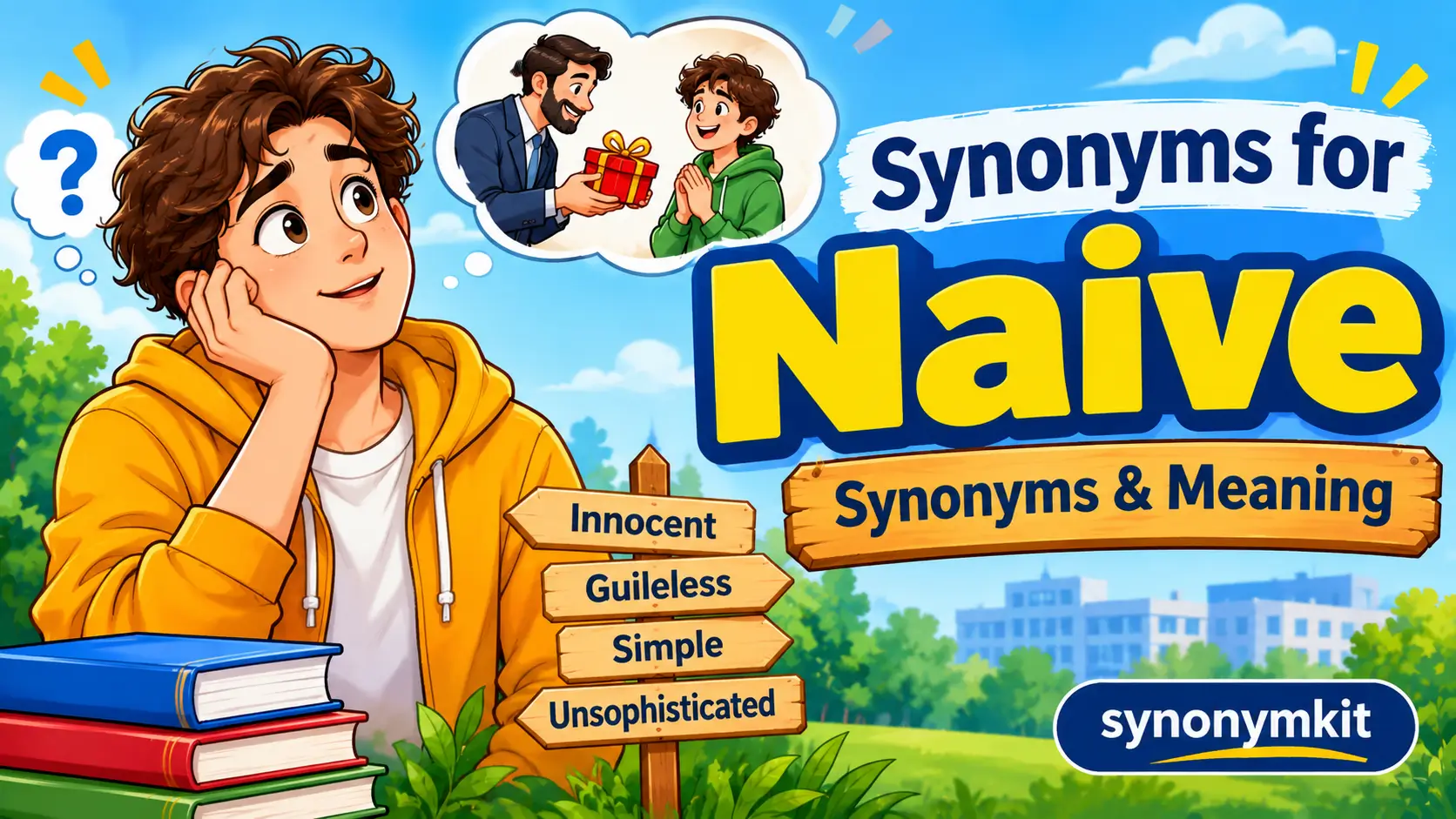
Synonyms for naive include innocent, gullible, trusting, inexperienced, credulous, unworldly, and unsophisticated. These words describe someone who lacks experience or does not know much about how people and situations work. Some sound kind and gentle, while others suggest poor judgment or a lack of knowledge.
Imagine a person who believes every story they hear. They trust new people quickly and never think someone might be lying. Their kind heart is clear, but their lack of experience can sometimes get them into trouble.
For example, a new student may believe a classmate who promises to share answers but never does. This is a common way the word naive can describe someone.
Learning different words for this idea can make your English stronger. Students can use them in essays and schoolwork.
Bloggers can make their articles more interesting. Content writers can choose words that fit each topic. Daily English users can speak with more care and confidence.
“A little experience can teach more than a thousand words.”
Choosing the right word also helps readers understand your meaning. Some words show kindness, while others point to a lack of judgment.
“Wisdom grows when we learn from the world around us.”
Here are 45 useful words and phrases for describing someone who is innocent, inexperienced, trusting, or unaware of certain things. Each word has a simple meaning and two everyday examples.
1. Innocent
- Meaning: Innocent describes someone who has done nothing wrong or lacks experience.
- Examples: She has an innocent view of life. His innocent smile made everyone feel happy.
2. Gullible
- Meaning: Gullible describes someone who believes things too easily without checking facts.
- Examples: He is gullible and trusts every story. Don’t be gullible when strangers offer gifts.
3. Trusting
- Meaning: Trusting describes someone who believes others are honest and kind.
- Examples: She is trusting with new friends. His trusting nature sometimes causes small problems.
4. Inexperienced
- Meaning: Inexperienced means someone has little knowledge from doing something before.
- Examples: The inexperienced worker asked many questions. She felt inexperienced during her first interview.
5. Credulous
- Meaning: Credulous describes someone who accepts stories as true without much doubt.
- Examples: The credulous boy believed the strange tale. Credulous people may fall for false promises.
6. Unworldly
- Meaning: Unworldly describes someone who knows little about real life and people.
- Examples: His unworldly nature surprised his friends. She seemed unworldly in the busy city.
7. Unsophisticated
- Meaning: Unsophisticated describes someone with little knowledge of complex social situations.
- Examples: His unsophisticated ideas made us smile. She felt unsophisticated at the formal event.
8. Green
- Meaning: Green means new to an activity and lacking useful experience.
- Examples: The green player made simple mistakes. He was still green at his new job.
9. Callow
- Meaning: Callow describes a young person who lacks experience and maturity.
- Examples: His callow behavior upset the team. She was callow when she started working.
10. Ingenuous
- Meaning: Ingenuous describes someone who is honest, open, and free from tricks.
- Examples: Her ingenuous answer made everyone laugh. He gave an ingenuous smile to his teacher.
11. Artless
- Meaning: Artless describes someone who speaks honestly without trying to trick others.
- Examples: Her artless words touched my heart. His artless reply showed his true feelings.
12. Guileless
- Meaning: Guileless describes someone who is honest and has no hidden plans.
- Examples: The guileless child trusted her new friend. His guileless nature made him easy to like.
13. Childlike
- Meaning: Childlike describes someone with the wonder, trust, or joy of a child.
- Examples: She has a childlike love of stories. His childlike excitement filled the room.
14. Simple
- Meaning: Simple describes someone who may not understand complex ideas or situations.
- Examples: He had a simple view of business. Her simple nature made her easygoing.
15. Simple minded
- Meaning: Simple minded describes someone who struggles to understand difficult ideas or situations.
- Examples: He made a simple minded choice today. The story shows a simple minded young character.
16. Impressionable
- Meaning: Impressionable describes someone who is easily influenced by other people’s ideas.
- Examples: Young children can be very impressionable. He was impressionable around his older friends.
17. Idealistic
- Meaning: Idealistic describes someone who expects people and life to be very good.
- Examples: She has an idealistic view of love. His idealistic plans inspired the whole group.
18. Unsuspecting
- Meaning: Unsuspecting describes someone who does not expect danger, lies, or trouble.
- Examples: The unsuspecting buyer paid the wrong person. An unsuspecting visitor entered the empty house.
19. Unaware
- Meaning: Unaware describes someone who does not know what is happening around them.
- Examples: She was unaware of the hidden problem. He remained unaware of their real plans.
20. Unversed
- Meaning: Unversed means someone has little knowledge of a subject or activity.
- Examples: He was unversed in modern technology. She felt unversed in office rules.
21. Naive hearted
- Meaning: Naive hearted describes someone with a trusting nature and little worldly experience.
- Examples: Her naive hearted nature made her kind. He was naive hearted when meeting strangers.
22. Greenhorn
- Meaning: A greenhorn is someone who is new and lacks experience.
- Examples: The greenhorn needed help with the task. Everyone was once a greenhorn at work.
23. Wet Behind the Ears
- Meaning: This phrase describes someone who is young and not experienced.
- Examples: He is still wet behind the ears. The new manager seemed wet behind the ears.
24. Trustful
- Meaning: Trustful describes someone who believes others will treat them honestly.
- Examples: The trustful child shared her secrets. He remained trustful despite past mistakes.
25. Credulous minded
- Meaning: Credulous minded describes someone who accepts claims without asking enough questions.
- Examples: His credulous minded approach caused confusion. A credulous minded buyer may miss warning signs.
26. Uncritical
- Meaning: Uncritical describes someone who accepts ideas without thinking about them carefully.
- Examples: She took an uncritical view of the story. His uncritical support surprised the group.
27. Unquestioning
- Meaning: Unquestioning describes someone who accepts information without asking for proof.
- Examples: His unquestioning trust worried his parents. She showed unquestioning faith in her friend.
28. Green and Inexperienced
- Meaning: This phrase describes someone who is new and still learning basic skills.
- Examples: He was green and inexperienced at work. The green and inexperienced player needed guidance.
29. Openhearted
- Meaning: Openhearted describes someone who shares feelings and trusts others easily.
- Examples: She is openhearted with everyone she meets. His openhearted nature makes friendships easy.
30. Guileless hearted
- Meaning: Guileless hearted describes someone who is honest, kind, and free from tricks.
- Examples: The guileless hearted girl helped her neighbor. His guileless hearted nature earned their respect.
31. Unschooled
- Meaning: Unschooled describes someone who has not received much teaching or training.
- Examples: He was unschooled in business matters. She felt unschooled in the new subject.
32. Uninitiated
- Meaning: Uninitiated describes someone who has not learned about an activity or subject.
- Examples: The uninitiated visitor asked simple questions. This guide helps uninitiated readers understand the game.
33. Unseasoned
- Meaning: Unseasoned describes someone who has not gained much experience yet.
- Examples: The unseasoned employee needed extra support. She was unseasoned but eager to learn.
34. Green eyed
- Meaning: Green eyed is sometimes used informally for someone new or inexperienced.
- Examples: The green eyed newcomer watched the team carefully. He felt green eyed among skilled workers.
35. Naive minded
- Meaning: Naive minded describes someone who has a simple view of people or life.
- Examples: His naive minded thinking caused a mistake. She was naive minded about online scams.
36. Tenderhearted
- Meaning: Tenderhearted describes someone who is kind, gentle, and easily moved.
- Examples: The tenderhearted girl helped the stray puppy. His tenderhearted nature made him generous.
37. Uncynical
- Meaning: Uncynical describes someone who does not expect bad motives from others.
- Examples: She has an uncynical view of people. His uncynical attitude made him hopeful.
38. Purehearted
- Meaning: Purehearted describes someone with kind intentions and an honest nature.
- Examples: The purehearted boy always helped others. Her purehearted actions showed real kindness.
39. Wide Eyed
- Meaning: Wide eyed describes someone who is amazed and new to something.
- Examples: The wide eyed child watched the fireworks. She looked wide eyed during her first trip.
40. Unprepared
- Meaning: Unprepared describes someone who does not have enough knowledge or readiness.
- Examples: He felt unprepared for the difficult question. The unprepared student forgot her notes.
41. Unsuspecting and Trusting
- Meaning: This phrase describes someone who trusts others and expects no hidden danger.
- Examples: The unsuspecting and trusting buyer paid quickly. She was unsuspecting and trusting with strangers.
42. Fresh Faced
- Meaning: Fresh faced describes someone who looks young and new to adult life.
- Examples: The fresh faced student entered the classroom. A fresh faced worker joined our small team.
43. Green as Grass
- Meaning: This informal phrase describes someone who has almost no experience.
- Examples: I was green as grass at first. He is green as grass in sales.
44. Uninitiated Beginner
- Meaning: An uninitiated beginner is someone starting without much knowledge or experience.
- Examples: The uninitiated beginner needed a clear guide. Every expert was once an uninitiated beginner.
45. Innocent Minded
- Meaning: Innocent minded describes someone who thinks kindly and knows little about bad behavior.
- Examples: Her innocent minded thoughts made us smile. He remained innocent minded despite life’s challenges.
Synonyms for Naive Person
Words for a naive person include innocent, gullible, trusting, inexperienced, green, and unworldly. These terms describe people who may not understand hidden motives or difficult situations.
For a kind description, use innocent or trusting. For someone who believes every story, gullible is more accurate. Choose the word that matches the person’s actions and the tone of your writing.
Positive Synonyms for Naive
Some words can describe naivety in a positive way. Innocent, purehearted, openhearted, guileless, and idealistic show kindness, honesty, and hope. These words are useful when you want to describe someone’s good nature without making them sound foolish.
For example, an idealistic person may believe that people can work together and make the world better.
Synonyms for Naivety
Naivety is a noun that describes a lack of experience or understanding. Related words include innocence, inexperience, gullibility, credulity, and unsophistication. Use innocence when talking about a person’s pure nature.
Use gullibility when someone believes false stories too easily. These choices help make your sentences clearer and more natural in everyday English.
Synonyms and Antonyms for Naive
Common synonyms include innocent, trusting, inexperienced, credulous, and unworldly. Their antonyms include experienced, wise, cautious, skeptical, and worldly. A naive person may trust others without checking the facts, while a cautious person thinks before making a choice.
Learning both groups helps you explain differences in personality and behavior.
Frequently Asked Questions
Is Gullible a Synonym of Naive?
Yes, gullible can be a synonym of naive, but the two words have slightly different meanings. Naive usually describes someone who lacks experience or understanding.
Gullible describes someone who believes things too easily, even when they are not true. For example, a naive person may not understand a business deal, while a gullible person may believe a false promise without checking it.
How Do You Say Naive in a Nice Way?
You can use words like innocent, trusting, openhearted, purehearted, or idealistic to describe someone in a kinder way. These words focus on positive qualities instead of a lack of experience.
For example, you can say, “She has an innocent view of the world.” This sounds warmer than calling someone gullible or foolish. The best choice depends on what you want to express.
What Is a Person Who Is Naive Called?
A person who is naive may be called inexperienced, innocent, green, unworldly, or gullible. The right word depends on the person’s behavior. A green person is new to something, while a gullible person believes others too easily.
You can also use the phrase “wet behind the ears” in casual English. It describes someone who has little life or work experience.
What Is a Positive Synonym for “Naive”?
Innocent is one of the best positive synonyms for naive. Other good choices include trusting, guileless, openhearted, and idealistic. These words describe someone who has a kind heart and expects good things from others.
For example, you might say, “He has an innocent and hopeful view of life.” This gives a warm meaning without suggesting that the person is foolish or careless.
Conclusion
Learning synonyms for naive can make your English stronger and more natural. Instead of using the same word in every sentence, you can choose from words like innocent, trusting, gullible, inexperienced, and idealistic. Each word has its own meaning and feeling. Some describe a kind heart, while others show a lack of knowledge or good judgment.
These words are useful in many areas of life. Students can use them to improve essays, school projects, and vocabulary tests. Bloggers can add variety to their articles and make their ideas easier to understand.
Content writers can choose clear words that match their readers and topics. Daily English users can also use these words in conversations, messages, and emails.
Start by learning three new words each day. Write simple sentences with them and try using them in real conversations. Pay attention to the meaning before choosing a replacement. Not every synonym fits every situation.
“The right word makes your message easier to understand.”
Keep reading, writing, and practicing. Every new word gives you another way to share your thoughts.
“Small steps in learning lead to big changes in communication.”

Sarah is a freelance content writer and grammar enthusiast with over 6 years of experience helping students and bloggers write with more clarity. She joined SynonymKit to make vocabulary-building simple and accessible for everyone, one word list at a time.