Synonyms for Common: 45 Better Words to Improve Your English
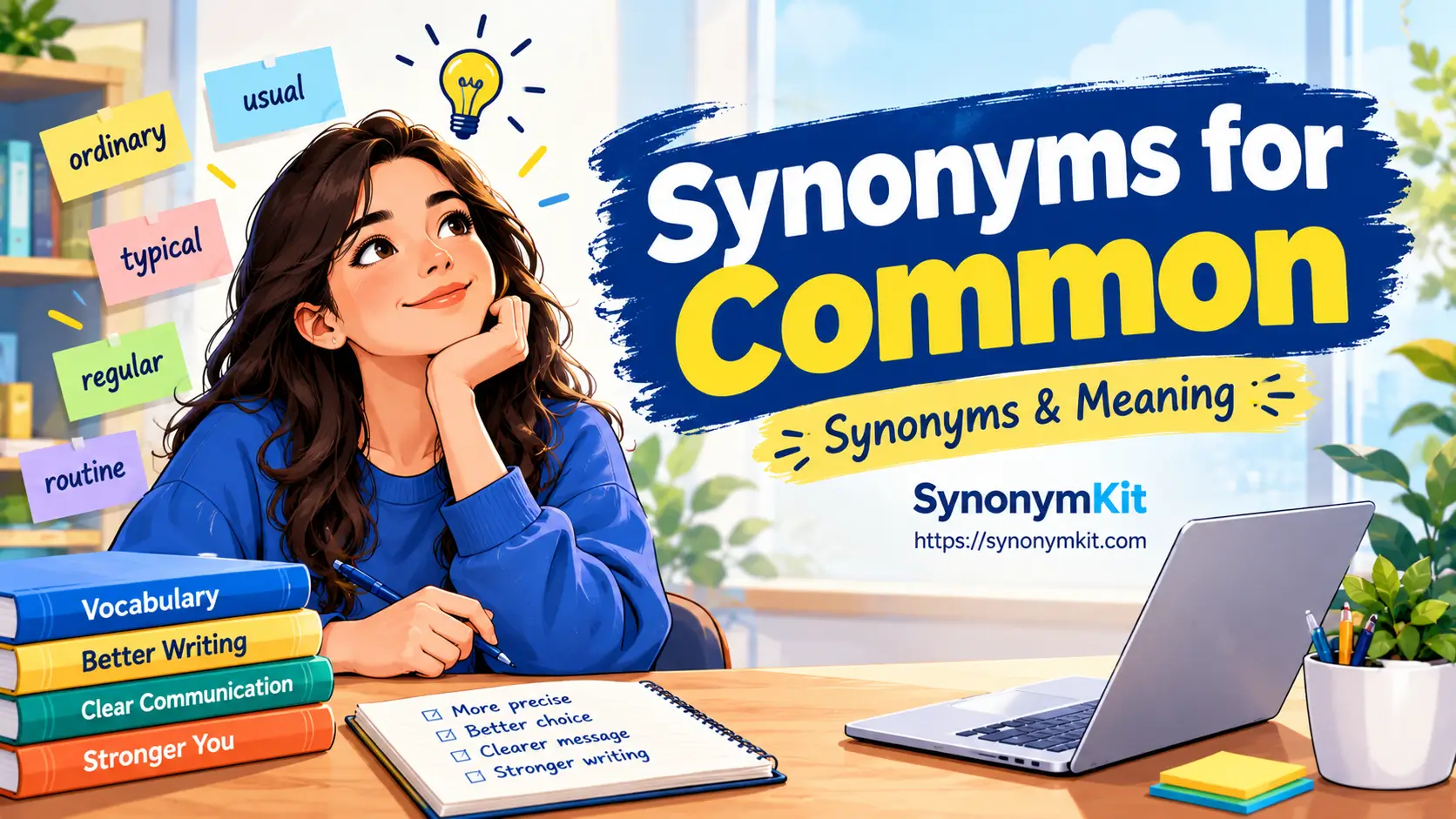
Synonyms for common include usual, ordinary, familiar, regular, widespread, frequent, typical, and prevalent. These words describe things people see, use, or do often. The best choice depends on your sentence. Some words fit daily talk, while others work better in essays, reports, and professional writing.
Imagine you are writing a school essay about things people do every day. You write, “It is common for people to use phones.” The sentence is clear, but you may want a more interesting word. You could say “usual,” “normal,” or “typical” instead.
Choosing the right word can make your writing sound fresh and clear. It also helps you explain your ideas in a better way.
“A little change in words can make a big difference.”
Students can use new words to make their essays stronger. Bloggers can keep readers interested with clear and varied language. Content writers can make articles easier to read. Daily English users can speak with more confidence in different situations.
For example, you might say, “Walking is a common way to stay active.” You could also write, “Walking is a popular way to stay active.” Both sentences make sense, but each gives a slightly different idea.
“Good words help us share our thoughts with care.”
Learning different words for everyday ideas can help you express yourself with greater ease. Let’s explore useful alternatives, their meanings, and examples you can use in real life.
These words can mean usual, ordinary, familiar, or widespread. However, not every word fits every sentence. Choose the one that best matches your meaning.
1. Usual
- Meaning: Something usual happens often or follows a normal pattern.
- Examples: I took my usual route home today.
- She ordered her usual coffee before work.
2. Ordinary
- Meaning: Something ordinary is simple and does not seem special.
- Examples: It was an ordinary day at school.
- He wore ordinary clothes to the small party.
3. Familiar
- Meaning: Something familiar is known because you have seen it before.
- Examples: That song sounds familiar to me.
- She recognized his familiar voice right away.
4. Regular
- Meaning: Something regular happens often or follows a set pattern.
- Examples: We have regular meetings every Monday morning.
- He is a regular visitor at this shop.
5. Widespread
- Meaning: Something widespread exists or happens across many places or people.
- Examples: Internet use is widespread in many cities.
- The news caused widespread concern among local families.
6. Frequent
- Meaning: Something frequent happens many times within a period.
- Examples: Frequent breaks help me stay focused.
- She makes frequent visits to her grandparents.
7. Typical
- Meaning: Something typical shows what usually happens in a situation.
- Examples: Rain is typical here during winter.
- His typical morning starts with a short walk.
8. Prevalent
- Meaning: Something prevalent is common in a place or group.
- Examples: This custom is prevalent in many villages.
- Online shopping is prevalent among young adults.
9. Normal
- Meaning: Something normal follows what people expect in everyday life.
- Examples: It is normal to feel nervous before exams.
- Her daily routine is normal for a student.
10. Popular
- Meaning: Something popular is liked or enjoyed by many people.
- Examples: This game is popular among school children.
- That café is popular with local families.
11. Everyday
- Meaning: Something everyday is part of normal daily life.
- Examples: These are everyday problems for busy parents.
- She uses everyday words to explain hard ideas.
12. Conventional
- Meaning: Something conventional follows accepted customs, ideas, or ways.
- Examples: They chose a conventional design for the office.
- His parents prefer conventional methods of teaching.
13. Standard
- Meaning: Something standard follows a usual rule or accepted level.
- Examples: This is the standard size for notebooks.
- The school uses a standard form for applications.
14. Routine
- Meaning: Something routine is done regularly as part of a pattern.
- Examples: Checking emails is part of my routine.
- The nurse completed her routine checks before lunch.
15. Customary
- Meaning: Something customary is done because people have long followed it.
- Examples: It is customary to greet guests warmly.
- Their customary meal includes rice and fresh vegetables.
16. Ordinary Looking
- Meaning: Something ordinary looking seems simple and does not attract much attention.
- Examples: He carried an ordinary looking bag to work.
- The ordinary looking box held a special gift.
17. Prevalent
- Meaning: Something prevalent is seen often within a certain group or area.
- Examples: This belief remains prevalent in some communities.
- The trend is prevalent among young online shoppers.
18. Frequented
- Meaning: A place frequented by people is visited often by them.
- Examples: The park is frequented by local runners.
- Tourists frequented the market during the summer months.
19. Familiarized
- Meaning: Familiarized means made more aware of something through learning or experience.
- Examples: The guide familiarized us with local customs.
- She familiarized herself with the new software.
20. Mainstream
- Meaning: Something mainstream is accepted or followed by many people.
- Examples: The idea soon became part of mainstream culture.
- Mainstream music often reaches a wide audience.
21. Established
- Meaning: Something established has been accepted or used for a long time.
- Examples: The company follows an established process.
- They trust the established rules of the club.
22. Wonted
- Meaning: Something wonted is usual or familiar, though this word is rare.
- Examples: He returned to his wonted quiet routine.
- Her wonted smile made everyone feel welcome.
23. Habitual
- Meaning: Something habitual happens regularly because it has become a habit.
- Examples: His habitual lateness upset the whole team.
- She made habitual checks of her daily schedule.
24. Prevailing
- Meaning: Something prevailing is widespread or most common at a certain time.
- Examples: The prevailing view favored a simple solution.
- They discussed the prevailing trends in education.
25. Ubiquitous
- Meaning: Something ubiquitous seems to be present almost everywhere.
- Examples: Smartphones are ubiquitous in modern city life.
- Coffee shops are ubiquitous in busy shopping areas.
26. Pervasive
- Meaning: Something pervasive spreads through many parts of a place or group.
- Examples: The pervasive smell filled the entire kitchen.
- Online ads have a pervasive role in shopping.
27. General
- Meaning: Something general applies to many people or things, not just one.
- Examples: We discussed the general rules before starting.
- The general opinion supported the new plan.
28. Broad
- Meaning: Something broad covers many people, ideas, or areas.
- Examples: The survey covered a broad range of topics.
- She has a broad knowledge of world history.
29. Collective
- Meaning: Something collective involves a group acting or thinking together.
- Examples: The team made a collective choice after discussion.
- Their collective effort helped clean the local park.
30. Shared
- Meaning: Something shared is held, used, or experienced by more than one person.
- Examples: They have a shared interest in music.
- The family uses a shared calendar for plans.
31. Mutual
- Meaning: Something mutual is felt, agreed on, or shared by two sides.
- Examples: They showed mutual respect during the debate.
- A mutual friend invited us to dinner.
32. Widely Used
- Meaning: This phrase describes something used by many people across different places.
- Examples: This tool is widely used in schools.
- The method is widely used by local businesses.
33. Recurrent
- Meaning: Something recurrent happens again and again over time.
- Examples: The team faced recurrent delays during construction.
- She had recurrent headaches after long workdays.
34. Repeated
- Meaning: Something repeated happens more than once in a similar way.
- Examples: Repeated practice helped him learn the song.
- The teacher gave repeated reminders about the deadline.
35. Regularly Occurring
- Meaning: Something regularly occurring happens again at expected times.
- Examples: The club holds regularly occurring weekend events.
- These regularly occurring meetings keep everyone informed.
36. Widely Known
- Meaning: Something widely known is recognized by many people.
- Examples: It is widely known that exercise supports health.
- The author is widely known for children’s books.
37. Well Known
- Meaning: Something well known is recognized or understood by many people.
- Examples: She visited a well known museum downtown.
- This is a well known rule in our school.
38. Recognized
- Meaning: Something recognized is known or accepted by a group of people.
- Examples: The award is recognized across the country.
- This method is recognized as a useful approach.
39. Ordinary Level
- Meaning: Ordinary level describes something that meets a basic, usual level.
- Examples: The course covers ordinary level English skills.
- He passed the ordinary level test with ease.
40. Everyday Occurrence
- Meaning: An everyday occurrence is something that happens as part of daily life.
- Examples: Traffic delays are an everyday occurrence here.
- Small mistakes are an everyday occurrence at work.
41. Typical of
- Meaning: Typical of describes a quality or action often seen in someone or something.
- Examples: This kindness is typical of my grandmother.
- Such delays are typical of busy holiday seasons.
42. Prevalent Practice
- Meaning: A prevalent practice is an action commonly followed in a group.
- Examples: Online booking is a prevalent practice today.
- This remains a prevalent practice in many offices.
43. Standard Practice
- Meaning: A standard practice is a usual method accepted by a group.
- Examples: Saving files daily is standard practice here.
- Wearing safety gear is standard practice at work.
44. Commonplace
- Meaning: Something commonplace happens often and no longer seems unusual.
- Examples: Video calls are commonplace in modern workplaces.
- Electric bikes are becoming commonplace in many cities.
45. Run of the Mill
- Meaning: Something run of the mill is ordinary and not special or unusual.
- Examples: It was a run of the mill office meeting.
- He wanted something better than a run of the mill gift.
Synonyms for Common Sense
Words related to common sense include good judgment, practical wisdom, sound judgment, and reason. They describe the ability to make sensible choices in daily life. For example, checking both sides before crossing a road shows good judgment.
Use “common sense” for everyday decisions and “sound judgment” when you want a slightly more formal tone.
Synonyms for Common Words
Common words can be replaced with everyday words, familiar terms, simple words, or frequently used words. These phrases work well when discussing language and writing.
For example, a teacher may ask students to use simple words so readers can understand an idea quickly. Choose familiar terms when your audience may not know technical language.
Synonyms for Common Ground
Common ground means shared ideas, interests, or beliefs between people. Useful alternatives include shared interests, mutual understanding, shared views, and points of agreement. These phrases work well in discussions, teamwork, and relationships.
For example, two people with different opinions may find common ground by agreeing on a shared goal. The best phrase depends on whether you mean shared beliefs or an agreement.
Synonyms for Common Knowledge
Common knowledge refers to information that many people know or accept. Alternatives include general knowledge, widely known information, familiar facts, and well known facts. Use “general knowledge” when talking about information people learn from daily life or education.
“Widely known information” is useful when explaining that a fact is recognized by many people. Avoid calling something common knowledge if your readers may not know it.
Synonyms and Antonyms for Common
Synonyms for common include usual, ordinary, typical, familiar, and widespread. Antonyms include rare, unusual, uncommon, exceptional, and unique. Synonyms help you explain something that happens often or is widely seen. Antonyms help you describe something that does not happen often or stands apart from others.
For example, “common birds” describes birds seen often, while “rare birds” describes birds that are hard to find.
Frequently Asked Questions
What is another word for most common?
Words such as most widespread, most frequent, most prevalent, and most usual can replace “most common,” depending on the sentence. “Most prevalent” works well in formal writing, while “most frequent” is useful when discussing how often something happens.
For example, you might write, “This is the most prevalent issue in the survey.” Always choose a phrase that matches the meaning you want to express.
What words can I use instead of “commonly”?
You can use usually, often, frequently, generally, or typically instead of “commonly.” Each word has a slightly different use. “Usually” describes what normally happens, while “frequently” highlights how often something occurs. “Generally” works when describing a broad pattern.
For example, instead of writing, “People commonly use this app,” you could write, “People often use this app.” Pick the word that sounds natural in your sentence.
What is a better word for “very common”?
Words such as widespread, prevalent, ubiquitous, and pervasive can express the idea of something being very common. “Widespread” is a clear choice for everyday writing. “Prevalent” suits formal reports, while “ubiquitous” suggests something seems to be everywhere.
For example, “Smartphones are widespread today” sounds clear and natural. Consider your audience before choosing a stronger or more formal word.
What is a professional word for “common”?
Professional alternatives for “common” include prevalent, widespread, standard, typical, and conventional. The best choice depends on the context. Use “prevalent” when describing a trend or issue seen often.
Use “standard” for accepted methods, rules, or procedures. For example, “This is a standard procedure in our office” sounds professional and clear. Avoid choosing complex words just to sound formal; clarity is more important.
Conclusion
Learning synonyms for common words can make your writing clearer, more interesting, and more precise. Words such as usual, typical, ordinary, widespread, and prevalent can express similar ideas, but they do not always mean exactly the same thing. Choosing the right word helps you share your message with less confusion.
Students can use these words to improve essays and school assignments. Bloggers can make their posts more engaging by avoiding repeated words. Content writers can choose language that suits their readers. People who use English every day can also build confidence when speaking, writing emails, or joining conversations.
“The right word makes your meaning easier to understand.”
Start with two or three synonyms from this list. Write a sentence with each one, then try using them in a short paragraph. You can also practice by changing simple sentences into more detailed ones. For example, replace “This is a common problem” with “This is a widespread problem” when the issue affects many people.
Remember that a good synonym should fit both the meaning and the tone of your sentence. A simple word is often better than a complex one if it helps readers understand you.
“Practice a new word today, and use it with confidence tomorrow.”
Keep learning, reading, and writing. Over time, your vocabulary will grow, and expressing your ideas in English will become easier.

Sarah is a freelance content writer and grammar enthusiast with over 6 years of experience helping students and bloggers write with more clarity. She joined SynonymKit to make vocabulary-building simple and accessible for everyone, one word list at a time.