50 Synonyms for Tension: Meanings, Examples, and Better Words
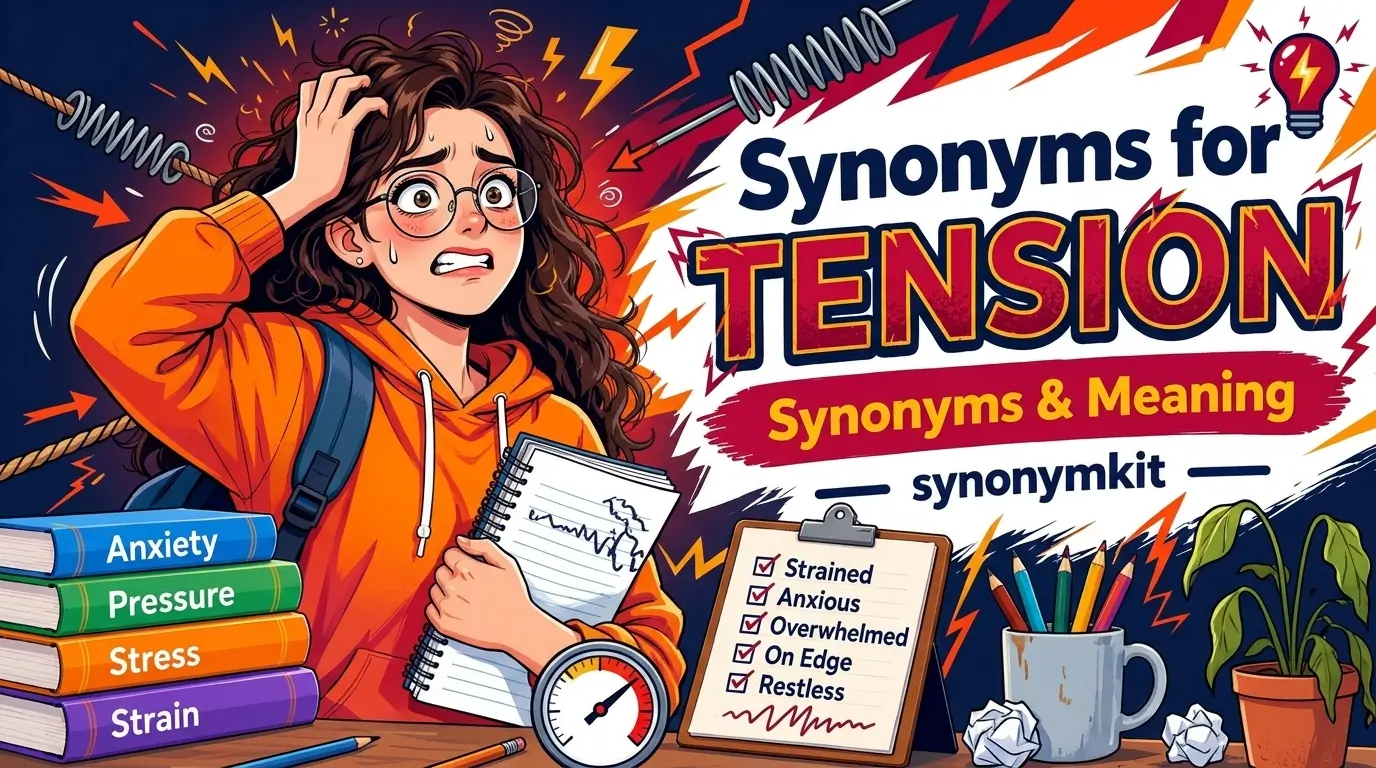
The best synonyms for tension include stress, strain, pressure, suspense, anxiety, and unease. These words describe worry, fear, conflict, or a feeling of tightness. The right choice depends on the situation, such as a difficult relationship, a stressful day, or an exciting story.
Imagine sitting in a room where two friends have stopped talking. Nobody says anything, but everyone feels uncomfortable. Their silence makes the situation harder, and even a small comment could start an argument. Moments like this happen in daily life, at work, and in stories.
Choosing the right words can help explain these moments more clearly. For example, a writer might describe a difficult meeting as stressful, awkward, or uncomfortable instead of using the same word again and again.
Students can use new words to make essays stronger. Bloggers can create more interesting articles with better word choices. Content writers can make their work clear and engaging. Daily English users can express their feelings with greater confidence.
Learning different words also helps you understand how small changes in language can affect meaning.
“Words are powerful when they express what we truly feel.”
A good vocabulary makes it easier to share thoughts and describe real situations. It also helps readers connect with your message.
“Clear words make difficult feelings easier to understand.”
50 Synonyms for Tension
1. Stress
- Meaning: A feeling of worry caused by difficult situations or too many problems.
- Examples: Work stress makes him tired every day.
- Examples: She feels stress before important exams.
2. Strain
- Meaning: Pressure or difficulty that makes something hard to manage.
- Examples: Their friendship faced strain after the argument.
- Examples: Too much work puts strain on employees.
3. Pressure
- Meaning: A strong feeling that comes from demands or expectations.
- Examples: She works well under pressure at school.
- Examples: Family pressure made his choice difficult.
4. Suspense
- Meaning: An exciting feeling of not knowing what happens next.
- Examples: The movie creates suspense until its ending.
- Examples: Readers enjoyed the suspense in every chapter.
5. Anxiety
- Meaning: A feeling of worry about something that may happen.
- Examples: His anxiety grew before the interview.
- Examples: She feels anxiety during important meetings.
6. Unease
- Meaning: A slight feeling that something is wrong or uncomfortable.
- Examples: His strange behavior made everyone uneasy.
- Examples: She felt unease while walking alone.
7. Apprehension
- Meaning: A worried feeling about something unpleasant that might happen.
- Examples: He felt apprehension before meeting his boss.
- Examples: Her apprehension grew as the date approached.
8. Friction
- Meaning: Disagreement or trouble between people who do not get along.
- Examples: Small mistakes created friction between coworkers.
- Examples: Their different views caused friction at work.
9. Conflict
- Meaning: A serious disagreement between people with different ideas or needs.
- Examples: The conflict started during their family dinner.
- Examples: They worked together to resolve the conflict.
10. Discord
- Meaning: A lack of peace caused by arguments or disagreement.
- Examples: Discord grew after the team meeting.
- Examples: Their constant arguments created discord at home.
11. Hostility
- Meaning: An angry or unfriendly feeling toward another person.
- Examples: Hostility filled the room during their debate.
- Examples: His hostility made the discussion uncomfortable.
12. Nervousness
- Meaning: A worried feeling that makes someone feel less relaxed.
- Examples: Her nervousness showed during the speech.
- Examples: He tried to hide his nervousness before class.
13. Worry
- Meaning: An unhappy feeling caused by thinking about possible problems.
- Examples: Money worries kept him awake last night.
- Examples: She shared her worries with her mother.
14. Agitation
- Meaning: A state of feeling upset, nervous, or unable to relax.
- Examples: His agitation increased during the long wait.
- Examples: She noticed his agitation after the news.
15. Turmoil
- Meaning: A state of great confusion, worry, or emotional trouble.
- Examples: The family faced turmoil after the news.
- Examples: His mind was in turmoil all night.
16. Unrest
- Meaning: A lack of peace caused by anger or dissatisfaction.
- Examples: Unrest spread throughout the busy office.
- Examples: The workers showed unrest during the protest.
17. Disquiet
- Meaning: A feeling of worry that makes someone feel less peaceful.
- Examples: The strange message caused disquiet among friends.
- Example: She felt disquiet about his sudden silence.
18. Awkwardness
- Meaning: An uncomfortable feeling during a difficult or strange situation.
- Examples: Awkwardness filled the room after his joke.
- Examples: Their silence created awkwardness at dinner.
19. Discomfort
- Meaning: A feeling of being unhappy, worried, or not relaxed.
- Examples: His question caused discomfort during lunch.
- Examples: She noticed discomfort among the guests.
20. Stiffness
- Meaning: A tight or unfriendly feeling in a person or situation.
- Examples: Stiffness remained between the two neighbors.
- Examples: His stiffness made the meeting less friendly.
21. Tightness
- Meaning: A feeling of being pulled, squeezed, or held firmly.
- Examples: She felt tightness in her shoulders.
- Examples: Tightness filled his chest before the race.
22. Rigidity
- Meaning: A state of being stiff or unwilling to change.
- Examples: Rigidity made their working relationship difficult.
- Examples: His rigidity stopped the team from agreeing.
23. Intensity
- Meaning: The strength of a feeling, action, or difficult situation.
- Examples: The intensity increased during their final argument.
- Examples: Everyone noticed the intensity of the match.
24. Anticipation
- Meaning: A strong feeling while waiting for something important to happen.
- Examples: Anticipation grew before the winner was announced.
- Examples: The children waited with great anticipation.
25. Uncertainty
- Meaning: A feeling caused by not knowing what will happen.
- Examples: Uncertainty made their future plans difficult.
- Examples: She felt uncertainty about the final decision.
26. Doubt
- Meaning: A feeling of not being sure about something.
- Examples: His doubt increased after their conversation.
- Examples: She expressed doubt about the new plan.
27. Nervous Tension
- Meaning: A worried feeling that makes the body or mind uneasy.
- Examples: Nervous tension filled the room before interviews.
- Examples: He felt nervous tension before his speech.
28. Burden
- Meaning: A heavy problem or responsibility that causes worry.
- Examples: Family problems became a heavy burden.
- Examples: She carried the burden of difficult choices.
29. Pressure Cooker
- Meaning: A situation where stress keeps building until someone reacts.
- Examples: The busy office became a pressure cooker.
- Examples: Their small apartment felt like a pressure cooker.
30. Suspicion
- Meaning: A feeling that someone may be hiding something wrong.
- Examples: Suspicion grew after he changed his story.
- Examples: Her silence created suspicion among friends.
31. Alarm
- Meaning: A sudden feeling of fear about possible danger or trouble.
- Examples: His strange call caused alarm at home.
- Examples: The warning created alarm among workers.
32. Fear
- Meaning: A strong feeling caused by danger or possible harm.
- Examples: Fear filled the room during the storm.
- Examples: She faced her fear before speaking.
33. Dread
- Meaning: A strong feeling of fear about something unpleasant ahead.
- Examples: He felt dread before opening the letter.
- Examples: Dread grew as the deadline came closer.
34. Frustration
- Meaning: An upset feeling when things do not happen as expected.
- Examples: Frustration grew after several failed attempts.
- Examples: She showed frustration during the long discussion.
35. Distress
- Meaning: A state of great worry, sadness, or emotional pain.
- Examples: His distress became clear during the call.
- Examples: She offered help during his time of distress.
36. Strife
- Meaning: Serious trouble or disagreement between people or groups.
- Examples: Strife divided the family for many years.
- Examples: The group faced strife over money.
37. Contention
- Meaning: Strong disagreement about an idea, choice, or action.
- Examples: Contention grew over the project deadline.
- Examples: Their opinions became a source of contention.
38. Discordance
- Meaning: A lack of agreement between people, ideas, or feelings.
- Examples: Discordance appeared during the team discussion.
- Examples: Their different goals created discordance at work.
39. Hostility Between People
- Meaning: An unfriendly feeling that creates distance between two people.
- Examples: Hostility between neighbors lasted for months.
- Examples: Their hostility made group work difficult.
40. Emotional Turmoil
- Meaning: Strong and confusing feelings that make it hard to feel calm.
- Examples: Emotional turmoil followed their sudden breakup.
- Examples: She faced emotional turmoil after the news.
41. Uneasiness
- Meaning: A feeling of discomfort when something does not seem right.
- Examples: Uneasiness spread during the quiet meeting.
- Examples: He could not explain his sudden uneasiness.
42. Restlessness
- Meaning: A feeling that makes someone unable to sit or relax.
- Examples: Restlessness kept the children awake last night.
- Examples: He showed restlessness before the big announcement.
43. Aggravation
- Meaning: A feeling of anger caused by repeated problems or delays.
- Examples: The long delay caused aggravation among passengers.
- Examples: She expressed aggravation over the mistake.
44. Tension Between Groups
- Meaning: A difficult relationship caused by disagreement between different groups.
- Examples: Tension between groups affected the school event.
- Examples: The leaders worked to reduce tension between groups.
45. Rivalry
- Meaning: A situation where people compete and want to win.
- Examples: Rivalry between teams made the match exciting.
- Examples: Their rivalry continued throughout the season.
46. Strained Relations
- Meaning: A difficult relationship where people do not feel comfortable together.
- Examples: Strained relations affected their family business.
- Examples: The two managers tried to improve strained relations.
47. Pressure Situation
- Meaning: A difficult moment that makes people feel worried or rushed.
- Examples: He stayed calm in the pressure situation.
- Examples: The team handled the pressure situation well.
48. Suspenseful Atmosphere
- Meaning: A feeling of excitement and worry about what comes next.
- Examples: A suspenseful atmosphere filled the dark room.
- Examples: The music created a suspenseful atmosphere.
49. Emotional Strain
- Meaning: Mental pressure caused by difficult feelings or personal problems.
- Examples: Emotional strain affected their family life.
- Examples: She needed rest after months of emotional strain.
50. Hostile Atmosphere
- Meaning: An unfriendly environment where people feel angry or uncomfortable.
- Examples: A hostile atmosphere filled the meeting room.
- Examples: His rude words created a hostile atmosphere.
Synonyms for Tension in Writing
Writers can use stress, strain, pressure, suspense, and unease to avoid repeating the same word. Each choice creates a slightly different meaning. Stress works well in personal situations, while suspense suits exciting scenes.
Strain can describe difficult relationships or demanding tasks. Choose a word that fits the sentence and helps readers understand the situation clearly.
Synonyms for Tension and Suspense
Suspense, anticipation, uncertainty, apprehension, and anxiety can describe moments when readers or people wait for an important event. Suspense is common in stories and movies. Anticipation describes the feeling of waiting, while apprehension suggests fear about what may happen.
These alternatives help writers build interest and make readers curious about the next event.
Synonyms for Tension Free
Words such as peaceful, relaxed, calm, easygoing, and comfortable can describe a tension free situation. These alternatives work well when talking about a friendly workplace, a happy relationship, or a quiet day.
For example, a calm environment helps people focus, while a relaxed conversation makes everyone feel welcome. The best choice depends on the situation.
Synonyms for Tension in the Air
When people feel that something is wrong but nobody speaks, words like unease, suspense, apprehension, hostility, and awkwardness can describe the atmosphere. Unease suggests quiet worry, while hostility shows unfriendly feelings.
Suspense works better when people are waiting for something important. These words help readers imagine an uncomfortable room or a difficult social moment.
Synonyms for Tension in Literature
Literature uses words like suspense, conflict, anticipation, uncertainty, and emotional strain to describe difficult moments in a story. Conflict creates problems between characters, while suspense makes readers wonder what will happen next.
Emotional strain shows a character’s inner struggle. These terms help students discuss plots, relationships, character development, and the feelings created by a writer.
Frequently Asked Questions
1. What Is Another Word for Tension Between Two People?
Friction, conflict, awkwardness, hostility, and strained relations are useful alternatives for tension between two people. Friction describes small disagreements, while conflict suggests a more serious problem.
Awkwardness is suitable when two people feel uncomfortable around each other. For example, two friends may experience friction after a misunderstanding. Choose the word that best describes the strength of their disagreement.
2. What Is Another Word for “Tension Feeling”?
Stress, anxiety, nervousness, unease, and apprehension are common alternatives when describing a tension feeling. Stress often comes from work or personal problems. Anxiety describes worry about something that may happen, while nervousness is common before an important event.
Unease suggests that something feels wrong. These words can help explain feelings in everyday conversations and personal writing.
3. What Is Another Word for Emotional Tension?
Emotional strain, inner conflict, distress, turmoil, and emotional pressure can replace emotional tension. Inner conflict describes a struggle between different thoughts or feelings. Emotional strain works well when someone faces a difficult personal situation.
Turmoil suggests stronger and more confusing feelings. These expressions are useful when writing about family problems, relationships, personal choices, or difficult life experiences.
4. What’s Another Word for Creating Tension?
Building suspense, increasing pressure, creating conflict, and raising anxiety are useful expressions for creating tension. Writers often use suspense to keep readers interested in a story. A filmmaker may build suspense through music, silence, or unexpected events.
In daily situations, pressure can increase when people face difficult choices. The best expression depends on whether you mean emotional, social, or dramatic tension.
Conclusion
Learning different synonyms for tension can make your English stronger and your writing more interesting. Instead of repeating the same word, you can choose an alternative that explains the exact feeling or situation.
Words like stress, anxiety, pressure, friction, and suspense each have their own meaning and purpose.
Students can use these words to improve essays, assignments, and classroom discussions. Bloggers can make their articles more engaging by choosing words that match their topics. Content writers can explain difficult situations with simple and clear language.
Daily English users can also express their thoughts more naturally during conversations.
Start by learning five new words from this list. Write a simple sentence for each one and try using them in your emails, essays, and daily conversations. Pay attention to the meaning before choosing a replacement. Not every synonym works in every sentence.
“A stronger vocabulary helps you share your ideas with confidence.”
Keep practicing and exploring new words. Over time, you will become better at choosing the right expressions for different situations.
“The right word can turn a simple sentence into a clear message.”
Good vocabulary is not about using difficult words. It is about using the right words at the right time.

James is a former English teacher turned content strategist who’s passionate about making language learning less intimidating. At SynonymKit, he focuses on curating word lists that are practical for everyday writing, essays, and professional communication.