50 Synonyms for Monster: Powerful and Creative Alternatives
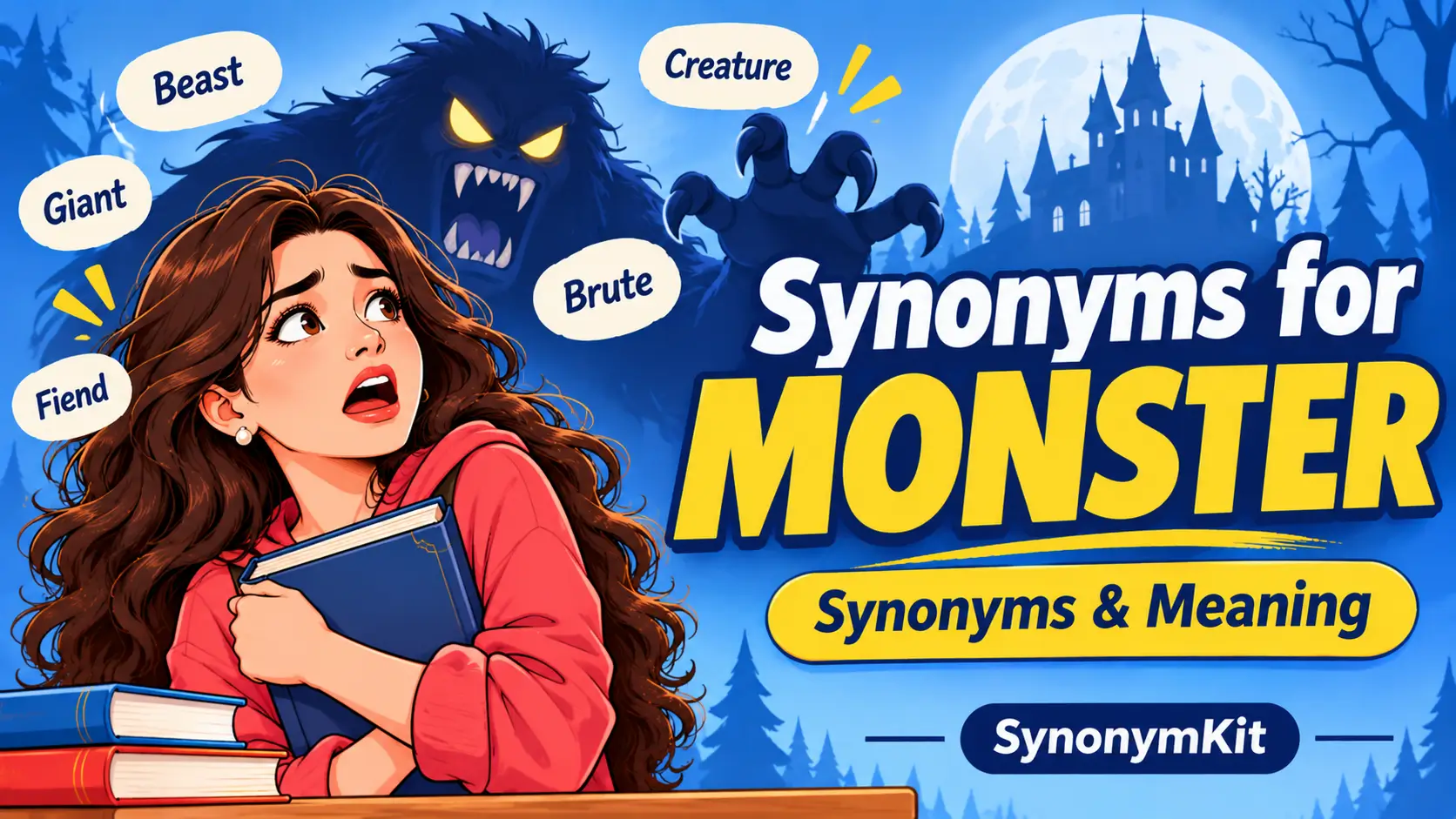
Synonyms for monster include beast, creature, beastie, fiend, ogre, giant, brute, and monstrosity. These words describe scary creatures, huge animals, evil characters, or people who act cruelly. The best choice depends on whether you mean a fictional monster, a frightening creature, or a terrible person.
Imagine walking through a dark forest at night. You hear strange sounds behind the trees. Suddenly, a huge creature appears in front of you. What would you call it? You might say monster, beast, or something even more powerful.
For example, a story about a giant dragon may use words like beast, creature, or monster to make the scene more exciting. Choosing the right word can make your writing stronger and more interesting.
Students can use these words to improve their vocabulary and essays. Bloggers can make their articles more engaging. Content writers can avoid using the same word too often. Daily English users can express their thoughts more clearly.
Learning different words also helps you understand books, movies, games, and conversations.
“Words have the power to bring stories to life.”
The right word can create fear, mystery, or excitement. It can also help readers picture a character more clearly.
“A strong vocabulary makes every story more powerful.”
Let’s explore 50 useful alternatives and learn how to use them naturally.
1. Beast
- Meaning: A beast is a large or wild animal that may seem frightening.
- Examples: The beast roared inside the dark cave.
- The villagers feared the beast at night.
2. Creature
- Meaning: A creature is a living thing, especially one that looks strange.
- Examples: A strange creature crossed the empty road.
- The creature had glowing eyes and sharp teeth.
3. Fiend
- Meaning: A fiend is an evil being that causes fear or harm.
- Examples: The fiend frightened everyone in the village.
- A brave knight defeated the wicked fiend.
4. Ogre
- Meaning: An ogre is a large, ugly character found in fairy tales.
- Examples: The ogre lived inside a mountain.
- The children ran away from the hungry ogre.
5. Brute
- Meaning: A brute is a cruel person or creature with great strength.
- Examples: The brute broke the wooden door.
- Everyone stayed away from that angry brute.
6. Giant
- Meaning: A giant is a huge person or creature in stories.
- Examples: The giant walked across the green valley.
- A giant guarded the castle entrance.
7. Troll
- Meaning: A troll is a strange creature often found in fantasy stories.
- Examples: The troll lived beneath an old bridge.
- The hero tricked the sleeping troll.
8. Demon
- Meaning: A demon is an evil spirit found in myths and stories.
- Examples: The demon appeared during the storm.
- The old legend spoke about a powerful demon.
9. Devil
- Meaning: A devil is an evil being linked with darkness and harm.
- Examples: The devil appeared in the ancient tale.
- The story described a devil with red eyes.
10. Goblin
- Meaning: A goblin is a small, ugly creature from fantasy stories.
- Examples: The goblin stole gold from the king.
- A little goblin hid behind the rocks.
11. Ghoul
- Meaning: A ghoul is a frightening creature often linked with graves.
- Examples: The ghoul appeared near the old cemetery.
- The villagers told stories about a hungry ghoul.
12. Vampire
- Meaning: A vampire is a fictional creature that drinks blood from people.
- Examples: The vampire slept inside a dark castle.
- A vampire appeared in the scary movie.
13. Werewolf
- Meaning: A werewolf is a person who changes into a wolf.
- Examples: The werewolf howled beneath the full moon.
- The movie showed a frightening werewolf transformation.
14. Dragon
- Meaning: A dragon is a large mythical creature with powerful features.
- Examples: The dragon guarded a hidden treasure.
- A fierce dragon flew above the castle.
15. Behemoth
- Meaning: A behemoth is an enormous creature that seems powerful and dangerous.
- Examples: The behemoth shook the ground with every step.
- A giant behemoth appeared in the fantasy game.
16. Colossus
- Meaning: A colossus is something extremely large that looks powerful or impressive.
- Examples: The colossus stood above the ancient city.
- Everyone stared at the enormous colossus.
17. Leviathan
- Meaning: A leviathan is a huge sea creature from ancient stories and myths.
- Examples: The leviathan moved beneath the ocean waves.
- Sailors feared the legendary leviathan.
18. Titan
- Meaning: A titan is a powerful giant from ancient myths or stories.
- Examples: The titan carried a massive stone.
- A mighty titan protected the ancient land.
19. Monstrosity
- Meaning: A monstrosity is something extremely ugly, strange, or frightening to see.
- Examples: The creature looked like a monstrosity.
- The artist created a strange monstrosity.
20. Abomination
- Meaning: An abomination is something considered deeply wrong, horrible, or disgusting.
- Examples: The villagers called the creature an abomination.
- The old book described an awful abomination.
21. Freak
- Meaning: A freak is something unusual that looks strange or unexpected.
- Examples: The story featured a strange creature.
- The old circus displayed a fictional freak.
22. Horror
- Meaning: A horror is something that causes great fear or shock.
- Examples: The monster became a horror to villagers.
- The movie showed a terrible horror.
23. Terror
- Meaning: A terror is someone or something that causes extreme fear.
- Examples: The creature became the terror of the town.
- The terror appeared after sunset.
24. Menace
- Meaning: A menace is a person or thing that threatens others.
- Examples: The monster was a menace to everyone.
- A strange menace entered the quiet village.
25. Villain
- Meaning: A villain is an evil character who harms others in stories.
- Examples: The villain planned to destroy the kingdom.
- The hero finally defeated the villain.
26. Tyrant
- Meaning: A tyrant is a cruel ruler who treats people badly.
- Examples: The tyrant ruled the kingdom with fear.
- Nobody dared to challenge the cruel tyrant.
27. Brutal
- Meaning: A brutal person or thing is someone or something that acts in a violent way.
- Examples: The brutal creature attacked the wooden fence.
- The story described a brutal beast.
28. Predator
- Meaning: A predator is an animal that hunts other animals for food.
- Examples: The predator waited quietly in the forest.
- A dangerous predator followed the smaller animal.
29. Mutant
- Meaning: A mutant is a living thing changed in an unusual way.
- Examples: The mutant appeared in the science fiction film.
- The hero fought a powerful mutant.
30. Grotesque
- Meaning: Grotesque describes something that looks very strange, ugly, or frightening.
- Examples: The creature had a grotesque face.
- The artist painted a grotesque figure.
31. Specter
- Meaning: A specter is a ghostly figure that causes fear.
- Examples: A specter appeared inside the empty house.
- The specter disappeared before sunrise.
32. Phantom
- Meaning: A phantom is a ghost or strange figure that seems unreal.
- Examples: A phantom walked through the hallway.
- The children saw a phantom near the window.
33. Apparition
- Meaning: An apparition is a strange ghostly figure that suddenly appears.
- Examples: An apparition appeared beside the old tree.
- The frightened man followed the mysterious apparition.
34. Wraith
- Meaning: A wraith is a frightening ghost or spirit from dark stories.
- Examples: The wraith moved through the dark forest.
- A lonely wraith guarded the ruined castle.
35. Nightmare
- Meaning: A nightmare is a frightening dream or something that causes great fear.
- Examples: The monster became part of his nightmare.
- The nightmare creature appeared in every dream.
36. Bogeyman
- Meaning: A bogeyman is a scary imaginary figure used in children’s stories.
- Examples: The children believed the bogeyman lived upstairs.
- Their grandmother told a story about the bogeyman.
37. Beastie
- Meaning: A beastie is a small or strange animal or creature.
- Examples: A little beastie crawled across the floor.
- The cartoon showed a funny beastie.
38. Hellion
- Meaning: A hellion is a wild, troublesome person who causes trouble.
- Examples: The little hellion broke his toy.
- Everyone laughed at the playful hellion.
39. Fiendish Creature
- Meaning: A fiendish creature is an evil being that enjoys causing trouble.
- Examples: The fiendish creature attacked the castle.
- Nobody trusted the dangerous fiendish creature.
40. Monstrous Beast
- Meaning: A monstrous beast is an enormous animal that looks frightening and dangerous.
- Examples: A monstrous beast guarded the cave.
- The villagers escaped from the monstrous beast.
41. Demon Spawn
- Meaning: Demon spawn describes an evil or frightening being in fantasy stories.
- Examples: The demon spawn entered the ruined temple.
- The wizard trapped the demon spawn.
42. Nightmare Creature
- Meaning: A nightmare creature is a frightening being that seems taken from bad dreams.
- Examples: The nightmare creature appeared behind the door.
- The children imagined a nightmare creature outside.
43. Horror Beast
- Meaning: A horror beast is a scary animal or creature from frightening stories.
- Examples: The horror beast chased the brave hunter.
- A horror beast appeared in the game.
44. Freak of Nature
- Meaning: A freak of nature is something unusually formed or different from normal.
- Examples: The fantasy film showed a freak of nature.
- The strange plant looked like a freak of nature.
45. Goliath
- Meaning: A Goliath is someone or something extremely large and powerful.
- Examples: The Goliath stood beside the castle.
- A huge Goliath challenged the brave warrior.
46. Juggernaut
- Meaning: A juggernaut is a powerful force that is hard to stop.
- Examples: The juggernaut destroyed everything in its path.
- Nobody could stop the powerful juggernaut.
47. Hydra
- Meaning: A hydra is a mythical monster with many heads.
- Examples: The hydra guarded the hidden treasure.
- The hero faced a dangerous hydra.
48. Chimera
- Meaning: A chimera is a mythical creature made from different animals.
- Examples: The chimera had a lion’s body.
- A strange chimera appeared in the legend.
49. Cyclops
- Meaning: A cyclops is a giant mythical creature with one eye.
- Examples: The cyclops guarded the mountain cave.
- The brave hero escaped from the cyclops.
50. Frankenstein’s Monster
- Meaning: Frankenstein’s monster is a fictional being made from human body parts.
- Examples: Frankenstein’s monster appeared in the old movie.
- The villagers ran away from Frankenstein’s monster.
Different Types of Monster Synonyms
Monster related words can describe different things. Some refer to fictional creatures, while others describe frightening people, huge animals, or powerful forces. Understanding these differences helps you select a word that fits your sentence.
“The right word makes the meaning clear.”
Synonyms for Monster Person
When describing a person who behaves cruelly, words like brute, fiend, tyrant, villain, and menace may fit.
These words focus on bad actions rather than physical appearance. For example, a cruel ruler can be called a tyrant, while someone who hurts others may be described as a brute.
Synonyms for Monster That Start With M
Several monster related words begin with M. Examples include monstrosity, menace, mutant, monstrous beast, and monster like.
These words work in different settings. Monstrosity describes something horrible, while mutant often appears in science fiction stories. Choose the word that best matches the creature or character.
Synonyms for Monster That Start With C
If you need a monster synonym beginning with C, try creature, colossus, chimera, and cyclops. Creature is a general word, while the other three describe particular types of mythical beings.
These choices are useful in fantasy stories, games, creative writing, and descriptions of legendary creatures.
Synonyms for Monster That Start With S
Words beginning with S can also describe frightening creatures. Useful options include brutal, specter, and scourge. Brutal describes violent behavior, while specter refers to a ghostly figure.
Scourge describes someone or something that causes great suffering, making it useful when describing a terrible threat.
Frequently Asked Questions
1. What Is Another Name for a Monster?
Another name for a monster can be beast, creature, fiend, ogre, giant, or brute. The best choice depends on the type of monster you want to describe. A beast usually suggests a wild animal, while an ogre is a large character from fairy tales.
A fiend often describes an evil being. These alternatives help make stories, essays, and descriptions more interesting.
2. What Can I Use Instead of Monster?
You can use words like creature, beast, monstrosity, giant, demon, or fiend instead of monster. For a friendly or mysterious character, creature may work better. For a frightening animal, beast is a good choice.
If you are describing something extremely ugly or unusual, monstrosity may fit. Always think about the meaning and feeling you want your sentence to express.
3. What Is Slang for Monster?
Common informal alternatives for monster include beast, beast mode, brute, and freak. In casual conversations, people sometimes call someone a beast when they perform extremely well in sports, games, or other activities.
For example, you might say, “She is a beast on the football field.” However, the meaning depends on the situation. Some words sound positive in slang but negative in other contexts.
4. What Are Some Fancy Names for Monsters?
Fancy and creative names for monsters include leviathan, behemoth, chimera, colossus, hydra, and abomination. These words often appear in mythology, fantasy books, and dramatic stories.
Leviathan suggests a huge sea creature, while chimera describes a mythical being made from different animals.
Behemoth suggests something enormous and powerful. Such words can make your descriptions sound more imaginative and dramatic.
Conclusion
Learning synonyms for monster can make your English stronger and your writing more interesting. Instead of repeating the same word, you can choose from many alternatives, such as beast, creature, fiend, ogre, giant, and monstrosity.
Each word has its own meaning and feeling. Some describe huge fictional creatures, while others describe evil characters, frightening animals, or cruel people. Understanding these small differences helps you choose the right word for every situation.
Students can use these alternatives in school essays and creative stories. Bloggers and content writers can make their articles more engaging by using different words naturally. English learners can also improve their speaking skills and understand more books, movies, and conversations.
Start by learning five new words each day. Write simple sentences with them and practice using them in emails, essays, and daily conversations. You can also read fantasy stories to see how writers describe unusual creatures.
“Every new word opens a new way to express yourself.”
Keep practicing, explore different meanings, and build your vocabulary one word at a time.
“Great writing begins with the words you choose.”
With regular practice, you will find it easier to express ideas clearly, creatively, and confidently.

James is a former English teacher turned content strategist who’s passionate about making language learning less intimidating. At SynonymKit, he focuses on curating word lists that are practical for everyday writing, essays, and professional communication.