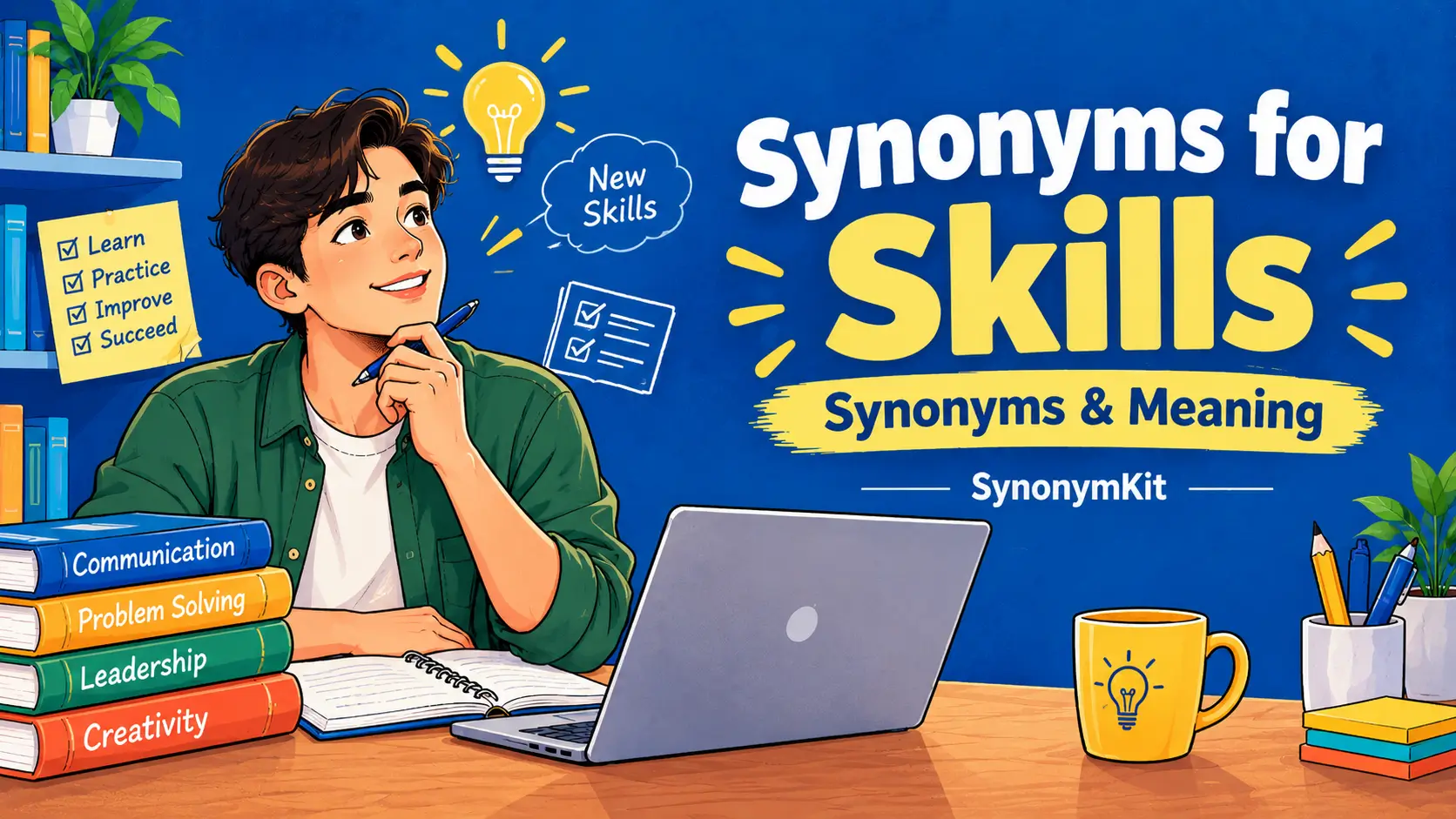
50 Synonyms for Skills: Better Words for Abilities and Expertise
Some useful synonyms for skills are abilities, talents, strengths, capabilities, expertise, knowledge, and competencies. These words describe what a person can do well through learning, practice, training, or experience. The best choice depends on if you are writing a resume, essay, email, or everyday conversation.
Mia is preparing her first job resume. She wants to say that she can lead a team, use computer tools, and solve problems.
However, she keeps using the word skills in every sentence. A few better word choices can make her writing clearer and more professional.
For example, she could write about her abilities in teamwork, her expertise with software, or her strengths in problem solving.
Students can use these words to make essays more varied and clear. Bloggers can use them to make articles smoother and more engaging. Content writers can use them to describe people and work more precisely. Daily English users can use them to make conversations more natural and precise.
“Words become stronger when we choose them with care.”
Learning different words also helps you match your language to the situation. A resume may need formal words, while a friendly conversation may need simple ones.
“Good word choices help simple ideas speak clearly.”
1. Abilities
- Meaning: Abilities are things a person can do well through learning or practice.
- Examples: She has strong writing abilities.
His abilities help the team succeed.
2. Talents
- Meaning: Talents are natural or learned gifts that help someone perform well.
- Examples: She has many artistic talents.
His talents make him stand out.
3. Capabilities
- Meaning: Capabilities are the powers or abilities needed to complete certain tasks.
- Examples: This job needs strong technical capabilities.
Her capabilities grew through practice.
4. Competencies
- Meaning: Competencies are skills needed to perform a task correctly and effectively.
- Examples: The course builds workplace competencies.
His competencies fit the position well.
5. Expertise
- Meaning: Expertise is special knowledge and skill gained through study or experience.
- Examples: She has expertise in marketing.
His expertise helped solve problems.
6. Proficiencies
- Meaning: Proficiencies are abilities that show someone can perform tasks successfully.
- Examples: Her computer proficiencies are impressive.
The resume lists language proficiencies.
7. Aptitudes
- Meaning: Aptitudes are natural abilities that make learning certain things easier.
- Examples: He has an aptitude for math.
Her aptitude became clear quickly.
8. Strengths
- Meaning: Strengths are areas where someone performs well or feels confident.
- Examples: Communication is one of her strengths.
His strengths include careful planning.
9. Know how
- Meaning: Know how means practical knowledge needed to complete a task successfully.
- Examples: She has the know how to lead.
His know how saves the team time.
10. Qualifications
- Meaning: Qualifications are skills, training, or education that prepare someone for work.
- Examples: She has excellent teaching qualifications.
His qualifications match the job.
11. Techniques
- Meaning: Techniques are specific methods used to perform tasks effectively.
- Examples: He learned new writing techniques.
These techniques improve her work.
12. Capacities
- Meaning: Capacities are abilities that allow someone to handle tasks or responsibilities.
- Examples: She has strong leadership capacity.
His capacity for learning impressed everyone.
13. Gifts
- Meaning: Gifts are natural abilities that allow someone to do something especially well.
- Examples: She has a gift for music.
His gift helps him teach others.
14. Mastery
- Meaning: Mastery means having a very high level of skill in something.
- Examples: Her mastery of grammar is clear.
He achieved mastery through years of practice.
15. Craftsmanship
- Meaning: Craftsmanship is the skill and care shown when making something.
- Examples: His craftsmanship is easy to notice.
The furniture shows excellent craftsmanship.
16. Command
- Meaning: Command means having strong control or knowledge of a subject.
- Examples: She has a command of English.
His command of tools is impressive.
17. Facility
- Meaning: Facility means natural ease or ability in doing something.
- Examples: She has a facility with languages.
His facility for numbers is strong.
18. Dexterity
- Meaning: Dexterity is the ability to use your hands quickly and accurately.
- Examples: The artist has great dexterity.
Her dexterity helps with detailed work.
19. Fluency
- Meaning: Fluency is the ability to use a language smoothly and easily.
- Examples: He speaks English with fluency.
Her fluency improved through daily practice.
20. Experience
- Meaning: Experience is knowledge and ability gained by doing something over time.
- Examples: She has experience in sales.
His experience helps him lead.
21. Training
- Meaning: Training is practice and teaching that helps someone develop useful abilities.
- Examples: She completed safety training.
His training prepared him well.
22. Knowledge
- Meaning: Knowledge is information and understanding gained through learning or experience.
- Examples: She has strong computer knowledge.
His knowledge helps the project.
23. Competence
- Meaning: Competence means having enough ability to complete something properly.
- Examples: Her competence impressed the manager.
He showed competence during training.
24. Potential
- Meaning: Potential is the ability someone may develop or use successfully later.
- Examples: She has great leadership potential.
His potential is easy to see.
25. Proficiency
- Meaning: Proficiency means being skilled enough to perform something well.
- Examples: He gained proficiency in Excel.
Her proficiency improved quickly.
26. Mastery
- Meaning: Mastery shows that someone has developed excellent control of a subject.
- Examples: His mastery of coding grew.
She showed mastery during class.
27. Know how
- Meaning: Know how describes practical understanding that helps someone handle real tasks.
- Examples: Her business know how is useful.
He gained know how through work.
28. Capability
- Meaning: Capability is the power or ability to complete a particular task.
- Examples: She has strong planning capability.
His capability impressed the team.
29. Acumen
- Meaning: Acumen is the ability to understand situations and make smart decisions.
- Examples: She has strong business acumen.
His financial acumen helps greatly.
30. Savvy
- Meaning: Savvy means practical knowledge that helps someone handle situations well.
- Examples: She is very tech savvy.
His business savvy helps clients.
31. Aptitude
- Meaning: Aptitude is a natural ability to learn or perform something well.
- Examples: He has an aptitude for science.
Her aptitude helped her learn quickly.
32. Proficiency
- Meaning: Proficiency describes a good level of ability in a specific area.
- Examples: Her writing proficiency is strong.
He improved his reading proficiency.
33. Ability
- Meaning: Ability is the power or skill needed to do something.
- Examples: She has the ability to lead.
His ability impressed the manager.
34. Talent
- Meaning: Talent is a special ability that helps someone perform something well.
- Examples: She has a talent for design.
His talent became clear early.
35. Resourcefulness
- Meaning: Resourcefulness is the ability to solve problems using available ideas and tools.
- Examples: Her resourcefulness saved the project.
His resourcefulness helped during trouble.
36. Creativity
- Meaning: Creativity is the ability to produce new and useful ideas.
- Examples: Her creativity improves every project.
His creativity inspires the team.
37. Problem solving
- Meaning: Problem solving is the ability to find useful answers to difficult situations.
- Examples: She has excellent problem solving skills.
His problem solving helped the team.
38. Leadership
- Meaning: Leadership is the ability to guide people toward a shared goal.
- Examples: Her leadership improved the team.
His leadership skills grew quickly.
39. Communication
- Meaning: Communication is the ability to share ideas clearly with other people.
- Examples: Her communication is clear and friendly.
Good communication builds strong teams.
40. Coordination
- Meaning: Coordination is the ability to organize people or actions effectively.
- Examples: Her coordination keeps projects moving.
His coordination improved team tasks.
41. Organization
- Meaning: Organization is the ability to arrange tasks, ideas, or resources clearly.
- Examples: Her organization saves everyone time.
His organization keeps work simple.
42. Adaptability
- Meaning: Adaptability is the ability to adjust when situations or needs change.
- Examples: Her adaptability helps at work.
His adaptability impressed the manager.
43. Teamwork
- Meaning: Teamwork is the ability to work well with other people.
- Examples: Her teamwork supports the group.
His teamwork makes projects easier.
44. Time Management
- Meaning: Time management is the ability to use available time wisely.
- Examples: Her time management is excellent.
Good time management reduces stress.
45. Critical Thinking
- Meaning: Critical thinking is the ability to examine ideas before making decisions.
- Examples: His critical thinking solved problems.
She uses critical thinking daily.
46. Decision Making
- Meaning: Decision making is the ability to choose suitable actions after considering options.
- Examples: Her decision making is careful.
Strong decision making helps leaders.
47. Presentation
- Meaning: Presentation is the ability to explain information clearly before an audience.
- Examples: His presentation skills are strong.
Her presentation impressed the class.
48. Negotiation
- Meaning: Negotiation is the ability to reach agreements through discussion and careful communication.
- Examples: Her negotiation skills helped greatly.
His negotiation saved the deal.
49. Collaboration
- Meaning: Collaboration is the ability to work with others toward one shared goal.
- Examples: Her collaboration improved the project.
Good collaboration creates better results.
50. Interpersonal Skills
- Meaning: Interpersonal skills help people communicate and build positive relationships with others.
- Examples: Her interpersonal skills are excellent.
Strong interpersonal skills help at work.
“The right word can show not only what you know, but how well you use it.”
Synonyms for Skills on Resume
A resume often needs words that sound clear and professional. Instead of repeating skills, you can use competencies, proficiencies, expertise, qualifications, strengths, capabilities, or experience. Choose the word that matches your real background.
For example, “technical expertise” suggests deep knowledge, while “communication strengths” sounds broader. Keep each term connected to a specific job requirement.
Synonyms for Skills and Abilities
The phrase skills and abilities can become repetitive in professional writing. Useful alternatives include competencies, capabilities, strengths, aptitudes, proficiencies, and talents. These words are not always exact matches, so context matters.
“Aptitudes” can suggest natural ability, while “competencies” often refers to abilities needed for a particular role. Using the right term makes your writing more precise.
Synonyms for Skills and Knowledge
When you want to describe both practical ability and understanding, use terms such as expertise, competence, know how, proficiency, or mastery. “Knowledge” focuses more on what someone understands, while “skills” focus on what they can do.
Together, these words can describe a person’s complete ability in an area, especially in education or professional writing.
Synonyms for Skills and Experience
When discussing work history, experience, expertise, qualifications, competencies, and know how can help replace repeated uses of “skills.” “Experience” shows what someone has done, while “expertise” suggests deeper knowledge gained from that work.
On a resume, combining these terms with specific examples can make your professional background easier to understand.
Synonyms for Skills and Expertise
For advanced professional writing, words such as proficiency, mastery, competence, acumen, know how, and capability can describe skills and expertise. These terms work well when you want to show depth.
For example, “technical proficiency” suggests a strong working level, while “technical mastery” suggests a much higher level of control.
People Also Ask
What is another word for “skills”?
Another word for skills can be abilities, talents, competencies, capabilities, strengths, or proficiencies. The best choice depends on the situation. “Abilities” is simple and common, while “competencies” sounds more professional.
“Talents” often suggests a natural gift. For a resume, “competencies” or “proficiencies” may fit better. In everyday English, “abilities” is usually clear and easy to understand.
What is another word for skills on a resume?
On a resume, useful alternatives to skills include competencies, proficiencies, expertise, qualifications, strengths, and capabilities. You can also use specific labels such as “technical expertise” or “leadership strengths.”
The best word should match the job and your real experience. Avoid replacing “skills” just to sound formal. Clear and specific wording is usually more helpful to employers.
What is another word for strong skills?
Instead of strong skills, you can say advanced abilities, proven expertise, strong competencies, excellent capabilities, professional proficiency, or key strengths. Your choice should show what kind of ability you mean.
For example, “proven expertise” works well for experienced professionals, while “key strengths” can introduce several areas of ability on a resume.
What is a better word for “develop skills”?
Better alternatives to develop skills include build abilities, gain proficiency, improve competence, strengthen expertise, enhance capabilities, or develop expertise. The best phrase depends on the context.
For beginners, “build skills” sounds natural and simple. In professional writing, “enhance capabilities” or “develop expertise” can sound more polished. Always choose a phrase that clearly describes the learning process.
Conclusion
Learning different words for skills can make your writing clearer, stronger, and more natural. You do not need to use difficult words all the time. Instead, choose a word that matches your exact meaning and the situation.
For example, abilities work well in simple writing. Talents can describe natural gifts. Competencies and proficiencies are useful in professional settings.
Expertise shows deeper knowledge and experience. Strengths can help you describe areas where you perform well.
Students can use these words to make essays less repetitive and easier to read. Bloggers can use them to make articles more varied and engaging.
For content writers, they offer precise ways to describe professional abilities. In daily conversations, simple alternatives can help you explain what someone does well.
Try using these words in your emails, resumes, essays, blog posts, and daily conversations. Start with two or three new words, then practice them in real sentences. Over time, choosing the right word will become easier.
“Better vocabulary grows through small choices made every day.”
The goal is not to replace skills every time. The goal is to understand your options and select the word that fits your message best.
“Clear communication begins with choosing words that fit.”

Sarah is a freelance content writer and grammar enthusiast with over 6 years of experience helping students and bloggers write with more clarity. She joined SynonymKit to make vocabulary-building simple and accessible for everyone, one word list at a time.