45 Synonyms for Instead: Formal, Academic, and Alternatives
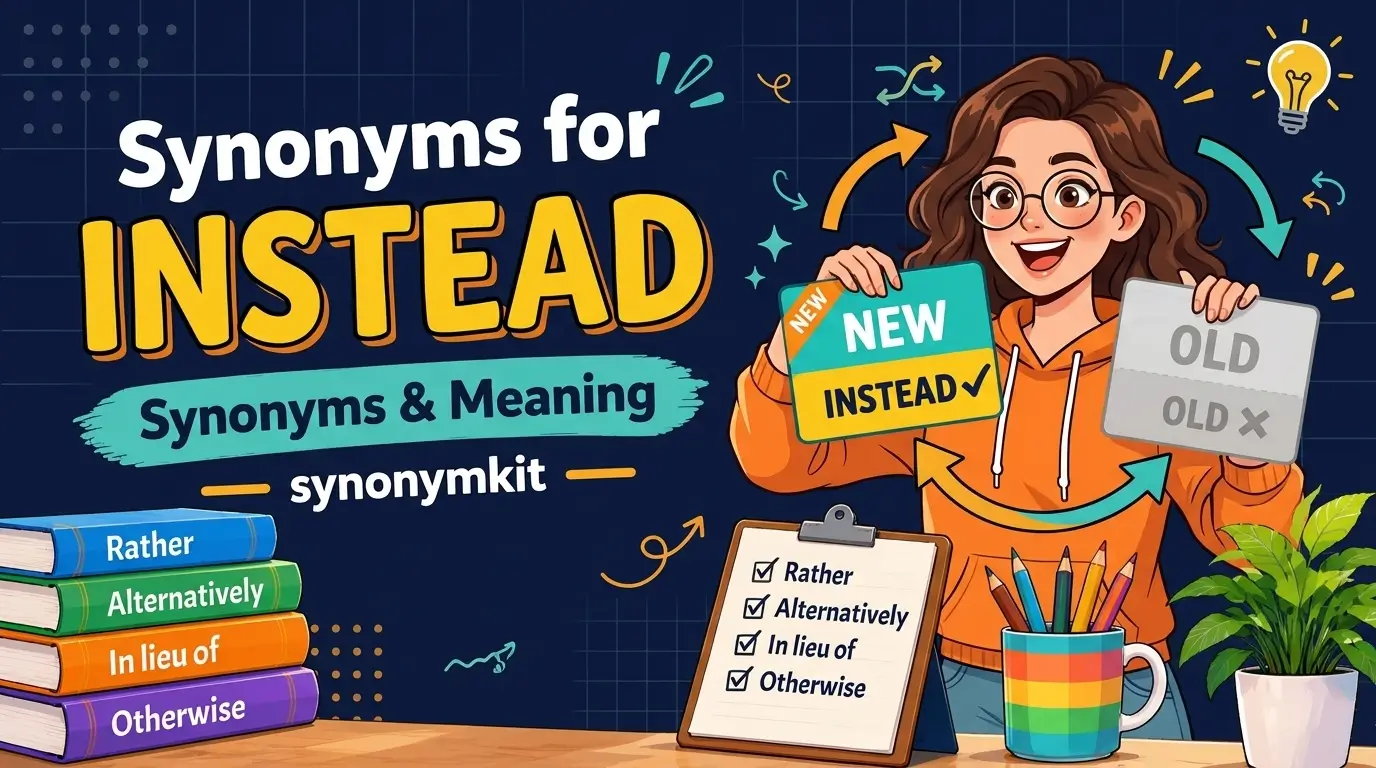
Synonyms for instead include alternatively, rather, in place of, as an alternative, and in lieu of. These words help you show a different choice or action. Some work well in formal writing, while others sound natural in daily conversations, essays, and professional emails.
Imagine writing an email about a meeting that cannot happen today. You want to suggest another plan, but you keep using the same word. Your message starts to sound repetitive. Finding the right alternative can make your writing clearer and more natural.
For example, instead of saying, “Let’s meet on Monday,” you might say, “Alternatively, we can meet on Tuesday.” This small change gives your sentence a fresh sound.
Learning different ways to express this idea is useful in many situations. Students can use these words to make essays stronger. Bloggers can avoid repeating the same expressions. Content writers can create smoother articles. Daily English users can express choices with more confidence.
The best alternative depends on your sentence. Some words suit formal writing, while others fit friendly talks.
“A fresh word can give an old sentence new life.”
Choosing the right expression also helps readers understand your meaning without confusion.
“Good writing makes every word count.”
45 Synonyms for Instead
1. Alternatively
- Meaning: Used to suggest another choice or way of doing something.
- Examples: We can walk or take a bus.
- Examples: Alternatively, you could finish the work tomorrow.
2. Rather
- Meaning: Used to show a different choice or preferred action.
- Examples: I would rather stay home tonight.
- Examples: She chose tea rather than coffee.
3. Instead of
- Meaning: Used when one thing takes the place of another.
- Examples: Use honey instead of white sugar.
- Examples: He walked instead of taking the bus.
4. In Place Of
- Meaning: Used when something takes the position of another thing.
- Examples: She used milk in place of cream.
- Examples: A chair stood in place of a table.
5. As an Alternative
- Meaning: Used to introduce another possible choice or solution.
- Examples: As an alternative, try the smaller room.
- Examples: We can use email as an alternative.
6. In Lieu Of
- Meaning: Used in formal writing when something replaces another thing.
- Examples: He received leave in lieu of payment.
- Examples: She submitted a report in lieu of attendance.
7. As a Substitute
- Meaning: Used when one thing takes the place of another.
- Examples: Use yogurt as a substitute for cream.
- Examples: We chose rice as a substitute for bread.
8. As a Replacement
- Meaning: Used when something new takes the place of something old.
- Examples: They bought a new sofa as a replacement.
- Examples: The school hired another teacher as a replacement.
9. Alternatively Speaking
- Meaning: An uncommon expression used to introduce another way of thinking.
- Examples: Alternatively speaking, we could delay the event.
- Examples: Alternatively speaking, choose a simpler plan.
10. On the Other Hand
- Meaning: Used to introduce a different idea or point of view.
- Examples: On the other hand, we could wait.
- Examples: The trip is costly; on the other hand, it is exciting.
11. As Another Option
- Meaning: Used to present one more choice for consideration.
- Examples: As another option, try the blue dress.
- Examples: We can book a smaller room as another option.
12. In Another Way
- Meaning: Used to explain something through a different method or approach.
- Examples: Try solving the problem in another way.
- Examples: She explained the lesson in another way.
13. As a Different Choice
- Meaning: Used to show that another selection is available.
- Examples: Choose this route as a different choice.
- Examples: We considered a hotel as a different choice.
14. In Its Place
- Meaning: Used when something takes the position of something else.
- Examples: Remove the old lock and put another in its place.
- Examples: A small garden grew in its place.
15. In Exchange
- Meaning: Used when one thing is given for another.
- Examples: She offered help in exchange for advice.
- Examples: He gave his book in exchange for mine.
16. In Return
- Meaning: Used when something is given back for something received.
- Examples: I helped him, and he smiled in return.
- Examples: She received a gift in return.
17. As Opposed To
- Meaning: Used to show a choice different from another one.
- Examples: I prefer walking as opposed to driving.
- Examples: Choose fresh fruit as opposed to sweets.
18. In Preference To
- Meaning: Used to show that one choice is liked more.
- Examples: She chose tea in preference to coffee.
- Examples: He likes reading in preference to watching television.
19. Rather Than
- Meaning: Used to show which choice is preferred over another.
- Examples: We stayed home rather than going outside.
- Examples: Choose kindness rather than anger.
20. As a Different Approach
- Meaning: Used to suggest another way to handle a situation.
- Examples: Try teamwork as a different approach.
- Examples: She used humor as a different approach.
21. In Another Form
- Meaning: Used when something appears in a changed or different form.
- Examples: The same idea appeared in another form.
- Examples: They presented the story in another form.
22. In Different Terms
- Meaning: Used to explain an idea with different words.
- Examples: Explain the rule in different terms.
- Examples: He described the problem in different terms.
23. As an Option
- Meaning: Used to introduce something that someone may choose.
- Examples: You can select soup as an option.
- Examples: A taxi is available as an option.
24. Another Way
- Meaning: Used to suggest a different method or possible action.
- Examples: There is another way to solve this.
- Examples: We found another way to reach home.
25. In Favor Of
- Meaning: Used to show support for one choice over another.
- Examples: They voted in favor of the new plan.
- Examples: She chose peace in favor of conflict.
26. Alternatively Available
- Meaning: Used to describe another choice that can be selected.
- Examples: A smaller size is alternatively available.
- Examples: Other colors are alternatively available online.
27. As a Second Choice
- Meaning: Used to describe an option considered after the first.
- Examples: We selected the blue room as a second choice.
- Examples: Keep this address as a second choice.
28. In Different Circumstances
- Meaning: Used to describe what may happen under other conditions.
- Examples: In different circumstances, I might agree.
- Examples: She would travel in different circumstances.
29. By Way Of
- Meaning: Used to introduce a method or means of doing something.
- Examples: He sent the files by way of email.
- Examples: She shared the news by way of a letter.
30. In Another Manner
- Meaning: Used to describe a different way of doing something.
- Examples: Please handle the matter in another manner.
- Examples: He completed the task in another manner.
31. As a Backup
- Meaning: Used for another choice kept ready when needed.
- Examples: Keep an extra charger as a backup.
- Examples: We saved another date as a backup.
32. In Place of That
- Meaning: Used to introduce something that replaces a previous choice.
- Examples: Do not buy that; choose this in place of that.
- Examples: We used a card in place of that.
33. On the Contrary
- Meaning: Used to introduce an idea that strongly disagrees with another.
- Examples: He was not lazy; on the contrary, he worked hard.
- Examples: The task was easy, on the cont expectations.
34. As a Variation
- Meaning: Used to suggest a slightly different version of something.
- Examples: Try this recipe as a variation.
- Examples: The designer created a new style as a variation.
35. In Different Ways
- Meaning: Used to show that something can happen through other methods.
- Examples: People express love in different ways.
- Examples: We can complete this task in different ways.
36. To the Exclusion Of
- Meaning: Used to show that one thing is left out.
- Examples: The rule applies to adults to the exclusion of children.
- Examples: They selected one group to the exclusion of others.
37. In Place Thereof
- Meaning: A formal expression used when something replaces another thing.
- Examples: A new rule was introduced in place thereof.
- Examples: The company offered another service in place thereof.
38. As a Replacement For
- Meaning: Used to identify something that takes another thing’s position.
- Examples: Use olive oil as a replacement for butter.
- Examples: This tool works as a replacement for the old one.
39. In Another Direction
- Meaning: Used to suggest moving toward a different idea or goal.
- Examples: The discussion moved in another direction.
- Examples: We decided to take the project in another direction.
40. In a Different Light
- Meaning: Used to show that something can be viewed differently.
- Examples: The story showed her in a different light.
- Examples: His actions looked different in a different light.
41. As an Alternate
- Meaning: Used to describe another available choice or possibility.
- Examples: We kept a second room as an alternate.
- Examples: This route serves as an alternate.
42. Alternatively Instead
- Meaning: An unnecessary combination that should be avoided in standard English.
- Examples: Say alternatively, we can wait until Friday.
- Examples: Use instead, we can choose another plan.
43. In Its Stead
- Meaning: A formal expression meaning that something takes another’s place.
- Examples: The old system ended, and a new one came in its stead.
- Examples: A fresh idea stood in its stead.
44. As a Different Possibility
- Meaning: Used to introduce another outcome or choice worth considering.
- Examples: Moving abroad is a different possibility.
- Examples: We discussed a different possibility for the event.
45. In the Alternative
- Meaning: A formal phrase used to present another possible choice.
- Examples: The court considered payment in the alternative.
- Examples: We can offer another solution in the alternative.
Synonyms for Instead in an Essay
In an essay, use expressions that make your ideas flow smoothly. Alternatively, rather than, in contrast, and as an alternative can help present choices.
Choose each expression based on your sentence. Avoid repeating the same word too often. Formal alternatives can make academic writing clearer without making it difficult to read.
Synonyms for Instead and Rather
Instead and rather can express different choices, but they do not always fit the same sentence. Use rather than to compare two actions.
Use alternatively to introduce another option. For example, “We can walk instead” and “We would rather walk” express related but different ideas.
Synonyms for Instead Of
When you want to replace instead of, try in place of, rather than, or as a substitute for. These expressions work in different situations.
For example, “Use water in place of juice” gives a clear replacement. Always check the sentence structure before choosing an alternative.
Instead Academic Synonyms
Academic writing often needs clear and formal expressions. Words such as alternatively, in lieu of, and rather than can work well.
You can also use “as an alternative to” when discussing another method. Select an expression that matches the meaning and keeps your argument easy to follow.
Instead Synonyms Formal
Formal communication benefits from precise word choices. In lieu of, alternatively, in place of, and as an alternative are useful options.
These expressions can improve professional emails, reports, and academic assignments. Avoid using rare phrases when a simple alternative communicates your point more clearly.
Frequently Asked Questions
1. How do you say “instead” in a formal way?
You can use alternatively, in lieu of, in place of, or as an alternative in formal writing. The best choice depends on your sentence. For example, “Alternatively, we can arrange another meeting” sounds professional.
“The employee received leave in lieu of payment” suits formal workplace writing. Choose clear expressions rather than complicated words that may confuse your reader.
2. What other words can I use instead of another?
You can use additional, different, alternative, extra, or further depending on your meaning. For example, “another option” can become “an alternative option.” “Another example” can become “an additional example.”
These words are not always interchangeable, so check whether you mean something extra, something different, or one more item.
3. What other words can I use to replace?
You can use substitute, exchange, replace, swap, or take the place of. Each expression has a slightly different use. For example, you can replace an old phone with a new one or swap one item for another.
In formal writing, “substitute” and “take the place of” often sound suitable. Choose the word that fits your sentence.
4. How else can I say “instead”?
You can say alternatively, rather, in place of, or as another option. For example, instead of saying, “We can eat outside instead,” write, “Alternatively, we can eat outside.” You can also use “rather than” when comparing actions.
Remember that some alternatives need a different sentence structure, so read your sentence aloud to check its flow.
Conclusion
Learning different ways to say instead can make your English stronger and more natural. You do not need to use the same expression in every sentence.
A suitable alternative can make an essay clearer, a blog post more interesting, and a professional email easier to read.
Students can use these words to improve their assignments and avoid repeated language. Bloggers and content writers can create fresh sentences that keep readers interested. English learners can also use them to express choices in daily conversations.
Start with simple words such as alternatively, rather than, and in place of. Practice using them in short sentences before adding formal expressions to your writing. You can write a few examples in your notebook, use them in emails, or try them during everyday conversations.
Always remember that the best synonym depends on the meaning of your sentence. A simple word used correctly is better than a difficult word used in the wrong place.
“Small steps in learning lead to better communication.”
Keep practicing, explore new expressions, and enjoy building your vocabulary. Every new word gives you another way to share your thoughts.
“Clear words create stronger connections.”