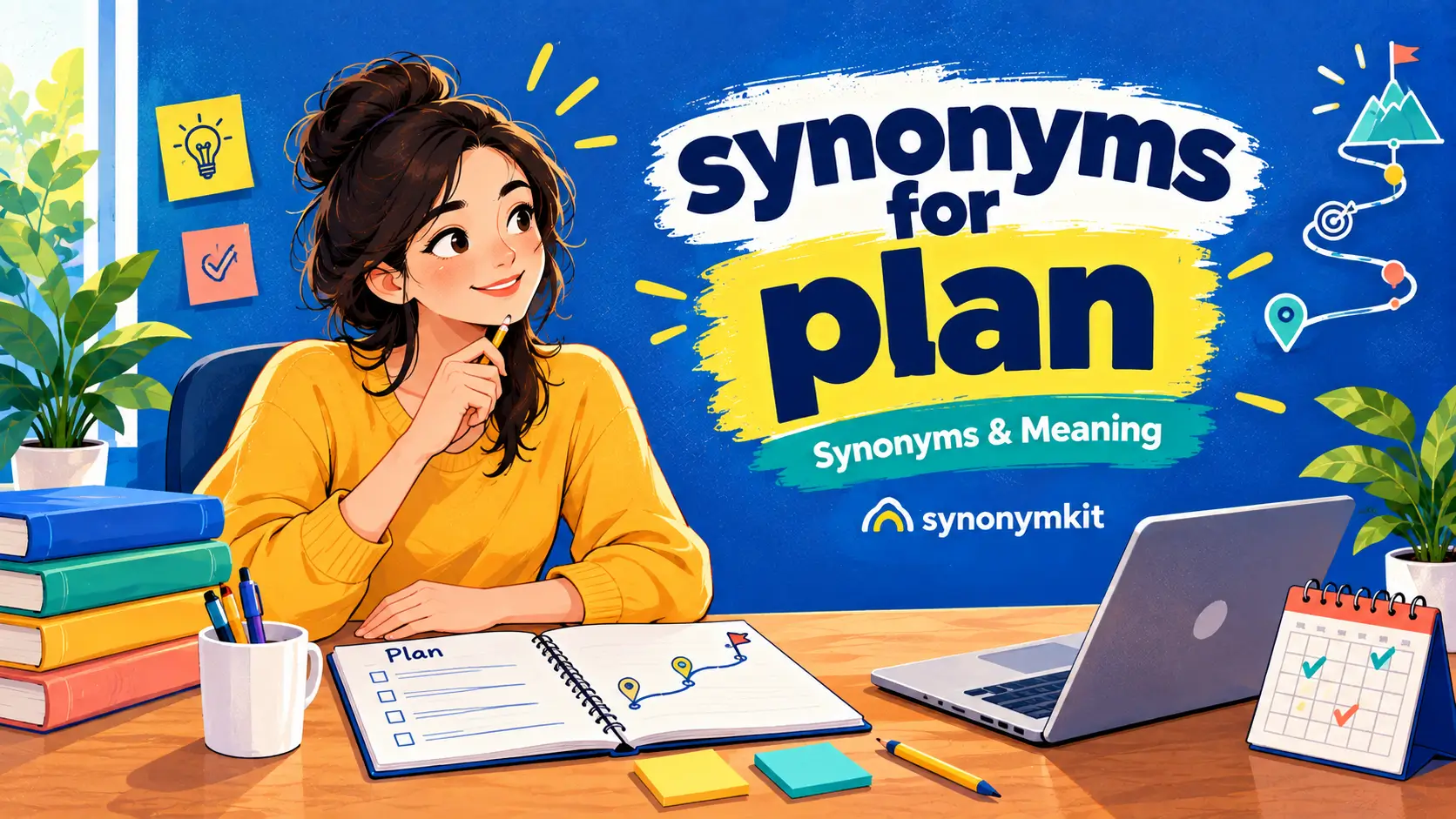
Synonyms for Plan: 55 Useful Words for Writing and Speaking
\Useful synonyms for plan include strategy, idea, scheme, outline, design, proposal, arrangement, intention, goal, purpose, and approach. The best choice depends on your meaning and context. Some words describe a careful plan, while others describe an idea, future goal, or steps taken to reach a result.
Sarah needs to finish a school project by Friday. Instead of starting without direction, she writes down what she needs to do each day. She has a clear plan, so the work feels easier and less stressful.
In daily life, we make plans for many reasons. We plan trips, meals, projects, meetings, and future goals. We also use different words when we want to make our writing more natural. For example, a manager may discuss a strategy, while a student may create an outline before writing an essay.
Students can use these words to make essays clearer and more varied. Bloggers can use them to make articles smoother and more engaging. Content writers can choose precise words to explain ideas. Daily English users can use them to express their thoughts naturally in conversations.
“A clear direction makes each small step easier.”
Choosing the right word can also make your message sound more professional. A simple word such as idea may work in a casual chat, while proposal can fit a workplace email.
“Good preparation turns a big task into small steps.”
Below are useful alternatives, followed by long tail phrases and common questions.
55 Synonyms for Plan
1. Strategy
- Meaning: A strategy is a careful way to reach an important goal.
- Examples: Our strategy focuses on better service.
We need a strategy for growth.
2. Scheme
- Meaning: A scheme is a planned idea for achieving something.
- Examples: They created a savings scheme.
The new scheme starts next month.
3. Outline
- Meaning: An outline shows the main points before detailed work begins.
- Examples: I made an outline first.
Her outline helped organize everything.
4. Proposal
- Meaning: A proposal is a suggested plan for people to consider.
- Examples: She sent a project proposal.
The team discussed his proposal.
5. Approach
- Meaning: An approach is a particular way of dealing with something.
- Examples: We need a different approach.
Her approach worked very well.
6. Design
- Meaning: A design is a detailed plan for creating something.
- Examples: The designer changed the plan.
We approved the new design.
7. Arrangement
- Meaning: An arrangement is a plan made for people or things.
- Examples: We made travel arrangements.
The seating arrangement looks perfect.
8. Intention
- Meaning: An intention is what someone plans or wants to do.
- Examples: My intention is to help.
His intention was very clear.
9. Purpose
- Meaning: A purpose is the reason behind a planned action.
- Examples: What is the purpose here?
The meeting has a clear purpose.
10. Goal
- Meaning: A goal is something you plan to achieve.
- Examples: My goal is simple.
She reached her main goal.
11. Objective
- Meaning: An objective is a specific result someone plans to achieve.
- Examples: Our main objective is growth.
The team reached its objective.
12. Program
- Meaning: A program is an organized plan of activities or events.
- Examples: The school started a program.
Our program begins tomorrow.
13. Project
- Meaning: A project is planned work with a clear purpose.
- Examples: This project needs more time.
They completed the project early.
14. Agenda
- Meaning: An agenda lists topics or tasks planned for a meeting.
- Examples: The agenda has five items.
Please check today’s agenda.
15. Blueprint
- Meaning: A blueprint is a detailed guide for building or doing something.
- Examples: We followed the blueprint carefully.
The blueprint shows every step.
16. Roadmap
- Meaning: A roadmap gives clear steps toward a future goal.
- Examples: Our roadmap covers three years.
The team followed its roadmap.
17. Schedule
- Meaning: A schedule shows when planned activities should happen.
- Examples: Check the work schedule.
Our schedule changed this morning.
18. Timetable
- Meaning: A timetable lists planned times for different activities.
- Examples: I checked the class timetable.
The timetable shows today’s lessons.
19. Agenda
- Meaning: An agenda is a list of matters planned for discussion.
- Examples: The manager shared an agenda.
Everyone reviewed the meeting agenda.
20. Method
- Meaning: A method is a planned way of doing something.
- Examples: This method saves time.
We tried a new method.
21. System
- Meaning: A system is an organized way to complete planned tasks.
- Examples: Our system works well.
She created a simple system.
22. Tactic
- Meaning: A tactic is a specific action used to reach a goal.
- Examples: That tactic saved time.
We need another tactic.
23. Campaign
- Meaning: A campaign is organized action designed to reach a specific goal.
- Examples: They launched a campaign.
The campaign needs careful planning.
24. Program
- Meaning: A program is a planned set of activities for a purpose.
- Examples: The program starts Monday.
Students joined the program.
25. Blueprint
- Meaning: A blueprint gives detailed instructions for completing a larger project.
- Examples: The builder studied the blueprint.
Our blueprint covers every stage.
26. Course
- Meaning: A course is a planned direction for reaching an outcome.
- Examples: We chose a new course.
The team stayed on course.
27. Scheme
- Meaning: A scheme is an organized idea designed to achieve something.
- Examples: They discussed a payment scheme.
The scheme begins next year.
28. Intention
- Meaning: Intention describes something a person has decided to do.
- Examples: I have no intention of leaving.
She shared her intention clearly.
29. Prospect
- Meaning: A prospect is a possible future result that someone considers.
- Examples: The prospect looks promising.
We discussed future prospects.
30. Vision
- Meaning: A vision describes a clear picture of a desired future.
- Examples: Her vision inspired everyone.
The company shared its vision.
“A useful plan gives your ideas a place to grow.”
31. Concept
- Meaning: A concept is a general idea behind a planned project.
- Examples: I like the basic concept.
The concept needs more work.
32. Idea
- Meaning: An idea is a thought about something you may do.
- Examples: I have an idea.
Her idea sounds useful.
33. Thought
- Meaning: A thought can be an idea about a possible action.
- Examples: That thought crossed my mind.
He shared his thought.
34. Intention
- Meaning: Intention shows what someone expects or wants to do.
- Examples: His intention was helpful.
My intention is to improve.
35. Decision
- Meaning: A decision is a choice made about what to do.
- Examples: We made a decision.
Her decision changed everything.
36. Arrangement
- Meaning: An arrangement is an organized plan for handling something.
- Examples: The travel arrangement is ready.
We changed the arrangement.
37. Preparation
- Meaning: Preparation is work done before an event or task.
- Examples: Preparation takes some time.
Good preparation reduces stress.
38. Framework
- Meaning: A framework provides basic structure for organizing planned work.
- Examples: We need a simple framework.
The framework guides our work.
39. Structure
- Meaning: Structure is the organized form used to arrange planned work.
- Examples: The article needs structure.
Its structure is easy to follow.
40. Direction
- Meaning: Direction shows where planned work or action should go.
- Examples: We need clear direction.
The project changed direction.
41. Intention
- Meaning: Intention describes a future action someone has in mind.
- Examples: She stated her intention.
His intention was honest.
42. Expectation
- Meaning: An expectation is something you believe or plan will happen.
- Examples: We have high expectations.
Her expectations were realistic.
43. Aim
- Meaning: An aim is the result someone wants to achieve.
- Examples: Our aim is better service.
He reached his main aim.
44. Target
- Meaning: A target is a specific result that someone plans to reach.
- Examples: We reached our target.
The sales target increased.
45. Mission
- Meaning: A mission is an important purpose that guides planned actions.
- Examples: Our mission is simple.
The team supports its mission.
46. Strategy
- Meaning: A strategy organizes actions to help achieve a larger goal.
- Examples: We changed our strategy.
Their strategy worked well.
47. Tactic
- Meaning: A tactic is one planned action used within a larger strategy.
- Examples: This tactic saved money.
The team tested another tactic.
48. Procedure
- Meaning: A procedure is a set way of completing a planned task.
- Examples: Follow the safety procedure.
The procedure is very simple.
49. Process
- Meaning: A process is a series of steps used to reach a result.
- Examples: The process takes time.
We improved the process.
50. Initiative
- Meaning: An initiative is a new planned action meant to create change.
- Examples: The school launched an initiative.
The initiative helped many students.
51. Blueprint
- Meaning: A blueprint gives a clear guide for future work or development.
- Examples: They created a business blueprint.
The blueprint explains each stage.
52. Roadmap
- Meaning: A roadmap shows the path toward a future goal.
- Examples: The roadmap starts with research.
Our roadmap includes five stages.
53. Forecast
- Meaning: A forecast gives an idea about what may happen later.
- Examples: The forecast looks positive.
We reviewed the sales forecast.
54. Proposal
- Meaning: A proposal presents an idea or plan for others to review.
- Examples: I finished the proposal.
The manager accepted her proposal.
55. Course of action
- Meaning: A course of action describes the steps chosen to handle something.
- Examples: We need a clear course of action.
They agreed on one course.
Synonyms for plan B
Synonyms for plan B include backup plan, alternative plan, second option, fallback plan, and contingency plan. These phrases describe another choice when the original idea does not work.
In professional writing, contingency plan sounds formal, while backup plan is common in everyday English. Choose the phrase based on your audience and situation.
Synonyms for plan of action
Common synonyms for plan of action include strategy, course of action, roadmap, approach, procedure, and action plan. These terms focus on the steps needed to reach a result.
An action plan is especially useful in workplaces, schools, projects, and personal goals because it clearly connects decisions with practical steps.
plan ahead synonyms
Useful plan ahead synonyms include prepare, arrange, organize, anticipate, schedule, and make preparations. These words describe thinking about future needs before they happen.
For example, you can prepare for a trip, schedule an appointment, or organize your work early. The best choice depends on the exact situation.
Synonyms for plan verb
When plan is used as a verb, useful alternatives include organize, prepare, arrange, schedule, design, intend, consider, and devise. For example, “We plan the event” can become “We organize the event.”
In formal writing, devise or design may sound more precise when discussing a detailed solution.
Synonyms for plan noun
When plan is used as a noun, alternatives include strategy, outline, proposal, scheme, roadmap, arrangement, design, approach, and blueprint. The right word depends on meaning.
Outline works well for writing, strategy suits business goals, and proposal fits an idea presented for approval.
Frequently Asked Questions
What is a professional synonym for “plan”?
A professional synonym for plan can be strategy, proposal, roadmap, approach, framework, or course of action. The best word depends on the workplace context. For example, a business may use “strategy” for long term goals, while “proposal” may describe an idea sent to a manager.
“Roadmap” is useful for future development, and “course of action” clearly describes planned steps.
What is another word for “plan for the future”?
Another word for plan for the future is prepare, prepare ahead, make arrangements, or anticipate. In professional contexts, you may also use strategize when discussing long term goals.
For example, “We need to prepare for next year” sounds natural. “The company is developing a long term strategy” sounds more formal and works well in business writing.
What is a fancy word for planning?
A more sophisticated word for planning is strategizing. Other formal choices include preparation, organization, coordination, development, forecasting, and foresight. The correct choice depends on the meaning.
Strategizing focuses on choosing ways to reach goals, while forecasting focuses on predicting future conditions. These words can make professional writing more precise without making it difficult to understand.
What is a fancy word for “planned”?
A more formal word for planned can be deliberate, intentional, prearranged, scheduled, or strategic. Each word gives a slightly different meaning. Deliberate suggests careful thought, while prearranged means something was organized earlier.
Scheduled works best for events or activities with a fixed time. Choose the word that matches the exact idea you want to express.
Conclusion
Learning different words for plan can make your English more flexible and natural. You do not need to use difficult words all the time. Instead, choose a word that matches your meaning, audience, and situation.
For example, strategy works well when discussing business goals. Outline is useful when preparing an essay or article. Proposal fits an idea that needs approval.
Schedule helps describe planned times, while roadmap can explain future steps.
Students can use these words to make essays clearer and avoid repeating the same word. Bloggers can use them to create smoother articles. Content writers can choose more exact words when explaining projects and ideas.
Daily English users can use simple alternatives such as idea, goal, approach, arrangement, and preparation in conversations.
Try practicing these synonyms in emails, essays, work messages, and daily conversations. Write one sentence with a new word each day. Then notice how its meaning changes in different situations.
“Small improvements in word choice can make writing much clearer.”
With regular practice, you can build a stronger vocabulary and express your thoughts with greater confidence. The goal is not to use the fanciest word. The goal is to use the right word for your message.
“The right word can make a simple idea easier to understand.”

Amelia is a linguistics graduate and lifelong word nerd who believes the right word can change how a sentence feels. She writes and edits vocabulary guides for SynonymKit, helping readers sound sharper and more confident in their writing.