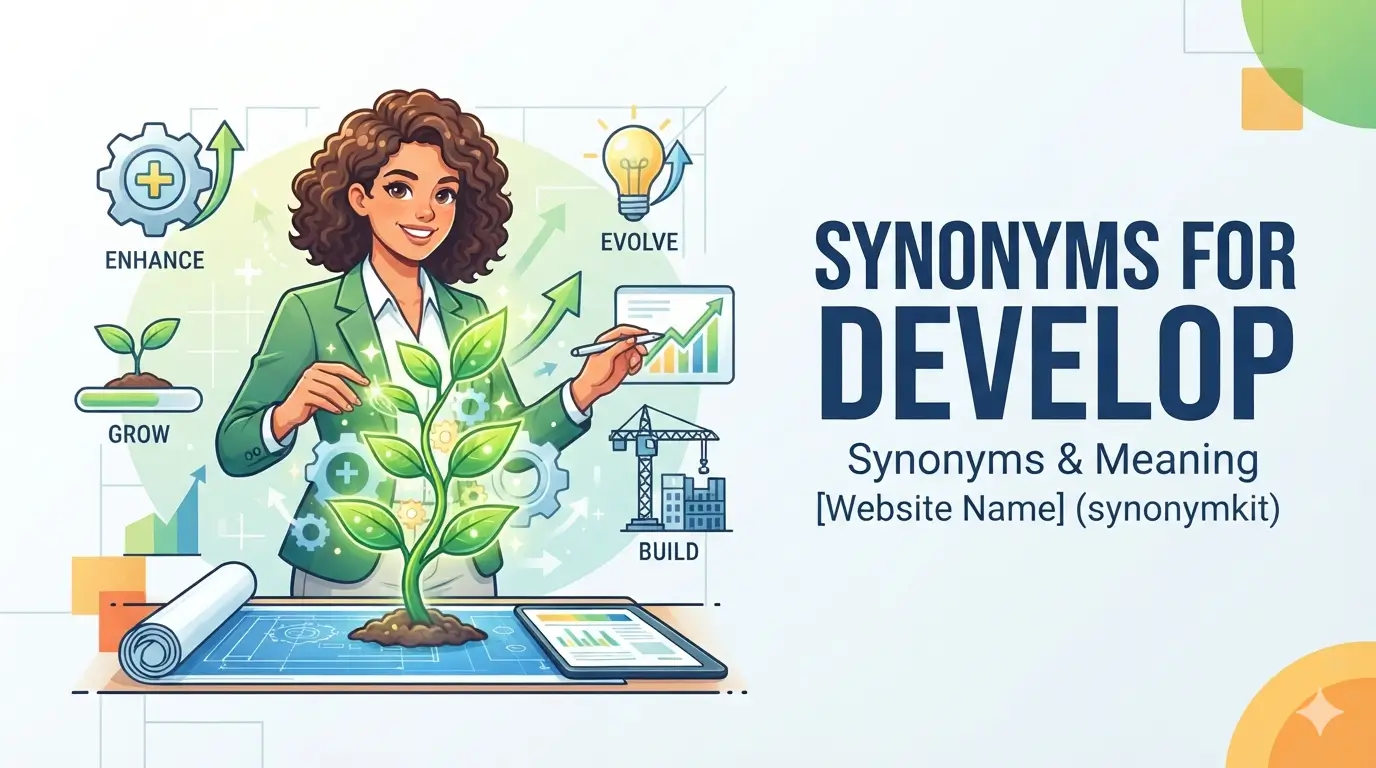
50 Synonyms for Develop: Better Words for Every Context
Synonyms for develop include create, build, grow, improve, expand, form, produce, advance, strengthen, and progress. The best choice depends on the context. You can use different words for develop when talking about skills, ideas, plans, people, businesses, projects, or personal growth in writing and everyday English.
A student works on a new skill every week. A small business owner builds a new service. A writer improves an idea until it becomes a useful article. In each case, the right word can make the sentence clearer and stronger.
For example, you might say that a student developed better writing skills after months of practice. You could also say the student improved or strengthened those skills.
Students can use these words to make essays more interesting.
Bloggers can avoid using the same word again and again.
Content writers can choose words that fit each topic.
Daily English users can speak and write with more confidence.
“Small steps can lead to big growth.”
Learning alternatives for common words gives you more ways to explain your ideas. It also helps you choose a word that matches the exact meaning you want.
“Good words make clear ideas easier to share.”
1. Create
- Meaning: Create means to make something new from an idea or plan.
- Examples: She created a simple study plan.
He created a useful online course.
2. Build
- Meaning: Build means to make something stronger, better, or more complete.
- Examples: They built a strong business.
She built better writing skills.
3. Grow
- Meaning: Grow means to become larger, stronger, better, or more advanced.
- Examples: His confidence grew with practice.
The company grew very quickly.
4. Improve
- Meaning: Improve means to make something better than it was before.
- Examples: Practice improved her speaking skills.
He improved his writing style.
5. Expand
- Meaning: Expand means to make something larger, wider, or more detailed.
- Examples: The company expanded its services.
She expanded her research topic.
6. Form
- Meaning: Form means to create or shape something into a clear structure.
- Examples: They formed a new team.
The idea formed slowly.
7. Produce
- Meaning: Produce means to make, create, or provide something useful.
- Examples: The factory produces fresh products.
She produced a helpful report.
8. Advance
- Meaning: Advance means to move something forward toward a better stage.
- Examples: The project advanced quickly.
Research advanced the medical field.
9. Strengthen
- Meaning: Strengthen means to make something stronger, firmer, or more effective.
- Examples: Reading strengthened his vocabulary.
Training strengthened her skills.
10. Progress
- Meaning: Progress means to move forward and become better over time.
- Examples: Her English progressed each month.
The project progressed without problems.
11. Establish
- Meaning: Establish means to create something firmly and make it lasting.
- Examples: They established a new company.
She established clear team rules.
12. Design
- Meaning: Design means to plan and create something for a purpose.
- Examples: He designed a new website.
She designed a study guide.
13. Produce
- Meaning: Produce can mean making something through work, planning, or creative effort.
- Examples: Writers produce fresh content.
The team produced excellent results.
14. Generate
- Meaning: Generate means to create something such as ideas, energy, interest, or results.
- Examples: The meeting generated new ideas.
The post generated strong interest.
15. Construct
- Meaning: Construct means to build something carefully from different parts.
- Examples: They constructed a new building.
She constructed a clear argument.
16. Cultivate
- Meaning: Cultivate means to develop a skill, habit, relationship, or quality over time.
- Examples: Reading cultivates strong language skills.
She cultivated good work habits.
17. Nurture
- Meaning: Nurture means to help something grow through care and support.
- Examples: Teachers nurture young talent.
Parents nurture children’s confidence.
18. Enhance
- Meaning: Enhance means to improve something and make its quality or value higher.
- Examples: Pictures enhanced the article.
Practice enhanced his communication skills.
19. Increase
- Meaning: Increase means to make something greater in amount, size, or level.
- Examples: The company increased its sales.
Exercise increased her energy.
20. Enlarge
- Meaning: Enlarge means to make something bigger in size, scope, or importance.
- Examples: They enlarged the office.
She enlarged the project scope.
21. Extend
- Meaning: Extend means to make something longer, broader, or more developed.
- Examples: They extended the project deadline.
She extended her research further.
22. Evolve
- Meaning: Evolve means to gradually change into a better or different form.
- Examples: His writing evolved.
The business evolved into a brand.
23. Shape
- Meaning: Shape means to influence something and help it become a certain form.
- Examples: Teachers shape young minds.
Experience shaped her career.
24. Refine
- Meaning: Refine means to improve something by making small changes.
- Examples: She refined her writing.
He refined the project plan.
25. Advance
- Meaning: Advance means to help something reach a more developed or successful stage.
- Examples: New tools advanced the project.
Training advanced his career.
26. Foster
- Meaning: Foster means to encourage something so it can grow or improve.
- Examples: Schools foster creative thinking.
Good leaders foster teamwork.
27. Initiate
- Meaning: Initiate means to start something that will continue or grow.
- Examples: They initiated a new program.
She initiated the planning process.
28. Launch
- Meaning: Launch means to start a new product, project, service, or idea.
- Examples: They launched a new website.
She launched her first course.
29. Innovate
- Meaning: Innovate means to create new ideas or better ways of doing things.
- Examples: The company innovates every year.
They innovated to solve problems.
30. Progress
- Meaning: Progress means to move toward a goal through steady improvement.
- Examples: She progressed through daily practice.
The team progressed toward its goal.
31. Mature
- Meaning: Mature means to grow more developed, experienced, or complete over time.
- Examples: His ideas matured with experience.
The young company matured quickly.
32. Adapt
- Meaning: Adapt means to change something so it works better in new conditions.
- Examples: The business adapted to change.
She adapted her study method.
33. Transform
- Meaning: Transform means to change something greatly into a new or better form.
- Examples: Training transformed his career.
The update transformed the website.
34. Upgrade
- Meaning: Upgrade means to improve something by adding newer or better features.
- Examples: They upgraded the computer system.
She upgraded her website design.
35. Improve
- Meaning: Improve means to raise the quality, value, or condition of something.
- Examples: Feedback improved his article.
Practice improved her grammar.
36. Expand
- Meaning: Expand means to add more parts, details, services, or opportunities.
- Examples: The brand expanded its range.
She expanded the lesson plan.
37. Strengthen
- Meaning: Strengthen means to make a skill, idea, relationship, or system more powerful.
- Examples: Practice strengthened her confidence.
Trust strengthened their partnership.
38. Establish
- Meaning: Establish means to set something up so it becomes accepted or stable.
- Examples: They established clear goals.
She established a daily routine.
39. Increase
- Meaning: Increase means to raise the level, amount, size, or number of something.
- Examples: The plan increased productivity.
Reading increased his knowledge.
40. Shape
- Meaning: Shape means to guide something as it grows or changes.
- Examples: Experience shaped her choices.
The course shaped his career.
41. Cultivate
- Meaning: Cultivate means to carefully encourage growth in a skill or quality.
- Examples: Practice cultivates patience and focus.
Reading cultivates better thinking.
42. Advance
- Meaning: Advance means to help an idea, skill, or project move forward.
- Examples: New research advanced the project.
Training advanced her professional skills.
43. Generate
- Meaning: Generate means to produce ideas, interest, results, or useful possibilities.
- Examples: Brainstorming generated fresh ideas.
The campaign generated new leads.
44. Nurture
- Meaning: Nurture means to support something carefully while it grows.
- Examples: Good teachers nurture talent.
Leaders nurture new ideas.
45. Enhance
- Meaning: Enhance means to add quality, value, or strength to something.
- Examples: Examples enhanced the lesson.
New images enhanced the page.
46. Refine
- Meaning: Refine means to improve something by removing problems or making details better.
- Examples: He refined his presentation.
She refined the final design.
47. Evolve
- Meaning: Evolve means to slowly change as experience, needs, or conditions change.
- Examples: Her career evolved naturally.
The product evolved.
48. Foster
- Meaning: Foster means to create conditions that help something grow successfully.
- Examples: Clubs foster new friendships.
Good feedback fosters learning.
49. Transform
- Meaning: Transform means to completely change something into a different form.
- Examples: Education transformed his life.
The redesign transformed the page.
50. Upgrade
- Meaning: Upgrade means to replace something with a newer or better version.
- Examples: We upgraded the office computers.
They upgraded the software system.
“The right synonym can change a simple sentence into a stronger one.”
Synonyms for Develop Skills
Useful synonyms for develop skills include build skills, improve skills, strengthen skills, cultivate skills, and enhance skills. For simple writing, “improve skills” is often the easiest choice.
Cultivate skills sounds more formal, while “build skills” feels natural in career and education writing. Choose the word based on the setting and the level of growth you want to show.
Synonyms for Develop Resume
When writing a resume, alternatives to develop can make your achievements sound clearer. Words such as build, create, strengthen, expand, establish, and enhance can work well. For example, “developed a marketing strategy” could become “created a marketing strategy” or “built a marketing strategy.”
Choose a strong action word that clearly shows what you did and what result your work produced.
Synonyms for Develop in an Essay
In an essay, alternatives for develop include explain, expand, explore, build, examine, shape, and support, depending on the sentence. For example, a writer can “develop an argument,” “expand an idea,” or “build a case.”
Using precise verbs helps your essay sound clearer and avoids repeating the same word across several paragraphs.
Synonyms for Develop and Create
Develop and create are close in meaning, but they are not always interchangeable. Create often means making something new, while develop can suggest improving, growing, or working on something over time.
Depending on the sentence, useful alternatives include build, produce, form, design, generate, establish, and construct. These words give writers more precise ways to describe the process.
What can I use instead of develop?
You can use create, build, improve, grow, expand, form, produce, strengthen, establish, or advance instead of develop. The best choice depends on your sentence. Use “create” for something new, “improve” for making something better, “grow” for gradual change, and “expand” for making something larger.
In professional writing, “establish,” “enhance,” and “advance” can also sound strong.
What can I say instead of developing?
Instead of developing, you can use words such as building, creating, improving, growing, expanding, forming, strengthening, cultivating, or advancing. The correct choice depends on what is changing.
For example, “developing skills” can become “building skills,” while “developing a plan” can become “creating a plan.” These alternatives can make your writing more varied and specific.
What is a professional synonym for “develop”?
A professional synonym for develop is enhance, establish, advance, cultivate, or strengthen, depending on the context. In a resume, “developed a strategy” may become “created a strategy” or “established a strategy.”
In business writing, “advance” can show progress, while “enhance” often shows improvement. Choose the word that best describes your actual work.
What is another word for “develop into”?
Another word for develop into is evolve into, grow into, become, transform into, or turn into. “Evolve into” works well when something changes gradually over time. “Transform into” suggests a larger or more noticeable change.
“Become” is simple and natural for everyday English. The best option depends on how much change the sentence describes.
Conclusion
Learning synonyms for develop gives you more control over your English. Instead of repeating one common word, you can choose a verb that shows exactly what happened. You may want to say that someone built a skill, improved a habit, created a plan, expanded a business, or strengthened a relationship.
These choices are useful in many areas. Students can use them in essays and school projects. Bloggers can make articles easier to read. Content writers can create stronger sentences and avoid repetition.
Professionals can use clear action words in resumes, reports, emails, and presentations. People who use English every day can also speak with more confidence.
Try practicing a few of these words at a time. Write one sentence with develop, then replace it with a synonym that gives a more exact meaning. This simple exercise can quickly improve your vocabulary.
“Every new word gives you another way to express an idea.”
You do not need to memorize all 50 words at once. Start with common choices such as create, build, improve, grow, expand, strengthen, and establish. Then learn more formal options as you need them.
“Better vocabulary grows through practice, not pressure.”
Use these synonyms in your emails, essays, blog posts, work documents, and daily conversations. With regular practice, choosing the right word will become easier and more natural.

James is a former English teacher turned content strategist who’s passionate about making language learning less intimidating. At SynonymKit, he focuses on curating word lists that are practical for everyday writing, essays, and professional communication.