Synonyms for Experience: 50 Best Words to Use
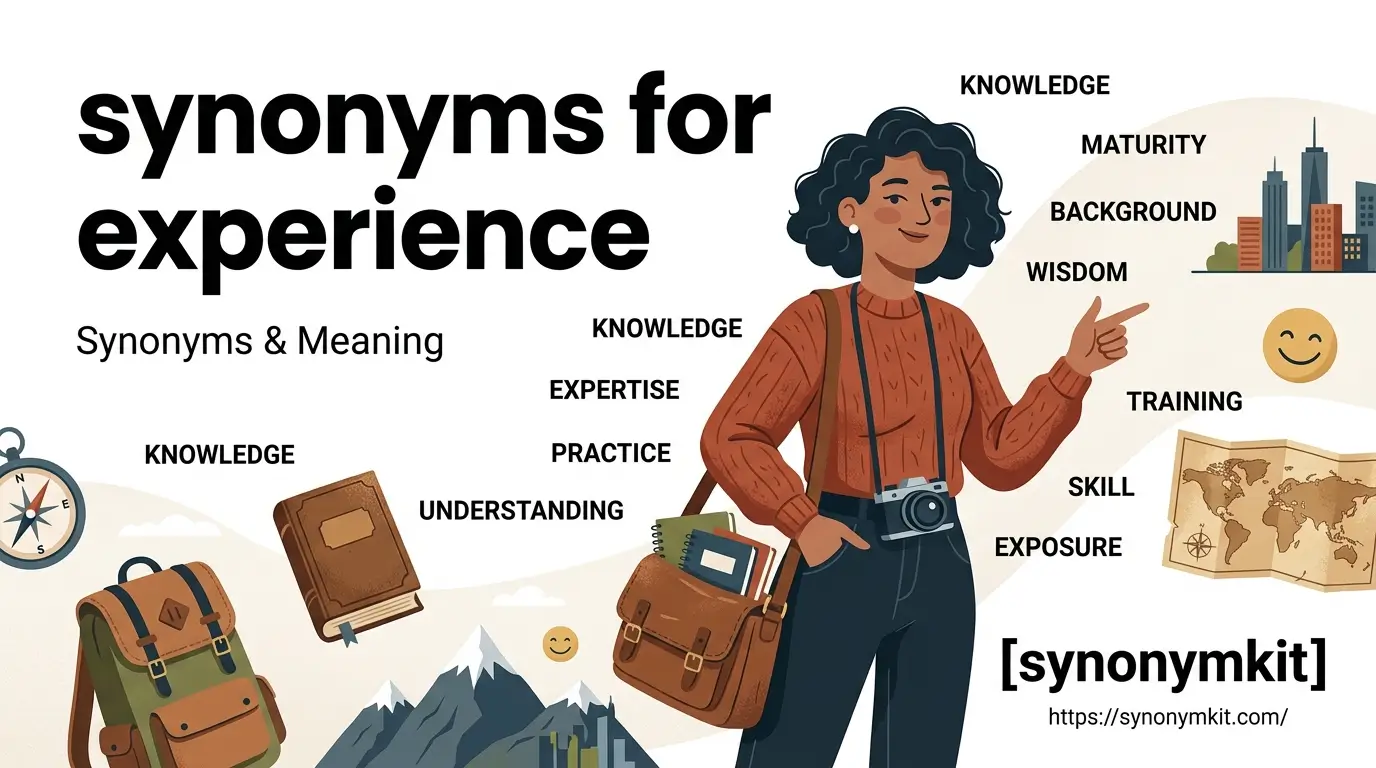
A synonym for experience is any word that describes knowledge or skill gained by doing something, or an event you lived through. Common choices are background, exposure, expertise, know how, and encounter. Picking the right one makes your writing sound clearer, more precise, and more professional.
Picture this: you are writing your resume for the tenth time, and the word “experience” shows up in every single line. It starts to feel flat and tired. You know the job is right for you, but the page does not show your real strength. This happens to almost everyone who writes often.
Here is a quick example. Instead of saying “I have experience in customer service,” you could say “I have strong background in customer service.” One small swap, and the sentence feels fresher.
For students, new words help essays sound sharper and more mature. The bloggers, fresh vocabulary keeps readers interested and scrolling. For content writers, variety avoids repeating the same word again and again in one article.
Daily English users, a bigger word bank makes conversations feel natural and confident.
“The only source of knowledge is experience.” Albert Einstein
Learning synonyms is not about sounding fancy. It is about saying exactly what you mean, every single time.
Body Quote
Halfway through building your vocabulary, it helps to remember why this practice matters at all.
“Experience is the teacher of all things.” Julius Caesar
Great writers do not use one word forever. They pick the best word for each moment. That is the real goal of this list.
1. Background
- Meaning: Your past work, study, or life that shaped who you are.
- Examples: She has a strong background in nursing. His background helped him solve the problem.
2. Exposure
- Meaning: Contact with something new that teaches you over time.
- Examples: Travel gave her exposure to new cultures. He gained exposure through his first internship.
3. Practice
- Meaning: Doing something many times until you get better at it.
- Examples: Years of practice made her a great cook. He learned coding through daily practice.
4. Knowledge
- Meaning: Facts and information you know from learning or living.
- Examples: Her knowledge of history amazed the teacher. He shared his knowledge with new employees.
5. Expertise
- Meaning: Deep skill in one subject built through years of work.
- Examples: Her expertise in law impressed the clients. His expertise made the project run smoothly.
6. Skill
- Meaning: The ability to do a task well after learning it.
- Examples: Her skill with numbers surprised everyone. He built his skill through daily practice.
7. Familiarity
- Meaning: Knowing something so well it feels comfortable and easy.
- Examples: His familiarity with the software saved time. Years gave her familiarity with the city.
8. Involvement
- Meaning: Being part of something and taking an active role in it.
- Examples: Her involvement in the club grew fast. His involvement helped the team win.
9. Participation
- Meaning: Taking part in an activity or event with others.
- Examples: Class participation boosted his final grade. Her participation made the event more fun.
10. Encounter
- Meaning: A meeting or moment when something unexpected happens to you.
- Examples: Their encounter changed how she saw life. He had a strange encounter at work.
11. Episode
- Meaning: One single event or period that stands out in life.
- Examples: That episode taught him a big lesson. It was a short but painful episode.
12. Event
- Meaning: Something that happens, often planned or clearly remembered later.
- Examples: The event changed her career path forever. It was the biggest event of summer.
13. Occurrence
- Meaning: Something that happens, often used for rare or odd moments.
- Examples: The blackout was a rare occurrence. Such an occurrence had never happened before.
14. Adventure
- Meaning: An exciting or risky journey that teaches you something new.
- Examples: Their trip became a wild adventure. He treats every new job as adventure.
15. Ordeal
- Meaning: A hard and painful event that tests your strength.
- Examples: The surgery was a long ordeal. Losing the job felt like an ordeal.
16. Trial
- Meaning: A difficult test or challenge you must go through.
- Examples: The illness was a painful trial. Their marriage survived many hard trials.
17. Test
- Meaning: A moment that checks your strength, skill, or patience.
- Examples: The exam was a true test. Losing the match tested his patience.
18. Undertaking
- Meaning: A task or project you agree to start and finish.
- Examples: Building the house was a huge undertaking. She began the undertaking with confidence.
19. Venture
- Meaning: A new and often risky attempt, plan, or business idea.
- Examples: His coffee shop was a bold venture. The new venture doubled their income.
20. Journey
- Meaning: A long process of change, growth, or physical travel.
- Examples: Her weight loss journey inspired many friends. Learning English was a long journey.
21. History
- Meaning: All the events and actions from someone’s past life.
- Examples: His work history shows great loyalty. She shared her family’s long history.
22. Track Record
- Meaning: A record showing how well someone has performed over time.
- Examples: His track record impressed the hiring team. Her track record proves steady success.
23. Proficiency
- Meaning: A high level of skill gained through study or practice.
- Examples: His proficiency in French grew quickly. She showed proficiency during the final test.
24. Competence
- Meaning: Having enough skill and knowledge to do a job well.
- Examples: Her competence earned quick praise. He proved his competence under pressure.
25. Training
- Meaning: Learning skills through lessons, practice, or guided instruction.
- Examples: Months of training prepared him well. Her training focused on public speaking.
26. Apprenticeship
- Meaning: A period of learning a trade while working under someone.
- Examples: His apprenticeship taught him carpentry skills. She finished her apprenticeship last spring.
27. Tenure
- Meaning: The length of time someone holds a job or position.
- Examples: Her tenure at the firm was long. He left after a short tenure.
28. Service
- Meaning: Time spent working for a company, group, or country.
- Examples: His years of service earned respect. She left after ten years of service.
29. Wisdom
- Meaning: Good judgment gained from years of living and learning.
- Examples: Her wisdom guided the younger staff. Age brought him quiet wisdom.
30. Insight
- Meaning: A clear and deep understanding gained from watching or living something.
- Examples: Her insight helped solve the issue. His insight came from years abroad.
31. Understanding
- Meaning: A clear grasp of how something works or feels.
- Examples: His understanding of the market grew. Her understanding of people impressed clients.
32. Know how
- Meaning: Practical skill and knowledge needed to do something well.
- Examples: His know how fixed the broken engine. She used her know how to bake bread.
33. Seasoning
- Meaning: The gradual skill and toughness gained through years of practice.
- Examples: Years of seasoning made her calm. His seasoning showed during the crisis.
34. Immersion
- Meaning: Being fully surrounded by something to learn it fast.
- Examples: Language immersion helped her learn Spanish. His immersion in coding paid off.
35. Interaction
- Meaning: Talking or working closely with other people or things.
- Examples: Daily interaction with clients built trust. Their interaction felt warm and easy.
36. Engagement
- Meaning: Being actively connected and involved in something meaningful.
- Examples: Her engagement with students grew strong. His engagement in the project doubled sales.
37. Contact
- Meaning: A connection or link formed through meeting or communication.
- Examples: Her contact with doctors grew steady. Regular contact kept their friendship alive.
38. Brush
- Meaning: A short or close encounter with danger or something new.
- Examples: He had a brush with fame. Her brush with failure taught patience.
39. Taste
- Meaning: A short experience that gives you a small sample of something.
- Examples: The trip gave her a taste of freedom. He got a taste of leadership.
40. Feel
- Meaning: A general sense or understanding gained by trying something firsthand.
- Examples: She got a feel for teaching quickly. He needed time to get feel.
41. Impression
- Meaning: A strong feeling or memory left by a person or event.
- Examples: The city left a lasting impression. His speech made a strong impression.
42. Undergoing
- Meaning: Going through a process, event, or difficult situation currently.
- Examples: She is undergoing a big change. He kept calm while undergoing treatment.
43. Endurance
- Meaning: The ability to keep going through something hard or painful.
- Examples: Marathon training built his endurance fast. Her endurance carried her through grief.
44. Hardship
- Meaning: A difficult period that causes stress, loss, or struggle.
- Examples: They survived years of hardship together. Hardship taught him true patience.
45. Situation
- Meaning: A set of conditions or events happening at one time.
- Examples: The situation forced him to adapt. She handled the situation calmly.
46. Circumstance
- Meaning: A fact or condition connected to a certain event or time.
- Examples: Circumstance brought them together that year. Every circumstance taught her something new.
47. Instance
- Meaning: A single example or case of something that happened.
- Examples: This was one instance of many. He recalled the instance clearly.
48. Case
- Meaning: A particular example or situation used to explain something.
- Examples: In her case, hard work paid off. This case proved the theory right.
49. Stint
- Meaning: A short fixed period spent doing a job or activity.
- Examples: His stint abroad changed his outlook. She finished a short stint in retail.
50. Chapter
- Meaning: A distinct period or stage of someone’s life or work.
- Examples: That job was one chapter closed. A new chapter began after college.
Synonyms for Experience Noun
When “experience” works as a noun, it usually means knowledge or a lived event. Words like background, exposure, and encounter fit here perfectly. They describe something you gained or went through, not something you actively do.
Use these in resumes, essays, or stories when describing what has already happened to you or what you already know.
Synonyms for Experience Verb
As a verb, “experience” means to go through or feel something directly. Good swaps include undergo, encounter, face, and live through. These words work well in sentences describing a current or ongoing event.
For example, “She is undergoing training” sounds more natural than repeating “experience” in every sentence about change or growth.
Synonyms for Experience in Resume
Resumes need sharp, professional words that stand out to hiring managers. Instead of repeating “experience,” try background, expertise, track record, or tenure. These words sound confident and specific.
A line like “proven track record in sales” grabs more attention than a plain “experience in sales” and shows real results clearly.
Synonyms for Experience in an Essay
Academic writing rewards variety and precision. Swap “experience” for encounter, exposure, journey, or ordeal, depending on tone.
A personal essay about struggle might use ordeal or hardship, while one about growth might use journey or insight. Choosing the right word makes your essay feel thoughtful and well written.
Synonyms and Antonyms for Experience
Synonyms like background, skill, and exposure add depth to experience related writing. Antonyms, on the other hand, show the opposite meaning. Words like inexperience, ignorance, and naivety describe a lack of knowledge or practice.
Knowing both sides helps you write clearer comparisons, especially in essays, reviews, or workplace evaluations.
Frequently Asked Questions
What can I write instead of experience?
You can use background, exposure, expertise, know how, or track record instead of experience. The best choice depends on context. Resumes often favor expertise or track record, while essays may favor journey or encounter. Pick a word that matches the tone and specific meaning you want your sentence to carry.
What is another word for strong experience?
For strong experience, try expertise, mastery, proficiency, or seasoned background. These words show high skill built over time, not just basic knowledge. “Mastery” and “expertise” work best in professional writing, while “seasoned background” fits naturally in resumes, interviews, and formal introductions describing long, proven skill.
What are some synonyms for “experience”?
Popular synonyms include background, exposure, knowledge, encounter, skill, familiarity, and journey. Each word carries a slightly different meaning. Some describe knowledge gained, others describe events lived through.
Choosing carefully helps your writing feel accurate, varied, and far less repetitive than using the same word repeatedly.
What is a stronger word for experienced?
Stronger words for experienced include seasoned, skilled, proficient, expert, and accomplished. These words suggest deep, proven ability rather than just basic practice. “Seasoned professional” or “accomplished writer” sounds more powerful than simply saying “experienced,” especially in resumes, cover letters, and formal introductions.
Conclusion
Learning new synonyms is one of the simplest ways to improve your writing. It helps your blog posts feel fresh, your essays feel thoughtful, and your daily conversations feel more natural.
Repeating the same word again and again can make even good writing feel dull and lazy. A wider vocabulary fixes that problem instantly.
Try using a few of these words this week. Swap “experience” for background in your next email. Use encounter in your next short story. Add track record to your resume summary. Small changes like these build strong writing habits over time, and they help readers stay engaged from start to finish.
“Words are, of course, the most powerful drug used by people.” Rudyard Kipling
Practice does not need to feel like homework. Treat it like a small daily game, and watch your writing grow stronger every week.
“The limits of my language mean the limits of my world.” Ludwig Wittgenstein
Keep learning, keep writing, and keep choosing your words with care.

Sarah is a freelance content writer and grammar enthusiast with over 6 years of experience helping students and bloggers write with more clarity. She joined SynonymKit to make vocabulary-building simple and accessible for everyone, one word list at a time.