55 Best Synonyms for However (With Meanings & Examples)
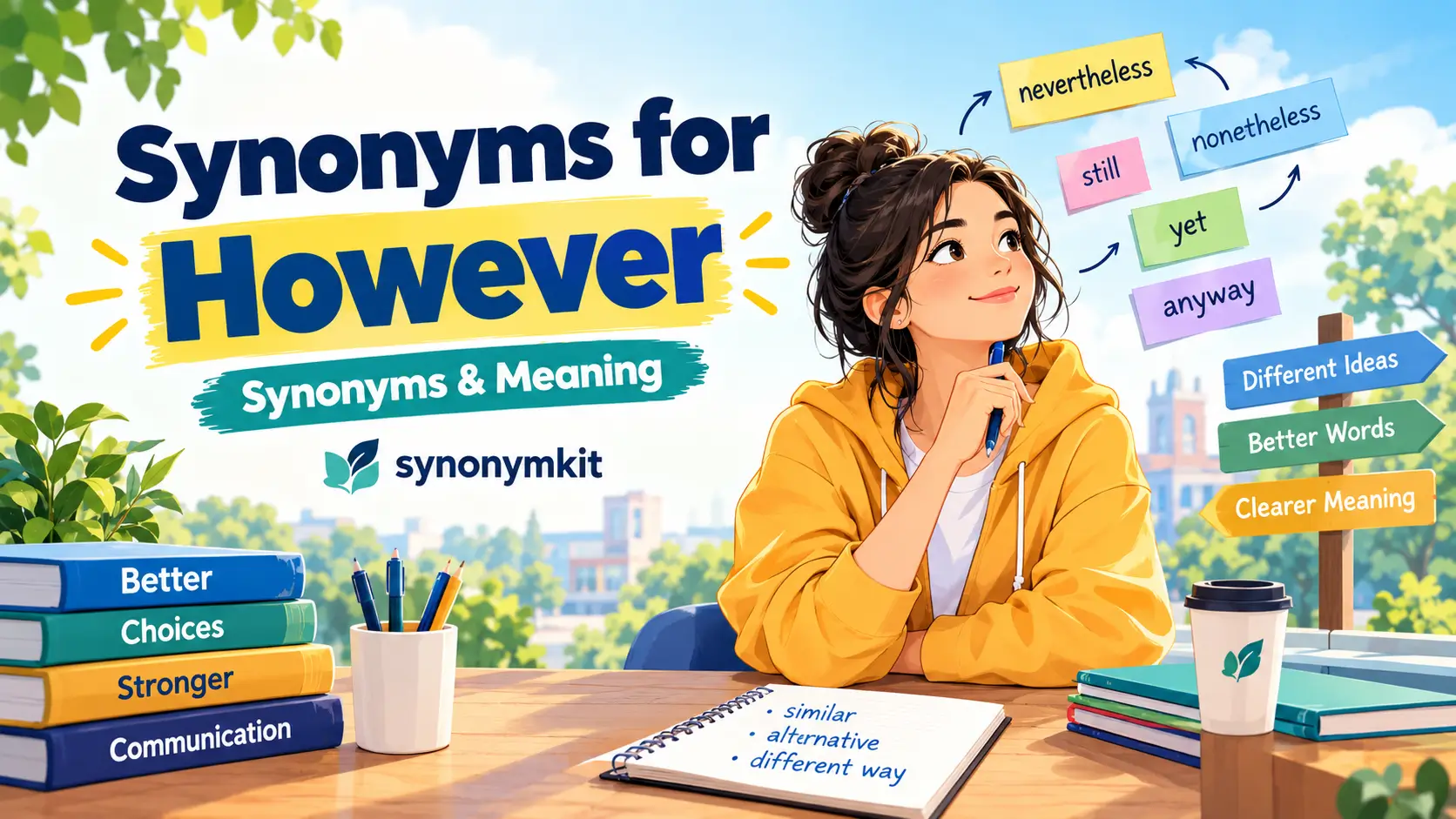
A synonym for however is a word that shows contrast, such as nevertheless, nonetheless, yet, still, or but. These words replace however when you want to show a different idea. Choose them by tone, since some sound formal and others sound casual.
Maya read her essay for the third time. Nearly every second sentence began with the same word: however. It felt flat, like a song stuck on repeat. Then she swapped a few words, and her writing began to flow.
“The difference between the almost right word and the right word is really a large matter.” Mark Twain
Here is a quick example: “I wanted to walk home; nevertheless, the rain changed my plan.” Small swaps like this make writing smoother.
These words help everyone. Students sound more polished in essays. Bloggers keep readers engaged. Content writers avoid repeating themselves. Daily English users speak with more confidence.
“The limits of my language mean the limits of my world.”Ludwig Wittgenstein
Let’s explore the best options.
1. Nevertheless
- Meaning: A formal word showing something happens despite what was just said.
- Examples: She was tired; nevertheless, she finished the project. The road was long; nevertheless, we kept walking.
2. Nonetheless
- Meaning: A formal word meaning “in spite of that fact.”
- Examples: The test was hard; nonetheless, he passed. It cost more; nonetheless, they bought it.
3. Still
- Meaning: A simple word showing an idea continues despite a problem.
- Examples: It was late. Still, we stayed for dinner. He’s young. Still, he plays well.
4. Yet
- Meaning: A short word that adds a surprising contrast to a sentence.
- Examples: The soup was simple, yet delicious. She studied little, yet scored high.
5. But
- Meaning: The most common word for joining two different ideas together.
- Examples: I like tea, but coffee wakes me up. He tried, but he failed.
6. Though
- Meaning: A soft word that shows a small, gentle contrast.
- Examples: The house is old, though it’s comfortable. It’s cold, though the sun is out.
7. Although
- Meaning: A word that begins a sentence part showing an unexpected contrast.
- Examples: Although it rained, the match continued. Although he’s shy, he loves singing.
8. Even so
- Meaning: A friendly phrase meaning “despite that being true.”
- Examples: Prices rose. Even so, shoppers came. It’s small. Even so, it’s very useful.
9. That said
- Meaning: A casual phrase used to add an opposite thought.
- Examples: The plan is risky. That said, I’ll try it. She’s strict. That said, she’s fair.
10. On the other hand
- Meaning: A phrase used to show the opposite side of something.
- Examples: Cities are exciting. On the other hand, villages are peaceful. Cars are fast; on the other hand, bikes are cheaper.
11. In contrast
- Meaning: A phrase that compares two things that are very different.
- Examples: Summer is hot. In contrast, winter is freezing. My sister talks a lot; in contrast, I stay quiet.
12. By contrast
- Meaning: A formal phrase used to point out a clear difference.
- Examples: Sales rose in May. By contrast, June was slow. The north is dry; by contrast, the south is wet.
13. Conversely
- Meaning: A formal word introducing the reverse of a previous idea.
- Examples: Some people love mornings. Conversely, others prefer nights. Too little sleep hurts; conversely, too much sleep also does.
14. Despite this
- Meaning: A phrase showing something happened even with a difficulty.
- Examples: The team lost twice. Despite this, they stayed hopeful. Despite this, she never gave up.
15. Despite that
- Meaning: A phrase showing an action continued against the odds.
- Examples: He was sick. Despite that, he worked. It was windy; despite that, we sailed.
16. All the same
- Meaning: A friendly phrase meaning “even after considering that.”
- Examples: I’m afraid of heights. All the same, I’ll climb. Thanks for warning me; all the same, I’m going.
17. Regardless
- Meaning: A word showing something stays true no matter what happens.
- Examples: It may rain. Regardless, we’re leaving at nine. Regardless, the show must go on.
18. Be that as it may
- Meaning: A formal phrase accepting a point but still disagreeing.
- Examples: You’re right. Be that as it may, I disagree. Be that as it may, we must finish.
19. Having said that
- Meaning: A phrase used to add a balancing or opposite point.
- Examples: The hotel is old. Having said that, it’s spotless. Having said that, prices are fair.
20. Even though
- Meaning: A phrase showing a strong contrast with a known fact.
- Examples: Even though he was late, the boss smiled. Even though she’s tiny, she’s strong.
21. Then again
- Meaning: A casual phrase used when changing your own opinion.
- Examples: I might buy it. Then again, it’s expensive. Then again, maybe I’ll wait.
22. Notwithstanding
- Meaning: A formal word meaning “despite,” often in legal writing.
- Examples: Notwithstanding the delay, the event began. The rule applies, notwithstanding your objection.
23. At the same time
- Meaning: A phrase showing two different ideas can both be true.
- Examples: I love my job. At the same time, it’s stressful. He’s kind; at the same time, he’s firm.
24. On the contrary
- Meaning: A phrase used to say the opposite is actually true.
- Examples: I’m not angry. On the contrary, I’m pleased. On the contrary, the film was great.
25. Instead
- Meaning: A word showing a different choice was made.
- Examples: We skipped the bus. Instead, we walked home. She chose tea instead.
26. Alternatively
- Meaning: A word offering another choice or possible option.
- Examples: Take the train. Alternatively, you could drive. Alternatively, we can order pizza tonight.
27. Rather
- Meaning: A word showing a preferred choice over another one.
- Examples: He didn’t complain. Rather, he offered help. Rather, let’s try a new approach.
28. Whereas
- Meaning: A word used to compare two different facts together.
- Examples: Tom loves math, whereas Sara loves art. Whereas cats sleep, dogs play.
29. While
- Meaning: A simple word that compares two ideas in one sentence.
- Examples: While I like cricket, my brother prefers football. She sings while he dances.
30. Albeit
- Meaning: A formal word meaning “although,” often used with short phrases.
- Examples: It was a good plan, albeit risky. He agreed, albeit slowly.
31. Anyway
- Meaning: A casual word used to move past a problem.
- Examples: It’s raining. Anyway, let’s go out. Anyway, I called her yesterday.
32. Anyhow
- Meaning: A very casual word similar to “anyway” in speech.
- Examples: I was tired. Anyhow, I finished it. Anyhow, we got there safely.
33. In any case
- Meaning: A phrase meaning the result stays the same regardless.
- Examples: I may be late. In any case, start without me. In any case, thanks for helping.
34. After all
- Meaning: A phrase adding a reason that changes the earlier idea.
- Examples: Let him rest. After all, he worked hard. It’s fine; after all, nobody’s hurt.
35. For all that
- Meaning: A phrase meaning “even considering everything just mentioned.”
- Examples: He’s rich. For all that, he’s humble. For all that, the trip was fun.
36. Just the same
- Meaning: A spoken phrase meaning “despite that, still.”
- Examples: I know it’s safe. Just the same, be careful. Just the same, I’ll check.
37. Even then
- Meaning: A phrase showing a result did not change anything.
- Examples: We asked politely. Even then, he refused. Even then, she stayed calm.
38. Granted
- Meaning: A word used to accept a point before disagreeing.
- Examples: Granted, it’s cheap. But it breaks easily. Granted, he’s young, but he’s talented.
39. Admittedly
- Meaning: A word used when honestly agreeing with a small weakness.
- Examples: Admittedly, the food was cold. Still, we enjoyed it. Admittedly, I was wrong.
40. Mind you
- Meaning: A casual British phrase adding a small opposite thought.
- Examples: The trip was short. Mind you, it was lovely. Mind you, she tried her best.
41. Only
- Meaning: A casual word adding a small problem to a statement.
- Examples: I’d love to come, only I’m busy. It’s perfect, only a bit expensive.
42. Except
- Meaning: A word showing one exception to what was just said.
- Examples: Everything’s ready, except the cake. I like all fruits except mangoes.
43. Otherwise
- Meaning: A word meaning “if not” or “in other ways.”
- Examples: Leave now; otherwise, you’ll miss the bus. The room was messy but otherwise fine.
44. Howbeit
- Meaning: An old, formal word meaning “however” or “even so.”
- Examples: The claim is old, howbeit still popular. Howbeit, the king remained calm.
45. Withal
- Meaning: A rare, old word meaning “despite that” or “in addition.”
- Examples: He was poor, withal generous. She was tired, withal cheerful.
46. Even if
- Meaning: A phrase showing something stays true in any situation.
- Examples: Even if it snows, we’ll go. Even if you’re late, come in.
47. That being said
- Meaning: A common phrase used to add a balancing thought.
- Examples: The movie was long. That being said, I loved it. That being said, let’s try.
48. With that said
- Meaning: A smooth phrase for moving to a contrasting point.
- Examples: We’ll miss him. With that said, he deserves this. With that said, let’s begin.
49. Despite that
- Meaning: A short phrase showing an action happened despite a difficulty.
- Examples: The ticket was costly. Despite that, she bought it. Despite that, he smiled.
50. In any event
- Meaning: A phrase meaning “whatever happens, this remains true.”
- Examples: We might win. In any event, we’ll celebrate. In any event, call me.
51. But then
- Meaning: A casual phrase that adds an unexpected extra thought.
- Examples: He sings well, but then he practices daily. It’s cheap, but then it’s old.
52. On the flip side
- Meaning: A casual phrase introducing the other side of something.
- Examples: Remote work saves time. On the flip side, it feels lonely. On the flip side, rent is lower.
53. Even still
- Meaning: A phrase showing something continues despite a strong reason.
- Examples: He apologized. Even still, she was upset. Even still, I trust him.
54. Yet still
- Meaning: A phrase that stresses a surprising continued contrast.
- Examples: She was scared, yet still she spoke. It hurt, yet still he smiled.
55. In comparison
- Meaning: A phrase showing how two things differ when placed together.
- Examples: My room is tiny. In comparison, yours is huge. In comparison, this bag is light.
“Short words are best, and the old words, when short, are best of all.” Winston Churchill
Synonyms for However in Academic Writing
In academic writing, choose formal words like nevertheless, nonetheless, conversely, and notwithstanding. They sound serious and clear. Place them at the start of a sentence, followed by a comma, or after a semicolon.
Avoid casual choices like “anyway” or “mind you” in essays and research papers. Consistent, formal transitions help your argument feel logical and polished.
Synonyms for However to Start a Sentence
To start a sentence, try still, even so, that said, or having said that. Each one signals a change in direction right away. Remember the comma after the phrase. Use them in moderation, because too many contrast words in a row can confuse readers.
Mix a few different sentence starters to keep your paragraphs fresh and natural.
Synonyms for However and But
However and but both show contrast, yet they behave differently. But joins ideas inside one sentence and sounds casual. However usually starts a new sentence and sounds more formal. Good swaps for “but” include yet, though, and still. Match your choice to your reader, and your writing will always sound suitable and smooth.
Synonyms for However in French
In French, the most common words for however are cependant, pourtant, toutefois, and néanmoins. Cependant and toutefois work well in formal writing. Pourtant feels stronger and more surprising, while néanmoins matches “nevertheless.”
Learning these helps English speakers understand French texts and write better contrast sentences.
FAQ: Real People Also Ask
What do you say instead of “however”?
In everyday talk, simple words work best. Try but, though, still, yet, or even so. They sound natural and friendly. In writing, you can use nevertheless or that said.
Pick the word that matches your audience, and vary your choices so your sentences do not sound repetitive.
How do you say “however” in a formal way?
For a formal tone, use nevertheless, nonetheless, notwithstanding, or conversely. Put a comma after the word at the start of a sentence, or use a semicolon before it in the middle. These words suit reports, essays, and business emails, where a polished and professional voice matters.
What can I use instead of “however” in my essay?
In an essay, pick words that keep your argument smooth, like on the other hand, in contrast, despite this, or admittedly.
Place them where your point changes direction. Avoid repeating the same transition twice in one paragraph, since variety makes your writing clearer and more convincing.
How do you say “however” in a positive way?
To keep a positive tone, use gentle words like still, even so, that said, or on the bright side. These soften a contrast without sounding negative.
For example: “The trip was tiring; even so, it was wonderful.” This style works well in feedback and friendly messages.
Conclusion
Learning synonyms is one of the easiest ways to improve your English. When you replace a repeated word like however with a fresh option, your writing becomes smoother, your blogging becomes more engaging, and your speaking sounds more confident.
Readers notice small details like these, even if they cannot explain why your sentences feel better.
You now have 55 choices, from simple ones like but and still to formal ones like nevertheless and notwithstanding. You don’t need to memorize them all today.
Start with five favorites and practice them in your emails, essays, and daily conversations. Try replacing one “however” a day, and soon it will feel natural.
Remember, good communication is about clarity and tone. The right word helps people understand you and enjoy what you say. Keep learning, keep practicing, and let your vocabulary grow one word at a time.
“Words are, of course, the most powerful drug used by persons.” Rudyard Kipling
“Language is the road map of a culture.” Rita Mae Brown

Amelia is a linguistics graduate and lifelong word nerd who believes the right word can change how a sentence feels. She writes and edits vocabulary guides for SynonymKit, helping readers sound sharper and more confident in their writing.