65 Synonyms for Like: Better Words for Writing and Speaking
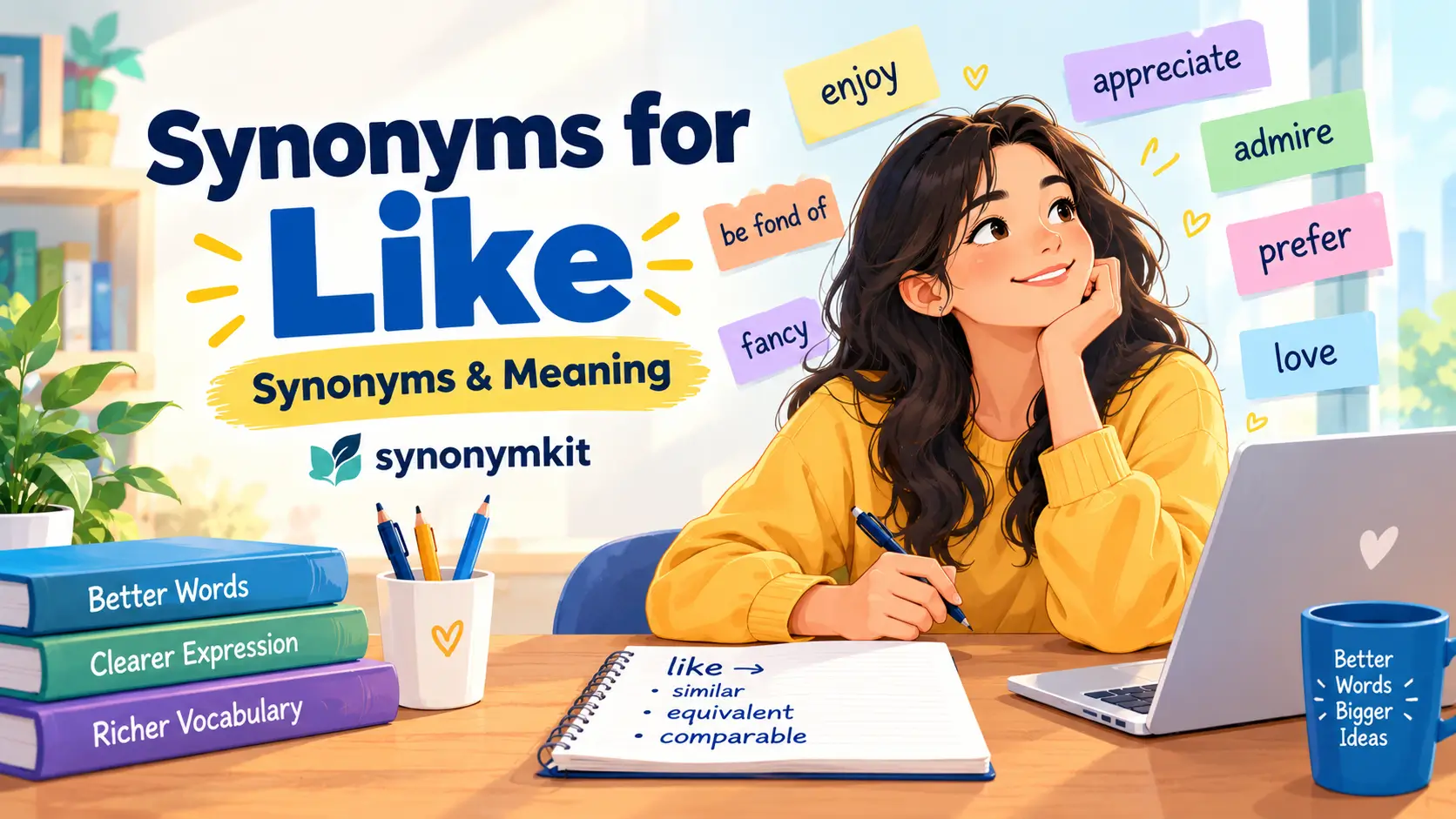
Synonyms for like include enjoy, love, prefer, admire, favor, appreciate, and fancy when “like” means having a positive feeling toward something. The best choice depends on your meaning and tone. Other useful options include similar to, such as, and for example when “like” has a different role.
Imagine writing an essay about your favorite book. You write, “I like this book” three times. The sentence is correct, but it starts to sound plain. A small change can make your writing clearer and more interesting.
For example, instead of saying, “I like this song,” you could say, “I enjoy this song.” If you feel strongly about it, you might say, “I love this song.” Each word gives your sentence a slightly different feeling.
Learning synonyms for like helps you choose the right word instead of using the same word again and again. Students can make essays more varied.
Bloggers can keep readers interested. Content writers can make their writing more precise. Daily English users can express feelings more clearly.
“Good words make simple ideas easier to understand.”
Try to think about the exact feeling or meaning you want before choosing a synonym.
“The right word can change the tone of a sentence.”
65 Synonyms for Like
1. Enjoy
- Meaning: To feel happy while doing, having, or experiencing something.
- Examples: I enjoy reading mystery books.
We enjoy walking after dinner.
2. Love
- Meaning: To like something or someone very much and feel strong affection.
- Examples: I love this new song.
They love spending time together.
3. Adore
- Meaning: To like someone or something very strongly and warmly.
- Examples: She adores her little dog.
I adore this quiet café.
4. Appreciate
- Meaning: To recognize the good qualities or value of something.
- Examples: I appreciate your honest advice.
We appreciate this kind gesture.
5. Admire
- Meaning: To respect or like someone because of good qualities.
- Examples: I admire her brave attitude.
Many people admire his patience.
6. Prefer
- Meaning: To like one choice more than another choice.
- Examples: I prefer tea in mornings.
She prefers quiet places.
7. Favor
- Meaning: To like or support one option more than another.
- Examples: Many students favor this plan.
I favor simple designs.
8. Fancy
- Meaning: To like or want something, often in British English.
- Examples: I fancy a cold drink.
She fancies that blue dress.
9. Relish
- Meaning: To enjoy something greatly, especially an experience or activity.
- Examples: He relished the exciting challenge.
She relishes quiet weekend mornings.
10. Treasure
- Meaning: To value someone or something deeply and care about it.
- Examples: I treasure our family memories.
She treasures every handwritten letter.
11. Cherish
- Meaning: To love and value someone or something deeply.
- Examples: They cherish their childhood memories.
I cherish our long conversations.
12. Delight in
- Meaning: To get great pleasure from something enjoyable.
- Examples: She delights in garden work.
He delights in funny stories.
13. Take pleasure in
- Meaning: To enjoy something and feel happy because of it.
- Examples: I take pleasure in cooking.
She takes pleasure in helping others.
14. Be fond of
- Meaning: To like someone or something in a warm, gentle way.
- Examples: I am fond of old movies.
She is fond of cats.
15. Be into
- Meaning: To be very interested in something or enjoy it.
- Examples: He is into street photography.
I am into classical music.
16. Be keen on
- Meaning: To like something and feel eager about it.
- Examples: She is keen on tennis.
I am keen on this idea.
17. Be partial to
- Meaning: To have a special liking for something.
- Examples: I am partial to spicy food.
He is partial to dark chocolate.
18. Savor
- Meaning: To enjoy something slowly and fully, especially food or moments.
- Examples: We savored the final bite.
She savored the peaceful moment.
19. Relate to
- Meaning: To understand or connect with someone’s feelings or experience.
- Examples: I relate to that story.
Many readers relate to her struggles.
20. Identify with
- Meaning: To feel that someone or something shares your experiences.
- Examples: I identify with this character.
She identifies with his journey.
21. Connect with
- Meaning: To feel interested in or emotionally linked to something.
- Examples: Readers connect with honest stories.
I connect with this message.
22. Support
- Meaning: To agree with or encourage someone, idea, or choice.
- Examples: I support your creative idea.
They support the new project.
23. Welcome
- Meaning: To accept something gladly because you think it is helpful.
- Examples: We welcome your helpful suggestions.
She welcomed the fresh idea.
24. Accept
- Meaning: To agree to something or receive it willingly.
- Examples: I accept your kind offer.
She accepted the new plan.
25. Agree with
- Meaning: To share the same opinion or view as someone.
- Examples: I agree with your point.
She agrees with her teacher.
26. Favorably regard
- Meaning: To view someone or something in a positive way.
- Examples: The manager regards her favorably.
Critics regarded the book favorably.
27. Respect
- Meaning: To have a good opinion of someone’s qualities or actions.
- Examples: I respect your honest choice.
We respect her hard work.
28. Value
- Meaning: To think someone or something is important and useful.
- Examples: I value your friendship deeply.
They value honest communication.
29. Esteem
- Meaning: To respect and think highly of someone.
- Examples: We esteem our old teacher.
Many students esteem her wisdom.
30. Enjoyment
- Meaning: A feeling of pleasure that comes from something you like.
- Examples: Music brings me enjoyment.
Reading gives her enjoyment.
31. Pleasure
- Meaning: A happy feeling caused by something enjoyable or satisfying.
- Examples: Cooking is a pleasure for me.
The trip was a pleasure.
32. Preference
- Meaning: A greater liking for one person, thing, or choice.
- Examples: Blue is my preference.
She has a clear preference for tea.
33. Affection
- Meaning: A warm feeling of love or liking toward someone.
- Examples: He showed affection for his family.
She has great affection for animals.
34. Attraction
- Meaning: A feeling that makes you interested in someone or something.
- Examples: The city has strong attraction.
Music was her first attraction.
35. Interest
- Meaning: A feeling of wanting to know or learn more about something.
- Examples: History is my main interest.
His interest grew quickly.
36. Passion
- Meaning: A strong feeling of love or excitement about something.
- Examples: Writing is her passion.
He has a passion for art.
37. Enthusiasm
- Meaning: Strong excitement and interest in doing or supporting something.
- Examples: She showed enthusiasm for dancing.
His enthusiasm inspired everyone.
38. Fondness
- Meaning: A gentle feeling of liking or affection for someone or something.
- Examples: I have a fondness for poetry.
She has a fondness for flowers.
39. Liking
- Meaning: A positive feeling toward someone or something you enjoy.
- Examples: I developed a liking for jazz.
Her liking for books grew.
40. Admiration
- Meaning: A strong feeling of respect for someone’s qualities or actions.
- Examples: She earned my admiration.
His courage deserves admiration.
41. Approval
- Meaning: A feeling that something is good, acceptable, or suitable.
- Examples: The plan received approval.
Her parents gave their approval.
42. Similar to
- Meaning: Having qualities or features that are almost the same as something.
- Examples: This color is similar to mine.
Her dress is similar to yours.
43. Alike
- Meaning: Similar in appearance, qualities, or other important ways.
- Examples: The two sisters look alike.
These ideas are quite alike.
44. Comparable to
- Meaning: Similar enough to another thing for useful comparison.
- Examples: Its size is comparable to ours.
This result is comparable to last year’s.
45. Resembling
- Meaning: Looking or being similar to another person or thing.
- Examples: The painting is resembling her mother.
His style is resembling classic art.
46. Such as
- Meaning: Used to give examples of people or things mentioned.
- Examples: I enjoy sports such as tennis.
We sell fruits such as apples.
47. For example
- Meaning: Used before a specific example that explains an idea.
- Examples: Try healthy snacks, for example, nuts.
Some pets, for example, cats, need care.
48. For instance
- Meaning: Used to introduce one example of something being discussed.
- Examples: Try walking, for instance, after dinner.
Some colors, for instance, blue, feel calm.
49. Including
- Meaning: Used to mention people or things that belong to a larger group.
- Examples: We visited cities including Lahore.
She likes fruits including mangoes.
50. Namely
- Meaning: Used to introduce the exact person or thing meant.
- Examples: Choose one color, namely, blue.
He wanted one thing, namely, peace.
51. Likewise
- Meaning: In the same way or with a similar result.
- Examples: She smiled, and I likewise smiled.
He helped me, and I likewise helped.
52. Equally
- Meaning: To the same degree, amount, or level as something else.
- Examples: I equally enjoy both choices.
She is equally happy today.
53. Correspondingly
- Meaning: In a way that matches or connects with something else.
- Examples: Prices rose correspondingly last year.
Costs increased correspondingly this month.
54. Analogous to
- Meaning: Similar to something in an important way or basic pattern.
- Examples: This process is analogous to learning.
The system is analogous to nature.
55. Kindred
- Meaning: Similar in nature, interests, feelings, or qualities.
- Examples: We found kindred interests quickly.
They have kindred creative ideas.
56. Congenial
- Meaning: Pleasant and naturally suited to your personality or interests.
- Examples: She found him congenial company.
We enjoyed his congenial nature.
57. Agreeable
- Meaning: Pleasant, acceptable, or enjoyable to experience or consider.
- Examples: The weather was agreeable today.
She found the plan agreeable.
58. Pleasing
- Meaning: Giving you a pleasant feeling because it looks or feels good.
- Examples: The room has a pleasing design.
Her voice is very pleasing.
59. Appealing
- Meaning: Attractive or interesting enough to make someone want it.
- Examples: The offer sounds appealing.
This design is appealing to readers.
60. Attractive
- Meaning: Pleasant or interesting enough to make people notice it.
- Examples: The website looks attractive.
That option seems attractive.
61. Enjoyable
- Meaning: Pleasant and fun enough to make you feel happy.
- Examples: The movie was very enjoyable.
We had an enjoyable evening.
62. Desirable
- Meaning: Wanted or considered good enough to be chosen.
- Examples: The house has desirable features.
Flexible hours are desirable here.
63. Likable
- Meaning: Pleasant and easy for people to like or enjoy.
- Examples: He is a likable person.
Her friendly nature is likable.
64. Compatible
- Meaning: Able to work or exist well together without major problems.
- Examples: Our ideas are compatible.
These devices are compatible with each other.
65. Suitable
- Meaning: Right or appropriate for a particular person, purpose, or situation.
- Examples: This style is suitable for work.
That book is suitable for children.
“Clear writing begins when every word has a clear job.”
Synonyms for Like or Love
When you want a stronger feeling than like, words such as love, adore, cherish, treasure, and care for can work. The right choice depends on the relationship and situation.
“Love” is common and strong, while “cherish” often shows deep personal value. “Adore” can sound warm and emotional.
Synonyms for Like Minded
For like minded, useful alternatives include similar thinking, kindred, compatible, and of similar views. These expressions describe people who share similar ideas, interests, goals, or values.
For example, “like minded people” can become “people with similar interests” when you want a clearer and more direct phrase.
Synonyms for Like Verb
As a verb, “like” can mean different things. Use enjoy for pleasure, prefer for a choice, admire for respect, and love for a very strong positive feeling. This distinction matters because replacing “like” with any synonym without checking the meaning can change your sentence.
Synonyms for Like or Such As
When “like” introduces examples, such as, including, for example, and for instance can often replace it. For example, “I enjoy outdoor sports like tennis” can become “I enjoy outdoor sports such as tennis.” These choices are especially useful in essays and professional writing.
Formal Synonyms for Like
In formal writing, enjoy, appreciate, prefer, admire, value, favor, and be fond of may sound more precise than “like.” However, the best word depends on the sentence. “I appreciate your help” is not the same as “I like your help,” so always choose the word that matches your intended meaning.
People Also Ask
What words can I use instead of “like”?
You can use enjoy, love, prefer, admire, appreciate, favor, adore, cherish, or value, depending on your meaning. If “like” means “similar to,” use similar to, alike, comparable to, or resembling.
If it introduces examples, use such as, including, for example, or for instance. The key is to identify what “like” means in your sentence before replacing it.
What are some synonyms for “like”?
Common synonyms include enjoy, love, adore, appreciate, admire, prefer, favor, and fancy. Some are stronger than others. For example, “enjoy” usually shows pleasure, while “love” shows a stronger feeling.
“Prefer” is useful when comparing choices. “Admire” is better when you respect a person’s qualities. There are also different synonyms when “like” means similarity or when it introduces examples.
What is a stronger word for like?
Love is one of the most common stronger words for “like,” but it is not right for every situation. Adore can show very strong affection, while cherish suggests deep personal value. Relish can show strong enjoyment of an activity or experience.
For professional or academic writing, a more precise word such as appreciate, admire, or value may communicate the intended feeling better.
How do you say “like” in a formal way?
A formal replacement depends on the meaning of “like.” Use enjoy for pleasure, appreciate for value, admire for respect, and prefer when choosing between options.
For example, use such as or for instance. For similarity, use similar to or comparable to. These choices make formal writing more exact instead of simply replacing “like” with one general word.
Conclusion
Learning synonyms for like gives you more control over your English. You do not need to replace “like” every time you use it. Instead, learn to notice what you really mean.
Maybe you enjoy something. Maybe you admire someone or value an idea. A more exact word can make a simple sentence much clearer.
This skill is useful in many parts of life. Students can use different words in essays and assignments. Bloggers can avoid repeating the same phrase.
Content writers can make sentences more precise and natural. In daily conversations, better word choices can help you explain your feelings without confusion.
Start with a few easy words from this list. Practice enjoy, prefer, appreciate, admire, love, and value first. Then try some of the more advanced choices. Use them in emails, essays, blog posts, messages, and everyday conversations.
“Practice turns new words into natural words.”
You do not need hundreds of synonyms at once. Learn a small group, understand the difference between them, and use each one in a real sentence. Over time, your vocabulary will grow, and your writing will sound more natural and flexible.
“A stronger vocabulary gives your ideas more room to speak.”

James is a former English teacher turned content strategist who’s passionate about making language learning less intimidating. At SynonymKit, he focuses on curating word lists that are practical for everyday writing, essays, and professional communication.