45 Synonyms for Awkward: Examples and Better Words to Use
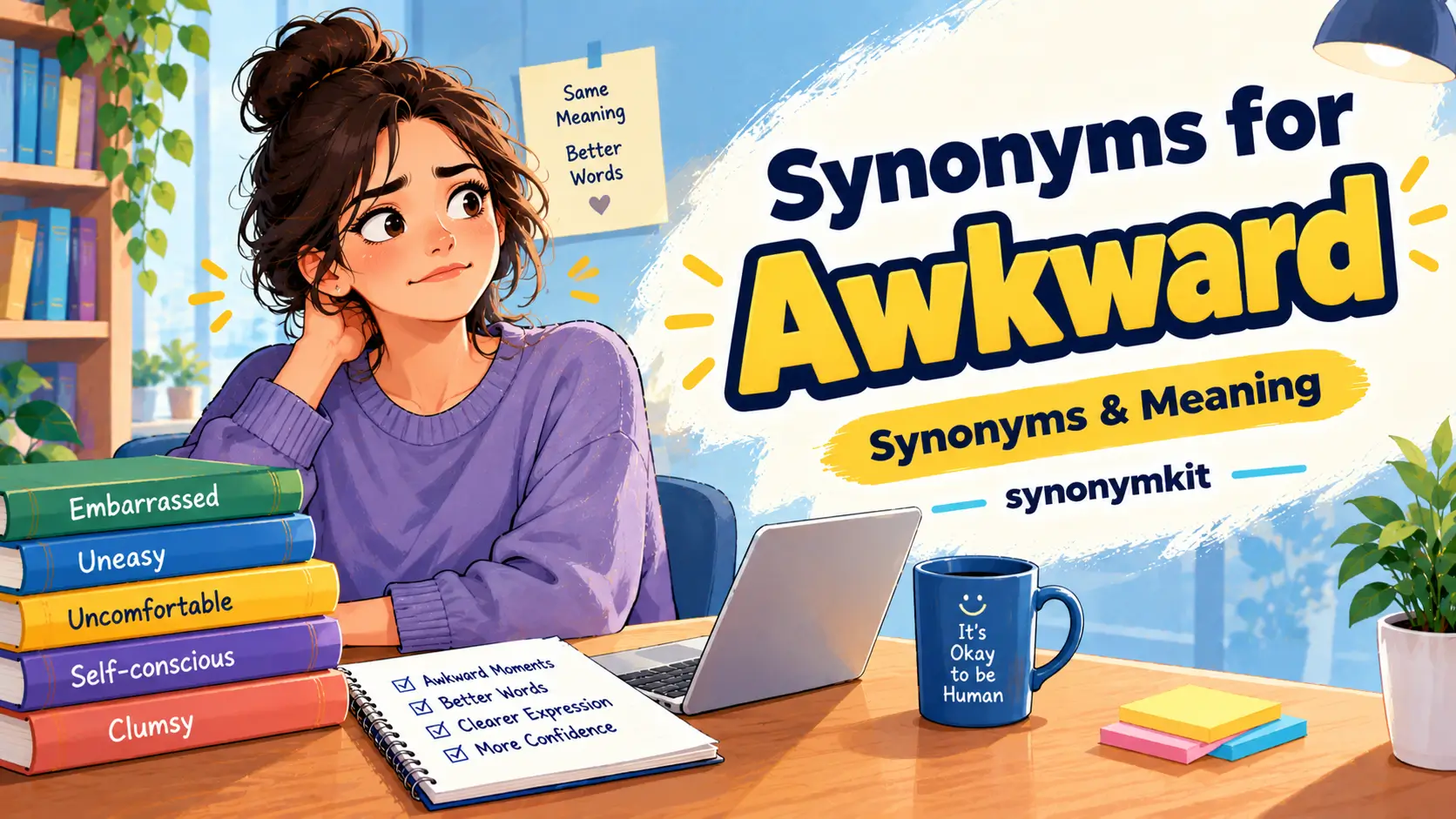
Synonyms for awkward include uncomfortable, clumsy, uneasy, embarrassing, and out of place. The best word depends on the situation. Some words describe a person who feels shy, while others describe an uncomfortable moment, a strange silence, or a movement that does not feel natural.
Imagine sitting with a new group of people. Everyone is quiet, nobody knows what to say, and you start looking around for something to talk about.
You might call this an awkward moment. The right word can help you explain how it feels without making the situation sound worse than it is.
For example, a student may feel uneasy when speaking in front of the class. Another student may make a clumsy move while carrying books. Both situations can feel awkward, but they do not mean the same thing.
Learning synonyms for awkward helps students choose better words in essays and schoolwork. Bloggers can use them to make stories more vivid and engaging.
Content writers can avoid repeating the same word in every paragraph. Daily English users can express feelings more clearly in chats and conversations.
“The right word can make a difficult moment easier to explain.”
You do not need to use fancy words all the time. Simple words often work best when they match what you mean.
“Clear words help people understand each other.”
These words can describe uncomfortable feelings, unusual situations, poor movement, or social moments that do not feel natural. Choose the word that best fits your meaning.
1. Uncomfortable
- Meaning: Uncomfortable describes a person or situation that does not feel pleasant or easy.
- Examples: I felt uncomfortable during the long silence.
- The hard chair made everyone uncomfortable.
2. Embarrassing
- Meaning: Embarrassing describes something that makes someone feel shy, ashamed, or worried.
- Examples: My mistake was embarrassing in front of everyone.
- She told an embarrassing story at lunch.
3. Clumsy
- Meaning: Clumsy describes someone who moves awkwardly or often drops and bumps things.
- Examples: I felt clumsy while carrying those boxes.
- He made a clumsy move during practice.
4. Uneasy
- Meaning: Uneasy describes a worried feeling when something does not seem right.
- Examples: I felt uneasy about the strange meeting.
- Her uneasy smile made me wonder why.
5. Strange
- Meaning: Strange describes something unusual that seems different from what people expect.
- Examples: That was a strange thing to say.
- The room felt strange after everyone left.
6. Unnatural
- Meaning: Unnatural describes actions or words that do not seem normal or relaxed.
- Examples: His laugh sounded unnatural during the interview.
- The pose felt unnatural for the photo.
7. Uncomfortable looking
- Meaning: Uncomfortable looking describes someone or something that appears tense or uneasy.
- Examples: He gave an uncomfortable looking smile at dinner.
- Her pose looked uncomfortable in the picture.
8. Ill at ease
- Meaning: Ill at ease describes someone who feels nervous or not relaxed.
- Examples: I felt ill at ease among strangers.
- She seemed ill at ease during lunch.
9. Self conscious
- Meaning: Self conscious describes feeling worried about how other people see you.
- Examples: He felt self conscious about his new haircut.
- I became self conscious when everyone looked over.
10. Bashful
- Meaning: Bashful describes someone who feels shy around others or when receiving attention.
- Examples: The bashful boy hid behind his mother.
- She felt bashful when praised by friends.
11. Shy
- Meaning: Shy describes someone who feels nervous about speaking or meeting other people.
- Examples: I was shy at my first party.
- The shy student spoke after the lesson.
12. Nervous
- Meaning: Nervous describes feeling worried or afraid about what may happen next.
- Examples: I felt nervous before meeting her parents.
- He grew nervous when the room went quiet.
13. Tense
- Meaning: Tense describes a person or moment that feels tight, worried, or strained.
- Examples: The tense meeting ended without a clear answer.
- Everyone felt tense during the long wait.
14. Strained
- Meaning: Strained describes a moment or relationship that feels forced or difficult.
- Examples: Their strained talk ended after five minutes.
- She gave a strained laugh at dinner.
15. Painful
- Meaning: Painful can describe an embarrassing moment that is hard to face.
- Examples: The painful silence lasted through dinner.
- His painful mistake became a family joke.
16. Cringeworthy
- Meaning: Cringeworthy describes something so embarrassing that people feel uncomfortable watching or hearing it.
- Examples: His cringeworthy joke made everyone look away.
- That old video is still cringeworthy today.
17. Peculiar
- Meaning: Peculiar describes something unusual or odd that catches people’s attention.
- Examples: He made a peculiar face during lunch.
- Her peculiar answer left the teacher confused.
18. Odd
- Meaning: Odd describes something that seems unusual, unexpected, or a little strange.
- Examples: It felt odd to sit there alone.
- He gave me an odd look yesterday.
19. Weird
- Meaning: Weird describes something strange that feels surprising, unusual, or hard to understand.
- Examples: That was a weird time to call.
- The weird pause made us laugh later.
20. Unsettling
- Meaning: Unsettling describes something that makes people feel worried or less comfortable.
- Examples: His sudden silence was unsettling to everyone.
- The strange message felt unsettling that night.
21. Fumbling
- Meaning: Fumbling describes handling things badly because you feel nervous or lack skill.
- Examples: I was fumbling with my keys outside.
- He kept fumbling for words during the speech.
22. Uncoordinated
- Meaning: Uncoordinated describes movements that do not work smoothly together.
- Examples: My uncoordinated steps ruined the dance practice.
- He looked uncoordinated while learning to skate.
23. Stiff
- Meaning: Stiff describes movements or behavior that seem rigid rather than relaxed.
- Examples: His stiff pose looked funny in photos.
- She gave a stiff greeting at the door.
24. Rigid
- Meaning: Rigid describes behavior or movement that seems too fixed or controlled.
- Examples: His rigid posture made him look nervous.
- The rigid conversation lacked any warmth.
25. Forced
- Meaning: Forced describes words, smiles, or actions that do not seem natural.
- Examples: She gave a forced smile for the camera.
- His forced joke did not make us laugh.
26. Hesitant
- Meaning: Hesitant describes someone who pauses because they feel unsure about acting or speaking.
- Examples: He sounded hesitant when answering the question.
- I was hesitant to join their conversation.
27. Awkward looking
- Meaning: Awkward looking describes something that appears strange, clumsy, or uncomfortable to others.
- Examples: The awkward looking chair blocked the doorway.
- His awkward looking pose made everyone smile.
28. Unpolished
- Meaning: Unpolished describes behavior or work that needs more care or practice.
- Examples: My first speech sounded unpolished but honest.
- The unpolished dance improved with more practice.
29. Insecure
- Meaning: Insecure describes someone who lacks confidence and worries about other people’s opinions.
- Examples: He felt insecure among the older students.
- She grew insecure when nobody answered her.
30. Disconcerting
- Meaning: Disconcerting describes something that surprises people and makes them feel unsure.
- Examples: His sudden question was disconcerting to me.
- The unexpected pause felt disconcerting at first.
31. Unfamiliar
- Meaning: Unfamiliar describes something new that you do not know well yet.
- Examples: The unfamiliar room made me feel uneasy.
- Her unfamiliar face stopped me from speaking.
32. Out of place
- Meaning: Out of place describes someone or something that does not seem to belong.
- Examples: My bright shoes felt out of place.
- He looked out of place at the formal dinner.
33. Inappropriate
- Meaning: Inappropriate describes words or actions that do not suit the situation.
- Examples: His inappropriate joke upset the whole group.
- That comment felt inappropriate during the meeting.
34. Unseemly
- Meaning: Unseemly describes behavior that people consider improper or unsuitable for the moment.
- Examples: Their unseemly argument upset the guests.
- His unseemly remark ended the friendly chat.
35. Inelegant
- Meaning: Inelegant describes something that lacks grace, smoothness, or a pleasing style.
- Examples: My inelegant turn spoiled the dance move.
- The inelegant solution made the task harder.
36. Gawky
- Meaning: Gawky describes someone tall or clumsy who moves without much grace.
- Examples: The gawky teenager bumped into the table.
- His gawky walk made his friends giggle.
37. Ungainly
- Meaning: Ungainly describes movements or shapes that seem clumsy and lack grace.
- Examples: The ungainly puppy slid across the floor.
- His ungainly jump missed the low hurdle.
38. Socially uncomfortable
- Meaning: Socially uncomfortable describes feeling unsure or tense while spending time with others.
- Examples: I felt socially uncomfortable at the busy party.
- He seemed socially uncomfortable with the new group.
39. Mortifying
- Meaning: Mortifying describes an event that makes someone feel deeply embarrassed.
- Examples: Forgetting her name was mortifying for me.
- The mortifying mistake stayed in his memory.
40. Discomfiting
- Meaning: Discomfiting describes something that makes a person feel uneasy or embarrassed.
- Examples: The personal question was discomfiting during lunch.
- His discomfiting stare made me turn away.
41. Clunky
- Meaning: Clunky describes something that feels heavy, awkward, or hard to use.
- Examples: The clunky door would not close smoothly.
- His clunky wording made the email hard to read.
42. Halting
- Meaning: Halting describes speech or movement that stops and starts with difficulty.
- Examples: Her halting speech showed that she felt nervous.
- He gave a halting answer to the group.
43. Stilted
- Meaning: Stilted describes speech that sounds too formal, stiff, or unnatural.
- Examples: Their stilted conversation soon came to an end.
- His stilted greeting sounded like a school speech.
44. Uncomfortable making
- Meaning: Uncomfortable making describes something that causes unease, though it is not a common everyday expression.
- Examples: His uncomfortable making joke upset the guests.
- The scene felt uncomfortable making to younger viewers.
45. Bumbling
- Meaning: Bumbling describes acting in a confused, clumsy way while trying to do something.
- Examples: The bumbling waiter dropped a spoon at lunch.
- I made a bumbling attempt to fix the printer.
Quick tip: Some of these words are close in meaning, but they are not interchangeable in every sentence. For example, clumsy often describes movement, embarrassing describes a feeling caused by an event, and stilted often describes speech or conversation.
“A useful synonym is one that fits the moment, not just the dictionary.”
Synonyms for Awkward Situation
An awkward situation can also be called an uncomfortable moment, embarrassing event, tense scene, or difficult encounter. The best choice depends on what happened. Use embarrassing event when someone makes a mistake in public.
Choose tense scene when people feel upset or worried. Use uncomfortable moment for a situation that feels hard to handle but is not always serious.
Synonyms for Awkward Silence
An awkward silence can be described as an uncomfortable pause, tense silence, embarrassing quiet, or long pause. These phrases help explain moments when nobody knows what to say.
Use uncomfortable pause in everyday conversation, or tense silence when people are upset with each other. A long pause is more neutral and does not always suggest embarrassment.
Synonyms for Awkward Person
If you want to describe an awkward person politely, try shy, reserved, nervous, unsure, or socially uncomfortable. These words focus on how someone feels instead of making them sound foolish.
Use reserved for someone who speaks very little. Choose nervous when a person seems worried. Use clumsy only when you mean that their movements lack coordination.
Synonyms for Awkward Laugh
An awkward laugh may be called a nervous laugh, forced laugh, uneasy chuckle, or strained laugh. Each phrase suggests a slightly different feeling. A nervous laugh often happens when someone feels unsure.
A forced laugh sounds less natural because the person may be pretending to find something funny. A strained laugh can suggest tension or discomfort.
Synonyms for Awkwardly
The word awkwardly describes how someone does something. Depending on the sentence, you can use clumsily, nervously, stiffly, hesitantly, or uncomfortably. For example, someone may walk clumsily, answer hesitantly, or smile nervously.
These words are not always interchangeable, so think about the action you want to describe. The right choice makes your sentence clearer and more natural.
Frequently Asked Questions
1. How do you say “awkward” in a nice way?
To say awkward in a kinder way, choose a word that describes the feeling rather than judging the person. Try shy, unsure, nervous, reserved, or a little uncomfortable.
For example, instead of saying, “He is awkward around people,” you could say, “He feels shy in new groups.” This sounds more caring and leaves room for the person to grow more confident.
2. What to say instead of “awkward”?
The best replacement depends on your sentence. Use uncomfortable for a difficult moment, clumsy for a movement, embarrassing for a mistake, and uneasy for a worried feeling. You can also say that it felt a little strange when you want a softer tone.
Before choosing a word, ask yourself what made the moment awkward. This helps you pick a word that explains the situation clearly.
3. What are some slang words for “awkward”?
Common informal words include cringey, weird, clunky, and cringe. People often use cringey for something embarrassing to watch or hear, while weird describes something unusual.
For example, a forced joke may feel cringey, and an unexpected message may seem weird. Slang changes over time and can sound too casual in formal writing, so use these words mainly with friends or in informal online posts.
4. What’s another way to say socially awkward?
You can say shy, socially unsure, reserved, nervous around people, or uncomfortable in social settings. These phrases can sound more respectful because they describe a feeling or behavior without labeling someone’s whole personality.
For example, “She feels nervous around new people” sounds gentler than “She is socially awkward.” Choose the phrase that best explains what you observe, and avoid assuming that a quiet person lacks social skills.
Conclusion
Learning synonyms for awkward can make your English clearer, kinder, and more interesting. Instead of using the same word again and again, you can choose a word that explains the exact feeling or situation.
For example, clumsy describes a movement that lacks control, while uneasy describes a worried feeling. The words may seem similar, but each one adds a different meaning.
These words are useful in many parts of life. Students can use them to improve essays and school assignments. Bloggers can make their stories more vivid by choosing words that help readers picture a scene.
Content writers can create fresh sentences without repeating the same expressions. In daily conversations, the right word helps you explain your feelings and understand other people.
Start with a few simple words, such as uncomfortable, nervous, clumsy, embarrassing, and uneasy. Write one sentence for each word. Then try using them in emails, essays, messages, and everyday conversations. You can also read your old writing and replace repeated words with better choices.
“Small changes in words can make a big difference in writing.”
Remember, you do not need to use difficult words to sound smart. Clear, natural English is often the best choice. Keep practicing, explore new words, and choose the synonym that fits your meaning.
“Good writing begins with choosing the right word.”

James is a former English teacher turned content strategist who’s passionate about making language learning less intimidating. At SynonymKit, he focuses on curating word lists that are practical for everyday writing, essays, and professional communication.