50 Synonyms for Nature: Beautiful Words for the Natural World
Synonyms for nature include the natural world, environment, wilderness, landscape, outdoors, and ecosystem. These words help describe forests, rivers, mountains, plants, and animals. Some words focus on natural beauty, while others describe the land, living things, or the way something normally behaves.
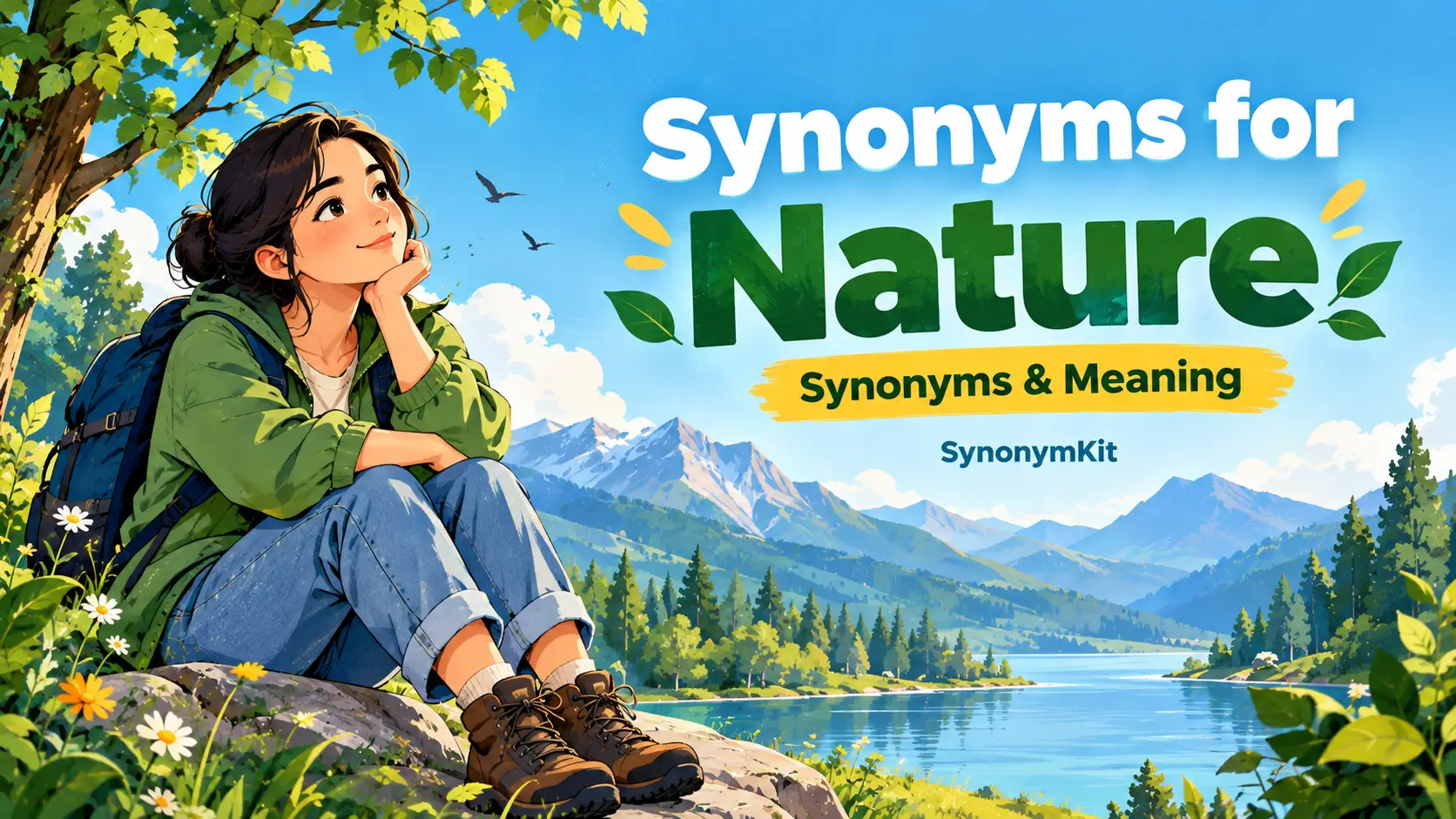
A cool breeze moves through the trees. Birds sing above a small stream, and sunlight shines on green leaves. A walk in the park can remind us how many beautiful things surround us every day. The right words help us share these moments with others.
Learning different words for nature makes your English clearer and more interesting. You can describe a quiet forest, a rocky mountain, or a garden full of flowers without using the same word again and again.
Students can use these words in essays and school projects. Bloggers can make travel stories more vivid. Content writers can create fresh descriptions for websites and articles. Daily English users can express their thoughts with greater ease.
Imagine writing about a family trip to the mountains. Words such as wilderness, scenery, and landscape can help readers picture the place.
“The earth has music for those who listen.”
Small changes in word choice can make a simple sentence more lively. They can also help you express the beauty, power, and variety of the world around you.
“Nature brings new beauty to every day.”
50 Synonyms for Nature
These words describe the natural world, outdoor places, living things, and natural qualities. Choose the word that best fits your sentence.
1. Natural World
Meaning: The natural world includes living things and places not made by humans.
Examples:
- The natural world is full of wonders.
- Children explored the natural world during their trip.
2. Environment
Meaning: The environment includes the air, water, land, and living things around us.
Examples:
- We should keep our environment clean and healthy.
- Trees help protect the environment from harm.
3. Wilderness
Meaning: Wilderness is wild land where nature grows with little human control.
Examples:
- We walked through the wilderness with our guide.
- Many animals live safely in the wilderness.
4. Landscape
Meaning: A landscape is an area of land with its own natural features.
Examples:
- The mountain landscape looked amazing at sunrise.
- We painted the landscape during our art class.
5. Scenery
Meaning: Scenery means the natural views that people see around them.
Examples:
- The scenery along the river was beautiful.
- We stopped to enjoy the mountain scenery.
6. Outdoors
Meaning: The outdoors refers to open air places away from indoor spaces.
Examples:
- Our family enjoys spending time outdoors together.
- Children played outdoors until the sun set.
7. Ecosystem
Meaning: An ecosystem includes living things and their surroundings working together.
Examples:
- Every forest has an ecosystem full of life.
- Pollution can harm a healthy river ecosystem.
8. Habitat
Meaning: A habitat is the natural home of a plant or animal.
Examples:
- This pond is a habitat for frogs.
- Birds need a safe habitat to build nests.
9. Flora
Meaning: Flora means all the plant life found in a place.
Examples:
- The island has rich flora and colorful flowers.
- We studied local flora during our science lesson.
10. Fauna
Meaning: Fauna means all the animal life found in a place.
Examples:
- The forest fauna includes deer and foxes.
- Our guide explained the area’s native fauna.
11. Wilderness Area
Meaning: A wilderness area protects wild land and its natural features.
Examples:
- We camped near a quiet wilderness area.
- The wilderness area protects many rare animals.
12. Countryside
Meaning: The countryside is land outside towns and cities, often with fields.
Examples:
- My grandparents live in the peaceful countryside.
- We drove through the countryside on Sunday.
13. Greenery
Meaning: Greenery means green plants, leaves, and trees in an area.
Examples:
- The garden was filled with fresh greenery.
- Greenery made the small balcony feel peaceful.
14. Vegetation
Meaning: Vegetation means the plants that grow naturally in a particular place.
Examples:
- Thick vegetation covered the side of the hill.
- Desert vegetation can survive with very little water.
15. Wildlife
Meaning: Wildlife includes animals that live freely in their natural surroundings.
Examples:
- We watched wildlife from a safe distance.
- The park provides shelter for local wildlife.
16. Earth
Meaning: Earth refers to our planet and the life it supports.
Examples:
- We must care for the Earth every day.
- The Earth supports millions of different living species.
17. Creation
Meaning: Creation can describe the world and all living things within it.
Examples:
- They admired the beauty of creation together.
- The poem celebrates every part of creation.
18. Outdoors World
Meaning: The outdoors world describes open spaces, natural places, and life outside.
Examples:
- The outdoors world offers many places to explore.
- She loves learning about the outdoors world.
19. Biosphere
Meaning: The biosphere includes all parts of Earth where life exists.
Examples:
- Plants and animals are part of the biosphere.
- Scientists study how life changes across the biosphere.
20. Biome
Meaning: A biome is a large region with similar plants and climate.
Examples:
- A desert biome receives very little rain.
- The rainforest biome supports many kinds of wildlife.
21. Terrain
Meaning: Terrain describes the shape and surface of an area of land.
Examples:
- The rocky terrain made our hike harder.
- Farmers know the terrain around their fields well.
22. Land
Meaning: Land means the solid ground that supports plants, animals, and people.
Examples:
- Wildflowers covered the land beside the road.
- The land looked dry after months without rain.
23. Earthly World
Meaning: The earthly world refers to life and places found on our planet.
Examples:
- The story celebrates the beauty of the earthly world.
- We explored the earthly world through nature books.
24. Wilds
Meaning: The wilds are remote places where nature remains largely untouched.
Examples:
- The explorers traveled deep into the wilds.
- Few roads reach the distant wilds.
25. Green World
Meaning: The green world describes plants, forests, and other thriving natural spaces.
Examples:
- The green world brightened our walk through town.
- Children learned to protect the green world.
26. Natural Surroundings
Meaning: Natural surroundings are the land, plants, and features around a place.
Examples:
- We enjoyed the natural surroundings of our cabin.
- Birds blended into the natural surroundings nearby.
27. Natural Beauty
Meaning: Natural beauty describes the lovely sights found in the world around us.
Examples:
- The waterfall showed the area’s natural beauty.
- Tourists came to admire the natural beauty.
28. Scenery of the Land
Meaning: This phrase describes the visible features of an area’s natural landscape.
Examples:
- The scenery of the land changed after rain.
- We photographed the scenery of the land.
29. Natural Habitat
Meaning: A natural habitat is the place where a species normally lives and grows.
Examples:
- The tiger returned to its natural habitat.
- Wetlands provide a natural habitat for birds.
30. Plant Life
Meaning: Plant life includes trees, flowers, grasses, and other plants in an area.
Examples:
- The island has unusual plant life.
- Rain helps the plant life grow quickly.
31. Animal Kingdom
Meaning: The animal kingdom includes all animal species living across the Earth.
Examples:
- The animal kingdom contains many amazing creatures.
- We learned about the animal kingdom in class.
32. Natural Order
Meaning: Natural order describes the way things in nature relate and work together.
Examples:
- Every species plays a role in natural order.
- Pollution can upset the natural order of wetlands.
33. Natural Forces
Meaning: Natural forces are powerful events or processes that occur without human control.
Examples:
- Storms are powerful natural forces.
- We watched natural forces shape the rocky coast.
34. The Wild
Meaning: The wild refers to places where animals and plants live freely.
Examples:
- The young fox returned to the wild.
- Some birds thrive in the wild.
35. Natural Realm
Meaning: The natural realm includes the living world and its physical surroundings.
Examples:
- The book explores life in the natural realm.
- Scientists study changes within the natural realm.
36. Living World
Meaning: The living world includes all plants, animals, and other living organisms.
Examples:
- The living world depends on clean water.
- Our lesson explored the living world.
37. Natural Landscape
Meaning: A natural landscape is land shaped mainly by natural processes.
Examples:
- Snow covered the natural landscape overnight.
- The natural landscape attracted many photographers.
38. Open Country
Meaning: Open country describes wide areas of land with few buildings or roads.
Examples:
- We rode our bikes across open country.
- Deer moved freely through the open country.
39. Natural Heritage
Meaning: Natural heritage includes special landscapes, wildlife, and places passed down through generations.
Examples:
- The park protects our natural heritage.
- Children learned about the region’s natural heritage.
40. Mother Earth
Meaning: Mother Earth is a warm, caring name for our planet and its life.
Examples:
- The poem asks us to respect Mother Earth.
- We planted trees to help Mother Earth.
41. Natural World Around Us
Meaning: This phrase describes the plants, animals, land, and water near us.
Examples:
- The natural world around us deserves care.
- We noticed birds in the natural world around us.
42. Natural Setting
Meaning: A natural setting is an outdoor place shaped mainly by nature.
Examples:
- The wedding took place in a natural setting.
- The lake made a lovely natural setting.
43. Physical World
Meaning: The physical world includes real things, places, and matter around us.
Examples:
- Science helps explain the physical world.
- Children explored the physical world through experiments.
44. Natural Beauty of the Earth
Meaning: This phrase describes the lovely sights and features found across our planet.
Examples:
- Mountains show the natural beauty of the Earth.
- The photos captured the natural beauty of the Earth.
45. Wild Landscape
Meaning: A wild landscape is a natural area with little human development.
Examples:
- The wild landscape stretched beyond the village.
- We crossed a wild landscape on horseback.
46. Natural Resources
Meaning: Natural resources are useful materials from Earth, such as water, soil, and forests.
Examples:
- We must use natural resources wisely.
- Clean water is one of our natural resources.
47. Biodiversity
Meaning: Biodiversity means the variety of living things found in a place or across Earth.
Examples:
- Healthy forests support rich biodiversity.
- Pollution can reduce biodiversity in rivers.
48. Natural World of Life
Meaning: This phrase refers to living organisms and the places where they thrive.
Examples:
- The documentary explores the natural world of life.
- We studied the natural world of life outdoors.
49. Natural Environment
Meaning: The natural environment includes land, air, water, plants, and animals around us.
Examples:
- Clean rivers support a healthy natural environment.
- The class studied the local natural environment.
50. Natural Beauty of the Outdoors
Meaning: This phrase describes the attractive sights found in outdoor places.
Examples:
- We enjoyed the natural beauty of the outdoors.
- Spring reveals the natural beauty of the outdoors.
Synonyms for Nature Beauty
Words that describe the beauty of nature include scenic, picturesque, breathtaking, lush, serene, and idyllic. Use picturesque for a lovely view, lush for rich green plants, and serene for a calm place.
For example, “The picturesque valley looked peaceful after the rain.” These choices help you describe gardens, forests, beaches, and mountains in a more vivid way.
Synonyms for Nature of Something
The word nature can also describe the basic character or main qualities of something. Depending on the sentence, alternatives include character, essence, quality, type, kind, and underlying character.
For example, “The nature of the problem was hard to understand.” You could write, “The real cause of the problem was hard to understand,” when you mean its source rather than its character.
Synonyms for Nature Lover
A person who loves nature may be called a nature enthusiast, outdoor enthusiast, wildlife lover, environmentalist, or conservationist. These terms have slightly different meanings.
An outdoor enthusiast enjoys activities outside, while a conservationist works to protect nature. For example, “My sister is a nature enthusiast who enjoys hiking and birdwatching.” Choose the term that best describes the person’s interests or actions.
Synonyms for Nature of a Person
When nature describes someone’s personality, useful alternatives include character, temperament, personality, disposition, and temper. Each word has a slightly different use. Temperament often describes someone’s usual emotional responses, while character can describe their moral qualities.
For example, “She has a kind nature” can become “She has a kind personality.” Choose a word that matches the quality you want to describe.
Synonyms and Antonyms for Nature
The best synonym for nature depends on its meaning. For the natural world, use environment, wilderness, or natural world. For a person’s nature, use character, personality, or temperament. There is no single antonym that works in every context.
When nature means the natural world, artificial world can express a contrast. When nature means someone’s character, unnatural behavior may fit a specific sentence.
“The more clearly we describe the world, the more clearly others can picture it.”
Frequently Asked Questions
What are fancy words for nature?
Fancy words for nature can make your writing sound more vivid and thoughtful. Try wilderness, biosphere, flora, fauna, and natural realm. Use flora when talking about plant life and fauna when discussing animals.
Biosphere is useful in science writing because it describes the parts of Earth where life exists. For creative writing, words such as idyllic and picturesque help describe beautiful natural places.
What can I use instead of nature?
You can replace nature with different words depending on what you mean. Use environment when discussing the surroundings, wilderness for wild places, and landscape for the visible features of an area.
If you mean someone’s usual behavior, choose character or personality. For example, “She enjoys nature” could become “She enjoys the outdoors.” Always check your sentence so the replacement keeps your original meaning.
What is a better word for natural?
A better word for natural depends on the context. Organic can describe certain products and farming methods, while authentic means real or genuine. Use spontaneous for actions that happen without planning and innate for qualities present from birth.
For example, “He has a natural talent for music” could become “He has an innate talent for music.” These words are not interchangeable in every sentence.
What are 10 words that describe nature?
Ten useful words to describe nature are beautiful, peaceful, lush, wild, scenic, green, vibrant, serene, breathtaking, and picturesque. Each word creates a different picture. Lush suggests thick green plants, while serene describes a calm place. Vibrant works well for colorful flowers and active wildlife.
You can use these words in school essays, travel blogs, nature poems, and everyday conversations to help readers imagine the scene.
Conclusion
Learning synonyms for nature helps you describe the world with greater detail and care. Instead of using nature in every sentence, you can choose words such as environment, wilderness, scenery, landscape, and natural world. Each word gives readers a slightly different picture.
These words are useful in many areas of life. Students can use them to make essays and school projects more interesting. Bloggers can create engaging travel stories and outdoor guides.
Content writers can add variety to website articles, while daily English users can explain what they see and feel more clearly.
Remember that not every synonym fits every sentence. Flora refers to plant life, while fauna refers to animal life. Landscape describes an area’s visible features, and character describes a person’s qualities when nature refers to personality.
“A new word can open a new way of seeing the world.”
Start by choosing five words from this list. Write a sentence for each one, then try using them in an email, essay, or daily conversation. With regular practice, you will learn which words sound natural in different situations.
“The best way to grow your vocabulary is to use it every day.”
Keep exploring new words, and let your English become clearer, richer, and more expressive.

Sarah is a freelance content writer and grammar enthusiast with over 6 years of experience helping students and bloggers write with more clarity. She joined SynonymKit to make vocabulary-building simple and accessible for everyone, one word list at a time.