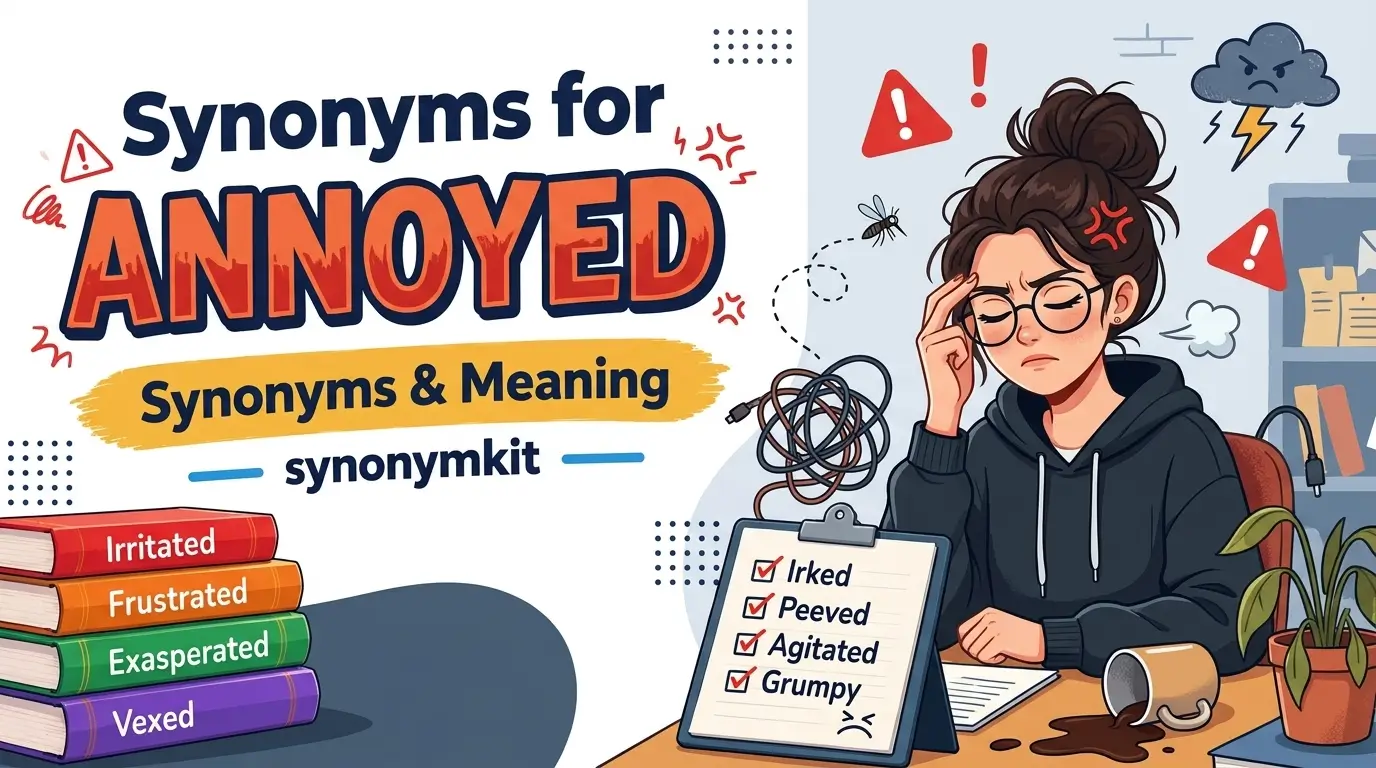
45 Synonyms for Annoyed: Better Words for Every Situation
Synonyms for annoyed include irritated, bothered, frustrated, displeased, aggravated, and exasperated. These words describe different levels of anger or discomfort. Some are gentle and polite, while others show stronger feelings. The best choice depends on how upset someone feels and the situation they want to describe.
Imagine waiting for an important phone call, but your phone keeps ringing with unwanted messages. After a while, you may feel upset and lose patience. Finding the right word helps you explain that feeling clearly.
For example, a student may feel irritated when classmates keep talking during a lesson. Another person may feel frustrated when a computer stops working during an important task. Both situations involve similar feelings, but different words can describe them better.
Learning new words makes English more interesting and useful. Students can use them to write better essays and assignments.
Bloggers can make their content more engaging. Content writers can avoid repeating the same words in every paragraph. Daily English users can express their feelings with more confidence.
“Words are the voice of our thoughts.”
A good vocabulary also helps people understand emotions and communicate with others. Instead of using one common word again and again, you can choose a word that fits your message.
“A little change in words can make a big difference.”
Here are 45 useful alternatives, with simple meanings and everyday examples. Each word has a slightly different meaning, so choose one that matches your situation.
1. Irritated
- Meaning: Feeling slightly angry because something is bothering you.
- Examples: She felt irritated by the noise.
- Examples: He gets irritated when people interrupt.
2. Bothered
- Meaning: Feeling uncomfortable because something is causing you trouble.
- Examples: I was bothered by his comments.
- Examples: She looked bothered during the meeting.
3. Frustrated
- Meaning: Feeling upset because something is difficult or not working.
- Examples: He felt frustrated with the slow computer.
- Examples: She became frustrated after missing the bus.
4. Aggravated
- Meaning: Feeling more annoyed because a problem keeps getting worse.
- Examples: The delay left everyone aggravated.
- Examples: She felt aggravated by repeated questions.
5. Exasperated
- Meaning: Feeling extremely annoyed after dealing with something difficult for too long.
- Examples: He sounded exasperated during the call.
- Examples: She became exasperated with their excuses.
6. Displeased
- Meaning: Feeling unhappy because something did not meet your expectations.
- Examples: The manager was displeased with the results.
- Examples: She looked displeased with the service.
7. Upset
- Meaning: Feeling unhappy or angry because something has gone wrong.
- Examples: He was upset about the mistake.
- Examples: She felt upset after their argument.
8. Agitated
- Meaning: Feeling nervous, angry, or upset about something happening.
- Examples: He became agitated during the discussion.
- Examples: She seemed agitated by the constant noise.
9. Peeved
- Meaning: Feeling slightly angry because something small has bothered you.
- Examples: She was peeved about the delay.
- Examples: He looked peeved after waiting outside.
10. Vexed
- Meaning: Feeling annoyed because something is causing trouble or worry.
- Examples: The confusing rules left him vexed.
- Examples: She seemed vexed by the problem.
11. Cross
- Meaning: Feeling angry or annoyed with someone or something.
- Examples: Dad was cross about the mess.
- Examples: She sounded cross with her brother.
12. Irritable
- Meaning: Easily becoming annoyed by small problems or actions.
- Examples: He gets irritable when he is hungry.
- Examples: She felt irritable after a long day.
13. Disgruntled
- Meaning: Feeling unhappy because you think something is unfair.
- Examples: The workers were disgruntled about low pay.
- Examples: A disgruntled customer requested another manager.
14. Resentful
- Meaning: Feeling angry because you believe someone treated you unfairly.
- Examples: She felt resentful about the unfair decision.
- Examples: He became resentful after being ignored.
15. Perturbed
- Meaning: Feeling worried or uncomfortable because something has disturbed you.
- Examples: She looked perturbed by the news.
- Examples: He was perturbed by their strange behavior.
16. Incensed
- Meaning: Feeling extremely angry about something wrong or unfair.
- Examples: The unfair rule left him incensed.
- Examples: She was incensed by the rude remark.
17. Infuriated
- Meaning: Feeling very angry because something has upset you deeply.
- Examples: He was infuriated by the false claim.
- Examples: She became infuriated after hearing the excuse.
18. Enraged
- Meaning: Feeling intense anger because something has upset you badly.
- Examples: The driver was enraged by the insult.
- Examples: She looked enraged during the argument.
19. Disconcerted
- Meaning: Feeling uncomfortable or confused because something unexpected has happened.
- Examples: He seemed disconcerted by her question.
- Examples: The sudden change left everyone disconcerted.
20. Frayed
- Meaning: Feeling emotionally tired and close to losing patience.
- Examples: Her patience was frayed after work.
- Examples: He sounded frayed during the conversation.
21. Restless
- Meaning: Feeling unable to relax because something is bothering you.
- Examples: She became restless during the long wait.
- Examples: He felt restless before the meeting.
22. Impatient
- Meaning: Feeling annoyed because something is taking too long.
- Examples: The children grew impatient in line.
- Examples: He became impatient with the slow service.
23. Touchy
- Meaning: Easily becoming upset or annoyed by small comments.
- Examples: She gets touchy about personal questions.
- Examples: He was touchy after a difficult morning.
24. Testy
- Meaning: Showing irritation through short or slightly angry replies.
- Examples: He gave a testy response yesterday.
- Examples: She sounded testy during the interview.
25. Grumpy
- Meaning: Being in a bad mood and easily annoyed.
- Examples: Grandpa feels grumpy before breakfast.
- Examples: The tired child became grumpy quickly.
26. Cranky
- Meaning: Feeling unhappy and easily annoyed, often because you are tired.
- Examples: I get cranky without enough sleep.
- Examples: She was cranky after the journey.
27. Aggrieved
- Meaning: Feeling upset because you believe someone treated you unfairly.
- Examples: He felt aggrieved by the decision.
- Examples: The aggrieved employee spoke to management.
28. Disenchanted
- Meaning: Feeling disappointed because something is not as good as expected.
- Examples: She became disenchanted with the service.
- Examples: He felt disenchanted after the experience.
29. Fractious
- Meaning: Easily becoming angry or difficult to deal with others.
- Examples: The fractious child refused to cooperate.
- Examples: Everyone avoided his fractious mood.
30. Testy
- Meaning: Showing impatience or irritation when dealing with other people.
- Examples: His testy tone surprised the team.
- Examples: She became testy after repeated delays.
31. Annoyed
- Meaning: Feeling slightly angry because something is causing discomfort.
- Examples: I was annoyed by the loud music.
- Examples: She looked annoyed with the delay.
32. Miffed
- Meaning: Feeling slightly upset because someone has offended you.
- Examples: He was miffed about the invitation.
- Examples: She looked miffed after the comment.
33. Chafed
- Meaning: Feeling irritated because something is uncomfortable or unfair.
- Examples: He chafed at the strict rules.
- Examples: She chafed under constant criticism.
34. Disquieted
- Meaning: Feeling uneasy or troubled because something has disturbed you.
- Examples: The strange message left her disquieted.
- Example: He seemed disquieted by the news.
35. Riled
- Meaning: Feeling angry because someone has upset or provoked you.
- Examples: His rude joke really riled me.
- Example: She was riled by the unfair treatment.
36. Worked Up
- Meaning: Feeling very upset or emotional about a situation.
- Examples: He got worked up over nothing.
- Examples: She was worked up about the results.
37. On Edge
- Meaning: Feeling nervous or easily annoyed because of stress.
- Examples: She felt on edge before exams.
- Examples: He was on edge all morning.
38. Put Out
- Meaning: Feeling annoyed because something has caused inconvenience.
- Examples: He was put out by the delay.
- Examples: She felt put out by the request.
39. Displeased
- Meaning: Feeling unhappy or dissatisfied with someone’s actions or behavior.
- Examples: The teacher was displeased with the noise.
- Examples: He looked displeased with the outcome.
40. Outraged
- Meaning: Feeling very angry because something seems deeply unfair.
- Examples: Residents were outraged by the decision.
- Examples: She felt outraged after reading the report.
41. Aggravated
- Meaning: Feeling increasingly angry because something keeps causing problems.
- Examples: He felt aggravated by the traffic.
- Examples: She became aggravated during the argument.
42. Exasperated
- Meaning: Feeling tired and angry after repeated problems or delays.
- Examples: The teacher looked exasperated with the class.
- Examples: He became exasperated by their excuses.
43. Hostile
- Meaning: Showing anger or an unfriendly attitude toward someone.
- Examples: His hostile reply ended the discussion.
- Examples: She noticed his hostile expression immediately.
44. Disgruntled
- Meaning: Feeling unhappy or dissatisfied about a situation or decision.
- Examples: The disgruntled buyer complained about the price.
- Examples: Workers felt disgruntled after the announcement.
45. Frustrating
- Meaning: Causing someone to feel upset because things are not working.
- Examples: The frustrating delay ruined our plans.
- Example: This frustrating task needs more time.
How to Choose the Right Synonym for Annoyed
Not every alternative has the same strength. Irritated works for small problems, while exasperated describes a stronger feeling after repeated trouble. Choose displeased in polite or formal situations. Use grumpy in casual conversations.
The right word helps readers understand the level of emotion without making your sentence sound too harsh.
Synonyms for Annoyed and Frustrated
Annoyed and frustrated often describe similar feelings, but frustration usually involves difficulty or blocked progress. Useful choices include irritated, exasperated, aggravated, vexed, and displeased.
For example, a person may feel frustrated when a task becomes difficult and irritated when someone keeps interrupting them. Choose the word that best explains the cause.
Synonyms for Annoyed and Angry
Some words express stronger anger than ordinary annoyance. Infuriated, enraged, incensed, outraged, and riled can describe intense feelings.
These words work well when someone faces unfair treatment, rude behavior, or a serious problem. For a milder feeling, irritated or peeved may be more suitable.
Synonyms for Annoyed Tone
An annoyed tone can sound irritated, sharp, testy, cross, or impatient. These words help describe how someone speaks rather than how they look.
For example, a short reply may sound testy, while a sharp response may show clear irritation. Writers can use these terms to make dialogue more expressive.
“The right word gives emotion a clearer voice.”
Synonyms for Annoyed Look
An annoyed look can be described as irritated, displeased, vexed, perturbed, or agitated. These words help explain someone’s facial appearance or body language.
A person may frown, narrow their eyes, or avoid eye contact when something bothers them. Select a word that matches the person’s actual expression.
Formal Synonyms for Annoyed
Formal writing often benefits from words such as displeased, perturbed, aggrieved, disconcerted, and disgruntled. These alternatives work in business emails, reports, academic writing, and professional conversations.
They can communicate dissatisfaction without sounding excessively emotional. For example, a manager may describe a customer as displeased with the service.
Frequently Asked Questions
1. What Is a Fancy Word for Annoyance?
A fancy word for annoyance is exasperation. It describes a strong feeling of frustration that develops after repeated problems or irritating experiences. Other advanced choices include irritation, vexation, displeasure, and aggravation.
For example, you might use exasperation in formal writing when describing someone’s reaction to repeated delays. Vexation is another useful choice when something causes ongoing worry or irritation.
2. What Is the Synonym for Annoying?
Common synonyms for annoying include irritating, bothersome, frustrating, aggravating, and troublesome. These words describe something that causes discomfort, frustration, or anger. For example, you can describe loud music as irritating or a repeated problem as frustrating. Troublesome works well when something creates extra difficulty. The best choice depends on what causes the annoyance and how strong the feeling is.
3. What Is a Better Word for Upset?
A better word for upset depends on the emotion you want to express. Distressed describes deep emotional discomfort, while disappointed explains sadness caused by unmet expectations. Frustrated works when something prevents progress, and troubled suggests worry. In everyday conversation, unhappy is a simple alternative.
In professional writing, displeased may sound more suitable when describing dissatisfaction with a service or decision.
4. What Is a Stronger Word for “Annoyed”?
Infuriated is a much stronger word than annoyed. It describes intense anger caused by something deeply upsetting or unfair. Other powerful alternatives include enraged, incensed, outraged, and exasperated.
These words are useful when describing serious arguments, unfair treatment, or repeated problems. However, they should not replace annoyed in every sentence because they communicate a much higher level of emotional intensity.
Conclusion
Learning different alternatives to annoyed can make your English stronger and more expressive. Instead of repeating the same word in every sentence, you can choose from options such as irritated, frustrated, displeased, aggravated, and exasperated. Each word adds a slightly different meaning to your message.
These words are useful in many areas of life. Students can use them to improve essays and school assignments. Bloggers can create more interesting articles by choosing words that match their topics.
Content writers can make their work sound natural and avoid unnecessary repetition. Daily English users can also express their feelings more clearly during conversations.
Start by learning three or four new words each day. Try using them in emails, essays, text messages, and everyday conversations. Pay attention to the situation before choosing a synonym because some words express mild irritation while others show strong anger.
“Good writing begins with choosing the right words.”
You do not need to memorize all 45 words at once. Practice a few regularly and notice how native English speakers use them. With time, your vocabulary will grow, your sentences will become clearer, and your communication skills will improve.
“Every new word opens the door to better expression.”

James is a former English teacher turned content strategist who’s passionate about making language learning less intimidating. At SynonymKit, he focuses on curating word lists that are practical for everyday writing, essays, and professional communication.