45 Synonyms for Aggressive: Words for Different Situations
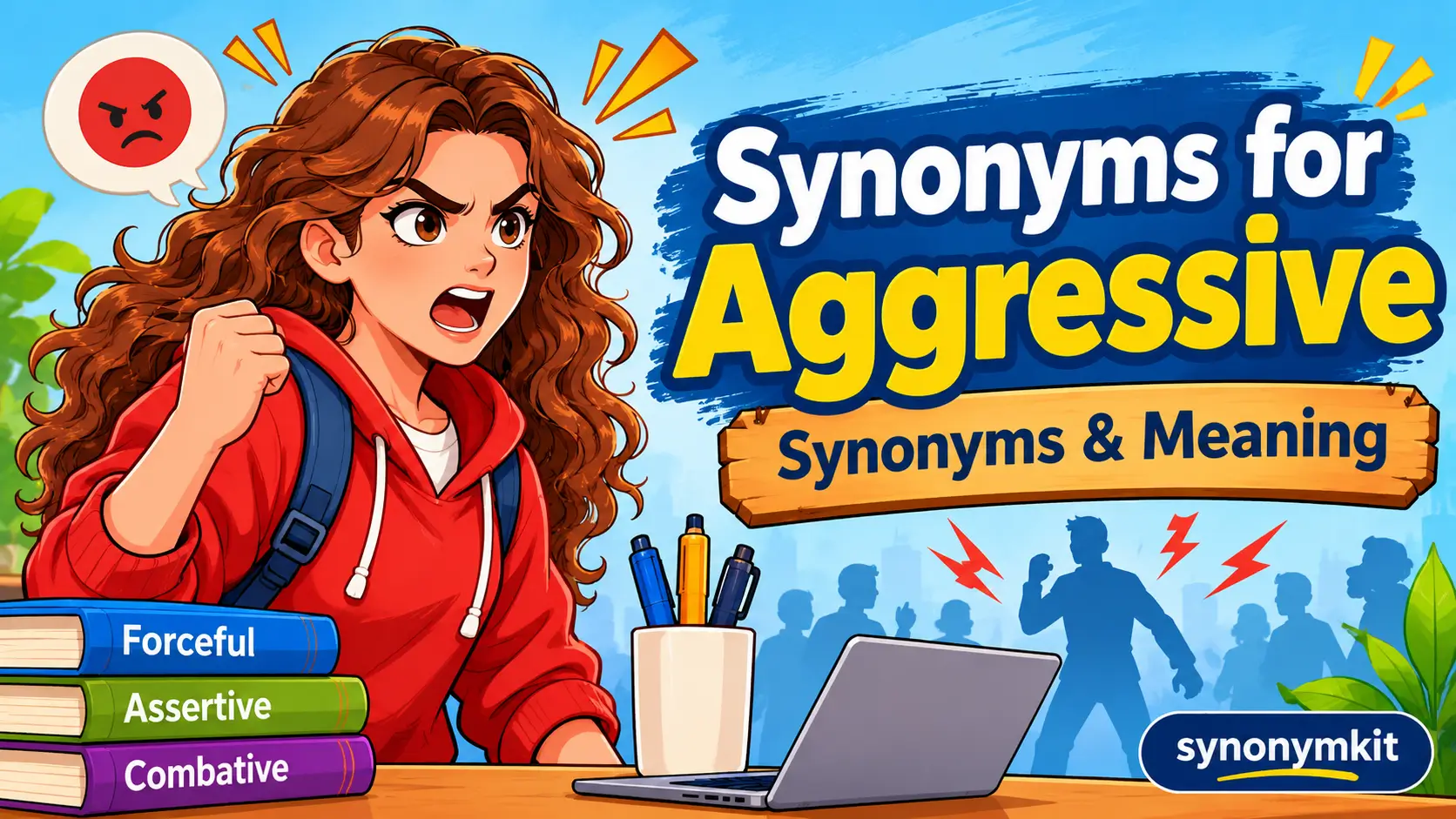
Synonyms for aggressive include forceful, assertive, hostile, fierce, bold, combative, and confrontational. These words describe people, actions, or behavior that show strong feelings or pressure. Some sound positive, while others suggest anger, conflict, or a lack of control. The best choice depends on the situation and tone.
Imagine a team meeting where one person speaks loudly, pushes their ideas, and refuses to listen to others. Their actions may make the room feel tense. In another situation, a player fights hard to win a game. Both situations can involve aggressive actions, but they do not carry the same meaning.
For example, an aggressive salesperson may push a customer to buy something quickly. Choosing the right word helps explain that behavior more clearly.
Students can use these words to improve essays and schoolwork. Bloggers can make their articles more interesting and clear.
Content writers can choose words that match each situation. Daily English users can express their thoughts with greater care.
Learning different words also helps you avoid repeating the same word in every sentence.
“Words have the power to change the way we express our thoughts.”
A strong vocabulary makes communication easier. It also helps readers understand the exact feeling behind a sentence.
“The right word can make a simple message more powerful.”
45 Synonyms for Aggressive
1. Forceful
Meaning: Forceful describes someone who uses strong actions or words to get results.
Examples:
- She made a forceful argument during class.
- His forceful approach helped the team decide.
2. Assertive
Meaning: Assertive describes someone who expresses thoughts clearly and stands up for themselves.
Examples:
- She remained assertive during the difficult meeting.
- He gave an assertive answer to everyone.
3. Hostile
Meaning: Hostile describes someone who shows anger, dislike, or unfriendly feelings toward others.
Examples:
- His hostile words upset the entire group.
- The manager gave me a hostile look.
4. Fierce
Meaning: Fierce describes someone who shows great energy, strength, or anger.
Examples:
- The fierce player fought until the end.
- She gave her rival a fierce look.
5. Combative
Meaning: Combative describes someone who often argues or wants to fight.
Examples:
- His combative attitude made talks difficult.
- The student became combative during the discussion.
6. Confrontational
Meaning: Confrontational describes someone who directly challenges others and often causes arguments.
Examples:
- His confrontational style upset the new staff.
- She avoided confrontational talks with her boss.
7. Belligerent
Meaning: Belligerent describes someone who acts angry and seems ready to fight.
Examples:
- The belligerent customer shouted at the waiter.
- His belligerent behavior shocked the entire team.
8. Forceful minded
Meaning: Forceful minded describes someone who strongly supports ideas and refuses to give up easily.
Examples:
- She is forceful minded about her career goals.
- His forceful minded nature shaped the debate.
9. Fierce minded
Meaning: Fierce minded describes someone with strong feelings and a determined way of thinking.
Examples:
- The fierce minded captain inspired her team.
- He stayed fierce minded during tough challenges.
10. Intense
Meaning: Intense describes someone or something that shows very strong feelings or energy.
Examples:
- Their intense discussion lasted for hours.
- She has an intense desire to succeed.
11. Dominant
Meaning: Dominant describes someone who likes to control people, situations, or decisions.
Examples:
- He has a dominant role in meetings.
- Her dominant personality shaped the whole group.
12. Pushy
Meaning: Pushy describes someone who pressures others to do what they want.
Examples:
- The pushy salesman followed us everywhere.
- His pushy attitude made customers uncomfortable.
13. Overbearing
Meaning: Overbearing describes someone who tries to control others too much.
Examples:
- Her overbearing boss checked every small task.
- He became overbearing during the family discussion.
14. Arrogant
Meaning: Arrogant describes someone who thinks they are better than other people.
Examples:
- His arrogant comments upset his classmates.
- The arrogant player ignored his teammates.
15. Bold
Meaning: Bold describes someone who takes risks and acts with confidence.
Examples:
- She made a bold move during negotiations.
- His bold ideas changed the project.
16. Daring
Meaning: Daring describes someone who takes risks without showing much fear.
Examples:
- The daring climber reached the high peak.
- She made a daring choice at work.
17. Determined
Meaning: Determined describes someone who keeps trying until they reach their goal.
Examples:
- He remained determined after several failures.
- She is determined to win the competition.
18. Strong willed
Meaning: Strong willed describes someone who does not easily change their decisions or beliefs.
Examples:
- Her strong willed nature helped her succeed.
- He is strong willed about his future plans.
19. Aggressive minded
Meaning: Aggressive minded describes someone who approaches goals with strong drive and energy.
Examples:
- The aggressive minded leader wanted quick results.
- She took an aggressive minded approach to business.
20. Unfriendly
Meaning: Unfriendly describes someone who does not show kindness or warmth toward others.
Examples:
- The unfriendly guard refused to answer questions.
- His unfriendly reply ended our conversation.
21. Antagonistic
Meaning: Antagonistic describes someone who acts against others and creates conflict.
Examples:
- His antagonistic attitude caused more problems.
- She received an antagonistic response from him.
22. Argumentative
Meaning: Argumentative describes someone who often disagrees and starts arguments with others.
Examples:
- My argumentative cousin challenged every opinion.
- The argumentative student interrupted the lesson.
23. Provocative
Meaning: Provocative describes words or actions that cause strong reactions or anger.
Examples:
- His provocative comments started another argument.
- She made a provocative statement during lunch.
24. Offensive
Meaning: Offensive describes behavior or words that upset, hurt, or insult others.
Examples:
- His offensive jokes hurt several people.
- The offensive message caused a serious complaint.
25. Intimidating
Meaning: Intimidating describes someone who makes others feel afraid or less confident.
Examples:
- The intimidating coach watched every player closely.
- His intimidating voice silenced the room.
26. Threatening
Meaning: Threatening describes someone or something that suggests harm or danger.
Examples:
- He gave me a threatening warning yesterday.
- Her threatening words frightened the young boy.
27. Violent
Meaning: Violent describes actions that use physical force to hurt people or damage things.
Examples:
- The violent fight stopped the school event.
- His violent actions caused serious injuries.
28. Brutal
Meaning: Brutal describes actions that show extreme cruelty, force, or lack of care.
Examples:
- The brutal attack shocked the whole town.
- His brutal treatment upset many workers.
29. Fierce tempered
Meaning: Fierce tempered describes someone who gets angry quickly and reacts strongly.
Examples:
- The fierce tempered coach shouted at players.
- Her fierce tempered nature caused frequent arguments.
30. Passionate
Meaning: Passionate describes someone who shows deep feelings and strong interest in something.
Examples:
- She gave a passionate speech about education.
- His passionate efforts inspired the young team.
31. Competitive
Meaning: Competitive describes someone who always wants to perform better than others.
Examples:
- My competitive brother loves winning games.
- She has a competitive spirit at work.
32. Ambitious
Meaning: Ambitious describes someone who has big goals and works hard to achieve them.
Examples:
- The ambitious student planned her future carefully.
- He is ambitious about his business goals.
33. Relentless
Meaning: Relentless describes someone who keeps pushing forward without stopping or giving up.
Examples:
- Her relentless efforts helped the team improve.
- The relentless player practiced every single day.
34. Unyielding
Meaning: Unyielding describes someone who refuses to change their position or give in.
Examples:
- The unyielding manager rejected every suggestion.
- His unyielding attitude made talks harder.
35. Headstrong
Meaning: Headstrong describes someone who follows their own ideas without listening to advice.
Examples:
- The headstrong teenager ignored his parents’ advice.
- She can be headstrong during family talks.
36. Overzealous
Meaning: Overzealous describes someone who shows too much excitement or effort about something.
Examples:
- The overzealous worker rushed through every task.
- His overzealous support made others uncomfortable.
37. High pressure
Meaning: High pressure describes an approach that pushes people to act quickly or perform well.
Examples:
- The high pressure sales pitch confused customers.
- They used a high pressure method to sell.
38. Demanding
Meaning: Demanding describes someone who expects a lot from other people.
Examples:
- Her demanding boss expected perfect work daily.
- The demanding coach pushed every player harder.
39. Forceful speaking
Meaning: Forceful speaking describes someone who uses strong and direct words when communicating.
Examples:
- The forceful speaking leader addressed the whole team.
- His forceful speaking style gained everyone’s attention.
40. Outspoken
Meaning: Outspoken describes someone who shares opinions openly without hiding their thoughts.
Examples:
- She is outspoken about workplace problems.
- His outspoken nature makes debates interesting.
41. Fierce looking
Meaning: Fierce looking describes someone whose appearance makes them seem angry or powerful.
Examples:
- The fierce looking guard stood near the gate.
- His fierce looking expression frightened the children.
42. Uncompromising
Meaning: Uncompromising describes someone who refuses to change their standards or beliefs.
Examples:
- The uncompromising director rejected the weak proposal.
- Her uncompromising attitude impressed the entire team.
43. Hard hitting
Meaning: Hard hitting describes words or actions that make a strong impact.
Examples:
- The reporter wrote a hard hitting article.
- His hard hitting speech changed public opinion.
44. Provocative minded
Meaning: Provocative minded describes someone who enjoys challenging ideas and creating strong reactions.
Examples:
- The provocative minded speaker questioned old beliefs.
- His provocative minded approach started a debate.
45. Spirited
Meaning: Spirited describes someone who shows strong energy, courage, and enthusiasm.
Examples:
- The spirited player never stopped trying.
- She gave a spirited answer during class.
Synonyms for Aggressive Approach
Words such as forceful, bold, assertive, determined, and hard hitting can describe an aggressive approach. These choices work when someone takes strong action to reach a goal.
In business, an assertive approach may sound professional, while a pushy approach can make people uncomfortable. Choose a word that matches the action and its effect.
Synonyms for Aggressive Tone
An aggressive tone may sound hostile, confrontational, harsh, threatening, or forceful. These words help describe how someone speaks during an argument, meeting, or difficult conversation.
A forceful tone can show confidence, but a hostile tone often shows anger. The right word helps readers understand the speaker’s feelings and attitude.
Synonyms for Aggressive Behavior
Common words for aggressive behavior include hostile, combative, violent, antagonistic, and confrontational. These terms describe actions that may cause fear, conflict, or discomfort.
For example, shouting, threatening someone, or starting fights can show aggressive behavior. Use violent when physical harm occurs, and use hostile when someone shows anger or dislike.
Synonyms for Aggressive Person
An aggressive person may be described as pushy, domineering, combative, overbearing, or intimidating. Each word shows a different personality trait. A pushy person pressures others, while a domineering person wants control.
An intimidating person makes others feel afraid. These alternatives help you describe someone’s personality without repeating the same word.
Positive Synonyms for Aggressive
Some words can express the positive side of an aggressive attitude. Assertive, bold, ambitious, determined, competitive, and spirited describe people who show confidence and strong motivation.
These words are useful when someone works hard, takes action, or stands up for an idea. They sound more encouraging than hostile or pushy.
“Strong communication begins when we choose words with care.”
Frequently Asked Questions
1. What Is Another Word for Over Aggressive?
Words such as overbearing, pushy, domineering, overzealous, and hostile can describe someone who acts too aggressively. The best choice depends on the behavior. Overbearing suits someone who tries to control others, while pushy describes someone who applies too much pressure.
Hostile is better when anger or unfriendly feelings are clear. These words help explain excessive behavior more accurately.
2. What Is a Better Word for Aggression?
A better word for aggression depends on whether you want a positive, neutral, or negative meaning. Assertiveness works when someone expresses strong opinions with respect. Hostility describes anger or unfriendly actions.
Determination highlights strong motivation, while forcefulness suggests powerful action. These alternatives make your writing clearer and help readers understand the exact message.
3. What Is a Word for Aggressive Behavior?
Hostility is a useful word for aggressive behavior that involves anger or unfriendly actions. Other choices include combativeness, violence, antagonism, and confrontation. Combativeness describes someone who often wants to argue or fight.
Violence refers to physical force that causes harm. Choose the word that best describes the action rather than using one general term for every situation.
4. What Is a Softer Word Than “Aggressive”?
Assertive is one of the best softer alternatives to aggressive. It describes someone who speaks clearly and stands up for their needs without disrespecting others. You can also use confident, determined, firm, or strong willed.
These words demonstrate confidence and strength without suggesting anger or harmful behavior. They are useful in professional writing and everyday conversations.
Conclusion
Learning synonyms for aggressive can make your English stronger and easier to understand. The same word does not fit every situation. Sometimes you need a word that shows confidence, such as assertive or bold.
In other cases, hostile, combative, or confrontational may describe the situation better.
A wider vocabulary also helps you write better essays, blog posts, emails, and reports. Bloggers can use different words to make their content more natural. Students can improve their vocabulary and express ideas with confidence.
Content writers can make their messages clear and avoid repeating the same words. Daily English users can also communicate their feelings more easily.
Start by learning five new words from this list. Write a simple sentence for each one and use them in your daily conversations. You can also practice them in emails, school essays, and social media posts.
Remember that word choice matters. A positive word can show confidence, while a negative word can describe anger or conflict. Always think about the meaning and situation before choosing an alternative.
“A strong vocabulary helps you share better ideas.”
“Practice a new word today, and use it with confidence tomorrow.”

James is a former English teacher turned content strategist who’s passionate about making language learning less intimidating. At SynonymKit, he focuses on curating word lists that are practical for everyday writing, essays, and professional communication.